Merja Saarinen, Tiina Pellinen, Joel Kostensalo, Jouni Nousiainen, Katri Joensuu, Suvi T Itkonen, Anne-Maria Pajari
{"title":"饮食气候影响与健康生物标志物之间存在模糊的相关性——一项针对健康芬兰成年人的随机对照试验","authors":"Merja Saarinen, Tiina Pellinen, Joel Kostensalo, Jouni Nousiainen, Katri Joensuu, Suvi T Itkonen, Anne-Maria Pajari","doi":"10.1007/s00394-025-03609-w","DOIUrl":null,"url":null,"abstract":"<p><strong>Purpose: </strong>A transition to more plant-rich diets is an effective way to reduce the climate impact of a diet. Using a whole-diet approach, we studied how partial replacement of animal-sourced with plant-sourced proteins affected the dietary climate impact while simultaneously considering diet-related health biomarkers.</p><p><strong>Methods: </strong>In a 12-week randomised controlled trial, 107 women and 29 men were assigned into three diet groups (ANIMAL, 50/50, PLANT) with animal-to-plant-protein ratios of 70/30, 50/50, and 30/70, respectively. Life-cycle-assessment-based coefficients for foods were used to assess the climate impact of the diet groups, based on four-day food records. Correlations between climate impact and biomarkers were assessed.</p><p><strong>Results: </strong>The climate impact (CO<sub>2</sub> eq.) for PLANT was 3.32 kg per day, 3.05 kg per 2,000 kcal, and 0.04 kg per gram of protein, for 50/50 4.34, 4.20, and 0.05 kg, and for ANIMAL 4.93, 4.94, and 0.06 kg, respectively (p < 0.05 for all except ANIMAL vs. 50/50 /g protein and /2,000 kcal). Climate impact correlated weakly positively with colorectal cancer risk markers and a positive status of bone turnover, but not with cardiometabolic risk markers. Animal-based iron intake and climate impact (per 2,000 kcal) had a strong positive correlation 0.70 C.I. [0.60, 0.77], while saturated fat (0.29 [0.13, 0.44]) and calcium (0.37, [0.22, 0.51]) intake had a weak positive correlation, and fibre intake (- 0.37, [- 0.51, - 0.21]) a weak negative correlation with climate impact.</p><p><strong>Conclusion: </strong>Replacing animal-sourced proteins with plant-sourced proteins reduced the climate impact of the diet. The relationship between climate impact and biomarkers was more ambiguous indicated by both beneficial and harmful indicators within lower climate impacts.</p><p><strong>Clinical trial registry: </strong>NCT03206827; registration date: 2017-06-30.</p>","PeriodicalId":12030,"journal":{"name":"European Journal of Nutrition","volume":"64 2","pages":"95"},"PeriodicalIF":4.3000,"publicationDate":"2025-02-18","publicationTypes":"Journal Article","fieldsOfStudy":null,"isOpenAccess":false,"openAccessPdf":"https://www.ncbi.nlm.nih.gov/pmc/articles/PMC11836174/pdf/","citationCount":"0","resultStr":"{\"title\":\"Dietary climate impact correlates ambiguously with health biomarkers- a randomised controlled trial in healthy Finnish adults.\",\"authors\":\"Merja Saarinen, Tiina Pellinen, Joel Kostensalo, Jouni Nousiainen, Katri Joensuu, Suvi T Itkonen, Anne-Maria Pajari\",\"doi\":\"10.1007/s00394-025-03609-w\",\"DOIUrl\":null,\"url\":null,\"abstract\":\"<p><strong>Purpose: </strong>A transition to more plant-rich diets is an effective way to reduce the climate impact of a diet. Using a whole-diet approach, we studied how partial replacement of animal-sourced with plant-sourced proteins affected the dietary climate impact while simultaneously considering diet-related health biomarkers.</p><p><strong>Methods: </strong>In a 12-week randomised controlled trial, 107 women and 29 men were assigned into three diet groups (ANIMAL, 50/50, PLANT) with animal-to-plant-protein ratios of 70/30, 50/50, and 30/70, respectively. Life-cycle-assessment-based coefficients for foods were used to assess the climate impact of the diet groups, based on four-day food records. Correlations between climate impact and biomarkers were assessed.</p><p><strong>Results: </strong>The climate impact (CO<sub>2</sub> eq.) for PLANT was 3.32 kg per day, 3.05 kg per 2,000 kcal, and 0.04 kg per gram of protein, for 50/50 4.34, 4.20, and 0.05 kg, and for ANIMAL 4.93, 4.94, and 0.06 kg, respectively (p < 0.05 for all except ANIMAL vs. 50/50 /g protein and /2,000 kcal). Climate impact correlated weakly positively with colorectal cancer risk markers and a positive status of bone turnover, but not with cardiometabolic risk markers. Animal-based iron intake and climate impact (per 2,000 kcal) had a strong positive correlation 0.70 C.I. [0.60, 0.77], while saturated fat (0.29 [0.13, 0.44]) and calcium (0.37, [0.22, 0.51]) intake had a weak positive correlation, and fibre intake (- 0.37, [- 0.51, - 0.21]) a weak negative correlation with climate impact.</p><p><strong>Conclusion: </strong>Replacing animal-sourced proteins with plant-sourced proteins reduced the climate impact of the diet. The relationship between climate impact and biomarkers was more ambiguous indicated by both beneficial and harmful indicators within lower climate impacts.</p><p><strong>Clinical trial registry: </strong>NCT03206827; registration date: 2017-06-30.</p>\",\"PeriodicalId\":12030,\"journal\":{\"name\":\"European Journal of Nutrition\",\"volume\":\"64 2\",\"pages\":\"95\"},\"PeriodicalIF\":4.3000,\"publicationDate\":\"2025-02-18\",\"publicationTypes\":\"Journal Article\",\"fieldsOfStudy\":null,\"isOpenAccess\":false,\"openAccessPdf\":\"https://www.ncbi.nlm.nih.gov/pmc/articles/PMC11836174/pdf/\",\"citationCount\":\"0\",\"resultStr\":null,\"platform\":\"Semanticscholar\",\"paperid\":null,\"PeriodicalName\":\"European Journal of Nutrition\",\"FirstCategoryId\":\"3\",\"ListUrlMain\":\"https://doi.org/10.1007/s00394-025-03609-w\",\"RegionNum\":2,\"RegionCategory\":\"医学\",\"ArticlePicture\":[],\"TitleCN\":null,\"AbstractTextCN\":null,\"PMCID\":null,\"EPubDate\":\"\",\"PubModel\":\"\",\"JCR\":\"Q2\",\"JCRName\":\"NUTRITION & DIETETICS\",\"Score\":null,\"Total\":0}","platform":"Semanticscholar","paperid":null,"PeriodicalName":"European Journal of Nutrition","FirstCategoryId":"3","ListUrlMain":"https://doi.org/10.1007/s00394-025-03609-w","RegionNum":2,"RegionCategory":"医学","ArticlePicture":[],"TitleCN":null,"AbstractTextCN":null,"PMCID":null,"EPubDate":"","PubModel":"","JCR":"Q2","JCRName":"NUTRITION & DIETETICS","Score":null,"Total":0}
引用次数: 0
摘要
目的:向更多富含植物的饮食过渡是减少饮食对气候影响的有效方法。采用全饮食方法,我们研究了用植物来源的蛋白质部分替代动物来源的蛋白质如何影响饮食气候影响,同时考虑了与饮食相关的健康生物标志物。方法:在为期12周的随机对照试验中,将107名女性和29名男性分为动物、50/50、植物3个饮食组,动物与植物蛋白质的比例分别为70/30、50/50和30/70。基于生命周期评估的食物系数被用来评估饮食组对气候的影响,基于四天的食物记录。评估了气候影响与生物标志物之间的相关性。结果:对PLANT的气候影响(CO2当量)为3.32 kg /天,3.05 kg / 2000 kcal, 0.04 kg / g蛋白质,50/50分别为4.34、4.20和0.05 kg, ANIMAL分别为4.93、4.94和0.06 kg (p结论:用植物源蛋白代替动物源蛋白减少了饮食对气候的影响。在较低的气候影响范围内,有益和有害指标表明气候影响与生物标志物之间的关系更为模糊。临床试验注册:NCT03206827;报名日期:2017-06-30。
Dietary climate impact correlates ambiguously with health biomarkers- a randomised controlled trial in healthy Finnish adults.
Purpose: A transition to more plant-rich diets is an effective way to reduce the climate impact of a diet. Using a whole-diet approach, we studied how partial replacement of animal-sourced with plant-sourced proteins affected the dietary climate impact while simultaneously considering diet-related health biomarkers.
Methods: In a 12-week randomised controlled trial, 107 women and 29 men were assigned into three diet groups (ANIMAL, 50/50, PLANT) with animal-to-plant-protein ratios of 70/30, 50/50, and 30/70, respectively. Life-cycle-assessment-based coefficients for foods were used to assess the climate impact of the diet groups, based on four-day food records. Correlations between climate impact and biomarkers were assessed.
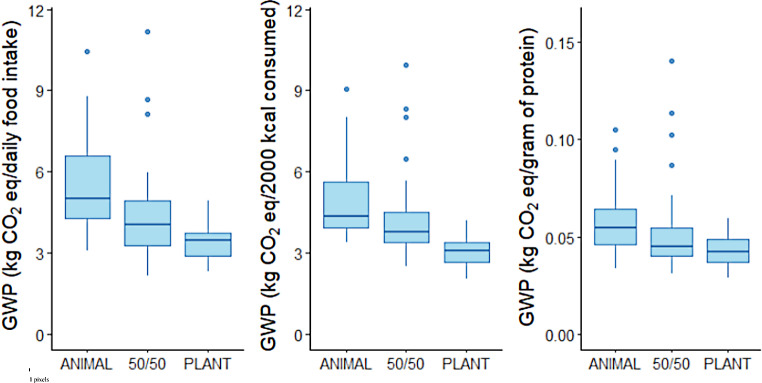
Results: The climate impact (CO2 eq.) for PLANT was 3.32 kg per day, 3.05 kg per 2,000 kcal, and 0.04 kg per gram of protein, for 50/50 4.34, 4.20, and 0.05 kg, and for ANIMAL 4.93, 4.94, and 0.06 kg, respectively (p < 0.05 for all except ANIMAL vs. 50/50 /g protein and /2,000 kcal). Climate impact correlated weakly positively with colorectal cancer risk markers and a positive status of bone turnover, but not with cardiometabolic risk markers. Animal-based iron intake and climate impact (per 2,000 kcal) had a strong positive correlation 0.70 C.I. [0.60, 0.77], while saturated fat (0.29 [0.13, 0.44]) and calcium (0.37, [0.22, 0.51]) intake had a weak positive correlation, and fibre intake (- 0.37, [- 0.51, - 0.21]) a weak negative correlation with climate impact.
Conclusion: Replacing animal-sourced proteins with plant-sourced proteins reduced the climate impact of the diet. The relationship between climate impact and biomarkers was more ambiguous indicated by both beneficial and harmful indicators within lower climate impacts.
期刊介绍:
The European Journal of Nutrition publishes original papers, reviews, and short communications in the nutritional sciences. The manuscripts submitted to the European Journal of Nutrition should have their major focus on the impact of nutrients and non-nutrients on
immunology and inflammation,
gene expression,
metabolism,
chronic diseases, or
carcinogenesis,
or a major focus on
epidemiology, including intervention studies with healthy subjects and with patients,
biofunctionality of food and food components, or
the impact of diet on the environment.





 京公网安备 11010802042870号
京ICP备2023020795号-1
京公网安备 11010802042870号
京ICP备2023020795号-1

 分享
分享
 求助内容:
求助内容: 应助结果提醒方式:
 扫码关注我们
