Maria Camila Urrea Suescun, Isabel C Garcés-Palacio, Amr S Soliman
{"title":"2011年至2022年间哥伦比亚按种族划分的癌症死亡率:一项基于人群的研究。","authors":"Maria Camila Urrea Suescun, Isabel C Garcés-Palacio, Amr S Soliman","doi":"10.3389/ijph.2025.1607975","DOIUrl":null,"url":null,"abstract":"<p><strong>Objectives: </strong>To examine cancer mortality rates in Colombia by ethnic groups (Indigenous, Rom, Raizal, Afro-Colombian, and Mestizo) and assess trends from 2011 to 2022.</p><p><strong>Methods: </strong>National vital statistics from death certificates and the Colombian census data were used. Crude and direct age-standardized mortality rates were determined by ethnicity for the study period, by year, sex, and cancer type and Joinpoint analysis was conducted to examine trends.</p><p><strong>Results: </strong>Age-standardized cancer mortality of Mestizos (60.1 per 100,000 population) was lower than in Rom and Raizales (557.3 and 77.7 per 100,000), and higher than for Afro-Colombians and Indigenous (37.2 and 20.0 per 100,000). Indigenous people in Colombia had greater proportions of individuals under 45 dying of cancer than Mestizos (18.7% vs. 9.7%, p-value = <0.01). Compared to the Mestizo population, Raizales and Afro-Colombians experienced disproportionately higher age-standardized mortality rates due to prostate cancer (26.6/100,000 and 8.6/100,000 vs. 8.1/100,000), and for Raizales and Rom breast cancer (14.0/100,000 and 103.2/100,000 vs. 9.1/100,000).</p><p><strong>Conclusion: </strong>The disparities in cancer mortality in ethnic minorities in Colombia call for investigating cancer etiology and access to care among the Rom and the Raizal populations.</p>","PeriodicalId":14322,"journal":{"name":"International Journal of Public Health","volume":"70 ","pages":"1607975"},"PeriodicalIF":2.4000,"publicationDate":"2025-02-03","publicationTypes":"Journal Article","fieldsOfStudy":null,"isOpenAccess":false,"openAccessPdf":"https://www.ncbi.nlm.nih.gov/pmc/articles/PMC11830512/pdf/","citationCount":"0","resultStr":"{\"title\":\"Cancer Mortality by Ethnicity in Colombia Between 2011 and 2022: A Population-Based Study.\",\"authors\":\"Maria Camila Urrea Suescun, Isabel C Garcés-Palacio, Amr S Soliman\",\"doi\":\"10.3389/ijph.2025.1607975\",\"DOIUrl\":null,\"url\":null,\"abstract\":\"<p><strong>Objectives: </strong>To examine cancer mortality rates in Colombia by ethnic groups (Indigenous, Rom, Raizal, Afro-Colombian, and Mestizo) and assess trends from 2011 to 2022.</p><p><strong>Methods: </strong>National vital statistics from death certificates and the Colombian census data were used. Crude and direct age-standardized mortality rates were determined by ethnicity for the study period, by year, sex, and cancer type and Joinpoint analysis was conducted to examine trends.</p><p><strong>Results: </strong>Age-standardized cancer mortality of Mestizos (60.1 per 100,000 population) was lower than in Rom and Raizales (557.3 and 77.7 per 100,000), and higher than for Afro-Colombians and Indigenous (37.2 and 20.0 per 100,000). Indigenous people in Colombia had greater proportions of individuals under 45 dying of cancer than Mestizos (18.7% vs. 9.7%, p-value = <0.01). Compared to the Mestizo population, Raizales and Afro-Colombians experienced disproportionately higher age-standardized mortality rates due to prostate cancer (26.6/100,000 and 8.6/100,000 vs. 8.1/100,000), and for Raizales and Rom breast cancer (14.0/100,000 and 103.2/100,000 vs. 9.1/100,000).</p><p><strong>Conclusion: </strong>The disparities in cancer mortality in ethnic minorities in Colombia call for investigating cancer etiology and access to care among the Rom and the Raizal populations.</p>\",\"PeriodicalId\":14322,\"journal\":{\"name\":\"International Journal of Public Health\",\"volume\":\"70 \",\"pages\":\"1607975\"},\"PeriodicalIF\":2.4000,\"publicationDate\":\"2025-02-03\",\"publicationTypes\":\"Journal Article\",\"fieldsOfStudy\":null,\"isOpenAccess\":false,\"openAccessPdf\":\"https://www.ncbi.nlm.nih.gov/pmc/articles/PMC11830512/pdf/\",\"citationCount\":\"0\",\"resultStr\":null,\"platform\":\"Semanticscholar\",\"paperid\":null,\"PeriodicalName\":\"International Journal of Public Health\",\"FirstCategoryId\":\"3\",\"ListUrlMain\":\"https://doi.org/10.3389/ijph.2025.1607975\",\"RegionNum\":3,\"RegionCategory\":\"医学\",\"ArticlePicture\":[],\"TitleCN\":null,\"AbstractTextCN\":null,\"PMCID\":null,\"EPubDate\":\"2025/1/1 0:00:00\",\"PubModel\":\"eCollection\",\"JCR\":\"Q2\",\"JCRName\":\"PUBLIC, ENVIRONMENTAL & OCCUPATIONAL HEALTH\",\"Score\":null,\"Total\":0}","platform":"Semanticscholar","paperid":null,"PeriodicalName":"International Journal of Public Health","FirstCategoryId":"3","ListUrlMain":"https://doi.org/10.3389/ijph.2025.1607975","RegionNum":3,"RegionCategory":"医学","ArticlePicture":[],"TitleCN":null,"AbstractTextCN":null,"PMCID":null,"EPubDate":"2025/1/1 0:00:00","PubModel":"eCollection","JCR":"Q2","JCRName":"PUBLIC, ENVIRONMENTAL & OCCUPATIONAL HEALTH","Score":null,"Total":0}
引用次数: 0
摘要
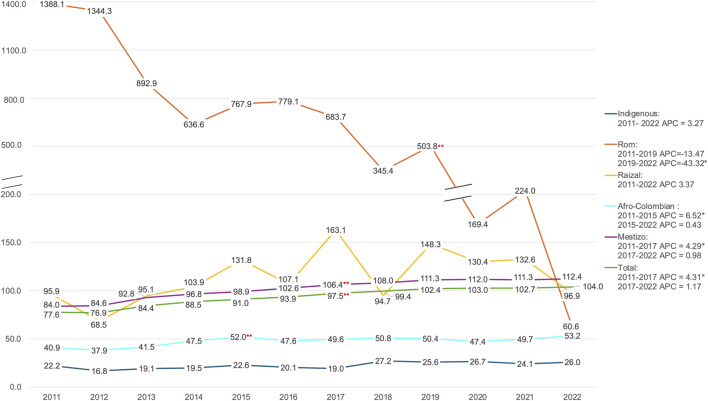
目的:研究哥伦比亚各族裔(土著、罗姆人、雷扎尔人、非裔哥伦比亚人和梅蒂索人)的癌症死亡率,并评估2011年至2022年的趋势。方法:采用来自死亡证明的国家生命统计数据和哥伦比亚人口普查数据。粗死亡率和直接年龄标准化死亡率按研究期间的种族、年份、性别和癌症类型确定,并进行联合点分析以检查趋势。结果:梅斯蒂索人的年龄标准化癌症死亡率(每10万人60.1人)低于罗姆人和雷扎莱斯人(每10万人557.3人和77.7人),高于非裔哥伦比亚人和土著(每10万人37.2人和20.0人)。哥伦比亚45岁以下的土著居民死于癌症的比例高于梅斯蒂索人(18.7% vs. 9.7%, p值=)。结论:哥伦比亚少数民族癌症死亡率的差异要求调查罗姆人和Raizal人的癌症病因和获得医疗服务的情况。
Cancer Mortality by Ethnicity in Colombia Between 2011 and 2022: A Population-Based Study.
Objectives: To examine cancer mortality rates in Colombia by ethnic groups (Indigenous, Rom, Raizal, Afro-Colombian, and Mestizo) and assess trends from 2011 to 2022.
Methods: National vital statistics from death certificates and the Colombian census data were used. Crude and direct age-standardized mortality rates were determined by ethnicity for the study period, by year, sex, and cancer type and Joinpoint analysis was conducted to examine trends.
Results: Age-standardized cancer mortality of Mestizos (60.1 per 100,000 population) was lower than in Rom and Raizales (557.3 and 77.7 per 100,000), and higher than for Afro-Colombians and Indigenous (37.2 and 20.0 per 100,000). Indigenous people in Colombia had greater proportions of individuals under 45 dying of cancer than Mestizos (18.7% vs. 9.7%, p-value = <0.01). Compared to the Mestizo population, Raizales and Afro-Colombians experienced disproportionately higher age-standardized mortality rates due to prostate cancer (26.6/100,000 and 8.6/100,000 vs. 8.1/100,000), and for Raizales and Rom breast cancer (14.0/100,000 and 103.2/100,000 vs. 9.1/100,000).
Conclusion: The disparities in cancer mortality in ethnic minorities in Colombia call for investigating cancer etiology and access to care among the Rom and the Raizal populations.
期刊介绍:
The International Journal of Public Health publishes scientific articles relevant to global public health, from different countries and cultures, and assembles them into issues that raise awareness and understanding of public health problems and solutions. The Journal welcomes submissions of original research, critical and relevant reviews, methodological papers and manuscripts that emphasize theoretical content. IJPH sometimes publishes commentaries and opinions. Special issues highlight key areas of current research. The Editorial Board''s mission is to provide a thoughtful forum for contemporary issues and challenges in global public health research and practice.






 京公网安备 11010802042870号
京ICP备2023020795号-1
京公网安备 11010802042870号
京ICP备2023020795号-1

 分享
分享
 求助内容:
求助内容: 应助结果提醒方式:
 扫码关注我们
