Edoardo Mortato, Anna Paola De Caro, Luca Schinzari, Sonia Maniglio, Carmelo Laface, Gerardo Cazzato, Caterina Foti, Francesca Ambrogio
{"title":"abemaciclib在HR+/HER2-乳腺癌患者中的诱导地衣样皮炎","authors":"Edoardo Mortato, Anna Paola De Caro, Luca Schinzari, Sonia Maniglio, Carmelo Laface, Gerardo Cazzato, Caterina Foti, Francesca Ambrogio","doi":"10.4081/dr.2024.10144","DOIUrl":null,"url":null,"abstract":"<p><p>Cyclin-dependent kinase (CDK) 4/6 inhibitors, such as palbociclib, ribociclib, and abemaciclib, are widely used in combination with endocrine therapy for the treatment of hormone receptor-positive (HR+) and human epidermal growth factor receptor 2-negative (HER2-) breast cancer. Despite their efficacy, these drugs are associated with a range of adverse events (AEs), including dermatologic toxicities. This case report presents a rare instance of lichenoid dermatitis in a 48-year-old woman following treatment with abemaciclib. The patient developed erythematous, edematous plaques and papules on her hands and forearms, which resolved after discontinuation of the drug and treatment with topical corticosteroids. This report highlights the need for awareness of cutaneous side effects associated with CDK4/6 inhibitors, particularly abemaciclib.</p>","PeriodicalId":11049,"journal":{"name":"Dermatology Reports","volume":" ","pages":""},"PeriodicalIF":1.3000,"publicationDate":"2025-05-23","publicationTypes":"Journal Article","fieldsOfStudy":null,"isOpenAccess":false,"openAccessPdf":"https://www.ncbi.nlm.nih.gov/pmc/articles/PMC12264715/pdf/","citationCount":"0","resultStr":"{\"title\":\"Lichenoid dermatitis induced by abemaciclib in a patient with HR+/HER2- breast cancer.\",\"authors\":\"Edoardo Mortato, Anna Paola De Caro, Luca Schinzari, Sonia Maniglio, Carmelo Laface, Gerardo Cazzato, Caterina Foti, Francesca Ambrogio\",\"doi\":\"10.4081/dr.2024.10144\",\"DOIUrl\":null,\"url\":null,\"abstract\":\"<p><p>Cyclin-dependent kinase (CDK) 4/6 inhibitors, such as palbociclib, ribociclib, and abemaciclib, are widely used in combination with endocrine therapy for the treatment of hormone receptor-positive (HR+) and human epidermal growth factor receptor 2-negative (HER2-) breast cancer. Despite their efficacy, these drugs are associated with a range of adverse events (AEs), including dermatologic toxicities. This case report presents a rare instance of lichenoid dermatitis in a 48-year-old woman following treatment with abemaciclib. The patient developed erythematous, edematous plaques and papules on her hands and forearms, which resolved after discontinuation of the drug and treatment with topical corticosteroids. This report highlights the need for awareness of cutaneous side effects associated with CDK4/6 inhibitors, particularly abemaciclib.</p>\",\"PeriodicalId\":11049,\"journal\":{\"name\":\"Dermatology Reports\",\"volume\":\" \",\"pages\":\"\"},\"PeriodicalIF\":1.3000,\"publicationDate\":\"2025-05-23\",\"publicationTypes\":\"Journal Article\",\"fieldsOfStudy\":null,\"isOpenAccess\":false,\"openAccessPdf\":\"https://www.ncbi.nlm.nih.gov/pmc/articles/PMC12264715/pdf/\",\"citationCount\":\"0\",\"resultStr\":null,\"platform\":\"Semanticscholar\",\"paperid\":null,\"PeriodicalName\":\"Dermatology Reports\",\"FirstCategoryId\":\"1085\",\"ListUrlMain\":\"https://doi.org/10.4081/dr.2024.10144\",\"RegionNum\":0,\"RegionCategory\":null,\"ArticlePicture\":[],\"TitleCN\":null,\"AbstractTextCN\":null,\"PMCID\":null,\"EPubDate\":\"2024/11/19 0:00:00\",\"PubModel\":\"Epub\",\"JCR\":\"Q2\",\"JCRName\":\"DERMATOLOGY\",\"Score\":null,\"Total\":0}","platform":"Semanticscholar","paperid":null,"PeriodicalName":"Dermatology Reports","FirstCategoryId":"1085","ListUrlMain":"https://doi.org/10.4081/dr.2024.10144","RegionNum":0,"RegionCategory":null,"ArticlePicture":[],"TitleCN":null,"AbstractTextCN":null,"PMCID":null,"EPubDate":"2024/11/19 0:00:00","PubModel":"Epub","JCR":"Q2","JCRName":"DERMATOLOGY","Score":null,"Total":0}
Lichenoid dermatitis induced by abemaciclib in a patient with HR+/HER2- breast cancer.
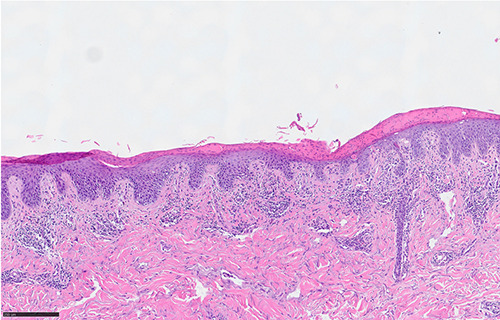
Cyclin-dependent kinase (CDK) 4/6 inhibitors, such as palbociclib, ribociclib, and abemaciclib, are widely used in combination with endocrine therapy for the treatment of hormone receptor-positive (HR+) and human epidermal growth factor receptor 2-negative (HER2-) breast cancer. Despite their efficacy, these drugs are associated with a range of adverse events (AEs), including dermatologic toxicities. This case report presents a rare instance of lichenoid dermatitis in a 48-year-old woman following treatment with abemaciclib. The patient developed erythematous, edematous plaques and papules on her hands and forearms, which resolved after discontinuation of the drug and treatment with topical corticosteroids. This report highlights the need for awareness of cutaneous side effects associated with CDK4/6 inhibitors, particularly abemaciclib.






 京公网安备 11010802042870号
京ICP备2023020795号-1
京公网安备 11010802042870号
京ICP备2023020795号-1

 分享
分享
 求助内容:
求助内容: 应助结果提醒方式:
 扫码关注我们
