{"title":"含缩醛结构的生物基聚苯并恶嗪:粘合、再粘合和降解性能","authors":"Renzhi Xu, Xin Lu, Zhong Xin","doi":"10.1016/j.polymer.2025.128180","DOIUrl":null,"url":null,"abstract":"<div><div>A degradable biobased polybenzoxazine with strong adhesion property was fabricated through incorporating of acetal structures. A main-chain type benzoxazine precursor (DVEA-dad) was prepared from a diacetal derived from vanillin and erythritol, 1,10-diaminodecane and paraformaldehyde. The structure and curing behavior of DVEA-dad were investigated in detail. The cured polybenzoxazine (PDVEA-dad) possessed a glass transition temperature (<em>T</em><sub>g</sub>) of 154 °C according to the result of dynamic mechanical analysis (DMA). When utilized as adhesives for metal sheets, PDVEA-dad exhibited high lap shear strength up to 9.4 ± 0.9 MPa for steel sheets. The dynamic exchange of acetal bonds enabled PDVEA-dad to have rebonding and reprocessing properties. Additionally, the results of chemical degradation experiments revealed that PDVEA-dad could be degraded completely under acidic conditions through the cleavage of acetal bonds. This work provided an effective solution to promote the development of biobased polybenzoxazine adhesives.</div></div>","PeriodicalId":405,"journal":{"name":"Polymer","volume":"323 ","pages":"Article 128180"},"PeriodicalIF":4.5000,"publicationDate":"2025-04-10","publicationTypes":"Journal Article","fieldsOfStudy":null,"isOpenAccess":false,"openAccessPdf":"","citationCount":"0","resultStr":"{\"title\":\"Biobased polybenzoxazine containing acetal structures: Adhesion, rebonding, and degradation properties\",\"authors\":\"Renzhi Xu, Xin Lu, Zhong Xin\",\"doi\":\"10.1016/j.polymer.2025.128180\",\"DOIUrl\":null,\"url\":null,\"abstract\":\"<div><div>A degradable biobased polybenzoxazine with strong adhesion property was fabricated through incorporating of acetal structures. A main-chain type benzoxazine precursor (DVEA-dad) was prepared from a diacetal derived from vanillin and erythritol, 1,10-diaminodecane and paraformaldehyde. The structure and curing behavior of DVEA-dad were investigated in detail. The cured polybenzoxazine (PDVEA-dad) possessed a glass transition temperature (<em>T</em><sub>g</sub>) of 154 °C according to the result of dynamic mechanical analysis (DMA). When utilized as adhesives for metal sheets, PDVEA-dad exhibited high lap shear strength up to 9.4 ± 0.9 MPa for steel sheets. The dynamic exchange of acetal bonds enabled PDVEA-dad to have rebonding and reprocessing properties. Additionally, the results of chemical degradation experiments revealed that PDVEA-dad could be degraded completely under acidic conditions through the cleavage of acetal bonds. This work provided an effective solution to promote the development of biobased polybenzoxazine adhesives.</div></div>\",\"PeriodicalId\":405,\"journal\":{\"name\":\"Polymer\",\"volume\":\"323 \",\"pages\":\"Article 128180\"},\"PeriodicalIF\":4.5000,\"publicationDate\":\"2025-04-10\",\"publicationTypes\":\"Journal Article\",\"fieldsOfStudy\":null,\"isOpenAccess\":false,\"openAccessPdf\":\"\",\"citationCount\":\"0\",\"resultStr\":null,\"platform\":\"Semanticscholar\",\"paperid\":null,\"PeriodicalName\":\"Polymer\",\"FirstCategoryId\":\"92\",\"ListUrlMain\":\"https://www.sciencedirect.com/science/article/pii/S0032386125001661\",\"RegionNum\":2,\"RegionCategory\":\"化学\",\"ArticlePicture\":[],\"TitleCN\":null,\"AbstractTextCN\":null,\"PMCID\":null,\"EPubDate\":\"2025/2/19 0:00:00\",\"PubModel\":\"Epub\",\"JCR\":\"Q2\",\"JCRName\":\"POLYMER SCIENCE\",\"Score\":null,\"Total\":0}","platform":"Semanticscholar","paperid":null,"PeriodicalName":"Polymer","FirstCategoryId":"92","ListUrlMain":"https://www.sciencedirect.com/science/article/pii/S0032386125001661","RegionNum":2,"RegionCategory":"化学","ArticlePicture":[],"TitleCN":null,"AbstractTextCN":null,"PMCID":null,"EPubDate":"2025/2/19 0:00:00","PubModel":"Epub","JCR":"Q2","JCRName":"POLYMER SCIENCE","Score":null,"Total":0}
Biobased polybenzoxazine containing acetal structures: Adhesion, rebonding, and degradation properties
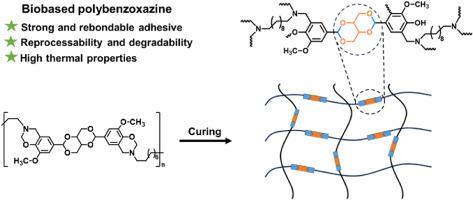
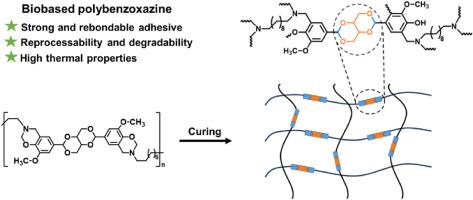
A degradable biobased polybenzoxazine with strong adhesion property was fabricated through incorporating of acetal structures. A main-chain type benzoxazine precursor (DVEA-dad) was prepared from a diacetal derived from vanillin and erythritol, 1,10-diaminodecane and paraformaldehyde. The structure and curing behavior of DVEA-dad were investigated in detail. The cured polybenzoxazine (PDVEA-dad) possessed a glass transition temperature (Tg) of 154 °C according to the result of dynamic mechanical analysis (DMA). When utilized as adhesives for metal sheets, PDVEA-dad exhibited high lap shear strength up to 9.4 ± 0.9 MPa for steel sheets. The dynamic exchange of acetal bonds enabled PDVEA-dad to have rebonding and reprocessing properties. Additionally, the results of chemical degradation experiments revealed that PDVEA-dad could be degraded completely under acidic conditions through the cleavage of acetal bonds. This work provided an effective solution to promote the development of biobased polybenzoxazine adhesives.
期刊介绍:
Polymer is an interdisciplinary journal dedicated to publishing innovative and significant advances in Polymer Physics, Chemistry and Technology. We welcome submissions on polymer hybrids, nanocomposites, characterisation and self-assembly. Polymer also publishes work on the technological application of polymers in energy and optoelectronics.
The main scope is covered but not limited to the following core areas:
Polymer Materials
Nanocomposites and hybrid nanomaterials
Polymer blends, films, fibres, networks and porous materials
Physical Characterization
Characterisation, modelling and simulation* of molecular and materials properties in bulk, solution, and thin films
Polymer Engineering
Advanced multiscale processing methods
Polymer Synthesis, Modification and Self-assembly
Including designer polymer architectures, mechanisms and kinetics, and supramolecular polymerization
Technological Applications
Polymers for energy generation and storage
Polymer membranes for separation technology
Polymers for opto- and microelectronics.




 京公网安备 11010802042870号
京ICP备2023020795号-1
京公网安备 11010802042870号
京ICP备2023020795号-1

 分享
分享
 求助内容:
求助内容: 应助结果提醒方式:
 扫码关注我们
