{"title":"基于资源回收和生命周期评价的农工废弃物联合生产生物表面活性剂和脂肪酶的循环经济改造策略综述","authors":"Roshan Jaiswal , Padmanaban Velayudhaperumal Chellam , Rangabhashiyam Selvasembian","doi":"10.1016/j.biombioe.2025.107733","DOIUrl":null,"url":null,"abstract":"<div><div>In recent decades, biosurfactants have gained a variety of applications in the agro-industrial and environmental sectors. Advances in microbial bioprocessing can address global demand for biosurfactants by intensifying processes on co-production with lipases, enhancing their applications in agro-industrial and environmental sectors. Key challenges in the co-production of lipases and biosurfactants include inefficiencies in resource utilization, recycling, market value retention and environmental impacts. Waste oil cakes from food processing, ayurvedic and petrochemical industries can be used as substrates for lipases and biosurfactants, promoting resource recovery and the circular economy. Though this strategy increases the production rate and the economy associated with this, the key bottlenecks are the stability of the products, understanding the co-metabolism, simultaneous process intensification methods, scaling up, and its end application. This review explores the potential of the circular economy principles, including waste reduction, resource recovery, and resource conservation, to co-produce lipases and biosurfactants. The Life Cycle Assessment (LCA) is discussed in this review to incorporate environmental sustainability in the cumulative production system for lipases and biosurfactants. Adopting a circular economy is beneficial for achieving a balance between economic growth and environmental sustainability in bioprocessing.</div></div>","PeriodicalId":253,"journal":{"name":"Biomass & Bioenergy","volume":"196 ","pages":"Article 107733"},"PeriodicalIF":5.8000,"publicationDate":"2025-02-21","publicationTypes":"Journal Article","fieldsOfStudy":null,"isOpenAccess":false,"openAccessPdf":"","citationCount":"0","resultStr":"{\"title\":\"Critical review on revamping circular economy strategies for the co-production of biosurfactants and lipase from agro-industrial wastes through resource recovery and life cycle assessment\",\"authors\":\"Roshan Jaiswal , Padmanaban Velayudhaperumal Chellam , Rangabhashiyam Selvasembian\",\"doi\":\"10.1016/j.biombioe.2025.107733\",\"DOIUrl\":null,\"url\":null,\"abstract\":\"<div><div>In recent decades, biosurfactants have gained a variety of applications in the agro-industrial and environmental sectors. Advances in microbial bioprocessing can address global demand for biosurfactants by intensifying processes on co-production with lipases, enhancing their applications in agro-industrial and environmental sectors. Key challenges in the co-production of lipases and biosurfactants include inefficiencies in resource utilization, recycling, market value retention and environmental impacts. Waste oil cakes from food processing, ayurvedic and petrochemical industries can be used as substrates for lipases and biosurfactants, promoting resource recovery and the circular economy. Though this strategy increases the production rate and the economy associated with this, the key bottlenecks are the stability of the products, understanding the co-metabolism, simultaneous process intensification methods, scaling up, and its end application. This review explores the potential of the circular economy principles, including waste reduction, resource recovery, and resource conservation, to co-produce lipases and biosurfactants. The Life Cycle Assessment (LCA) is discussed in this review to incorporate environmental sustainability in the cumulative production system for lipases and biosurfactants. Adopting a circular economy is beneficial for achieving a balance between economic growth and environmental sustainability in bioprocessing.</div></div>\",\"PeriodicalId\":253,\"journal\":{\"name\":\"Biomass & Bioenergy\",\"volume\":\"196 \",\"pages\":\"Article 107733\"},\"PeriodicalIF\":5.8000,\"publicationDate\":\"2025-02-21\",\"publicationTypes\":\"Journal Article\",\"fieldsOfStudy\":null,\"isOpenAccess\":false,\"openAccessPdf\":\"\",\"citationCount\":\"0\",\"resultStr\":null,\"platform\":\"Semanticscholar\",\"paperid\":null,\"PeriodicalName\":\"Biomass & Bioenergy\",\"FirstCategoryId\":\"5\",\"ListUrlMain\":\"https://www.sciencedirect.com/science/article/pii/S0961953425001448\",\"RegionNum\":2,\"RegionCategory\":\"生物学\",\"ArticlePicture\":[],\"TitleCN\":null,\"AbstractTextCN\":null,\"PMCID\":null,\"EPubDate\":\"\",\"PubModel\":\"\",\"JCR\":\"Q1\",\"JCRName\":\"AGRICULTURAL ENGINEERING\",\"Score\":null,\"Total\":0}","platform":"Semanticscholar","paperid":null,"PeriodicalName":"Biomass & Bioenergy","FirstCategoryId":"5","ListUrlMain":"https://www.sciencedirect.com/science/article/pii/S0961953425001448","RegionNum":2,"RegionCategory":"生物学","ArticlePicture":[],"TitleCN":null,"AbstractTextCN":null,"PMCID":null,"EPubDate":"","PubModel":"","JCR":"Q1","JCRName":"AGRICULTURAL ENGINEERING","Score":null,"Total":0}
Critical review on revamping circular economy strategies for the co-production of biosurfactants and lipase from agro-industrial wastes through resource recovery and life cycle assessment
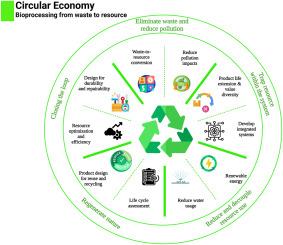
In recent decades, biosurfactants have gained a variety of applications in the agro-industrial and environmental sectors. Advances in microbial bioprocessing can address global demand for biosurfactants by intensifying processes on co-production with lipases, enhancing their applications in agro-industrial and environmental sectors. Key challenges in the co-production of lipases and biosurfactants include inefficiencies in resource utilization, recycling, market value retention and environmental impacts. Waste oil cakes from food processing, ayurvedic and petrochemical industries can be used as substrates for lipases and biosurfactants, promoting resource recovery and the circular economy. Though this strategy increases the production rate and the economy associated with this, the key bottlenecks are the stability of the products, understanding the co-metabolism, simultaneous process intensification methods, scaling up, and its end application. This review explores the potential of the circular economy principles, including waste reduction, resource recovery, and resource conservation, to co-produce lipases and biosurfactants. The Life Cycle Assessment (LCA) is discussed in this review to incorporate environmental sustainability in the cumulative production system for lipases and biosurfactants. Adopting a circular economy is beneficial for achieving a balance between economic growth and environmental sustainability in bioprocessing.
期刊介绍:
Biomass & Bioenergy is an international journal publishing original research papers and short communications, review articles and case studies on biological resources, chemical and biological processes, and biomass products for new renewable sources of energy and materials.
The scope of the journal extends to the environmental, management and economic aspects of biomass and bioenergy.
Key areas covered by the journal:
• Biomass: sources, energy crop production processes, genetic improvements, composition. Please note that research on these biomass subjects must be linked directly to bioenergy generation.
• Biological Residues: residues/rests from agricultural production, forestry and plantations (palm, sugar etc), processing industries, and municipal sources (MSW). Papers on the use of biomass residues through innovative processes/technological novelty and/or consideration of feedstock/system sustainability (or unsustainability) are welcomed. However waste treatment processes and pollution control or mitigation which are only tangentially related to bioenergy are not in the scope of the journal, as they are more suited to publications in the environmental arena. Papers that describe conventional waste streams (ie well described in existing literature) that do not empirically address ''new'' added value from the process are not suitable for submission to the journal.
• Bioenergy Processes: fermentations, thermochemical conversions, liquid and gaseous fuels, and petrochemical substitutes
• Bioenergy Utilization: direct combustion, gasification, electricity production, chemical processes, and by-product remediation
• Biomass and the Environment: carbon cycle, the net energy efficiency of bioenergy systems, assessment of sustainability, and biodiversity issues.



 京公网安备 11010802042870号
京ICP备2023020795号-1
京公网安备 11010802042870号
京ICP备2023020795号-1

 分享
分享
 求助内容:
求助内容: 应助结果提醒方式:
 扫码关注我们
