Eitan Kugler MD, PhD, Hagop Kantarjian MD, Elias Jabbour MD, Niranjan Khaire MBBS, MD, Nicholas J. Short MD, Tapan M. Kadia MD, Fadi G. Haddad MD, Koji Sasaki MD, PhD, Rashmi Kanagal Shamanna MD, Rebecca Garris MS, Farhad Ravandi MD, Nitin Jain MD
{"title":"费城染色体阳性急性淋巴细胞白血病非移植患者的无治疗缓解率","authors":"Eitan Kugler MD, PhD, Hagop Kantarjian MD, Elias Jabbour MD, Niranjan Khaire MBBS, MD, Nicholas J. Short MD, Tapan M. Kadia MD, Fadi G. Haddad MD, Koji Sasaki MD, PhD, Rashmi Kanagal Shamanna MD, Rebecca Garris MS, Farhad Ravandi MD, Nitin Jain MD","doi":"10.1002/cncr.35773","DOIUrl":null,"url":null,"abstract":"<div>\n \n \n <section>\n \n <h3> Background</h3>\n \n <p>The BCR::ABL1 tyrosine kinase inhibitors (TKIs) have significantly improved the outcomes of patients with Philadelphia chromosome (Ph)-positive acute lymphoblastic leukemia (ALL). However, the optimal duration of TKI therapy in patients who achieve a complete molecular response (CMR; undetectable <i>BCR::ABL1</i> transcripts) and who do not undergo allogeneic stem cell transplantation (allo-SCT) remains undefined.</p>\n </section>\n \n <section>\n \n <h3> Methods</h3>\n \n <p>The authors conducted a retrospective analysis of patients with Ph-positive ALL in first complete remission who achieved a CMR and discontinued TKI therapy, most commonly due to treatment-related side effects.</p>\n </section>\n \n <section>\n \n <h3> Results</h3>\n \n <p>In total, 14 patients were identified. The regimen of hyperfractionated cyclophosphamide, vincristine, doxorubicin, and dexamethasone alternating with high-dose methotrexate and cytarabine was the primary backbone chemotherapy and was received by 12 patients (86%) combined with either imatinib (14%), dasatinib (43%), or ponatinib (29%) during induction. Two patients received blinatumomab and ponatinib. The median duration of TKI therapy was 60 months. The median CMR duration before TKI discontinuation was 46.1 months (range, 2.7–121.3 months). After a median follow-up of 42.5 months from TKI discontinuation, three patients (21%) experienced relapse (two molecular, one morphologic), whereas 11 patients (79%) maintained treatment-free remission. The median time to relapse was 6.4 months (range, 4–16 months), and two of three relapsed patients regained CMR after resuming TKI therapy. Importantly, none of the six patients with a CMR duration >48 months before TKI discontinuation relapsed.</p>\n </section>\n \n <section>\n \n <h3> Conclusions</h3>\n \n <p>The current findings suggest that TKI discontinuation may be safe for highly selected patients with Ph-positive ALL in first complete remission who maintain CMR for at least 48 months. Larger studies are needed to confirm these findings.</p>\n </section>\n </div>","PeriodicalId":138,"journal":{"name":"Cancer","volume":"131 5","pages":""},"PeriodicalIF":5.6000,"publicationDate":"2025-02-21","publicationTypes":"Journal Article","fieldsOfStudy":null,"isOpenAccess":false,"openAccessPdf":"https://onlinelibrary.wiley.com/doi/epdf/10.1002/cncr.35773","citationCount":"0","resultStr":"{\"title\":\"Treatment-free remission in nontransplanted patients with Philadelphia chromosome-positive acute lymphoblastic leukemia\",\"authors\":\"Eitan Kugler MD, PhD, Hagop Kantarjian MD, Elias Jabbour MD, Niranjan Khaire MBBS, MD, Nicholas J. Short MD, Tapan M. Kadia MD, Fadi G. Haddad MD, Koji Sasaki MD, PhD, Rashmi Kanagal Shamanna MD, Rebecca Garris MS, Farhad Ravandi MD, Nitin Jain MD\",\"doi\":\"10.1002/cncr.35773\",\"DOIUrl\":null,\"url\":null,\"abstract\":\"<div>\\n \\n \\n <section>\\n \\n <h3> Background</h3>\\n \\n <p>The BCR::ABL1 tyrosine kinase inhibitors (TKIs) have significantly improved the outcomes of patients with Philadelphia chromosome (Ph)-positive acute lymphoblastic leukemia (ALL). However, the optimal duration of TKI therapy in patients who achieve a complete molecular response (CMR; undetectable <i>BCR::ABL1</i> transcripts) and who do not undergo allogeneic stem cell transplantation (allo-SCT) remains undefined.</p>\\n </section>\\n \\n <section>\\n \\n <h3> Methods</h3>\\n \\n <p>The authors conducted a retrospective analysis of patients with Ph-positive ALL in first complete remission who achieved a CMR and discontinued TKI therapy, most commonly due to treatment-related side effects.</p>\\n </section>\\n \\n <section>\\n \\n <h3> Results</h3>\\n \\n <p>In total, 14 patients were identified. The regimen of hyperfractionated cyclophosphamide, vincristine, doxorubicin, and dexamethasone alternating with high-dose methotrexate and cytarabine was the primary backbone chemotherapy and was received by 12 patients (86%) combined with either imatinib (14%), dasatinib (43%), or ponatinib (29%) during induction. Two patients received blinatumomab and ponatinib. The median duration of TKI therapy was 60 months. The median CMR duration before TKI discontinuation was 46.1 months (range, 2.7–121.3 months). After a median follow-up of 42.5 months from TKI discontinuation, three patients (21%) experienced relapse (two molecular, one morphologic), whereas 11 patients (79%) maintained treatment-free remission. The median time to relapse was 6.4 months (range, 4–16 months), and two of three relapsed patients regained CMR after resuming TKI therapy. Importantly, none of the six patients with a CMR duration >48 months before TKI discontinuation relapsed.</p>\\n </section>\\n \\n <section>\\n \\n <h3> Conclusions</h3>\\n \\n <p>The current findings suggest that TKI discontinuation may be safe for highly selected patients with Ph-positive ALL in first complete remission who maintain CMR for at least 48 months. Larger studies are needed to confirm these findings.</p>\\n </section>\\n </div>\",\"PeriodicalId\":138,\"journal\":{\"name\":\"Cancer\",\"volume\":\"131 5\",\"pages\":\"\"},\"PeriodicalIF\":5.6000,\"publicationDate\":\"2025-02-21\",\"publicationTypes\":\"Journal Article\",\"fieldsOfStudy\":null,\"isOpenAccess\":false,\"openAccessPdf\":\"https://onlinelibrary.wiley.com/doi/epdf/10.1002/cncr.35773\",\"citationCount\":\"0\",\"resultStr\":null,\"platform\":\"Semanticscholar\",\"paperid\":null,\"PeriodicalName\":\"Cancer\",\"FirstCategoryId\":\"3\",\"ListUrlMain\":\"https://onlinelibrary.wiley.com/doi/10.1002/cncr.35773\",\"RegionNum\":2,\"RegionCategory\":\"医学\",\"ArticlePicture\":[],\"TitleCN\":null,\"AbstractTextCN\":null,\"PMCID\":null,\"EPubDate\":\"\",\"PubModel\":\"\",\"JCR\":\"Q1\",\"JCRName\":\"ONCOLOGY\",\"Score\":null,\"Total\":0}","platform":"Semanticscholar","paperid":null,"PeriodicalName":"Cancer","FirstCategoryId":"3","ListUrlMain":"https://onlinelibrary.wiley.com/doi/10.1002/cncr.35773","RegionNum":2,"RegionCategory":"医学","ArticlePicture":[],"TitleCN":null,"AbstractTextCN":null,"PMCID":null,"EPubDate":"","PubModel":"","JCR":"Q1","JCRName":"ONCOLOGY","Score":null,"Total":0}
Treatment-free remission in nontransplanted patients with Philadelphia chromosome-positive acute lymphoblastic leukemia
Background
The BCR::ABL1 tyrosine kinase inhibitors (TKIs) have significantly improved the outcomes of patients with Philadelphia chromosome (Ph)-positive acute lymphoblastic leukemia (ALL). However, the optimal duration of TKI therapy in patients who achieve a complete molecular response (CMR; undetectable BCR::ABL1 transcripts) and who do not undergo allogeneic stem cell transplantation (allo-SCT) remains undefined.
Methods
The authors conducted a retrospective analysis of patients with Ph-positive ALL in first complete remission who achieved a CMR and discontinued TKI therapy, most commonly due to treatment-related side effects.
Results
In total, 14 patients were identified. The regimen of hyperfractionated cyclophosphamide, vincristine, doxorubicin, and dexamethasone alternating with high-dose methotrexate and cytarabine was the primary backbone chemotherapy and was received by 12 patients (86%) combined with either imatinib (14%), dasatinib (43%), or ponatinib (29%) during induction. Two patients received blinatumomab and ponatinib. The median duration of TKI therapy was 60 months. The median CMR duration before TKI discontinuation was 46.1 months (range, 2.7–121.3 months). After a median follow-up of 42.5 months from TKI discontinuation, three patients (21%) experienced relapse (two molecular, one morphologic), whereas 11 patients (79%) maintained treatment-free remission. The median time to relapse was 6.4 months (range, 4–16 months), and two of three relapsed patients regained CMR after resuming TKI therapy. Importantly, none of the six patients with a CMR duration >48 months before TKI discontinuation relapsed.
Conclusions
The current findings suggest that TKI discontinuation may be safe for highly selected patients with Ph-positive ALL in first complete remission who maintain CMR for at least 48 months. Larger studies are needed to confirm these findings.
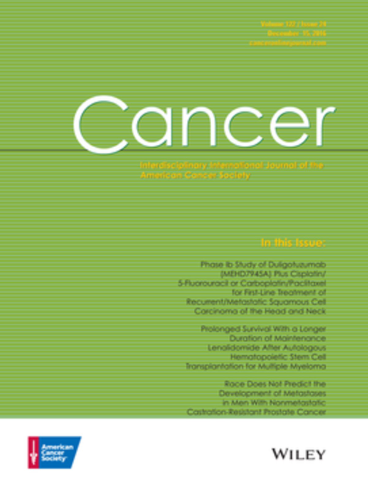
期刊介绍:
The CANCER site is a full-text, electronic implementation of CANCER, an Interdisciplinary International Journal of the American Cancer Society, and CANCER CYTOPATHOLOGY, a Journal of the American Cancer Society.
CANCER publishes interdisciplinary oncologic information according to, but not limited to, the following disease sites and disciplines: blood/bone marrow; breast disease; endocrine disorders; epidemiology; gastrointestinal tract; genitourinary disease; gynecologic oncology; head and neck disease; hepatobiliary tract; integrated medicine; lung disease; medical oncology; neuro-oncology; pathology radiation oncology; translational research





 京公网安备 11010802042870号
京ICP备2023020795号-1
京公网安备 11010802042870号
京ICP备2023020795号-1

 分享
分享
 求助内容:
求助内容: 应助结果提醒方式:
 扫码关注我们
