Fei Xie, Lifeng Wang, Song Li, Long Hu, Yanhua Wen, Xuming Li, Kun Ye, Zhimei Duan, Qi Wang, Yuanlin Guan, Ye Zhang, Qiqi Shi, Jiyong Yang, Han Xia, Lixin Xie
{"title":"大规模基因组分析揭示了插入序列在鲍曼不动杆菌抗微生物药物耐药性中的重要作用。","authors":"Fei Xie, Lifeng Wang, Song Li, Long Hu, Yanhua Wen, Xuming Li, Kun Ye, Zhimei Duan, Qi Wang, Yuanlin Guan, Ye Zhang, Qiqi Shi, Jiyong Yang, Han Xia, Lixin Xie","doi":"10.1128/mbio.02852-24","DOIUrl":null,"url":null,"abstract":"<p><p><i>Acinetobacter baumannii</i>, a prominent nosocomial pathogen renowned for its extensive resistance to antimicrobial agents, poses a significant challenge in the accurate prediction of antimicrobial resistance (AMR) from genomic data. Despite thorough researches on the molecular mechanisms of AMR, gaps remain in our understanding of key contributors. This study utilized rule-based and three machine learning models to predict AMR phenotypes, aiming to decipher key genomic factors associated with AMR. Genomes and antibiotic resistance phenotypes from 1,012 public isolates were employed for model construction and training. To validate the models, a data set comprising 164 self-collected strains underwent next-generation sequencing, nanopore long-read sequencing, and antimicrobial susceptibility testing using the broth dilution method. It was found that the presence of antibiotic resistance genes (ARGs) alone was insufficient to accurately predict AMR phenotype for the majority of antibiotics (90%, 18 out of 20) in the public data set. Conversely, it was observed that combining ARGs with insertion sequence (IS) elements significantly enhanced predictive performance. The Random Forest model was found to outperform the support vector machine (SVM), logistic regression model, and rule-based method across all 20 antibiotics, with accuracies ranging from 83.80% to 97.70%. In the validation data set, even higher accuracies were achieved, ranging from 85.63% to 99.31%. Furthermore, conserved sequence patterns between IS elements and ARGs were validated using self-collected long-read sequencing data, substantially enhancing the accuracy of AMR prediction in <i>A. baumannii</i>. This study underscores the pivotal role of IS elements in AMR.</p><p><strong>Importance: </strong>The interplay between insertion sequences (ISs) and antibiotic resistance genes (ARGs) in <i>Acinetobacter baumannii</i> contributes to resistance against specific antibiotics. Conventionally, genetic variations and ARGs have been utilized for predicting resistance phenotypes, with the potential pivotal role of IS elements largely overlooked. Our study advances this approach by integrating both rule-based and machine learning models to predict AMR in <i>A. baumannii</i>. This significantly enhances the accuracy of AMR prediction, emphasizing the pivotal function of IS elements in antibiotic resistance. Notably, we uncover a series of conserved sequence patterns linking IS elements and ARGs, which outperform ARGs alone in phenotypic prediction. Our findings are crucial for bioinformatics strategies aimed at studying and tracking AMR, offering novel insights into combating the escalating AMR challenge.</p>","PeriodicalId":18315,"journal":{"name":"mBio","volume":" ","pages":"e0285224"},"PeriodicalIF":5.4000,"publicationDate":"2025-03-12","publicationTypes":"Journal Article","fieldsOfStudy":null,"isOpenAccess":false,"openAccessPdf":"https://www.ncbi.nlm.nih.gov/pmc/articles/PMC11898611/pdf/","citationCount":"0","resultStr":"{\"title\":\"Large-scale genomic analysis reveals significant role of insertion sequences in antimicrobial resistance of <i>Acinetobacter baumannii</i>.\",\"authors\":\"Fei Xie, Lifeng Wang, Song Li, Long Hu, Yanhua Wen, Xuming Li, Kun Ye, Zhimei Duan, Qi Wang, Yuanlin Guan, Ye Zhang, Qiqi Shi, Jiyong Yang, Han Xia, Lixin Xie\",\"doi\":\"10.1128/mbio.02852-24\",\"DOIUrl\":null,\"url\":null,\"abstract\":\"<p><p><i>Acinetobacter baumannii</i>, a prominent nosocomial pathogen renowned for its extensive resistance to antimicrobial agents, poses a significant challenge in the accurate prediction of antimicrobial resistance (AMR) from genomic data. Despite thorough researches on the molecular mechanisms of AMR, gaps remain in our understanding of key contributors. This study utilized rule-based and three machine learning models to predict AMR phenotypes, aiming to decipher key genomic factors associated with AMR. Genomes and antibiotic resistance phenotypes from 1,012 public isolates were employed for model construction and training. To validate the models, a data set comprising 164 self-collected strains underwent next-generation sequencing, nanopore long-read sequencing, and antimicrobial susceptibility testing using the broth dilution method. It was found that the presence of antibiotic resistance genes (ARGs) alone was insufficient to accurately predict AMR phenotype for the majority of antibiotics (90%, 18 out of 20) in the public data set. Conversely, it was observed that combining ARGs with insertion sequence (IS) elements significantly enhanced predictive performance. The Random Forest model was found to outperform the support vector machine (SVM), logistic regression model, and rule-based method across all 20 antibiotics, with accuracies ranging from 83.80% to 97.70%. In the validation data set, even higher accuracies were achieved, ranging from 85.63% to 99.31%. Furthermore, conserved sequence patterns between IS elements and ARGs were validated using self-collected long-read sequencing data, substantially enhancing the accuracy of AMR prediction in <i>A. baumannii</i>. This study underscores the pivotal role of IS elements in AMR.</p><p><strong>Importance: </strong>The interplay between insertion sequences (ISs) and antibiotic resistance genes (ARGs) in <i>Acinetobacter baumannii</i> contributes to resistance against specific antibiotics. Conventionally, genetic variations and ARGs have been utilized for predicting resistance phenotypes, with the potential pivotal role of IS elements largely overlooked. Our study advances this approach by integrating both rule-based and machine learning models to predict AMR in <i>A. baumannii</i>. This significantly enhances the accuracy of AMR prediction, emphasizing the pivotal function of IS elements in antibiotic resistance. Notably, we uncover a series of conserved sequence patterns linking IS elements and ARGs, which outperform ARGs alone in phenotypic prediction. Our findings are crucial for bioinformatics strategies aimed at studying and tracking AMR, offering novel insights into combating the escalating AMR challenge.</p>\",\"PeriodicalId\":18315,\"journal\":{\"name\":\"mBio\",\"volume\":\" \",\"pages\":\"e0285224\"},\"PeriodicalIF\":5.4000,\"publicationDate\":\"2025-03-12\",\"publicationTypes\":\"Journal Article\",\"fieldsOfStudy\":null,\"isOpenAccess\":false,\"openAccessPdf\":\"https://www.ncbi.nlm.nih.gov/pmc/articles/PMC11898611/pdf/\",\"citationCount\":\"0\",\"resultStr\":null,\"platform\":\"Semanticscholar\",\"paperid\":null,\"PeriodicalName\":\"mBio\",\"FirstCategoryId\":\"99\",\"ListUrlMain\":\"https://doi.org/10.1128/mbio.02852-24\",\"RegionNum\":1,\"RegionCategory\":\"生物学\",\"ArticlePicture\":[],\"TitleCN\":null,\"AbstractTextCN\":null,\"PMCID\":null,\"EPubDate\":\"2025/2/20 0:00:00\",\"PubModel\":\"Epub\",\"JCR\":\"Q1\",\"JCRName\":\"MICROBIOLOGY\",\"Score\":null,\"Total\":0}","platform":"Semanticscholar","paperid":null,"PeriodicalName":"mBio","FirstCategoryId":"99","ListUrlMain":"https://doi.org/10.1128/mbio.02852-24","RegionNum":1,"RegionCategory":"生物学","ArticlePicture":[],"TitleCN":null,"AbstractTextCN":null,"PMCID":null,"EPubDate":"2025/2/20 0:00:00","PubModel":"Epub","JCR":"Q1","JCRName":"MICROBIOLOGY","Score":null,"Total":0}
Large-scale genomic analysis reveals significant role of insertion sequences in antimicrobial resistance of Acinetobacter baumannii.
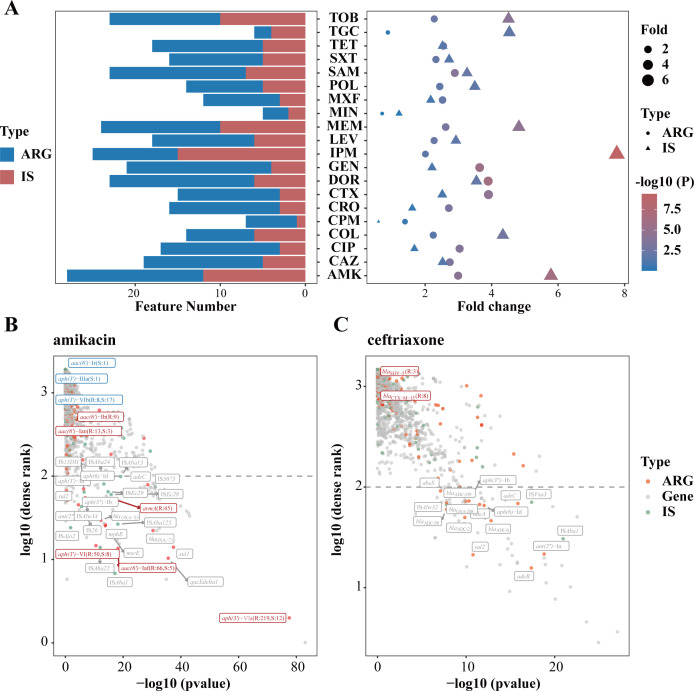
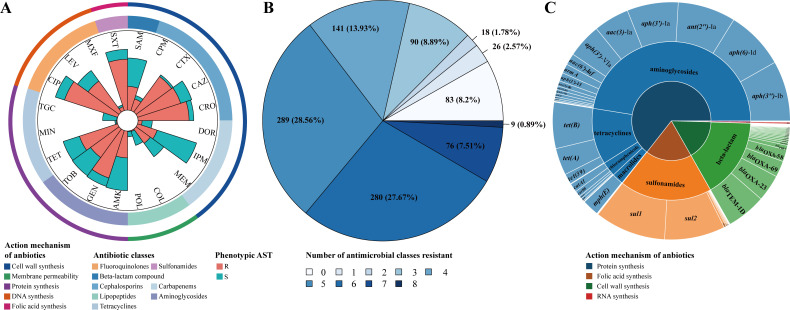
Acinetobacter baumannii, a prominent nosocomial pathogen renowned for its extensive resistance to antimicrobial agents, poses a significant challenge in the accurate prediction of antimicrobial resistance (AMR) from genomic data. Despite thorough researches on the molecular mechanisms of AMR, gaps remain in our understanding of key contributors. This study utilized rule-based and three machine learning models to predict AMR phenotypes, aiming to decipher key genomic factors associated with AMR. Genomes and antibiotic resistance phenotypes from 1,012 public isolates were employed for model construction and training. To validate the models, a data set comprising 164 self-collected strains underwent next-generation sequencing, nanopore long-read sequencing, and antimicrobial susceptibility testing using the broth dilution method. It was found that the presence of antibiotic resistance genes (ARGs) alone was insufficient to accurately predict AMR phenotype for the majority of antibiotics (90%, 18 out of 20) in the public data set. Conversely, it was observed that combining ARGs with insertion sequence (IS) elements significantly enhanced predictive performance. The Random Forest model was found to outperform the support vector machine (SVM), logistic regression model, and rule-based method across all 20 antibiotics, with accuracies ranging from 83.80% to 97.70%. In the validation data set, even higher accuracies were achieved, ranging from 85.63% to 99.31%. Furthermore, conserved sequence patterns between IS elements and ARGs were validated using self-collected long-read sequencing data, substantially enhancing the accuracy of AMR prediction in A. baumannii. This study underscores the pivotal role of IS elements in AMR.
Importance: The interplay between insertion sequences (ISs) and antibiotic resistance genes (ARGs) in Acinetobacter baumannii contributes to resistance against specific antibiotics. Conventionally, genetic variations and ARGs have been utilized for predicting resistance phenotypes, with the potential pivotal role of IS elements largely overlooked. Our study advances this approach by integrating both rule-based and machine learning models to predict AMR in A. baumannii. This significantly enhances the accuracy of AMR prediction, emphasizing the pivotal function of IS elements in antibiotic resistance. Notably, we uncover a series of conserved sequence patterns linking IS elements and ARGs, which outperform ARGs alone in phenotypic prediction. Our findings are crucial for bioinformatics strategies aimed at studying and tracking AMR, offering novel insights into combating the escalating AMR challenge.
期刊介绍:
mBio® is ASM''s first broad-scope, online-only, open access journal. mBio offers streamlined review and publication of the best research in microbiology and allied fields.





 京公网安备 11010802042870号
京ICP备2023020795号-1
京公网安备 11010802042870号
京ICP备2023020795号-1

 分享
分享
 求助内容:
求助内容: 应助结果提醒方式:
 扫码关注我们
