Grant L. Harley, Kristine L. DeLong, Marcus Lofverstrom, Carl Andy Reese, Ellen V. Bergan, Samuel J. Bentley, Kehui Xu, Kelli Moran, Karen E. King, Alicia Caporaso
{"title":"美国墨西哥湾北部一片被淹没的更新世森林的迅速衰落和死亡","authors":"Grant L. Harley, Kristine L. DeLong, Marcus Lofverstrom, Carl Andy Reese, Ellen V. Bergan, Samuel J. Bentley, Kehui Xu, Kelli Moran, Karen E. King, Alicia Caporaso","doi":"10.1038/s41612-025-00951-y","DOIUrl":null,"url":null,"abstract":"<p>The Gulf and Atlantic Coastal Plains of the southern United States are characterized by a wide continental shelf that was subaerially exposed for ca. 80,000 years during glacial-interval marine regressions and transgressions. Given their present submergence, little is known about the vegetation dynamics, particularly at annual time scales, of these formerly terrestrial sites due to erosional processes associated with marine transgressions. Here, we present an annually resolved and well-replicated 489-year tree-ring chronology from macrobotanical specimens—anatomically identified as <i>Taxodium distichum</i> (L.) Rich.—collected in situ from a recently exposed submerged forest in 18 m water depth in the northern Gulf of Mexico. This chronology not only reveals historical vegetation dynamics at annual resolutions during Marine Isotope Stages 3–5a, but it also captures a catastrophic mortality event likely connected to intense storm activity, perhaps driven by freshwater fluxes from Heinrich events. Our findings are supported by coupled climate model simulations from the last glaciation, providing new insights into the environmental history of the southeastern US coastal regions.</p>","PeriodicalId":19438,"journal":{"name":"npj Climate and Atmospheric Science","volume":"1 1","pages":""},"PeriodicalIF":8.4000,"publicationDate":"2025-02-20","publicationTypes":"Journal Article","fieldsOfStudy":null,"isOpenAccess":false,"openAccessPdf":"","citationCount":"0","resultStr":"{\"title\":\"Rapid decline and mortality of a Pleistocene-aged forest now submerged in the northern Gulf of Mexico, USA\",\"authors\":\"Grant L. Harley, Kristine L. DeLong, Marcus Lofverstrom, Carl Andy Reese, Ellen V. Bergan, Samuel J. Bentley, Kehui Xu, Kelli Moran, Karen E. King, Alicia Caporaso\",\"doi\":\"10.1038/s41612-025-00951-y\",\"DOIUrl\":null,\"url\":null,\"abstract\":\"<p>The Gulf and Atlantic Coastal Plains of the southern United States are characterized by a wide continental shelf that was subaerially exposed for ca. 80,000 years during glacial-interval marine regressions and transgressions. Given their present submergence, little is known about the vegetation dynamics, particularly at annual time scales, of these formerly terrestrial sites due to erosional processes associated with marine transgressions. Here, we present an annually resolved and well-replicated 489-year tree-ring chronology from macrobotanical specimens—anatomically identified as <i>Taxodium distichum</i> (L.) Rich.—collected in situ from a recently exposed submerged forest in 18 m water depth in the northern Gulf of Mexico. This chronology not only reveals historical vegetation dynamics at annual resolutions during Marine Isotope Stages 3–5a, but it also captures a catastrophic mortality event likely connected to intense storm activity, perhaps driven by freshwater fluxes from Heinrich events. Our findings are supported by coupled climate model simulations from the last glaciation, providing new insights into the environmental history of the southeastern US coastal regions.</p>\",\"PeriodicalId\":19438,\"journal\":{\"name\":\"npj Climate and Atmospheric Science\",\"volume\":\"1 1\",\"pages\":\"\"},\"PeriodicalIF\":8.4000,\"publicationDate\":\"2025-02-20\",\"publicationTypes\":\"Journal Article\",\"fieldsOfStudy\":null,\"isOpenAccess\":false,\"openAccessPdf\":\"\",\"citationCount\":\"0\",\"resultStr\":null,\"platform\":\"Semanticscholar\",\"paperid\":null,\"PeriodicalName\":\"npj Climate and Atmospheric Science\",\"FirstCategoryId\":\"89\",\"ListUrlMain\":\"https://doi.org/10.1038/s41612-025-00951-y\",\"RegionNum\":1,\"RegionCategory\":\"地球科学\",\"ArticlePicture\":[],\"TitleCN\":null,\"AbstractTextCN\":null,\"PMCID\":null,\"EPubDate\":\"\",\"PubModel\":\"\",\"JCR\":\"Q1\",\"JCRName\":\"METEOROLOGY & ATMOSPHERIC SCIENCES\",\"Score\":null,\"Total\":0}","platform":"Semanticscholar","paperid":null,"PeriodicalName":"npj Climate and Atmospheric Science","FirstCategoryId":"89","ListUrlMain":"https://doi.org/10.1038/s41612-025-00951-y","RegionNum":1,"RegionCategory":"地球科学","ArticlePicture":[],"TitleCN":null,"AbstractTextCN":null,"PMCID":null,"EPubDate":"","PubModel":"","JCR":"Q1","JCRName":"METEOROLOGY & ATMOSPHERIC SCIENCES","Score":null,"Total":0}
Rapid decline and mortality of a Pleistocene-aged forest now submerged in the northern Gulf of Mexico, USA
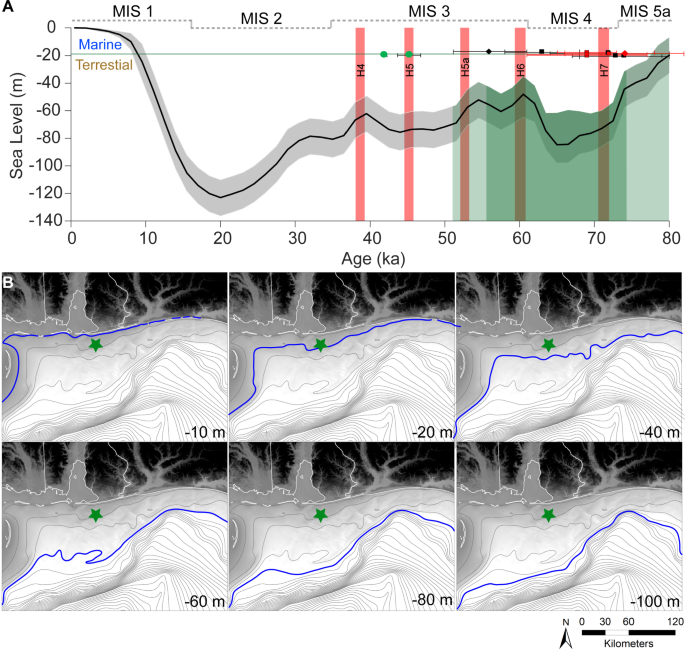
The Gulf and Atlantic Coastal Plains of the southern United States are characterized by a wide continental shelf that was subaerially exposed for ca. 80,000 years during glacial-interval marine regressions and transgressions. Given their present submergence, little is known about the vegetation dynamics, particularly at annual time scales, of these formerly terrestrial sites due to erosional processes associated with marine transgressions. Here, we present an annually resolved and well-replicated 489-year tree-ring chronology from macrobotanical specimens—anatomically identified as Taxodium distichum (L.) Rich.—collected in situ from a recently exposed submerged forest in 18 m water depth in the northern Gulf of Mexico. This chronology not only reveals historical vegetation dynamics at annual resolutions during Marine Isotope Stages 3–5a, but it also captures a catastrophic mortality event likely connected to intense storm activity, perhaps driven by freshwater fluxes from Heinrich events. Our findings are supported by coupled climate model simulations from the last glaciation, providing new insights into the environmental history of the southeastern US coastal regions.
期刊介绍:
npj Climate and Atmospheric Science is an open-access journal encompassing the relevant physical, chemical, and biological aspects of atmospheric and climate science. The journal places particular emphasis on regional studies that unveil new insights into specific localities, including examinations of local atmospheric composition, such as aerosols.
The range of topics covered by the journal includes climate dynamics, climate variability, weather and climate prediction, climate change, ocean dynamics, weather extremes, air pollution, atmospheric chemistry (including aerosols), the hydrological cycle, and atmosphere–ocean and atmosphere–land interactions. The journal welcomes studies employing a diverse array of methods, including numerical and statistical modeling, the development and application of in situ observational techniques, remote sensing, and the development or evaluation of new reanalyses.




 京公网安备 11010802042870号
京ICP备2023020795号-1
京公网安备 11010802042870号
京ICP备2023020795号-1

 分享
分享
 求助内容:
求助内容: 应助结果提醒方式:
 扫码关注我们
