Anna Lee Jones , Christian Pfrang , Felicity Hayes , Elizabeth S. Jeffers
{"title":"关于成熟反射:利用高光谱反射可以检测橡树的臭氧损伤","authors":"Anna Lee Jones , Christian Pfrang , Felicity Hayes , Elizabeth S. Jeffers","doi":"10.1016/j.ecolind.2025.113263","DOIUrl":null,"url":null,"abstract":"<div><div>At the near-surface, ozone (O<sub>3</sub>) is a toxic pollutant which has reached dangerously high concentrations across the world and is predicted to continue to rise. O<sub>3</sub> reduces the growth, productivity and resilience of trees but the extent of O<sub>3</sub> damage to forests is uncertain. To develop a high throughput method of monitoring O<sub>3</sub> damage to forests, we pioneer hyperspectral monitoring of O<sub>3</sub> damage in adult oak trees across a range of naturally occurring O<sub>3</sub> concentrations. Using a machine learning approach, we demonstrate accurate prediction of O<sub>3</sub> exposure of trees from hyperspectral leaf reflectance alone. This method could be used for forest level assessments of O<sub>3</sub> damage. Vegetation indices characterising green reflectance and red-edge track O<sub>3</sub> induced changes in leaf reflectance. Vegetation indices have the potential to scale up O<sub>3</sub> damage monitoring across spatial scales. As O<sub>3</sub> concentrations continue to rise globally, understanding the extent of O<sub>3</sub> damage to forests is crucial to effectively harness the carbon sequestration potential of forests. We demonstrate the exciting potential of spectral monitoring of O<sub>3</sub> damage in mature trees under natural conditions.</div></div>","PeriodicalId":11459,"journal":{"name":"Ecological Indicators","volume":"172 ","pages":"Article 113263"},"PeriodicalIF":7.0000,"publicationDate":"2025-03-01","publicationTypes":"Journal Article","fieldsOfStudy":null,"isOpenAccess":false,"openAccessPdf":"","citationCount":"0","resultStr":"{\"title\":\"On mature reflection: Ozone damage can be detected in oak trees by hyperspectral reflectance\",\"authors\":\"Anna Lee Jones , Christian Pfrang , Felicity Hayes , Elizabeth S. Jeffers\",\"doi\":\"10.1016/j.ecolind.2025.113263\",\"DOIUrl\":null,\"url\":null,\"abstract\":\"<div><div>At the near-surface, ozone (O<sub>3</sub>) is a toxic pollutant which has reached dangerously high concentrations across the world and is predicted to continue to rise. O<sub>3</sub> reduces the growth, productivity and resilience of trees but the extent of O<sub>3</sub> damage to forests is uncertain. To develop a high throughput method of monitoring O<sub>3</sub> damage to forests, we pioneer hyperspectral monitoring of O<sub>3</sub> damage in adult oak trees across a range of naturally occurring O<sub>3</sub> concentrations. Using a machine learning approach, we demonstrate accurate prediction of O<sub>3</sub> exposure of trees from hyperspectral leaf reflectance alone. This method could be used for forest level assessments of O<sub>3</sub> damage. Vegetation indices characterising green reflectance and red-edge track O<sub>3</sub> induced changes in leaf reflectance. Vegetation indices have the potential to scale up O<sub>3</sub> damage monitoring across spatial scales. As O<sub>3</sub> concentrations continue to rise globally, understanding the extent of O<sub>3</sub> damage to forests is crucial to effectively harness the carbon sequestration potential of forests. We demonstrate the exciting potential of spectral monitoring of O<sub>3</sub> damage in mature trees under natural conditions.</div></div>\",\"PeriodicalId\":11459,\"journal\":{\"name\":\"Ecological Indicators\",\"volume\":\"172 \",\"pages\":\"Article 113263\"},\"PeriodicalIF\":7.0000,\"publicationDate\":\"2025-03-01\",\"publicationTypes\":\"Journal Article\",\"fieldsOfStudy\":null,\"isOpenAccess\":false,\"openAccessPdf\":\"\",\"citationCount\":\"0\",\"resultStr\":null,\"platform\":\"Semanticscholar\",\"paperid\":null,\"PeriodicalName\":\"Ecological Indicators\",\"FirstCategoryId\":\"93\",\"ListUrlMain\":\"https://www.sciencedirect.com/science/article/pii/S1470160X2500192X\",\"RegionNum\":2,\"RegionCategory\":\"环境科学与生态学\",\"ArticlePicture\":[],\"TitleCN\":null,\"AbstractTextCN\":null,\"PMCID\":null,\"EPubDate\":\"2025/2/22 0:00:00\",\"PubModel\":\"Epub\",\"JCR\":\"Q1\",\"JCRName\":\"ENVIRONMENTAL SCIENCES\",\"Score\":null,\"Total\":0}","platform":"Semanticscholar","paperid":null,"PeriodicalName":"Ecological Indicators","FirstCategoryId":"93","ListUrlMain":"https://www.sciencedirect.com/science/article/pii/S1470160X2500192X","RegionNum":2,"RegionCategory":"环境科学与生态学","ArticlePicture":[],"TitleCN":null,"AbstractTextCN":null,"PMCID":null,"EPubDate":"2025/2/22 0:00:00","PubModel":"Epub","JCR":"Q1","JCRName":"ENVIRONMENTAL SCIENCES","Score":null,"Total":0}
On mature reflection: Ozone damage can be detected in oak trees by hyperspectral reflectance
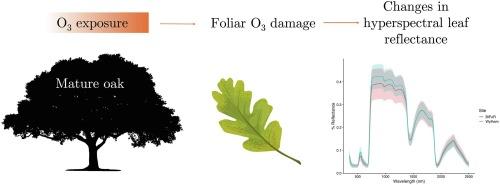
At the near-surface, ozone (O3) is a toxic pollutant which has reached dangerously high concentrations across the world and is predicted to continue to rise. O3 reduces the growth, productivity and resilience of trees but the extent of O3 damage to forests is uncertain. To develop a high throughput method of monitoring O3 damage to forests, we pioneer hyperspectral monitoring of O3 damage in adult oak trees across a range of naturally occurring O3 concentrations. Using a machine learning approach, we demonstrate accurate prediction of O3 exposure of trees from hyperspectral leaf reflectance alone. This method could be used for forest level assessments of O3 damage. Vegetation indices characterising green reflectance and red-edge track O3 induced changes in leaf reflectance. Vegetation indices have the potential to scale up O3 damage monitoring across spatial scales. As O3 concentrations continue to rise globally, understanding the extent of O3 damage to forests is crucial to effectively harness the carbon sequestration potential of forests. We demonstrate the exciting potential of spectral monitoring of O3 damage in mature trees under natural conditions.
期刊介绍:
The ultimate aim of Ecological Indicators is to integrate the monitoring and assessment of ecological and environmental indicators with management practices. The journal provides a forum for the discussion of the applied scientific development and review of traditional indicator approaches as well as for theoretical, modelling and quantitative applications such as index development. Research into the following areas will be published.
• All aspects of ecological and environmental indicators and indices.
• New indicators, and new approaches and methods for indicator development, testing and use.
• Development and modelling of indices, e.g. application of indicator suites across multiple scales and resources.
• Analysis and research of resource, system- and scale-specific indicators.
• Methods for integration of social and other valuation metrics for the production of scientifically rigorous and politically-relevant assessments using indicator-based monitoring and assessment programs.
• How research indicators can be transformed into direct application for management purposes.
• Broader assessment objectives and methods, e.g. biodiversity, biological integrity, and sustainability, through the use of indicators.
• Resource-specific indicators such as landscape, agroecosystems, forests, wetlands, etc.




 京公网安备 11010802042870号
京ICP备2023020795号-1
京公网安备 11010802042870号
京ICP备2023020795号-1

 分享
分享
 求助内容:
求助内容: 应助结果提醒方式:
 扫码关注我们
