{"title":"肺移植患者中罕见嗜铬细胞瘤的遗传特征分析。","authors":"Stéfanie Parisien-La Salle, Florence Perreault, Gilles Corbeil, Julie Morisset, Charles Poirier, Catherine Beauregard, Agnès Räkel, Marjorie Labrecque, Martine Tétreault, Christian Cohade, Pasquale Ferraro, Isabelle Bourdeau","doi":"10.3389/fendo.2024.1481906","DOIUrl":null,"url":null,"abstract":"<p><strong>Background: </strong>Pheochromocytomas (PCCs) and paragangliomas (PGLs) (PPGLs) are rare tumours arising from the chromaffin cells. There is evidence suggesting a link between hypoxemia and PPGLs. Chronic hypoxia can lead to gain of function somatic variants in the <i>EPAS1</i> gene that encodes for hypoxia-inducible factor 2-alpha (HIF-2α), involved in PPGL tumorigenesis.</p><p><strong>Objective: </strong>To describe a rare case of PCC in a pulmonary transplant patient and characterize the tumour's genetic background.</p><p><strong>Clinical case: </strong>A 47 year-old man underwent a lung transplant for chronic obstructive pulmonary disease associated with alpha-1 antitrypsin deficiency. He required home oxygen therapy for 3 years prior to transplant. Nineteen years after transplant, a CT-scan revealed a 5.8 cm x 3.9 cm heterogeneous right adrenal mass (HU of 7). Initial assessments indicated elevated 24-hour urinary catecholamines. Consequently, the patient underwent laparoscopic right adrenalectomy, confirming the PCC diagnosis.</p><p><strong>Genetic studies: </strong>1) Germline PPGL multigene panel: After consent, the patient underwent a panel of 14 susceptibility genes for PPGLs that revealed no pathogenic variants. 2) Somatic genetic analysis for <i>EPAS1</i> gene found no variants. However, tumoral RNA sequencing unveiled activation of the HIF pathway.</p><p><strong>Conclusion: </strong>We describe a rare case of PCC in a pulmonary transplant recipient, with genetic analyses showing no germline pathogenic variants and no somatic variants in the <i>EPAS1</i> gene. RNA sequencing highlighted HIF pathway activation and angiogenic implications. Further research is necessary to elucidate the genetic and molecular mechanisms underlying PCCs in this specific case and determine its link with hypoxemia in the context of pulmonary disease.</p>","PeriodicalId":12447,"journal":{"name":"Frontiers in Endocrinology","volume":"15 ","pages":"1481906"},"PeriodicalIF":4.6000,"publicationDate":"2025-02-06","publicationTypes":"Journal Article","fieldsOfStudy":null,"isOpenAccess":false,"openAccessPdf":"https://www.ncbi.nlm.nih.gov/pmc/articles/PMC11839448/pdf/","citationCount":"0","resultStr":"{\"title\":\"Genetic characterization of a rare case of pheochromocytoma in a pulmonary transplant patient.\",\"authors\":\"Stéfanie Parisien-La Salle, Florence Perreault, Gilles Corbeil, Julie Morisset, Charles Poirier, Catherine Beauregard, Agnès Räkel, Marjorie Labrecque, Martine Tétreault, Christian Cohade, Pasquale Ferraro, Isabelle Bourdeau\",\"doi\":\"10.3389/fendo.2024.1481906\",\"DOIUrl\":null,\"url\":null,\"abstract\":\"<p><strong>Background: </strong>Pheochromocytomas (PCCs) and paragangliomas (PGLs) (PPGLs) are rare tumours arising from the chromaffin cells. There is evidence suggesting a link between hypoxemia and PPGLs. Chronic hypoxia can lead to gain of function somatic variants in the <i>EPAS1</i> gene that encodes for hypoxia-inducible factor 2-alpha (HIF-2α), involved in PPGL tumorigenesis.</p><p><strong>Objective: </strong>To describe a rare case of PCC in a pulmonary transplant patient and characterize the tumour's genetic background.</p><p><strong>Clinical case: </strong>A 47 year-old man underwent a lung transplant for chronic obstructive pulmonary disease associated with alpha-1 antitrypsin deficiency. He required home oxygen therapy for 3 years prior to transplant. Nineteen years after transplant, a CT-scan revealed a 5.8 cm x 3.9 cm heterogeneous right adrenal mass (HU of 7). Initial assessments indicated elevated 24-hour urinary catecholamines. Consequently, the patient underwent laparoscopic right adrenalectomy, confirming the PCC diagnosis.</p><p><strong>Genetic studies: </strong>1) Germline PPGL multigene panel: After consent, the patient underwent a panel of 14 susceptibility genes for PPGLs that revealed no pathogenic variants. 2) Somatic genetic analysis for <i>EPAS1</i> gene found no variants. However, tumoral RNA sequencing unveiled activation of the HIF pathway.</p><p><strong>Conclusion: </strong>We describe a rare case of PCC in a pulmonary transplant recipient, with genetic analyses showing no germline pathogenic variants and no somatic variants in the <i>EPAS1</i> gene. RNA sequencing highlighted HIF pathway activation and angiogenic implications. Further research is necessary to elucidate the genetic and molecular mechanisms underlying PCCs in this specific case and determine its link with hypoxemia in the context of pulmonary disease.</p>\",\"PeriodicalId\":12447,\"journal\":{\"name\":\"Frontiers in Endocrinology\",\"volume\":\"15 \",\"pages\":\"1481906\"},\"PeriodicalIF\":4.6000,\"publicationDate\":\"2025-02-06\",\"publicationTypes\":\"Journal Article\",\"fieldsOfStudy\":null,\"isOpenAccess\":false,\"openAccessPdf\":\"https://www.ncbi.nlm.nih.gov/pmc/articles/PMC11839448/pdf/\",\"citationCount\":\"0\",\"resultStr\":null,\"platform\":\"Semanticscholar\",\"paperid\":null,\"PeriodicalName\":\"Frontiers in Endocrinology\",\"FirstCategoryId\":\"3\",\"ListUrlMain\":\"https://doi.org/10.3389/fendo.2024.1481906\",\"RegionNum\":2,\"RegionCategory\":\"医学\",\"ArticlePicture\":[],\"TitleCN\":null,\"AbstractTextCN\":null,\"PMCID\":null,\"EPubDate\":\"2024/1/1 0:00:00\",\"PubModel\":\"eCollection\",\"JCR\":\"Q2\",\"JCRName\":\"ENDOCRINOLOGY & METABOLISM\",\"Score\":null,\"Total\":0}","platform":"Semanticscholar","paperid":null,"PeriodicalName":"Frontiers in Endocrinology","FirstCategoryId":"3","ListUrlMain":"https://doi.org/10.3389/fendo.2024.1481906","RegionNum":2,"RegionCategory":"医学","ArticlePicture":[],"TitleCN":null,"AbstractTextCN":null,"PMCID":null,"EPubDate":"2024/1/1 0:00:00","PubModel":"eCollection","JCR":"Q2","JCRName":"ENDOCRINOLOGY & METABOLISM","Score":null,"Total":0}
引用次数: 0
摘要
背景:嗜铬细胞瘤(PCCs)和副神经节瘤(PPGLs)是由嗜铬细胞引起的罕见肿瘤。有证据表明低氧血症和ppgl之间存在联系。慢性缺氧可导致EPAS1基因的功能体细胞变异,该基因编码缺氧诱导因子2- α (HIF-2α),参与PPGL的肿瘤发生。目的:描述一例罕见的肺移植患者的PCC,并描述肿瘤的遗传背景。临床病例:一名47岁男性因慢性阻塞性肺疾病合并α -1抗胰蛋白酶缺乏症接受肺移植手术。他在移植前接受了3年的家庭氧气治疗。移植19年后,ct扫描显示一个5.8 cm x 3.9 cm的异质性右肾上腺肿块(HU为7)。初步评估显示24小时尿儿茶酚胺升高。因此,患者行腹腔镜右肾上腺切除术,证实了PCC的诊断。遗传研究:1)生殖系PPGL多基因面板:经同意后,患者接受了14个PPGL易感基因面板,未发现致病变异。2) EPAS1基因体细胞遗传分析未发现变异。然而,肿瘤RNA测序揭示了HIF通路的激活。结论:我们描述了一例罕见的肺移植受体PCC病例,遗传分析显示EPAS1基因没有种系致病变异,也没有体细胞变异。RNA测序强调了HIF通路激活和血管生成的意义。需要进一步的研究来阐明这一特定病例中PCCs的遗传和分子机制,并确定其与肺部疾病背景下低氧血症的联系。
Genetic characterization of a rare case of pheochromocytoma in a pulmonary transplant patient.
Background: Pheochromocytomas (PCCs) and paragangliomas (PGLs) (PPGLs) are rare tumours arising from the chromaffin cells. There is evidence suggesting a link between hypoxemia and PPGLs. Chronic hypoxia can lead to gain of function somatic variants in the EPAS1 gene that encodes for hypoxia-inducible factor 2-alpha (HIF-2α), involved in PPGL tumorigenesis.
Objective: To describe a rare case of PCC in a pulmonary transplant patient and characterize the tumour's genetic background.
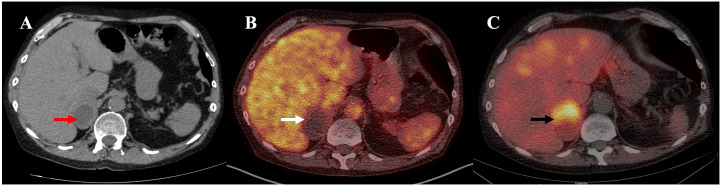
Clinical case: A 47 year-old man underwent a lung transplant for chronic obstructive pulmonary disease associated with alpha-1 antitrypsin deficiency. He required home oxygen therapy for 3 years prior to transplant. Nineteen years after transplant, a CT-scan revealed a 5.8 cm x 3.9 cm heterogeneous right adrenal mass (HU of 7). Initial assessments indicated elevated 24-hour urinary catecholamines. Consequently, the patient underwent laparoscopic right adrenalectomy, confirming the PCC diagnosis.
Genetic studies: 1) Germline PPGL multigene panel: After consent, the patient underwent a panel of 14 susceptibility genes for PPGLs that revealed no pathogenic variants. 2) Somatic genetic analysis for EPAS1 gene found no variants. However, tumoral RNA sequencing unveiled activation of the HIF pathway.
Conclusion: We describe a rare case of PCC in a pulmonary transplant recipient, with genetic analyses showing no germline pathogenic variants and no somatic variants in the EPAS1 gene. RNA sequencing highlighted HIF pathway activation and angiogenic implications. Further research is necessary to elucidate the genetic and molecular mechanisms underlying PCCs in this specific case and determine its link with hypoxemia in the context of pulmonary disease.
期刊介绍:
Frontiers in Endocrinology is a field journal of the "Frontiers in" journal series.
In today’s world, endocrinology is becoming increasingly important as it underlies many of the challenges societies face - from obesity and diabetes to reproduction, population control and aging. Endocrinology covers a broad field from basic molecular and cellular communication through to clinical care and some of the most crucial public health issues. The journal, thus, welcomes outstanding contributions in any domain of endocrinology.
Frontiers in Endocrinology publishes articles on the most outstanding discoveries across a wide research spectrum of Endocrinology. The mission of Frontiers in Endocrinology is to bring all relevant Endocrinology areas together on a single platform.




 京公网安备 11010802042870号
京ICP备2023020795号-1
京公网安备 11010802042870号
京ICP备2023020795号-1

 分享
分享
 求助内容:
求助内容: 应助结果提醒方式:
 扫码关注我们
