Xiaoyu Tang, Sun Sun, Mevludin Memedi, Ayako Hiyoshi, Scott Montgomery, Yang Cao
{"title":"COVID-19预防性干预措施的成本效益:基于现实世界数据的比较经济评估研究的系统回顾和网络荟萃分析","authors":"Xiaoyu Tang, Sun Sun, Mevludin Memedi, Ayako Hiyoshi, Scott Montgomery, Yang Cao","doi":"10.7189/jogh.15.04017","DOIUrl":null,"url":null,"abstract":"<p><strong>Background: </strong>There is a knowledge gap regarding the effectiveness and utility of various preventive interventions during the COVID-19 pandemic. In this study, we aimed to evaluate the cost-effectiveness of various COVID-19 preventive interventions, including non-medical interventions (NMIs) and vaccination programs, using real-world data across different demographic and socioeconomic contexts worldwide.</p><p><strong>Methods: </strong>We searched Medline, Cochrane Library, Embase, and Web of Science Core Collection from December 2019 to March 2024. We identified 75 studies which compared 34 COVID-19 preventive interventions. We conducted a network meta-analysis to assess the incremental net benefits (INB) of these interventions from both societal and health care system perspectives. We adjusted purchasing power parity (PPP) and standardised willingness to pay (WTP) to enhance the comparability of cost-effectiveness across different economic levels. We performed sensitivity and subgroup analyses to examine the robustness of the results.</p><p><strong>Results: </strong>Movement restrictions and expanding testing emerged as the most cost-effective strategies from a societal perspective, with WTP-standardised INB values of USD 21 050 and USD 11 144. In contrast, combinations of NMIs with vaccination were less cost-effective, particularly in high-income regions. From a health care system perspective, vaccination plus distancing and test, trace, and isolate strategy were highly cost-effective, while masking requirements were less economically viable. The effectiveness of interventions varied significantly across different economic contexts, underlining the necessity for region-specific strategies.</p><p><strong>Conclusions: </strong>In this study, we highlight significant variations in the cost-effectiveness of COVID-19 preventive interventions. Tailoring strategies to specific regional economic and infrastructural conditions is crucial. Continuous evaluation and adaptation of these strategies are essential for effective management of ongoing and future public health threats.</p><p><strong>Registration: </strong>PROSPERO: CRD42023385169.</p>","PeriodicalId":48734,"journal":{"name":"Journal of Global Health","volume":"15 ","pages":"04017"},"PeriodicalIF":4.3000,"publicationDate":"2025-02-21","publicationTypes":"Journal Article","fieldsOfStudy":null,"isOpenAccess":false,"openAccessPdf":"https://www.ncbi.nlm.nih.gov/pmc/articles/PMC11842005/pdf/","citationCount":"0","resultStr":"{\"title\":\"Cost-effectiveness of preventive COVID-19 interventions: a systematic review and network meta-analysis of comparative economic evaluation studies based on real-world data.\",\"authors\":\"Xiaoyu Tang, Sun Sun, Mevludin Memedi, Ayako Hiyoshi, Scott Montgomery, Yang Cao\",\"doi\":\"10.7189/jogh.15.04017\",\"DOIUrl\":null,\"url\":null,\"abstract\":\"<p><strong>Background: </strong>There is a knowledge gap regarding the effectiveness and utility of various preventive interventions during the COVID-19 pandemic. In this study, we aimed to evaluate the cost-effectiveness of various COVID-19 preventive interventions, including non-medical interventions (NMIs) and vaccination programs, using real-world data across different demographic and socioeconomic contexts worldwide.</p><p><strong>Methods: </strong>We searched Medline, Cochrane Library, Embase, and Web of Science Core Collection from December 2019 to March 2024. We identified 75 studies which compared 34 COVID-19 preventive interventions. We conducted a network meta-analysis to assess the incremental net benefits (INB) of these interventions from both societal and health care system perspectives. We adjusted purchasing power parity (PPP) and standardised willingness to pay (WTP) to enhance the comparability of cost-effectiveness across different economic levels. We performed sensitivity and subgroup analyses to examine the robustness of the results.</p><p><strong>Results: </strong>Movement restrictions and expanding testing emerged as the most cost-effective strategies from a societal perspective, with WTP-standardised INB values of USD 21 050 and USD 11 144. In contrast, combinations of NMIs with vaccination were less cost-effective, particularly in high-income regions. From a health care system perspective, vaccination plus distancing and test, trace, and isolate strategy were highly cost-effective, while masking requirements were less economically viable. The effectiveness of interventions varied significantly across different economic contexts, underlining the necessity for region-specific strategies.</p><p><strong>Conclusions: </strong>In this study, we highlight significant variations in the cost-effectiveness of COVID-19 preventive interventions. Tailoring strategies to specific regional economic and infrastructural conditions is crucial. Continuous evaluation and adaptation of these strategies are essential for effective management of ongoing and future public health threats.</p><p><strong>Registration: </strong>PROSPERO: CRD42023385169.</p>\",\"PeriodicalId\":48734,\"journal\":{\"name\":\"Journal of Global Health\",\"volume\":\"15 \",\"pages\":\"04017\"},\"PeriodicalIF\":4.3000,\"publicationDate\":\"2025-02-21\",\"publicationTypes\":\"Journal Article\",\"fieldsOfStudy\":null,\"isOpenAccess\":false,\"openAccessPdf\":\"https://www.ncbi.nlm.nih.gov/pmc/articles/PMC11842005/pdf/\",\"citationCount\":\"0\",\"resultStr\":null,\"platform\":\"Semanticscholar\",\"paperid\":null,\"PeriodicalName\":\"Journal of Global Health\",\"FirstCategoryId\":\"3\",\"ListUrlMain\":\"https://doi.org/10.7189/jogh.15.04017\",\"RegionNum\":3,\"RegionCategory\":\"医学\",\"ArticlePicture\":[],\"TitleCN\":null,\"AbstractTextCN\":null,\"PMCID\":null,\"EPubDate\":\"\",\"PubModel\":\"\",\"JCR\":\"Q1\",\"JCRName\":\"PUBLIC, ENVIRONMENTAL & OCCUPATIONAL HEALTH\",\"Score\":null,\"Total\":0}","platform":"Semanticscholar","paperid":null,"PeriodicalName":"Journal of Global Health","FirstCategoryId":"3","ListUrlMain":"https://doi.org/10.7189/jogh.15.04017","RegionNum":3,"RegionCategory":"医学","ArticlePicture":[],"TitleCN":null,"AbstractTextCN":null,"PMCID":null,"EPubDate":"","PubModel":"","JCR":"Q1","JCRName":"PUBLIC, ENVIRONMENTAL & OCCUPATIONAL HEALTH","Score":null,"Total":0}
引用次数: 0
摘要
背景:在2019冠状病毒病大流行期间,各种预防干预措施的有效性和效用方面存在知识缺口。在本研究中,我们旨在利用全球不同人口和社会经济背景的真实数据,评估各种COVID-19预防干预措施的成本效益,包括非医疗干预措施(NMIs)和疫苗接种计划。方法:检索Medline、Cochrane Library、Embase和Web of Science核心馆藏,检索时间为2019年12月至2024年3月。我们确定了75项研究,比较了34项COVID-19预防干预措施。我们进行了一项网络荟萃分析,从社会和卫生保健系统的角度评估这些干预措施的增量净效益(INB)。我们调整购买力平价(PPP)和标准化支付意愿(WTP),以提高不同经济水平的成本效益可比性。我们进行敏感性和亚组分析来检验结果的稳健性。结果:从社会角度来看,行动限制和扩大检测是最具成本效益的策略,世界卫生组织标准化的INB值为21 050美元和11 144美元。相比之下,NMIs与疫苗接种相结合的成本效益较低,特别是在高收入地区。从卫生保健系统的角度来看,疫苗接种加距离以及检测、追踪和隔离策略具有很高的成本效益,而掩蔽要求在经济上不太可行。干预措施的有效性在不同的经济背景下差别很大,这突出了制定区域特定战略的必要性。结论:在本研究中,我们强调了COVID-19预防干预措施成本效益的显著差异。根据具体的区域经济和基础设施情况制定战略至关重要。持续评估和调整这些战略对于有效管理当前和未来的公共卫生威胁至关重要。注册:普洛斯彼罗:CRD42023385169。
Cost-effectiveness of preventive COVID-19 interventions: a systematic review and network meta-analysis of comparative economic evaluation studies based on real-world data.
Background: There is a knowledge gap regarding the effectiveness and utility of various preventive interventions during the COVID-19 pandemic. In this study, we aimed to evaluate the cost-effectiveness of various COVID-19 preventive interventions, including non-medical interventions (NMIs) and vaccination programs, using real-world data across different demographic and socioeconomic contexts worldwide.
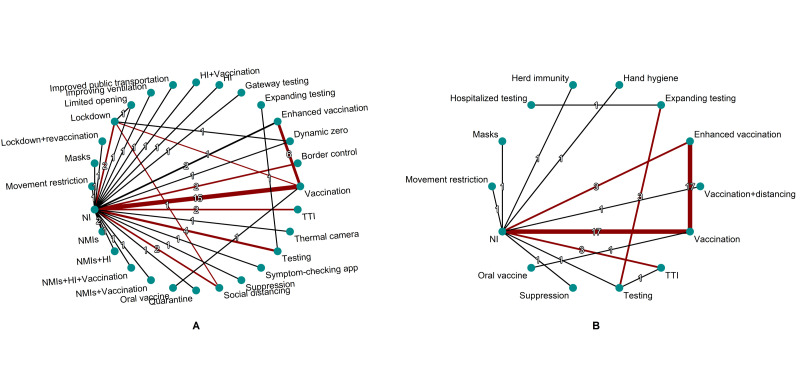
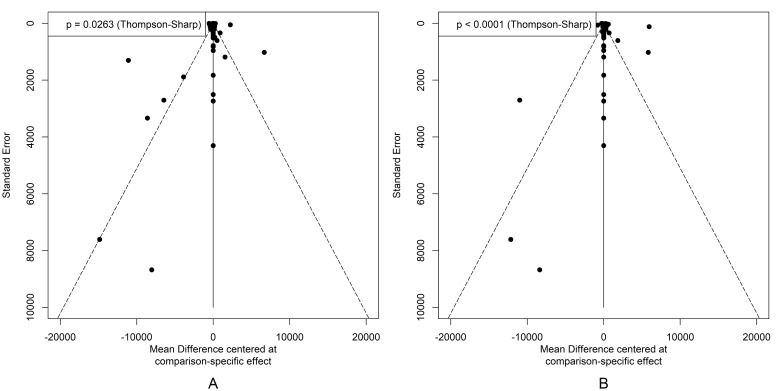
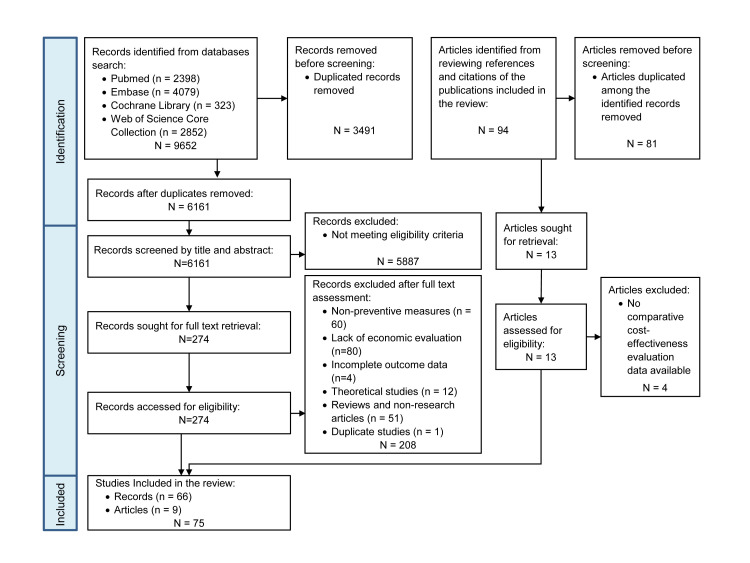
Methods: We searched Medline, Cochrane Library, Embase, and Web of Science Core Collection from December 2019 to March 2024. We identified 75 studies which compared 34 COVID-19 preventive interventions. We conducted a network meta-analysis to assess the incremental net benefits (INB) of these interventions from both societal and health care system perspectives. We adjusted purchasing power parity (PPP) and standardised willingness to pay (WTP) to enhance the comparability of cost-effectiveness across different economic levels. We performed sensitivity and subgroup analyses to examine the robustness of the results.
Results: Movement restrictions and expanding testing emerged as the most cost-effective strategies from a societal perspective, with WTP-standardised INB values of USD 21 050 and USD 11 144. In contrast, combinations of NMIs with vaccination were less cost-effective, particularly in high-income regions. From a health care system perspective, vaccination plus distancing and test, trace, and isolate strategy were highly cost-effective, while masking requirements were less economically viable. The effectiveness of interventions varied significantly across different economic contexts, underlining the necessity for region-specific strategies.
Conclusions: In this study, we highlight significant variations in the cost-effectiveness of COVID-19 preventive interventions. Tailoring strategies to specific regional economic and infrastructural conditions is crucial. Continuous evaluation and adaptation of these strategies are essential for effective management of ongoing and future public health threats.
期刊介绍:
Journal of Global Health is a peer-reviewed journal published by the Edinburgh University Global Health Society, a not-for-profit organization registered in the UK. We publish editorials, news, viewpoints, original research and review articles in two issues per year.




 京公网安备 11010802042870号
京ICP备2023020795号-1
京公网安备 11010802042870号
京ICP备2023020795号-1

 分享
分享
 求助内容:
求助内容: 应助结果提醒方式:
 扫码关注我们
