Guilherme J M Lacerda, Felipe Fregni, Linamara R Battistella, Marta Imamura
{"title":"高体重指数破坏膝关节骨关节炎患者疼痛抑制控制与症状之间的稳态关系——来自DEFINE研究的横断面分析","authors":"Guilherme J M Lacerda, Felipe Fregni, Linamara R Battistella, Marta Imamura","doi":"10.3390/neurosci6010014","DOIUrl":null,"url":null,"abstract":"<p><strong>Objective: </strong>As outlined in our previous study, this study aims to investigate the role of body mass index (BMI) as an effect modifier in the relationship between conditioned pain modulation (CPM) and clinical outcomes, including depression, quality of life, and pain in individuals with knee osteoarthritis (KOA).</p><p><strong>Methods: </strong>This cross-sectional analysis is part of the DEFINE Study in Rehabilitation. A total of 113 participants with KOA, admitted to the Instituto de Medicina Física e Reabilitação (IMREA) rehabilitation program, were included. Clinical and neurophysiological assessments were conducted, focusing on CPM, the Hamilton Depression Rating Scale (HDRS), and the SF-36 health survey. BMI was stratified into two categories based on the mean BMI of 31.99 kg/m<sup>2</sup>, and linear regression models were used to evaluate BMI as an effect modifier in the relationship between CPM and clinical outcomes. <i>p</i>-values below 0.10 for interaction terms (CPM × BMI) indicated effect modification.</p><p><strong>Results: </strong>In participants with BMI < 31.99 kg/m<sup>2</sup>, increased CPM was significantly associated with improved depression scores (lower HDRS) and enhanced physical functioning, emotional well-being, and reduced limitations due to emotional problems (SF-36). In contrast, no significant associations between CPM and these outcomes were found in participants with BMI ≥ 31.99 kg/m<sup>2</sup>. The results suggest that a higher BMI disrupts the salutogenic effects of endogenous pain control, diminishing the beneficial associations between CPM and both physical and psychological outcomes, as previously observed in fibromyalgia patients.</p><p><strong>Conclusions: </strong>BMI acts as an effect modifier in the relationship between CPM and clinical outcomes in individuals with KOA. Obesity appears to hinder the beneficial relationships between clinical symptoms and CPM, leading to a less favorable link between physical and emotional functioning and CPM. These findings highlight the importance of considering BMI in treatment strategies for KOA, particularly when addressing the impact of lifestyle and other modifiable factors that influence pain modulation.</p>","PeriodicalId":74294,"journal":{"name":"NeuroSci","volume":"6 1","pages":""},"PeriodicalIF":1.9000,"publicationDate":"2025-02-08","publicationTypes":"Journal Article","fieldsOfStudy":null,"isOpenAccess":false,"openAccessPdf":"https://www.ncbi.nlm.nih.gov/pmc/articles/PMC11843865/pdf/","citationCount":"0","resultStr":"{\"title\":\"High Body Mass Index Disrupts the Homeostatic Relationship Between Pain Inhibitory Control and the Symptomatology in Patients with Knee Osteoarthritis-A Cross-Sectional Analysis from the DEFINE Study.\",\"authors\":\"Guilherme J M Lacerda, Felipe Fregni, Linamara R Battistella, Marta Imamura\",\"doi\":\"10.3390/neurosci6010014\",\"DOIUrl\":null,\"url\":null,\"abstract\":\"<p><strong>Objective: </strong>As outlined in our previous study, this study aims to investigate the role of body mass index (BMI) as an effect modifier in the relationship between conditioned pain modulation (CPM) and clinical outcomes, including depression, quality of life, and pain in individuals with knee osteoarthritis (KOA).</p><p><strong>Methods: </strong>This cross-sectional analysis is part of the DEFINE Study in Rehabilitation. A total of 113 participants with KOA, admitted to the Instituto de Medicina Física e Reabilitação (IMREA) rehabilitation program, were included. Clinical and neurophysiological assessments were conducted, focusing on CPM, the Hamilton Depression Rating Scale (HDRS), and the SF-36 health survey. BMI was stratified into two categories based on the mean BMI of 31.99 kg/m<sup>2</sup>, and linear regression models were used to evaluate BMI as an effect modifier in the relationship between CPM and clinical outcomes. <i>p</i>-values below 0.10 for interaction terms (CPM × BMI) indicated effect modification.</p><p><strong>Results: </strong>In participants with BMI < 31.99 kg/m<sup>2</sup>, increased CPM was significantly associated with improved depression scores (lower HDRS) and enhanced physical functioning, emotional well-being, and reduced limitations due to emotional problems (SF-36). In contrast, no significant associations between CPM and these outcomes were found in participants with BMI ≥ 31.99 kg/m<sup>2</sup>. The results suggest that a higher BMI disrupts the salutogenic effects of endogenous pain control, diminishing the beneficial associations between CPM and both physical and psychological outcomes, as previously observed in fibromyalgia patients.</p><p><strong>Conclusions: </strong>BMI acts as an effect modifier in the relationship between CPM and clinical outcomes in individuals with KOA. Obesity appears to hinder the beneficial relationships between clinical symptoms and CPM, leading to a less favorable link between physical and emotional functioning and CPM. These findings highlight the importance of considering BMI in treatment strategies for KOA, particularly when addressing the impact of lifestyle and other modifiable factors that influence pain modulation.</p>\",\"PeriodicalId\":74294,\"journal\":{\"name\":\"NeuroSci\",\"volume\":\"6 1\",\"pages\":\"\"},\"PeriodicalIF\":1.9000,\"publicationDate\":\"2025-02-08\",\"publicationTypes\":\"Journal Article\",\"fieldsOfStudy\":null,\"isOpenAccess\":false,\"openAccessPdf\":\"https://www.ncbi.nlm.nih.gov/pmc/articles/PMC11843865/pdf/\",\"citationCount\":\"0\",\"resultStr\":null,\"platform\":\"Semanticscholar\",\"paperid\":null,\"PeriodicalName\":\"NeuroSci\",\"FirstCategoryId\":\"1085\",\"ListUrlMain\":\"https://doi.org/10.3390/neurosci6010014\",\"RegionNum\":0,\"RegionCategory\":null,\"ArticlePicture\":[],\"TitleCN\":null,\"AbstractTextCN\":null,\"PMCID\":null,\"EPubDate\":\"\",\"PubModel\":\"\",\"JCR\":\"Q3\",\"JCRName\":\"CLINICAL NEUROLOGY\",\"Score\":null,\"Total\":0}","platform":"Semanticscholar","paperid":null,"PeriodicalName":"NeuroSci","FirstCategoryId":"1085","ListUrlMain":"https://doi.org/10.3390/neurosci6010014","RegionNum":0,"RegionCategory":null,"ArticlePicture":[],"TitleCN":null,"AbstractTextCN":null,"PMCID":null,"EPubDate":"","PubModel":"","JCR":"Q3","JCRName":"CLINICAL NEUROLOGY","Score":null,"Total":0}
High Body Mass Index Disrupts the Homeostatic Relationship Between Pain Inhibitory Control and the Symptomatology in Patients with Knee Osteoarthritis-A Cross-Sectional Analysis from the DEFINE Study.
Objective: As outlined in our previous study, this study aims to investigate the role of body mass index (BMI) as an effect modifier in the relationship between conditioned pain modulation (CPM) and clinical outcomes, including depression, quality of life, and pain in individuals with knee osteoarthritis (KOA).
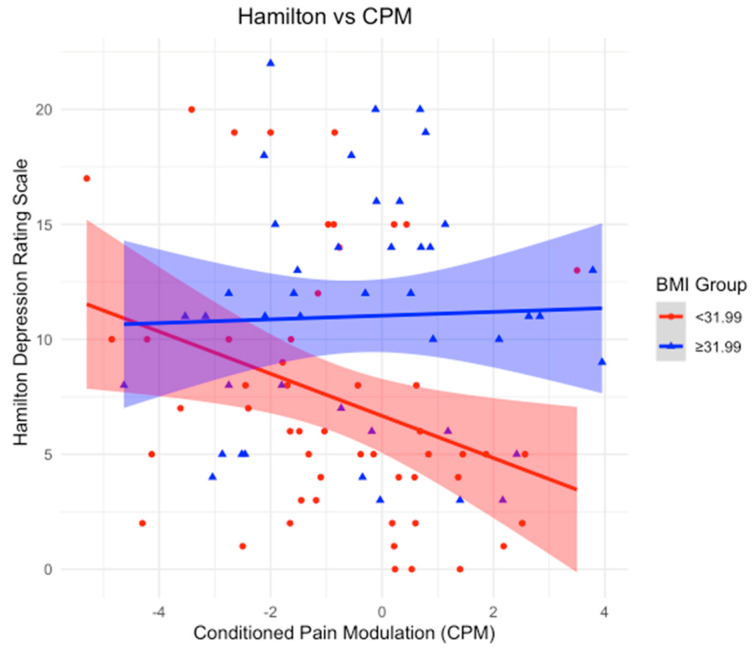
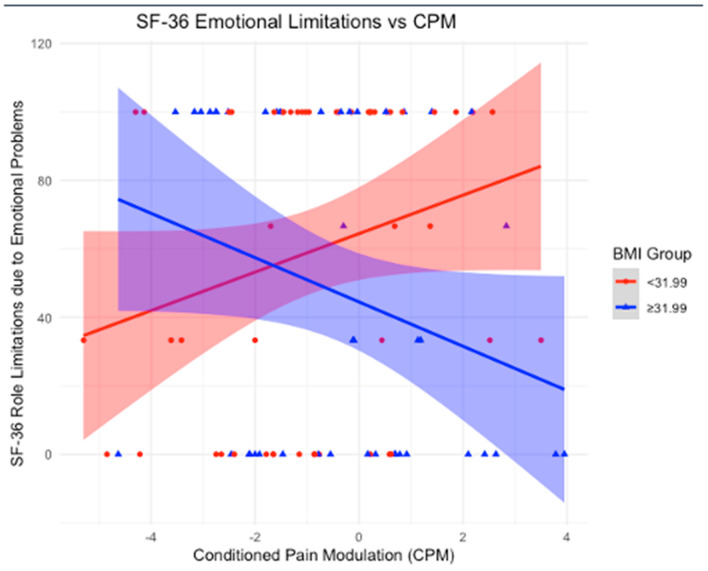
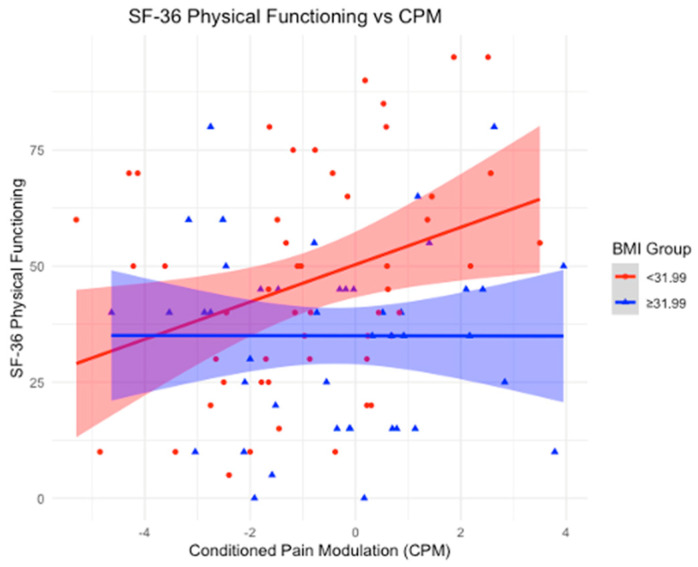
Methods: This cross-sectional analysis is part of the DEFINE Study in Rehabilitation. A total of 113 participants with KOA, admitted to the Instituto de Medicina Física e Reabilitação (IMREA) rehabilitation program, were included. Clinical and neurophysiological assessments were conducted, focusing on CPM, the Hamilton Depression Rating Scale (HDRS), and the SF-36 health survey. BMI was stratified into two categories based on the mean BMI of 31.99 kg/m2, and linear regression models were used to evaluate BMI as an effect modifier in the relationship between CPM and clinical outcomes. p-values below 0.10 for interaction terms (CPM × BMI) indicated effect modification.
Results: In participants with BMI < 31.99 kg/m2, increased CPM was significantly associated with improved depression scores (lower HDRS) and enhanced physical functioning, emotional well-being, and reduced limitations due to emotional problems (SF-36). In contrast, no significant associations between CPM and these outcomes were found in participants with BMI ≥ 31.99 kg/m2. The results suggest that a higher BMI disrupts the salutogenic effects of endogenous pain control, diminishing the beneficial associations between CPM and both physical and psychological outcomes, as previously observed in fibromyalgia patients.
Conclusions: BMI acts as an effect modifier in the relationship between CPM and clinical outcomes in individuals with KOA. Obesity appears to hinder the beneficial relationships between clinical symptoms and CPM, leading to a less favorable link between physical and emotional functioning and CPM. These findings highlight the importance of considering BMI in treatment strategies for KOA, particularly when addressing the impact of lifestyle and other modifiable factors that influence pain modulation.




 京公网安备 11010802042870号
京ICP备2023020795号-1
京公网安备 11010802042870号
京ICP备2023020795号-1

 分享
分享

 求助内容:
求助内容: 应助结果提醒方式:
 扫码关注我们
