Chang Liu , Lin Li , Huan Zhang , Qinghan Wang , Yumeng Liang , Peng Chen , Shaoxian Song , Feifei Jia
{"title":"通过耦合电迁移和光催化作用对引入缺陷和氧掺入MoS2有效回收S2O32-体系中的Au(S2O3)23 -","authors":"Chang Liu , Lin Li , Huan Zhang , Qinghan Wang , Yumeng Liang , Peng Chen , Shaoxian Song , Feifei Jia","doi":"10.1016/j.seppur.2025.132251","DOIUrl":null,"url":null,"abstract":"<div><div>High concentration of S<sub>2</sub>O<sub>3</sub><sup>2-</sup> in gold thiosulfate leaching solution caused serious obstacle for Au(S<sub>2</sub>O<sub>3</sub>)<sub>2</sub><sup>3–</sup> recovery because of the strongly competitive adsorption effect. To cope with this trouble, a novel recovery strategy of coupling electromigration and photocatalysis (CEP) by using MoS<sub>2</sub> cathode electrode and activated carbon (AC) anode electrode pairs has been proposed in this work. Au(S<sub>2</sub>O<sub>3</sub>)<sub>2</sub><sup>3–</sup> recovery behavior and recovery mechanism by CEP were detailed investigated with specific voltage and indoor light irradiation. Under the condition with S<sub>2</sub>O<sub>3</sub><sup>2-</sup>/Au(S<sub>2</sub>O<sub>3</sub>)<sub>2</sub><sup>3–</sup> molar ratio of 2000:1, ∼98 % gold recovery performance achieved. In addition, modified MoS<sub>2</sub> with defect introducing and oxygen incorporation (D,O-MoS<sub>2</sub>) could greatly enhance gold recovery performance because of more excellent photoelectric property for faster Au(S<sub>2</sub>O<sub>3</sub>)<sub>2</sub><sup>3–</sup> reduction. Besides, the influences of CEP parameters such as voltage, water flux and electrode pairs were systematically explored for better understanding of gold recovery behaviors. Confirming by characterization tests and COMSOL simulation, the movement of S<sub>2</sub>O<sub>3</sub><sup>2-</sup> was mainly controlled by electromigration to move towards anode and then stored in the electric double layer (EDL) of coated AC. Meanwhile, Au(S<sub>2</sub>O<sub>3</sub>)<sub>2</sub><sup>3–</sup> was impelled to diffuse towards cathode driven by its concentration gradient and then reduced to Au<sup>0</sup> through photogenerated electrons from coated D,O-MoS<sub>2</sub>. Therefore, by means of distinct mass transfer behaviors, Au(S<sub>2</sub>O<sub>3</sub>)<sub>2</sub><sup>3–</sup> could separate from high concentrated S<sub>2</sub>O<sub>3</sub><sup>2-</sup> system, so that achieving satisfied recovery performance via excellent photocatalytic reduction effect from D,O-MoS<sub>2</sub>. These findings provided a new insight for enhancing Au(S<sub>2</sub>O<sub>3</sub>)<sub>2</sub><sup>3–</sup> recovery from gold thiosulfate leaching solution, which catered to the topic of green production of gold.</div></div>","PeriodicalId":427,"journal":{"name":"Separation and Purification Technology","volume":"363 ","pages":"Article 132251"},"PeriodicalIF":9.1000,"publicationDate":"2025-08-14","publicationTypes":"Journal Article","fieldsOfStudy":null,"isOpenAccess":false,"openAccessPdf":"","citationCount":"0","resultStr":"{\"title\":\"Efficient Au(S2O3)23– recovery from S2O32- system through coupling electromigration and photocatalysis effect on defect introduced and oxygen incorporated MoS2\",\"authors\":\"Chang Liu , Lin Li , Huan Zhang , Qinghan Wang , Yumeng Liang , Peng Chen , Shaoxian Song , Feifei Jia\",\"doi\":\"10.1016/j.seppur.2025.132251\",\"DOIUrl\":null,\"url\":null,\"abstract\":\"<div><div>High concentration of S<sub>2</sub>O<sub>3</sub><sup>2-</sup> in gold thiosulfate leaching solution caused serious obstacle for Au(S<sub>2</sub>O<sub>3</sub>)<sub>2</sub><sup>3–</sup> recovery because of the strongly competitive adsorption effect. To cope with this trouble, a novel recovery strategy of coupling electromigration and photocatalysis (CEP) by using MoS<sub>2</sub> cathode electrode and activated carbon (AC) anode electrode pairs has been proposed in this work. Au(S<sub>2</sub>O<sub>3</sub>)<sub>2</sub><sup>3–</sup> recovery behavior and recovery mechanism by CEP were detailed investigated with specific voltage and indoor light irradiation. Under the condition with S<sub>2</sub>O<sub>3</sub><sup>2-</sup>/Au(S<sub>2</sub>O<sub>3</sub>)<sub>2</sub><sup>3–</sup> molar ratio of 2000:1, ∼98 % gold recovery performance achieved. In addition, modified MoS<sub>2</sub> with defect introducing and oxygen incorporation (D,O-MoS<sub>2</sub>) could greatly enhance gold recovery performance because of more excellent photoelectric property for faster Au(S<sub>2</sub>O<sub>3</sub>)<sub>2</sub><sup>3–</sup> reduction. Besides, the influences of CEP parameters such as voltage, water flux and electrode pairs were systematically explored for better understanding of gold recovery behaviors. Confirming by characterization tests and COMSOL simulation, the movement of S<sub>2</sub>O<sub>3</sub><sup>2-</sup> was mainly controlled by electromigration to move towards anode and then stored in the electric double layer (EDL) of coated AC. Meanwhile, Au(S<sub>2</sub>O<sub>3</sub>)<sub>2</sub><sup>3–</sup> was impelled to diffuse towards cathode driven by its concentration gradient and then reduced to Au<sup>0</sup> through photogenerated electrons from coated D,O-MoS<sub>2</sub>. Therefore, by means of distinct mass transfer behaviors, Au(S<sub>2</sub>O<sub>3</sub>)<sub>2</sub><sup>3–</sup> could separate from high concentrated S<sub>2</sub>O<sub>3</sub><sup>2-</sup> system, so that achieving satisfied recovery performance via excellent photocatalytic reduction effect from D,O-MoS<sub>2</sub>. These findings provided a new insight for enhancing Au(S<sub>2</sub>O<sub>3</sub>)<sub>2</sub><sup>3–</sup> recovery from gold thiosulfate leaching solution, which catered to the topic of green production of gold.</div></div>\",\"PeriodicalId\":427,\"journal\":{\"name\":\"Separation and Purification Technology\",\"volume\":\"363 \",\"pages\":\"Article 132251\"},\"PeriodicalIF\":9.1000,\"publicationDate\":\"2025-08-14\",\"publicationTypes\":\"Journal Article\",\"fieldsOfStudy\":null,\"isOpenAccess\":false,\"openAccessPdf\":\"\",\"citationCount\":\"0\",\"resultStr\":null,\"platform\":\"Semanticscholar\",\"paperid\":null,\"PeriodicalName\":\"Separation and Purification Technology\",\"FirstCategoryId\":\"5\",\"ListUrlMain\":\"https://www.sciencedirect.com/science/article/pii/S1383586625008482\",\"RegionNum\":1,\"RegionCategory\":\"工程技术\",\"ArticlePicture\":[],\"TitleCN\":null,\"AbstractTextCN\":null,\"PMCID\":null,\"EPubDate\":\"2025/2/23 0:00:00\",\"PubModel\":\"Epub\",\"JCR\":\"Q1\",\"JCRName\":\"ENGINEERING, CHEMICAL\",\"Score\":null,\"Total\":0}","platform":"Semanticscholar","paperid":null,"PeriodicalName":"Separation and Purification Technology","FirstCategoryId":"5","ListUrlMain":"https://www.sciencedirect.com/science/article/pii/S1383586625008482","RegionNum":1,"RegionCategory":"工程技术","ArticlePicture":[],"TitleCN":null,"AbstractTextCN":null,"PMCID":null,"EPubDate":"2025/2/23 0:00:00","PubModel":"Epub","JCR":"Q1","JCRName":"ENGINEERING, CHEMICAL","Score":null,"Total":0}
Efficient Au(S2O3)23– recovery from S2O32- system through coupling electromigration and photocatalysis effect on defect introduced and oxygen incorporated MoS2
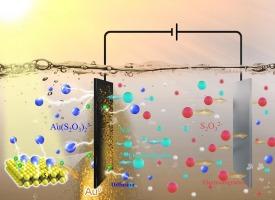
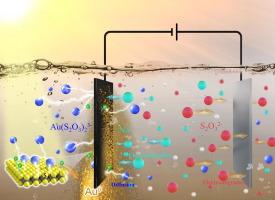
High concentration of S2O32- in gold thiosulfate leaching solution caused serious obstacle for Au(S2O3)23– recovery because of the strongly competitive adsorption effect. To cope with this trouble, a novel recovery strategy of coupling electromigration and photocatalysis (CEP) by using MoS2 cathode electrode and activated carbon (AC) anode electrode pairs has been proposed in this work. Au(S2O3)23– recovery behavior and recovery mechanism by CEP were detailed investigated with specific voltage and indoor light irradiation. Under the condition with S2O32-/Au(S2O3)23– molar ratio of 2000:1, ∼98 % gold recovery performance achieved. In addition, modified MoS2 with defect introducing and oxygen incorporation (D,O-MoS2) could greatly enhance gold recovery performance because of more excellent photoelectric property for faster Au(S2O3)23– reduction. Besides, the influences of CEP parameters such as voltage, water flux and electrode pairs were systematically explored for better understanding of gold recovery behaviors. Confirming by characterization tests and COMSOL simulation, the movement of S2O32- was mainly controlled by electromigration to move towards anode and then stored in the electric double layer (EDL) of coated AC. Meanwhile, Au(S2O3)23– was impelled to diffuse towards cathode driven by its concentration gradient and then reduced to Au0 through photogenerated electrons from coated D,O-MoS2. Therefore, by means of distinct mass transfer behaviors, Au(S2O3)23– could separate from high concentrated S2O32- system, so that achieving satisfied recovery performance via excellent photocatalytic reduction effect from D,O-MoS2. These findings provided a new insight for enhancing Au(S2O3)23– recovery from gold thiosulfate leaching solution, which catered to the topic of green production of gold.
期刊介绍:
Separation and Purification Technology is a premier journal committed to sharing innovative methods for separation and purification in chemical and environmental engineering, encompassing both homogeneous solutions and heterogeneous mixtures. Our scope includes the separation and/or purification of liquids, vapors, and gases, as well as carbon capture and separation techniques. However, it's important to note that methods solely intended for analytical purposes are not within the scope of the journal. Additionally, disciplines such as soil science, polymer science, and metallurgy fall outside the purview of Separation and Purification Technology. Join us in advancing the field of separation and purification methods for sustainable solutions in chemical and environmental engineering.




 京公网安备 11010802042870号
京ICP备2023020795号-1
京公网安备 11010802042870号
京ICP备2023020795号-1

 分享
分享
 求助内容:
求助内容: 应助结果提醒方式:
 扫码关注我们
