Junho Park , Garam An , Taeyeon Hong , Hojun Lee , Gwonhwa Song , Whasun Lim , Wooyoung Jeong
{"title":"芬诺威通过产生活性氧、过度炎症和细胞凋亡诱导斑马鱼幼鱼的心血管、肝脏和胰腺毒性","authors":"Junho Park , Garam An , Taeyeon Hong , Hojun Lee , Gwonhwa Song , Whasun Lim , Wooyoung Jeong","doi":"10.1016/j.scitotenv.2025.178957","DOIUrl":null,"url":null,"abstract":"<div><div>Fenoxycarb, a carbamate insecticide, functions as a juvenile hormone agonist to inhibit pests, and its detection in aquatic environments is concerning because of its widespread application. These concerns have led to ecotoxicological studies on aquatic crustaceans; however, research on the effects of fenoxycarb on the developmental processes of organisms is limited. In the present study, the deleterious effects of fenoxycarb on zebrafish development and the related cellular mechanisms mediating this toxicity were addressed. Exposure to sublethal concentrations of fenoxycarb (0, 0.5, 1, and 2 mg/L) resulted in morphological defects in zebrafish larvae, particularly in the heart region, eyes, and body length. These defects were accompanied by an increase in the number of apoptotic cells and the upregulation of related gene expression. Moreover, fenoxycarb increased ROS production and the number of macrophages, and altered the expression of immune-related genes, thereby inducing inflammation. These results revealed various abnormalities in the heart, vasculature, liver, and pancreas, as confirmed by transgenic models, such as <em>cmlc2:DsRed</em>, <em>fli1a:EGFP</em>, and <em>fabp10a:DsRed;elastase:GFP</em>. These developmental impairments were associated with the altered expression levels of genes involved in the development and function of each organ. These results suggest that fenoxycarb can affect multiple organs through excessive inflammation during development and highlight its potent toxic effects on other non-target organisms.</div></div>","PeriodicalId":422,"journal":{"name":"Science of the Total Environment","volume":"969 ","pages":"Article 178957"},"PeriodicalIF":8.0000,"publicationDate":"2025-03-15","publicationTypes":"Journal Article","fieldsOfStudy":null,"isOpenAccess":false,"openAccessPdf":"","citationCount":"0","resultStr":"{\"title\":\"Fenoxycarb induces cardiovascular, hepatic, and pancreatic toxicity in zebrafish larvae via ROS production, excessive inflammation, and apoptosis\",\"authors\":\"Junho Park , Garam An , Taeyeon Hong , Hojun Lee , Gwonhwa Song , Whasun Lim , Wooyoung Jeong\",\"doi\":\"10.1016/j.scitotenv.2025.178957\",\"DOIUrl\":null,\"url\":null,\"abstract\":\"<div><div>Fenoxycarb, a carbamate insecticide, functions as a juvenile hormone agonist to inhibit pests, and its detection in aquatic environments is concerning because of its widespread application. These concerns have led to ecotoxicological studies on aquatic crustaceans; however, research on the effects of fenoxycarb on the developmental processes of organisms is limited. In the present study, the deleterious effects of fenoxycarb on zebrafish development and the related cellular mechanisms mediating this toxicity were addressed. Exposure to sublethal concentrations of fenoxycarb (0, 0.5, 1, and 2 mg/L) resulted in morphological defects in zebrafish larvae, particularly in the heart region, eyes, and body length. These defects were accompanied by an increase in the number of apoptotic cells and the upregulation of related gene expression. Moreover, fenoxycarb increased ROS production and the number of macrophages, and altered the expression of immune-related genes, thereby inducing inflammation. These results revealed various abnormalities in the heart, vasculature, liver, and pancreas, as confirmed by transgenic models, such as <em>cmlc2:DsRed</em>, <em>fli1a:EGFP</em>, and <em>fabp10a:DsRed;elastase:GFP</em>. These developmental impairments were associated with the altered expression levels of genes involved in the development and function of each organ. These results suggest that fenoxycarb can affect multiple organs through excessive inflammation during development and highlight its potent toxic effects on other non-target organisms.</div></div>\",\"PeriodicalId\":422,\"journal\":{\"name\":\"Science of the Total Environment\",\"volume\":\"969 \",\"pages\":\"Article 178957\"},\"PeriodicalIF\":8.0000,\"publicationDate\":\"2025-03-15\",\"publicationTypes\":\"Journal Article\",\"fieldsOfStudy\":null,\"isOpenAccess\":false,\"openAccessPdf\":\"\",\"citationCount\":\"0\",\"resultStr\":null,\"platform\":\"Semanticscholar\",\"paperid\":null,\"PeriodicalName\":\"Science of the Total Environment\",\"FirstCategoryId\":\"93\",\"ListUrlMain\":\"https://www.sciencedirect.com/science/article/pii/S0048969725005923\",\"RegionNum\":1,\"RegionCategory\":\"环境科学与生态学\",\"ArticlePicture\":[],\"TitleCN\":null,\"AbstractTextCN\":null,\"PMCID\":null,\"EPubDate\":\"2025/2/26 0:00:00\",\"PubModel\":\"Epub\",\"JCR\":\"Q1\",\"JCRName\":\"ENVIRONMENTAL SCIENCES\",\"Score\":null,\"Total\":0}","platform":"Semanticscholar","paperid":null,"PeriodicalName":"Science of the Total Environment","FirstCategoryId":"93","ListUrlMain":"https://www.sciencedirect.com/science/article/pii/S0048969725005923","RegionNum":1,"RegionCategory":"环境科学与生态学","ArticlePicture":[],"TitleCN":null,"AbstractTextCN":null,"PMCID":null,"EPubDate":"2025/2/26 0:00:00","PubModel":"Epub","JCR":"Q1","JCRName":"ENVIRONMENTAL SCIENCES","Score":null,"Total":0}
Fenoxycarb induces cardiovascular, hepatic, and pancreatic toxicity in zebrafish larvae via ROS production, excessive inflammation, and apoptosis
Fenoxycarb, a carbamate insecticide, functions as a juvenile hormone agonist to inhibit pests, and its detection in aquatic environments is concerning because of its widespread application. These concerns have led to ecotoxicological studies on aquatic crustaceans; however, research on the effects of fenoxycarb on the developmental processes of organisms is limited. In the present study, the deleterious effects of fenoxycarb on zebrafish development and the related cellular mechanisms mediating this toxicity were addressed. Exposure to sublethal concentrations of fenoxycarb (0, 0.5, 1, and 2 mg/L) resulted in morphological defects in zebrafish larvae, particularly in the heart region, eyes, and body length. These defects were accompanied by an increase in the number of apoptotic cells and the upregulation of related gene expression. Moreover, fenoxycarb increased ROS production and the number of macrophages, and altered the expression of immune-related genes, thereby inducing inflammation. These results revealed various abnormalities in the heart, vasculature, liver, and pancreas, as confirmed by transgenic models, such as cmlc2:DsRed, fli1a:EGFP, and fabp10a:DsRed;elastase:GFP. These developmental impairments were associated with the altered expression levels of genes involved in the development and function of each organ. These results suggest that fenoxycarb can affect multiple organs through excessive inflammation during development and highlight its potent toxic effects on other non-target organisms.
期刊介绍:
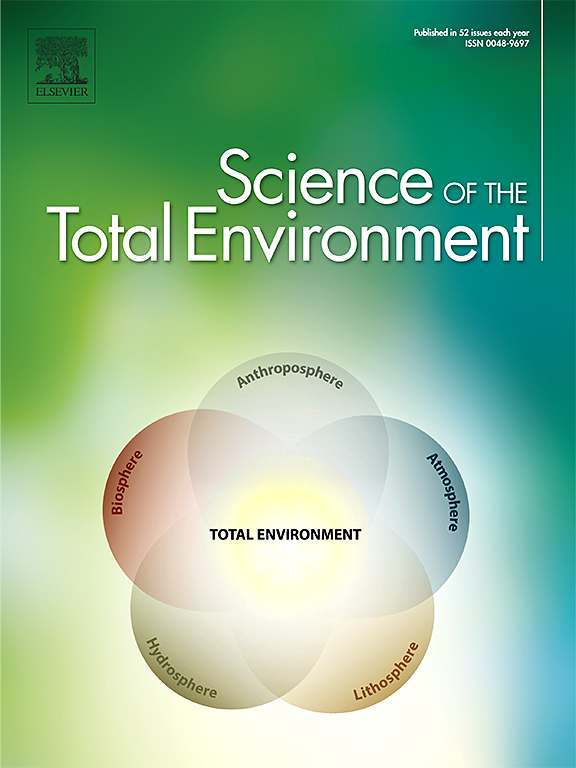
The Science of the Total Environment is an international journal dedicated to scientific research on the environment and its interaction with humanity. It covers a wide range of disciplines and seeks to publish innovative, hypothesis-driven, and impactful research that explores the entire environment, including the atmosphere, lithosphere, hydrosphere, biosphere, and anthroposphere.
The journal's updated Aims & Scope emphasizes the importance of interdisciplinary environmental research with broad impact. Priority is given to studies that advance fundamental understanding and explore the interconnectedness of multiple environmental spheres. Field studies are preferred, while laboratory experiments must demonstrate significant methodological advancements or mechanistic insights with direct relevance to the environment.





 京公网安备 11010802042870号
京ICP备2023020795号-1
京公网安备 11010802042870号
京ICP备2023020795号-1

 分享
分享
 求助内容:
求助内容: 应助结果提醒方式:
 扫码关注我们
