{"title":"非贵重热解cu掺杂ZIF作为氧去极化阴极在先进氯碱电解槽中的集成","authors":"Tahereh Jangjooye Shaldehi , Lele Zhao , Teresa Andreu , Soosan Rowshanzamir , Ignasi Sirés","doi":"10.1016/j.electacta.2025.145929","DOIUrl":null,"url":null,"abstract":"<div><div>Oxygen reduction is the critical step in advanced chlor-alkali electrolysis, which has motivated extensive research in catalyst development for improved efficiency and durability. This study investigates the oxygen reduction reaction (ORR) on Cu-based electrocatalysts supported on N-doped carbon (Cu/NC), derived from a Cu-modified zeolitic imidazolate framework (ZIF), and their ultimate performance in a chlor-alkali electrolyzer. Through comprehensive electrochemical characterization in 0.1 M NaOH solution, values of <em>E</em><sub>onset</sub> = 0.87 V and <em>E</em><sub>1/</sub><sub>2</sub> = 0.75 V (<em>vs.</em> RHE) were obtained, which are competitive with commercial Pt/C despite the superior <em>j</em> achieved by the latter in LSV tests. The electron transfer number (<em>n</em>) of the optimum Cu/NC was 4, very close to benchmark catalyst Pt/C 20 wt. % (<em>n</em> = 3.94). Cu/NC had a low Tafel slope (128 mV dec<sup>−1</sup>), thus speeding up the ORR on this nanocatalyst. Additionally, chronoamperometry and accelerated durability tests demonstrated the long-term stability of Cu/NC for 10 h. The catalyst was assembled as an oxygen depolarized cathode (ODC) in a purpose-designed advanced chlor-alkali electrolyzer, resulting in a cell voltage of 2.1 V at 1 kA m<sup>-2</sup> and 80 °C, which underscores the potential of Cu-based nanocatalysts in electrochemical energy devices. This research serves to leverage insights for the use of advanced electrocatalysts to enhance the efficiency and sustainability of chlor-alkali electrolysis.</div></div>","PeriodicalId":305,"journal":{"name":"Electrochimica Acta","volume":"522 ","pages":"Article 145929"},"PeriodicalIF":5.8000,"publicationDate":"2025-05-10","publicationTypes":"Journal Article","fieldsOfStudy":null,"isOpenAccess":false,"openAccessPdf":"","citationCount":"0","resultStr":"{\"title\":\"Integration of a non-precious pyrolyzed Cu-doped ZIF as an oxygen depolarized cathode in an advanced chlor-alkali electrolyzer\",\"authors\":\"Tahereh Jangjooye Shaldehi , Lele Zhao , Teresa Andreu , Soosan Rowshanzamir , Ignasi Sirés\",\"doi\":\"10.1016/j.electacta.2025.145929\",\"DOIUrl\":null,\"url\":null,\"abstract\":\"<div><div>Oxygen reduction is the critical step in advanced chlor-alkali electrolysis, which has motivated extensive research in catalyst development for improved efficiency and durability. This study investigates the oxygen reduction reaction (ORR) on Cu-based electrocatalysts supported on N-doped carbon (Cu/NC), derived from a Cu-modified zeolitic imidazolate framework (ZIF), and their ultimate performance in a chlor-alkali electrolyzer. Through comprehensive electrochemical characterization in 0.1 M NaOH solution, values of <em>E</em><sub>onset</sub> = 0.87 V and <em>E</em><sub>1/</sub><sub>2</sub> = 0.75 V (<em>vs.</em> RHE) were obtained, which are competitive with commercial Pt/C despite the superior <em>j</em> achieved by the latter in LSV tests. The electron transfer number (<em>n</em>) of the optimum Cu/NC was 4, very close to benchmark catalyst Pt/C 20 wt. % (<em>n</em> = 3.94). Cu/NC had a low Tafel slope (128 mV dec<sup>−1</sup>), thus speeding up the ORR on this nanocatalyst. Additionally, chronoamperometry and accelerated durability tests demonstrated the long-term stability of Cu/NC for 10 h. The catalyst was assembled as an oxygen depolarized cathode (ODC) in a purpose-designed advanced chlor-alkali electrolyzer, resulting in a cell voltage of 2.1 V at 1 kA m<sup>-2</sup> and 80 °C, which underscores the potential of Cu-based nanocatalysts in electrochemical energy devices. This research serves to leverage insights for the use of advanced electrocatalysts to enhance the efficiency and sustainability of chlor-alkali electrolysis.</div></div>\",\"PeriodicalId\":305,\"journal\":{\"name\":\"Electrochimica Acta\",\"volume\":\"522 \",\"pages\":\"Article 145929\"},\"PeriodicalIF\":5.8000,\"publicationDate\":\"2025-05-10\",\"publicationTypes\":\"Journal Article\",\"fieldsOfStudy\":null,\"isOpenAccess\":false,\"openAccessPdf\":\"\",\"citationCount\":\"0\",\"resultStr\":null,\"platform\":\"Semanticscholar\",\"paperid\":null,\"PeriodicalName\":\"Electrochimica Acta\",\"FirstCategoryId\":\"88\",\"ListUrlMain\":\"https://www.sciencedirect.com/science/article/pii/S0013468625002920\",\"RegionNum\":3,\"RegionCategory\":\"材料科学\",\"ArticlePicture\":[],\"TitleCN\":null,\"AbstractTextCN\":null,\"PMCID\":null,\"EPubDate\":\"2025/2/25 0:00:00\",\"PubModel\":\"Epub\",\"JCR\":\"Q1\",\"JCRName\":\"ELECTROCHEMISTRY\",\"Score\":null,\"Total\":0}","platform":"Semanticscholar","paperid":null,"PeriodicalName":"Electrochimica Acta","FirstCategoryId":"88","ListUrlMain":"https://www.sciencedirect.com/science/article/pii/S0013468625002920","RegionNum":3,"RegionCategory":"材料科学","ArticlePicture":[],"TitleCN":null,"AbstractTextCN":null,"PMCID":null,"EPubDate":"2025/2/25 0:00:00","PubModel":"Epub","JCR":"Q1","JCRName":"ELECTROCHEMISTRY","Score":null,"Total":0}
引用次数: 0
摘要
氧还原是先进氯碱电解的关键步骤,为提高效率和耐久性,在催化剂开发方面进行了广泛的研究。本研究研究了由Cu修饰的沸石咪唑盐骨架(ZIF)制备的氮掺杂碳(Cu/NC)电催化剂的氧还原反应(ORR)及其在氯碱电解槽中的最终性能。通过在0.1 M NaOH溶液中进行全面的电化学表征,得到了Eonset = 0.87 V和E1/2 = 0.75 V (vs. RHE)的值,尽管后者在LSV测试中取得了更好的j,但与商用Pt/C竞争。最优Cu/NC的电子转移数(n)为4,与基准催化剂Pt/C的电子转移数(n = 3.94)非常接近。Cu/NC具有较低的Tafel斜率(128 mV dec−1),从而加快了该纳米催化剂的ORR。此外,计时电流法和加速耐久性测试表明,Cu/NC的长期稳定性为10小时。催化剂作为氧去极化阴极(ODC)组装在专门设计的先进氯碱电解槽中,在1 kA m-2和80°C的条件下,电池电压为2.1 V,这凸显了Cu基纳米催化剂在电化学能源装置中的潜力。本研究为利用先进电催化剂提高氯碱电解的效率和可持续性提供了借鉴。
Integration of a non-precious pyrolyzed Cu-doped ZIF as an oxygen depolarized cathode in an advanced chlor-alkali electrolyzer
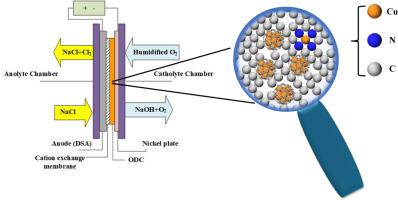
Oxygen reduction is the critical step in advanced chlor-alkali electrolysis, which has motivated extensive research in catalyst development for improved efficiency and durability. This study investigates the oxygen reduction reaction (ORR) on Cu-based electrocatalysts supported on N-doped carbon (Cu/NC), derived from a Cu-modified zeolitic imidazolate framework (ZIF), and their ultimate performance in a chlor-alkali electrolyzer. Through comprehensive electrochemical characterization in 0.1 M NaOH solution, values of Eonset = 0.87 V and E1/2 = 0.75 V (vs. RHE) were obtained, which are competitive with commercial Pt/C despite the superior j achieved by the latter in LSV tests. The electron transfer number (n) of the optimum Cu/NC was 4, very close to benchmark catalyst Pt/C 20 wt. % (n = 3.94). Cu/NC had a low Tafel slope (128 mV dec−1), thus speeding up the ORR on this nanocatalyst. Additionally, chronoamperometry and accelerated durability tests demonstrated the long-term stability of Cu/NC for 10 h. The catalyst was assembled as an oxygen depolarized cathode (ODC) in a purpose-designed advanced chlor-alkali electrolyzer, resulting in a cell voltage of 2.1 V at 1 kA m-2 and 80 °C, which underscores the potential of Cu-based nanocatalysts in electrochemical energy devices. This research serves to leverage insights for the use of advanced electrocatalysts to enhance the efficiency and sustainability of chlor-alkali electrolysis.
期刊介绍:
Electrochimica Acta is an international journal. It is intended for the publication of both original work and reviews in the field of electrochemistry. Electrochemistry should be interpreted to mean any of the research fields covered by the Divisions of the International Society of Electrochemistry listed below, as well as emerging scientific domains covered by ISE New Topics Committee.





 京公网安备 11010802042870号
京ICP备2023020795号-1
京公网安备 11010802042870号
京ICP备2023020795号-1

 分享
分享
 求助内容:
求助内容: 应助结果提醒方式:
 扫码关注我们
