{"title":"选择性激光熔化奥氏体不锈钢氢脆的研究进展:机理、显微组织及未来发展方向","authors":"Chilou Zhou, Xinrui Yan, Haixiang Wang, Yanlei Huang, Jinxin Xue, Jiaqing Li, Xinfeng Li, Wulin Han","doi":"10.1016/j.jmst.2025.01.019","DOIUrl":null,"url":null,"abstract":"Austenitic stainless steel (ASS) is a common material used in high-pressure hydrogen systems. Prolonged exposure to high-pressure hydrogen can cause hydrogen embrittlement (HE), raising significant safety concerns. Selective Laser Melting (SLM), known for its high precision, is a promising additive manufacturing technology that has been widely adopted across various industries. Studies have reported that under certain SLM manufacturing conditions and process parameters, the HE resistance of SLM ASS is significantly better than that of conventionally manufactured (CM) ASS, showing great potential for application in high-pressure hydrogen systems. Thus, studying the HE of SLM ASS is crucial for further improving the safety of high-pressure hydrogen systems. This paper provides an overview of the SLM process, reviews the mechanisms of HE and their synergistic effects, and analyzes the HE characteristics of SLM ASS. Additionally, it examines the influence of unique microstructures and SLM process variables on HE of SLM ASS and offers recommendations for future research to enhance the safety of high-pressure hydrogen systems.","PeriodicalId":16154,"journal":{"name":"Journal of Materials Science & Technology","volume":"6 1","pages":""},"PeriodicalIF":14.3000,"publicationDate":"2025-02-26","publicationTypes":"Journal Article","fieldsOfStudy":null,"isOpenAccess":false,"openAccessPdf":"","citationCount":"0","resultStr":"{\"title\":\"Advancements in hydrogen embrittlement of selective laser melting austenitic stainless steel: Mechanisms, microstructures, and future directions\",\"authors\":\"Chilou Zhou, Xinrui Yan, Haixiang Wang, Yanlei Huang, Jinxin Xue, Jiaqing Li, Xinfeng Li, Wulin Han\",\"doi\":\"10.1016/j.jmst.2025.01.019\",\"DOIUrl\":null,\"url\":null,\"abstract\":\"Austenitic stainless steel (ASS) is a common material used in high-pressure hydrogen systems. Prolonged exposure to high-pressure hydrogen can cause hydrogen embrittlement (HE), raising significant safety concerns. Selective Laser Melting (SLM), known for its high precision, is a promising additive manufacturing technology that has been widely adopted across various industries. Studies have reported that under certain SLM manufacturing conditions and process parameters, the HE resistance of SLM ASS is significantly better than that of conventionally manufactured (CM) ASS, showing great potential for application in high-pressure hydrogen systems. Thus, studying the HE of SLM ASS is crucial for further improving the safety of high-pressure hydrogen systems. This paper provides an overview of the SLM process, reviews the mechanisms of HE and their synergistic effects, and analyzes the HE characteristics of SLM ASS. Additionally, it examines the influence of unique microstructures and SLM process variables on HE of SLM ASS and offers recommendations for future research to enhance the safety of high-pressure hydrogen systems.\",\"PeriodicalId\":16154,\"journal\":{\"name\":\"Journal of Materials Science & Technology\",\"volume\":\"6 1\",\"pages\":\"\"},\"PeriodicalIF\":14.3000,\"publicationDate\":\"2025-02-26\",\"publicationTypes\":\"Journal Article\",\"fieldsOfStudy\":null,\"isOpenAccess\":false,\"openAccessPdf\":\"\",\"citationCount\":\"0\",\"resultStr\":null,\"platform\":\"Semanticscholar\",\"paperid\":null,\"PeriodicalName\":\"Journal of Materials Science & Technology\",\"FirstCategoryId\":\"88\",\"ListUrlMain\":\"https://doi.org/10.1016/j.jmst.2025.01.019\",\"RegionNum\":1,\"RegionCategory\":\"材料科学\",\"ArticlePicture\":[],\"TitleCN\":null,\"AbstractTextCN\":null,\"PMCID\":null,\"EPubDate\":\"\",\"PubModel\":\"\",\"JCR\":\"Q1\",\"JCRName\":\"MATERIALS SCIENCE, MULTIDISCIPLINARY\",\"Score\":null,\"Total\":0}","platform":"Semanticscholar","paperid":null,"PeriodicalName":"Journal of Materials Science & Technology","FirstCategoryId":"88","ListUrlMain":"https://doi.org/10.1016/j.jmst.2025.01.019","RegionNum":1,"RegionCategory":"材料科学","ArticlePicture":[],"TitleCN":null,"AbstractTextCN":null,"PMCID":null,"EPubDate":"","PubModel":"","JCR":"Q1","JCRName":"MATERIALS SCIENCE, MULTIDISCIPLINARY","Score":null,"Total":0}
引用次数: 0
摘要
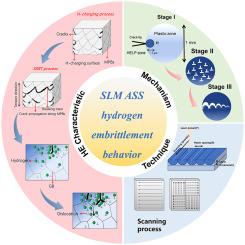
奥氏体不锈钢(ASS)是高压氢气系统中常用的材料。长时间暴露在高压氢气中会导致氢脆(HE),引起重大的安全问题。选择性激光熔化(SLM)以其高精度而闻名,是一种有前途的增材制造技术,已广泛应用于各个行业。有研究报道,在一定的SLM制造条件和工艺参数下,SLM ASS的抗HE性能明显优于常规制造(CM) ASS,在高压氢气系统中具有很大的应用潜力。因此,研究SLM系统的HE对进一步提高高压氢气系统的安全性至关重要。本文综述了SLM工艺,综述了HE的机理及其协同效应,分析了SLM ASS的HE特性,并探讨了独特的微观结构和SLM工艺变量对SLM ASS HE的影响,为今后的研究提供了建议,以提高高压氢气系统的安全性。
Advancements in hydrogen embrittlement of selective laser melting austenitic stainless steel: Mechanisms, microstructures, and future directions
Austenitic stainless steel (ASS) is a common material used in high-pressure hydrogen systems. Prolonged exposure to high-pressure hydrogen can cause hydrogen embrittlement (HE), raising significant safety concerns. Selective Laser Melting (SLM), known for its high precision, is a promising additive manufacturing technology that has been widely adopted across various industries. Studies have reported that under certain SLM manufacturing conditions and process parameters, the HE resistance of SLM ASS is significantly better than that of conventionally manufactured (CM) ASS, showing great potential for application in high-pressure hydrogen systems. Thus, studying the HE of SLM ASS is crucial for further improving the safety of high-pressure hydrogen systems. This paper provides an overview of the SLM process, reviews the mechanisms of HE and their synergistic effects, and analyzes the HE characteristics of SLM ASS. Additionally, it examines the influence of unique microstructures and SLM process variables on HE of SLM ASS and offers recommendations for future research to enhance the safety of high-pressure hydrogen systems.
期刊介绍:
Journal of Materials Science & Technology strives to promote global collaboration in the field of materials science and technology. It primarily publishes original research papers, invited review articles, letters, research notes, and summaries of scientific achievements. The journal covers a wide range of materials science and technology topics, including metallic materials, inorganic nonmetallic materials, and composite materials.




 京公网安备 11010802042870号
京ICP备2023020795号-1
京公网安备 11010802042870号
京ICP备2023020795号-1

 分享
分享
 求助内容:
求助内容: 应助结果提醒方式:
 扫码关注我们
