Zhe Liu, Yi Wang, Xia Gao, Jingwen Ma, Chan Hui, Chao Wang, Yanfei Liu, Yao Huang, Yuting Wen
{"title":"丹参酮IIA通过破坏厌氧条件下的糖酵解抑制MGC803细胞的增殖。","authors":"Zhe Liu, Yi Wang, Xia Gao, Jingwen Ma, Chan Hui, Chao Wang, Yanfei Liu, Yao Huang, Yuting Wen","doi":"10.1007/s12010-025-05205-4","DOIUrl":null,"url":null,"abstract":"<div><p>This study aimed to investigate how Tanshinone IIA (Tan IIA) affects gastric cancer cell (MGC803) proliferation under anaerobic conditions, which are linked to drug resistance and tumor growth. The proliferation of MGC803 cells under both aerobic and anaerobic conditions in response to Tan IIA was assessed using the Cell Counting Kit-8 (CCK-8) assay. To elucidate the molecular mechanisms underlying these effects, proteomics analysis was performed following treatment with 50 µmol/L Tan IIA, focusing on alterations in Gene Ontology (GO) terms and Kyoto Encyclopedia of Genes and Genomes (KEGG) pathways. Additionally, in vitro evaluations such as glucose uptake, lactate production, and adenosine triphosphate (ATP) synthesis were employed to validate the alterations in glycolytic activity observed in anaerobic cells treated with Tan IIA. Under anaerobic conditions, Tan IIA enhanced the inhibitory effect on the proliferation of MGC803 cells. Proteomics data revealed that a total of 6629 proteins were identified and quantified using liquid chromatography-tandem mass spectrometry (LC–MS/MS), with 2604 proteins exhibiting significant changes (fold change > 2 or < 0.5, <i>P</i> < 0.05). KEGG analysis highlighted the perturbation of glycolytic pathway by Tan IIA under anaerobic conditions, accompanied by reduced glucose uptake, lactate production, and ATP synthesis. Additionally, a downregulation of glycolytic enzyme expression was observed at both the mRNA and protein levels, including glyceraldehyde-3-phosphate dehydrogenase (GAPDH), lactate dehydrogenase A (LDHA), phosphofructokinase 2 (PFKP), and pyruvate dehydrogenase (PDH). Tan IIA inhibits the proliferation of MGC803 cells by disrupting the glycolysis under anaerobic conditions, offering a potential treatment for anaerobiosis-resistant solid tumors.</p></div>","PeriodicalId":465,"journal":{"name":"Applied Biochemistry and Biotechnology","volume":"197 6","pages":"3706 - 3723"},"PeriodicalIF":3.3000,"publicationDate":"2025-02-26","publicationTypes":"Journal Article","fieldsOfStudy":null,"isOpenAccess":false,"openAccessPdf":"","citationCount":"0","resultStr":"{\"title\":\"Tanshinone IIA Suppresses the Proliferation of MGC803 Cells by Disrupting Glycolysis Under Anaerobic Conditions\",\"authors\":\"Zhe Liu, Yi Wang, Xia Gao, Jingwen Ma, Chan Hui, Chao Wang, Yanfei Liu, Yao Huang, Yuting Wen\",\"doi\":\"10.1007/s12010-025-05205-4\",\"DOIUrl\":null,\"url\":null,\"abstract\":\"<div><p>This study aimed to investigate how Tanshinone IIA (Tan IIA) affects gastric cancer cell (MGC803) proliferation under anaerobic conditions, which are linked to drug resistance and tumor growth. The proliferation of MGC803 cells under both aerobic and anaerobic conditions in response to Tan IIA was assessed using the Cell Counting Kit-8 (CCK-8) assay. To elucidate the molecular mechanisms underlying these effects, proteomics analysis was performed following treatment with 50 µmol/L Tan IIA, focusing on alterations in Gene Ontology (GO) terms and Kyoto Encyclopedia of Genes and Genomes (KEGG) pathways. Additionally, in vitro evaluations such as glucose uptake, lactate production, and adenosine triphosphate (ATP) synthesis were employed to validate the alterations in glycolytic activity observed in anaerobic cells treated with Tan IIA. Under anaerobic conditions, Tan IIA enhanced the inhibitory effect on the proliferation of MGC803 cells. Proteomics data revealed that a total of 6629 proteins were identified and quantified using liquid chromatography-tandem mass spectrometry (LC–MS/MS), with 2604 proteins exhibiting significant changes (fold change > 2 or < 0.5, <i>P</i> < 0.05). KEGG analysis highlighted the perturbation of glycolytic pathway by Tan IIA under anaerobic conditions, accompanied by reduced glucose uptake, lactate production, and ATP synthesis. Additionally, a downregulation of glycolytic enzyme expression was observed at both the mRNA and protein levels, including glyceraldehyde-3-phosphate dehydrogenase (GAPDH), lactate dehydrogenase A (LDHA), phosphofructokinase 2 (PFKP), and pyruvate dehydrogenase (PDH). Tan IIA inhibits the proliferation of MGC803 cells by disrupting the glycolysis under anaerobic conditions, offering a potential treatment for anaerobiosis-resistant solid tumors.</p></div>\",\"PeriodicalId\":465,\"journal\":{\"name\":\"Applied Biochemistry and Biotechnology\",\"volume\":\"197 6\",\"pages\":\"3706 - 3723\"},\"PeriodicalIF\":3.3000,\"publicationDate\":\"2025-02-26\",\"publicationTypes\":\"Journal Article\",\"fieldsOfStudy\":null,\"isOpenAccess\":false,\"openAccessPdf\":\"\",\"citationCount\":\"0\",\"resultStr\":null,\"platform\":\"Semanticscholar\",\"paperid\":null,\"PeriodicalName\":\"Applied Biochemistry and Biotechnology\",\"FirstCategoryId\":\"5\",\"ListUrlMain\":\"https://link.springer.com/article/10.1007/s12010-025-05205-4\",\"RegionNum\":4,\"RegionCategory\":\"生物学\",\"ArticlePicture\":[],\"TitleCN\":null,\"AbstractTextCN\":null,\"PMCID\":null,\"EPubDate\":\"\",\"PubModel\":\"\",\"JCR\":\"Q3\",\"JCRName\":\"BIOCHEMISTRY & MOLECULAR BIOLOGY\",\"Score\":null,\"Total\":0}","platform":"Semanticscholar","paperid":null,"PeriodicalName":"Applied Biochemistry and Biotechnology","FirstCategoryId":"5","ListUrlMain":"https://link.springer.com/article/10.1007/s12010-025-05205-4","RegionNum":4,"RegionCategory":"生物学","ArticlePicture":[],"TitleCN":null,"AbstractTextCN":null,"PMCID":null,"EPubDate":"","PubModel":"","JCR":"Q3","JCRName":"BIOCHEMISTRY & MOLECULAR BIOLOGY","Score":null,"Total":0}
引用次数: 0
摘要
本研究旨在探讨丹参酮IIA (Tan IIA)如何在厌氧条件下影响胃癌细胞(MGC803)的增殖,并与耐药和肿瘤生长有关。使用细胞计数试剂盒-8 (CCK-8)检测评估Tan IIA在有氧和厌氧条件下MGC803细胞的增殖情况。为了阐明这些影响的分子机制,在50µmol/L Tan IIA处理后进行蛋白质组学分析,重点关注基因本体(GO)术语和京都基因与基因组百科全书(KEGG)途径的改变。此外,体外评估如葡萄糖摄取、乳酸生成和三磷酸腺苷(ATP)合成被用来验证在经Tan IIA处理的厌氧细胞中观察到的糖酵解活性的变化。在厌氧条件下,Tan IIA增强了对MGC803细胞增殖的抑制作用。蛋白质组学数据显示,利用液相色谱-串联质谱(LC-MS/MS)共鉴定和定量了6629个蛋白,其中2604个蛋白发生了显著变化(倍数变化bbb2或
Tanshinone IIA Suppresses the Proliferation of MGC803 Cells by Disrupting Glycolysis Under Anaerobic Conditions
This study aimed to investigate how Tanshinone IIA (Tan IIA) affects gastric cancer cell (MGC803) proliferation under anaerobic conditions, which are linked to drug resistance and tumor growth. The proliferation of MGC803 cells under both aerobic and anaerobic conditions in response to Tan IIA was assessed using the Cell Counting Kit-8 (CCK-8) assay. To elucidate the molecular mechanisms underlying these effects, proteomics analysis was performed following treatment with 50 µmol/L Tan IIA, focusing on alterations in Gene Ontology (GO) terms and Kyoto Encyclopedia of Genes and Genomes (KEGG) pathways. Additionally, in vitro evaluations such as glucose uptake, lactate production, and adenosine triphosphate (ATP) synthesis were employed to validate the alterations in glycolytic activity observed in anaerobic cells treated with Tan IIA. Under anaerobic conditions, Tan IIA enhanced the inhibitory effect on the proliferation of MGC803 cells. Proteomics data revealed that a total of 6629 proteins were identified and quantified using liquid chromatography-tandem mass spectrometry (LC–MS/MS), with 2604 proteins exhibiting significant changes (fold change > 2 or < 0.5, P < 0.05). KEGG analysis highlighted the perturbation of glycolytic pathway by Tan IIA under anaerobic conditions, accompanied by reduced glucose uptake, lactate production, and ATP synthesis. Additionally, a downregulation of glycolytic enzyme expression was observed at both the mRNA and protein levels, including glyceraldehyde-3-phosphate dehydrogenase (GAPDH), lactate dehydrogenase A (LDHA), phosphofructokinase 2 (PFKP), and pyruvate dehydrogenase (PDH). Tan IIA inhibits the proliferation of MGC803 cells by disrupting the glycolysis under anaerobic conditions, offering a potential treatment for anaerobiosis-resistant solid tumors.
期刊介绍:
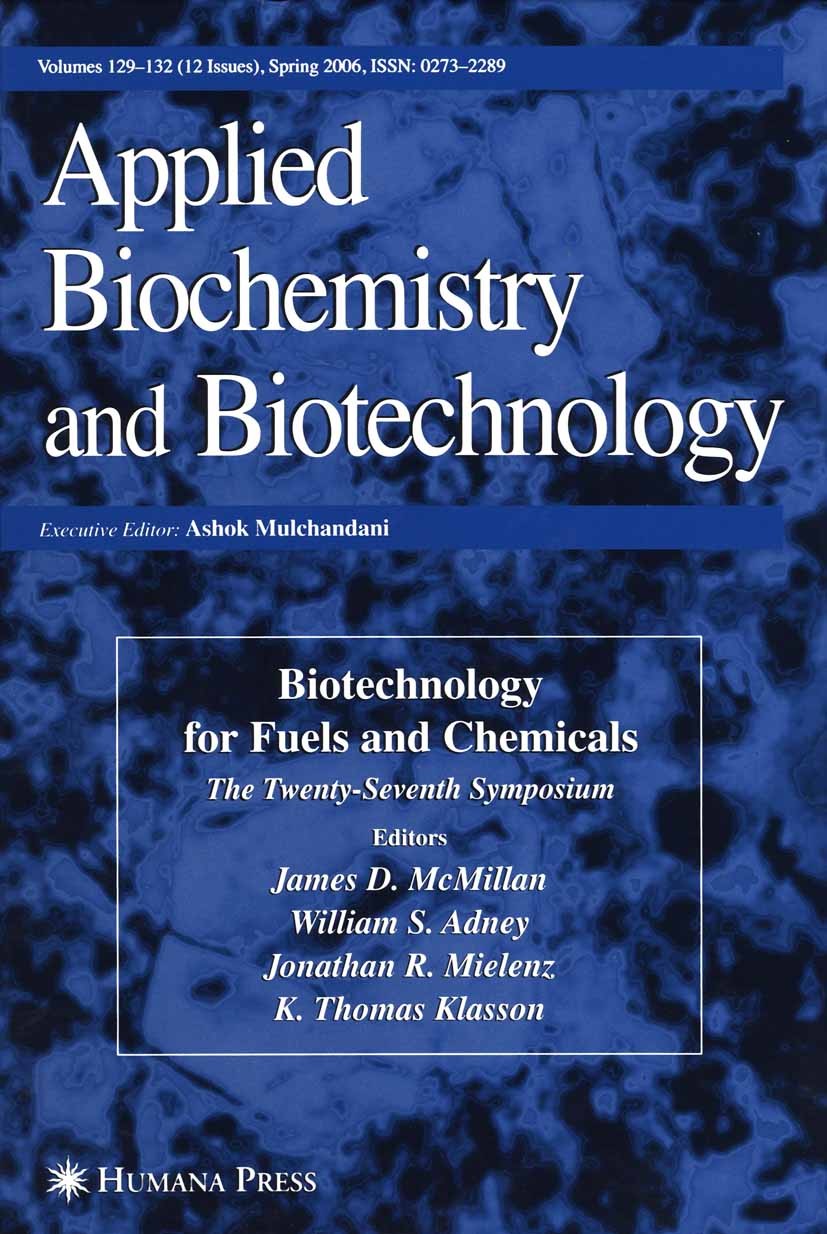
This journal is devoted to publishing the highest quality innovative papers in the fields of biochemistry and biotechnology. The typical focus of the journal is to report applications of novel scientific and technological breakthroughs, as well as technological subjects that are still in the proof-of-concept stage. Applied Biochemistry and Biotechnology provides a forum for case studies and practical concepts of biotechnology, utilization, including controls, statistical data analysis, problem descriptions unique to a particular application, and bioprocess economic analyses. The journal publishes reviews deemed of interest to readers, as well as book reviews, meeting and symposia notices, and news items relating to biotechnology in both the industrial and academic communities.
In addition, Applied Biochemistry and Biotechnology often publishes lists of patents and publications of special interest to readers.




 京公网安备 11010802042870号
京ICP备2023020795号-1
京公网安备 11010802042870号
京ICP备2023020795号-1

 分享
分享
 求助内容:
求助内容: 应助结果提醒方式:
 扫码关注我们
