Muhammad Azizan Samad, Arief Izzairy Zamani, Nazia Abdul Majid, Saiful Anuar Karsani, Syarul Nataqain Baharum, Jamilah Syafawati Yaacob, Mohd Zuwairi Saiman
{"title":"利用分子和代谢组学研究的综合方法揭示了小檗碱治疗的结直肠癌细胞系HCT 116中谷氨酸与端粒酶和氧化应激的联系。","authors":"Muhammad Azizan Samad, Arief Izzairy Zamani, Nazia Abdul Majid, Saiful Anuar Karsani, Syarul Nataqain Baharum, Jamilah Syafawati Yaacob, Mohd Zuwairi Saiman","doi":"10.1007/s12010-025-05200-9","DOIUrl":null,"url":null,"abstract":"<div><p>Colorectal cancer (CRC) is one of the common deadliest cancers worldwide. In Malaysia, the numbers of new CRC cases were horrific and worrisome. Telomerase is both prognostic indicator and predictor of carcinogenesis in CRC patients. Berberine, a telomerase inhibitor, was used in clinical trials and metabolomic studies; however, the association of telomerase with metabolites and metabolic pathways was not fully understood. Colorectal cancer cell line HCT 116 was cultured and treated with 10.54 µg/mL berberine. The cells were harvested at different time points to conduct subsequent analyses. The methods used in this research were real time-polymerase chain reaction (RT-PCR) to assess RNA expressions; Western blot to determine protein levels; <i>TELOTAGGG</i> Telomerase PCR ELISA to determine relative telomerase activity (RTA); 4′,6-diamidino-2-phenylindole (DAPI) staining to determine percentage of nuclei damage; fluorescence microscopy for cell area; spectrophotometric potassium iodide assay for intracellular hydrogen peroxide concentration [H<sub>2</sub>O<sub>2</sub>]; as well as liquid chromatography mass spectrometry (LCMS) and tandem mass spectrometry (MS/MS) to investigate the intracellular metabolites. Partial least square-discriminant analysis (PLS-DA) score plot exhibited an improved separation compared to principal component analysis (PCA) when metabolomic data analysis of HCT 116 at various berberine treatment durations was conducted. Time and berberine treatment had an impact on RTA in HCT 116. RTA was discovered to be positively and negatively correlated to 14 and 2 metabolites, respectively. Glutamic acid was consistently found correlated to RTA. Other four metabolites, i.e., MG(14:0), [3-[hydroxy(phosphonooxy)phosphoryl]oxyphenyl] phosphono hydrogen phosphate), (3S,6S)-6-[[(3S,6R)-6-[(2S,3S,5S)-2,5-diiodo-4-methoxy-6-methyloxan-3-yl]oxy-3,4,5-trihydroxyoxan-2-yl]methoxy]-3,4,5-trihydroxyoxane-2-carboxylic acid, and 1-[5-O-(5′-adenylyloxyphosphonyl)-beta-D-ribofuranosyl]-5-amino-1H-imidazole-4-carboxamide, were newly discovered to be connected to RTA in HCT 116. Four metabolic pathways that majorly affected shared glutamic acid and glutamine. Nitrogen metabolism, <span>d</span>-glutamine and <span>d</span>-glutamate metabolism, glyoxylate and dicarboxylate metabolism, and aminoacyl-tRNA biosynthesis have been identified to be associated with RTA. Network analyses hinted that glutamic acid was also associated with oxidative stress mechanism. The multiple roles glutamic acid acted in diverse metabolic pathways and interaction networks emphasized the importance of glutamic acid in HCT 116 regarding RTA. This research establishes the association between RTA and several chosen RNAs, proteins, metabolites, and oxidative stress mechanisms, consequential in morphological alteration in HCT 116, to expand the knowledge of the intricate biological relationships and telomerase mechanism in CRC.</p></div>","PeriodicalId":465,"journal":{"name":"Applied Biochemistry and Biotechnology","volume":"197 6","pages":"3724 - 3747"},"PeriodicalIF":3.3000,"publicationDate":"2025-02-26","publicationTypes":"Journal Article","fieldsOfStudy":null,"isOpenAccess":false,"openAccessPdf":"","citationCount":"0","resultStr":"{\"title\":\"An Integrative Approach Using Molecular and Metabolomic Studies Reveals the Connection of Glutamic Acid with Telomerase and Oxidative Stress in Berberine-Treated Colorectal Cancer Cell Line HCT 116\",\"authors\":\"Muhammad Azizan Samad, Arief Izzairy Zamani, Nazia Abdul Majid, Saiful Anuar Karsani, Syarul Nataqain Baharum, Jamilah Syafawati Yaacob, Mohd Zuwairi Saiman\",\"doi\":\"10.1007/s12010-025-05200-9\",\"DOIUrl\":null,\"url\":null,\"abstract\":\"<div><p>Colorectal cancer (CRC) is one of the common deadliest cancers worldwide. In Malaysia, the numbers of new CRC cases were horrific and worrisome. Telomerase is both prognostic indicator and predictor of carcinogenesis in CRC patients. Berberine, a telomerase inhibitor, was used in clinical trials and metabolomic studies; however, the association of telomerase with metabolites and metabolic pathways was not fully understood. Colorectal cancer cell line HCT 116 was cultured and treated with 10.54 µg/mL berberine. The cells were harvested at different time points to conduct subsequent analyses. The methods used in this research were real time-polymerase chain reaction (RT-PCR) to assess RNA expressions; Western blot to determine protein levels; <i>TELOTAGGG</i> Telomerase PCR ELISA to determine relative telomerase activity (RTA); 4′,6-diamidino-2-phenylindole (DAPI) staining to determine percentage of nuclei damage; fluorescence microscopy for cell area; spectrophotometric potassium iodide assay for intracellular hydrogen peroxide concentration [H<sub>2</sub>O<sub>2</sub>]; as well as liquid chromatography mass spectrometry (LCMS) and tandem mass spectrometry (MS/MS) to investigate the intracellular metabolites. Partial least square-discriminant analysis (PLS-DA) score plot exhibited an improved separation compared to principal component analysis (PCA) when metabolomic data analysis of HCT 116 at various berberine treatment durations was conducted. Time and berberine treatment had an impact on RTA in HCT 116. RTA was discovered to be positively and negatively correlated to 14 and 2 metabolites, respectively. Glutamic acid was consistently found correlated to RTA. Other four metabolites, i.e., MG(14:0), [3-[hydroxy(phosphonooxy)phosphoryl]oxyphenyl] phosphono hydrogen phosphate), (3S,6S)-6-[[(3S,6R)-6-[(2S,3S,5S)-2,5-diiodo-4-methoxy-6-methyloxan-3-yl]oxy-3,4,5-trihydroxyoxan-2-yl]methoxy]-3,4,5-trihydroxyoxane-2-carboxylic acid, and 1-[5-O-(5′-adenylyloxyphosphonyl)-beta-D-ribofuranosyl]-5-amino-1H-imidazole-4-carboxamide, were newly discovered to be connected to RTA in HCT 116. Four metabolic pathways that majorly affected shared glutamic acid and glutamine. Nitrogen metabolism, <span>d</span>-glutamine and <span>d</span>-glutamate metabolism, glyoxylate and dicarboxylate metabolism, and aminoacyl-tRNA biosynthesis have been identified to be associated with RTA. Network analyses hinted that glutamic acid was also associated with oxidative stress mechanism. The multiple roles glutamic acid acted in diverse metabolic pathways and interaction networks emphasized the importance of glutamic acid in HCT 116 regarding RTA. This research establishes the association between RTA and several chosen RNAs, proteins, metabolites, and oxidative stress mechanisms, consequential in morphological alteration in HCT 116, to expand the knowledge of the intricate biological relationships and telomerase mechanism in CRC.</p></div>\",\"PeriodicalId\":465,\"journal\":{\"name\":\"Applied Biochemistry and Biotechnology\",\"volume\":\"197 6\",\"pages\":\"3724 - 3747\"},\"PeriodicalIF\":3.3000,\"publicationDate\":\"2025-02-26\",\"publicationTypes\":\"Journal Article\",\"fieldsOfStudy\":null,\"isOpenAccess\":false,\"openAccessPdf\":\"\",\"citationCount\":\"0\",\"resultStr\":null,\"platform\":\"Semanticscholar\",\"paperid\":null,\"PeriodicalName\":\"Applied Biochemistry and Biotechnology\",\"FirstCategoryId\":\"5\",\"ListUrlMain\":\"https://link.springer.com/article/10.1007/s12010-025-05200-9\",\"RegionNum\":4,\"RegionCategory\":\"生物学\",\"ArticlePicture\":[],\"TitleCN\":null,\"AbstractTextCN\":null,\"PMCID\":null,\"EPubDate\":\"\",\"PubModel\":\"\",\"JCR\":\"Q3\",\"JCRName\":\"BIOCHEMISTRY & MOLECULAR BIOLOGY\",\"Score\":null,\"Total\":0}","platform":"Semanticscholar","paperid":null,"PeriodicalName":"Applied Biochemistry and Biotechnology","FirstCategoryId":"5","ListUrlMain":"https://link.springer.com/article/10.1007/s12010-025-05200-9","RegionNum":4,"RegionCategory":"生物学","ArticlePicture":[],"TitleCN":null,"AbstractTextCN":null,"PMCID":null,"EPubDate":"","PubModel":"","JCR":"Q3","JCRName":"BIOCHEMISTRY & MOLECULAR BIOLOGY","Score":null,"Total":0}
An Integrative Approach Using Molecular and Metabolomic Studies Reveals the Connection of Glutamic Acid with Telomerase and Oxidative Stress in Berberine-Treated Colorectal Cancer Cell Line HCT 116
Colorectal cancer (CRC) is one of the common deadliest cancers worldwide. In Malaysia, the numbers of new CRC cases were horrific and worrisome. Telomerase is both prognostic indicator and predictor of carcinogenesis in CRC patients. Berberine, a telomerase inhibitor, was used in clinical trials and metabolomic studies; however, the association of telomerase with metabolites and metabolic pathways was not fully understood. Colorectal cancer cell line HCT 116 was cultured and treated with 10.54 µg/mL berberine. The cells were harvested at different time points to conduct subsequent analyses. The methods used in this research were real time-polymerase chain reaction (RT-PCR) to assess RNA expressions; Western blot to determine protein levels; TELOTAGGG Telomerase PCR ELISA to determine relative telomerase activity (RTA); 4′,6-diamidino-2-phenylindole (DAPI) staining to determine percentage of nuclei damage; fluorescence microscopy for cell area; spectrophotometric potassium iodide assay for intracellular hydrogen peroxide concentration [H2O2]; as well as liquid chromatography mass spectrometry (LCMS) and tandem mass spectrometry (MS/MS) to investigate the intracellular metabolites. Partial least square-discriminant analysis (PLS-DA) score plot exhibited an improved separation compared to principal component analysis (PCA) when metabolomic data analysis of HCT 116 at various berberine treatment durations was conducted. Time and berberine treatment had an impact on RTA in HCT 116. RTA was discovered to be positively and negatively correlated to 14 and 2 metabolites, respectively. Glutamic acid was consistently found correlated to RTA. Other four metabolites, i.e., MG(14:0), [3-[hydroxy(phosphonooxy)phosphoryl]oxyphenyl] phosphono hydrogen phosphate), (3S,6S)-6-[[(3S,6R)-6-[(2S,3S,5S)-2,5-diiodo-4-methoxy-6-methyloxan-3-yl]oxy-3,4,5-trihydroxyoxan-2-yl]methoxy]-3,4,5-trihydroxyoxane-2-carboxylic acid, and 1-[5-O-(5′-adenylyloxyphosphonyl)-beta-D-ribofuranosyl]-5-amino-1H-imidazole-4-carboxamide, were newly discovered to be connected to RTA in HCT 116. Four metabolic pathways that majorly affected shared glutamic acid and glutamine. Nitrogen metabolism, d-glutamine and d-glutamate metabolism, glyoxylate and dicarboxylate metabolism, and aminoacyl-tRNA biosynthesis have been identified to be associated with RTA. Network analyses hinted that glutamic acid was also associated with oxidative stress mechanism. The multiple roles glutamic acid acted in diverse metabolic pathways and interaction networks emphasized the importance of glutamic acid in HCT 116 regarding RTA. This research establishes the association between RTA and several chosen RNAs, proteins, metabolites, and oxidative stress mechanisms, consequential in morphological alteration in HCT 116, to expand the knowledge of the intricate biological relationships and telomerase mechanism in CRC.
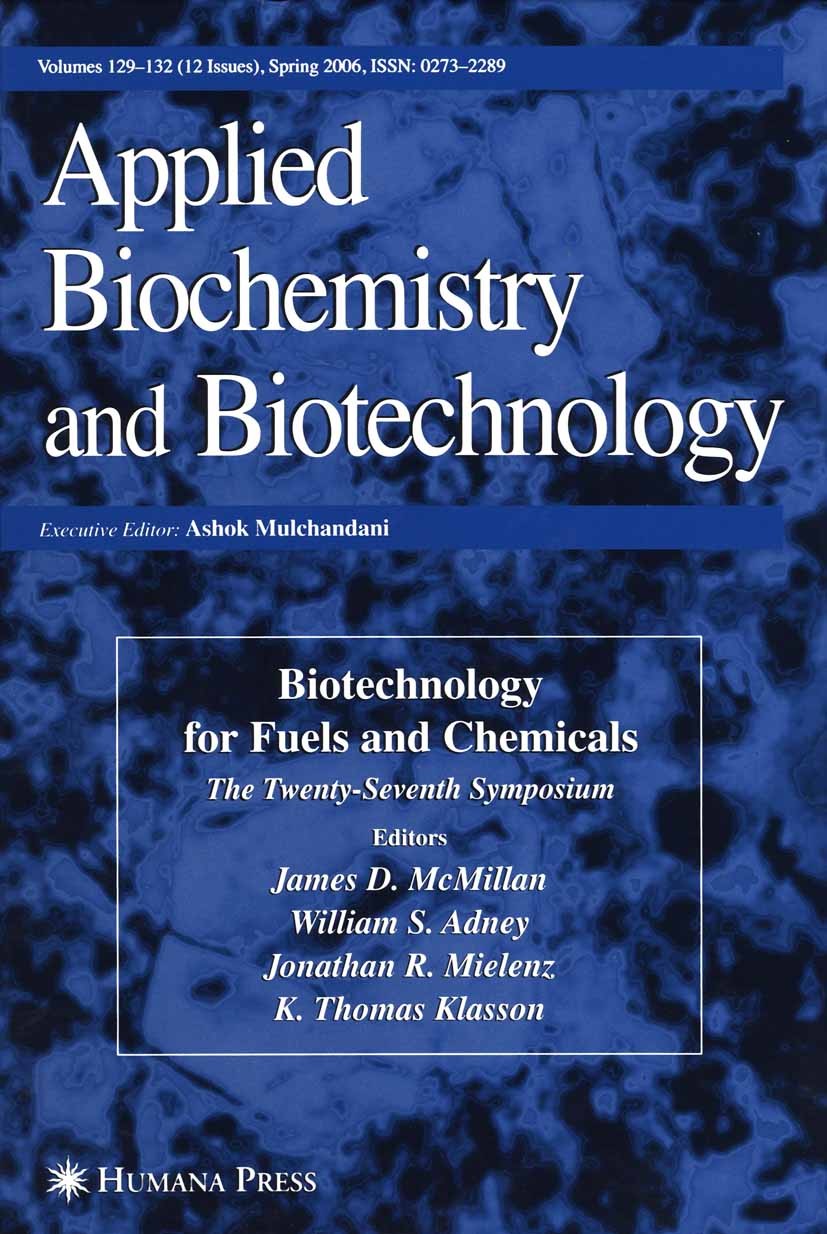
期刊介绍:
This journal is devoted to publishing the highest quality innovative papers in the fields of biochemistry and biotechnology. The typical focus of the journal is to report applications of novel scientific and technological breakthroughs, as well as technological subjects that are still in the proof-of-concept stage. Applied Biochemistry and Biotechnology provides a forum for case studies and practical concepts of biotechnology, utilization, including controls, statistical data analysis, problem descriptions unique to a particular application, and bioprocess economic analyses. The journal publishes reviews deemed of interest to readers, as well as book reviews, meeting and symposia notices, and news items relating to biotechnology in both the industrial and academic communities.
In addition, Applied Biochemistry and Biotechnology often publishes lists of patents and publications of special interest to readers.




 京公网安备 11010802042870号
京ICP备2023020795号-1
京公网安备 11010802042870号
京ICP备2023020795号-1

 分享
分享
 求助内容:
求助内容: 应助结果提醒方式:
 扫码关注我们
