{"title":"萝卜硫素通过Nrf2/HO-1信号通路对穷尽性运动诱导的炎症和氧化应激骨骼肌的影响","authors":"Ruheea Taskin Ruhee, Sihui Ma, Katsuhiko Suzuki","doi":"10.3390/antiox14020210","DOIUrl":null,"url":null,"abstract":"<p><p>Skeletal muscle is primarily involved in exercise performance and health promotion. Sulforaphane (SFN) is a naturally occurring isothiocyanate that indirectly activates the transcription factor Nrf2 (nuclear factor erythroid 2-related factor 2), thus inducing the expression of Nrf2 target genes, including antioxidant enzymes. This study aimed to identify the effects of a single dose of SFN administration on exhaustive exercise-induced inflammation and oxidative stress in skeletal muscle tissue and elucidate the underlying mechanisms. Thirty-six mice were divided into four groups: control, SFN, exercise (Ex), and SFN + Ex. The SFN group and SFN + Ex group received SFN orally (50 mg/kg body weight) 2 h before the running test. Exercise significantly reduced plasma glucose levels, while the SFN-treated group exhibited a smaller reduction. Acute exhaustive exercise increased the expression of pro-inflammatory cytokines in muscle tissue, while the SFN + Ex group exhibited significantly reduced expression of pro-inflammatory cytokines. The gene expression of Nrf2 and its target enzymes, including heme oxygenase (HO)-1, superoxide dismutase (SOD)-1, catalase (CAT), and glutathione peroxidase (GPx)-1, was measured in the gastrocnemius and soleus muscle tissue. Compared with the Ex group, the SFN + Ex group showed upregulated expression of all these parameters, including Nrf2. SFN treatment reduced acute exhaustive exercise-induced oxidative stress and inflammation via activation of the Nrf2/HO-1 signaling pathway.</p>","PeriodicalId":7984,"journal":{"name":"Antioxidants","volume":"14 2","pages":""},"PeriodicalIF":6.6000,"publicationDate":"2025-02-12","publicationTypes":"Journal Article","fieldsOfStudy":null,"isOpenAccess":false,"openAccessPdf":"https://www.ncbi.nlm.nih.gov/pmc/articles/PMC11851896/pdf/","citationCount":"0","resultStr":"{\"title\":\"Effects of Sulforaphane Treatment on Skeletal Muscle from Exhaustive Exercise-Induced Inflammation and Oxidative Stress Through the Nrf2/HO-1 Signaling Pathway.\",\"authors\":\"Ruheea Taskin Ruhee, Sihui Ma, Katsuhiko Suzuki\",\"doi\":\"10.3390/antiox14020210\",\"DOIUrl\":null,\"url\":null,\"abstract\":\"<p><p>Skeletal muscle is primarily involved in exercise performance and health promotion. Sulforaphane (SFN) is a naturally occurring isothiocyanate that indirectly activates the transcription factor Nrf2 (nuclear factor erythroid 2-related factor 2), thus inducing the expression of Nrf2 target genes, including antioxidant enzymes. This study aimed to identify the effects of a single dose of SFN administration on exhaustive exercise-induced inflammation and oxidative stress in skeletal muscle tissue and elucidate the underlying mechanisms. Thirty-six mice were divided into four groups: control, SFN, exercise (Ex), and SFN + Ex. The SFN group and SFN + Ex group received SFN orally (50 mg/kg body weight) 2 h before the running test. Exercise significantly reduced plasma glucose levels, while the SFN-treated group exhibited a smaller reduction. Acute exhaustive exercise increased the expression of pro-inflammatory cytokines in muscle tissue, while the SFN + Ex group exhibited significantly reduced expression of pro-inflammatory cytokines. The gene expression of Nrf2 and its target enzymes, including heme oxygenase (HO)-1, superoxide dismutase (SOD)-1, catalase (CAT), and glutathione peroxidase (GPx)-1, was measured in the gastrocnemius and soleus muscle tissue. Compared with the Ex group, the SFN + Ex group showed upregulated expression of all these parameters, including Nrf2. SFN treatment reduced acute exhaustive exercise-induced oxidative stress and inflammation via activation of the Nrf2/HO-1 signaling pathway.</p>\",\"PeriodicalId\":7984,\"journal\":{\"name\":\"Antioxidants\",\"volume\":\"14 2\",\"pages\":\"\"},\"PeriodicalIF\":6.6000,\"publicationDate\":\"2025-02-12\",\"publicationTypes\":\"Journal Article\",\"fieldsOfStudy\":null,\"isOpenAccess\":false,\"openAccessPdf\":\"https://www.ncbi.nlm.nih.gov/pmc/articles/PMC11851896/pdf/\",\"citationCount\":\"0\",\"resultStr\":null,\"platform\":\"Semanticscholar\",\"paperid\":null,\"PeriodicalName\":\"Antioxidants\",\"FirstCategoryId\":\"3\",\"ListUrlMain\":\"https://doi.org/10.3390/antiox14020210\",\"RegionNum\":2,\"RegionCategory\":\"医学\",\"ArticlePicture\":[],\"TitleCN\":null,\"AbstractTextCN\":null,\"PMCID\":null,\"EPubDate\":\"\",\"PubModel\":\"\",\"JCR\":\"Q1\",\"JCRName\":\"BIOCHEMISTRY & MOLECULAR BIOLOGY\",\"Score\":null,\"Total\":0}","platform":"Semanticscholar","paperid":null,"PeriodicalName":"Antioxidants","FirstCategoryId":"3","ListUrlMain":"https://doi.org/10.3390/antiox14020210","RegionNum":2,"RegionCategory":"医学","ArticlePicture":[],"TitleCN":null,"AbstractTextCN":null,"PMCID":null,"EPubDate":"","PubModel":"","JCR":"Q1","JCRName":"BIOCHEMISTRY & MOLECULAR BIOLOGY","Score":null,"Total":0}
Effects of Sulforaphane Treatment on Skeletal Muscle from Exhaustive Exercise-Induced Inflammation and Oxidative Stress Through the Nrf2/HO-1 Signaling Pathway.
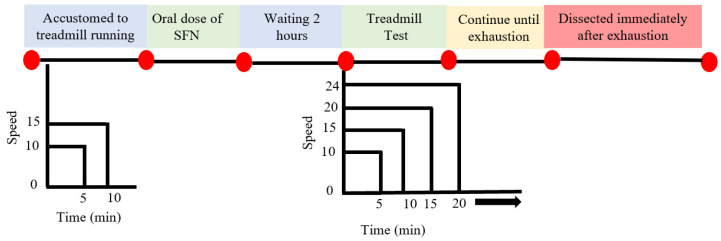
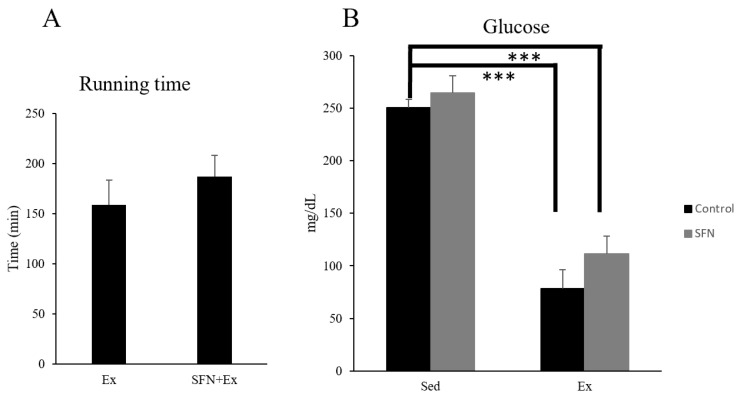
Skeletal muscle is primarily involved in exercise performance and health promotion. Sulforaphane (SFN) is a naturally occurring isothiocyanate that indirectly activates the transcription factor Nrf2 (nuclear factor erythroid 2-related factor 2), thus inducing the expression of Nrf2 target genes, including antioxidant enzymes. This study aimed to identify the effects of a single dose of SFN administration on exhaustive exercise-induced inflammation and oxidative stress in skeletal muscle tissue and elucidate the underlying mechanisms. Thirty-six mice were divided into four groups: control, SFN, exercise (Ex), and SFN + Ex. The SFN group and SFN + Ex group received SFN orally (50 mg/kg body weight) 2 h before the running test. Exercise significantly reduced plasma glucose levels, while the SFN-treated group exhibited a smaller reduction. Acute exhaustive exercise increased the expression of pro-inflammatory cytokines in muscle tissue, while the SFN + Ex group exhibited significantly reduced expression of pro-inflammatory cytokines. The gene expression of Nrf2 and its target enzymes, including heme oxygenase (HO)-1, superoxide dismutase (SOD)-1, catalase (CAT), and glutathione peroxidase (GPx)-1, was measured in the gastrocnemius and soleus muscle tissue. Compared with the Ex group, the SFN + Ex group showed upregulated expression of all these parameters, including Nrf2. SFN treatment reduced acute exhaustive exercise-induced oxidative stress and inflammation via activation of the Nrf2/HO-1 signaling pathway.
AntioxidantsBiochemistry, Genetics and Molecular Biology-Physiology
CiteScore
10.60
自引率
11.40%
发文量
2123
审稿时长
16.3 days
期刊介绍:
Antioxidants (ISSN 2076-3921), provides an advanced forum for studies related to the science and technology of antioxidants. It publishes research papers, reviews and communications. Our aim is to encourage scientists to publish their experimental and theoretical results in as much detail as possible. There is no restriction on the length of the papers. The full experimental details must be provided so that the results can be reproduced. Electronic files and software regarding the full details of the calculation or experimental procedure, if unable to be published in a normal way, can be deposited as supplementary electronic material.





 京公网安备 11010802042870号
京ICP备2023020795号-1
京公网安备 11010802042870号
京ICP备2023020795号-1

 分享
分享
 求助内容:
求助内容: 应助结果提醒方式:
 扫码关注我们
