{"title":"组织工程真皮微脂肪组织与人工真皮用于皮肤癌切除术后面部重建的比较。","authors":"Kyu-Il Lee, Won-Seok Song, Seung-Kyu Han, Kyung-Chul Moon, Seong-Ho Jeong, Eun-Sang Dhong","doi":"10.3390/bioengineering12020145","DOIUrl":null,"url":null,"abstract":"<p><p>Our group has previously demonstrated that tissue-engineered dermis containing cultured fibroblasts or adipose-derived stromal vascular fraction cells is superior to artificial dermis in terms of scar quality for covering facial defects. However, using these cells for clinical applications requires Food and Drug Administration approval and involves complex procedures for cell culture or isolation. This retrospective study aimed to compare effects of tissue-engineered dermis containing micronized adipose tissue (MAT) and artificial dermis for facial reconstruction. Tissue-engineered dermis consisting of MAT seeded on artificial dermis was applied in 30 cases, while artificial dermis without MAT was grafted in 35 cases. Healing time and severities of scar contraction, color mismatch, and landmark distortion at one year after healing were evaluated. Wounds in the tissue-engineered dermis group re-epithelialized in 30.0 ± 4.3 days compared to 34.3 ± 5.4 days in the artificial dermis group (<i>p</i> < 0.05). The average dE2000 score in color mismatch analysis was 4.9 ± 1.7 in the tissue-engineered dermis group and 5.1 ± 1.7 in the artificial dermis group (<i>p</i> = 0.57). The extent of scar contraction was 16.2 ± 12.3% in the tissue-engineered dermis group and 23.2 ± 12.8% in the artificial dermis group (<i>p</i> < 0.05). The average severity grade of landmark distortion was 0.20 ± 0.50 in the tissue-engineered dermis group and 0.50 ± 0.71 in the artificial dermis group (<i>p</i> < 0.05). These findings indicate that tissue-engineered dermis grafts containing MAT are superior to artificial dermis grafts for facial reconstruction in terms of healing time, scar contraction, and landmark distortion severity. However, there was no significant difference in color mismatch between the two groups.</p>","PeriodicalId":8874,"journal":{"name":"Bioengineering","volume":"12 2","pages":""},"PeriodicalIF":3.7000,"publicationDate":"2025-02-03","publicationTypes":"Journal Article","fieldsOfStudy":null,"isOpenAccess":false,"openAccessPdf":"https://www.ncbi.nlm.nih.gov/pmc/articles/PMC11851542/pdf/","citationCount":"0","resultStr":"{\"title\":\"Comparison of Tissue-Engineered Dermis with Micronized Adipose Tissue and Artificial Dermis for Facial Reconstruction Following Skin Cancer Resection.\",\"authors\":\"Kyu-Il Lee, Won-Seok Song, Seung-Kyu Han, Kyung-Chul Moon, Seong-Ho Jeong, Eun-Sang Dhong\",\"doi\":\"10.3390/bioengineering12020145\",\"DOIUrl\":null,\"url\":null,\"abstract\":\"<p><p>Our group has previously demonstrated that tissue-engineered dermis containing cultured fibroblasts or adipose-derived stromal vascular fraction cells is superior to artificial dermis in terms of scar quality for covering facial defects. However, using these cells for clinical applications requires Food and Drug Administration approval and involves complex procedures for cell culture or isolation. This retrospective study aimed to compare effects of tissue-engineered dermis containing micronized adipose tissue (MAT) and artificial dermis for facial reconstruction. Tissue-engineered dermis consisting of MAT seeded on artificial dermis was applied in 30 cases, while artificial dermis without MAT was grafted in 35 cases. Healing time and severities of scar contraction, color mismatch, and landmark distortion at one year after healing were evaluated. Wounds in the tissue-engineered dermis group re-epithelialized in 30.0 ± 4.3 days compared to 34.3 ± 5.4 days in the artificial dermis group (<i>p</i> < 0.05). The average dE2000 score in color mismatch analysis was 4.9 ± 1.7 in the tissue-engineered dermis group and 5.1 ± 1.7 in the artificial dermis group (<i>p</i> = 0.57). The extent of scar contraction was 16.2 ± 12.3% in the tissue-engineered dermis group and 23.2 ± 12.8% in the artificial dermis group (<i>p</i> < 0.05). The average severity grade of landmark distortion was 0.20 ± 0.50 in the tissue-engineered dermis group and 0.50 ± 0.71 in the artificial dermis group (<i>p</i> < 0.05). These findings indicate that tissue-engineered dermis grafts containing MAT are superior to artificial dermis grafts for facial reconstruction in terms of healing time, scar contraction, and landmark distortion severity. However, there was no significant difference in color mismatch between the two groups.</p>\",\"PeriodicalId\":8874,\"journal\":{\"name\":\"Bioengineering\",\"volume\":\"12 2\",\"pages\":\"\"},\"PeriodicalIF\":3.7000,\"publicationDate\":\"2025-02-03\",\"publicationTypes\":\"Journal Article\",\"fieldsOfStudy\":null,\"isOpenAccess\":false,\"openAccessPdf\":\"https://www.ncbi.nlm.nih.gov/pmc/articles/PMC11851542/pdf/\",\"citationCount\":\"0\",\"resultStr\":null,\"platform\":\"Semanticscholar\",\"paperid\":null,\"PeriodicalName\":\"Bioengineering\",\"FirstCategoryId\":\"5\",\"ListUrlMain\":\"https://doi.org/10.3390/bioengineering12020145\",\"RegionNum\":3,\"RegionCategory\":\"医学\",\"ArticlePicture\":[],\"TitleCN\":null,\"AbstractTextCN\":null,\"PMCID\":null,\"EPubDate\":\"\",\"PubModel\":\"\",\"JCR\":\"Q2\",\"JCRName\":\"ENGINEERING, BIOMEDICAL\",\"Score\":null,\"Total\":0}","platform":"Semanticscholar","paperid":null,"PeriodicalName":"Bioengineering","FirstCategoryId":"5","ListUrlMain":"https://doi.org/10.3390/bioengineering12020145","RegionNum":3,"RegionCategory":"医学","ArticlePicture":[],"TitleCN":null,"AbstractTextCN":null,"PMCID":null,"EPubDate":"","PubModel":"","JCR":"Q2","JCRName":"ENGINEERING, BIOMEDICAL","Score":null,"Total":0}
Comparison of Tissue-Engineered Dermis with Micronized Adipose Tissue and Artificial Dermis for Facial Reconstruction Following Skin Cancer Resection.
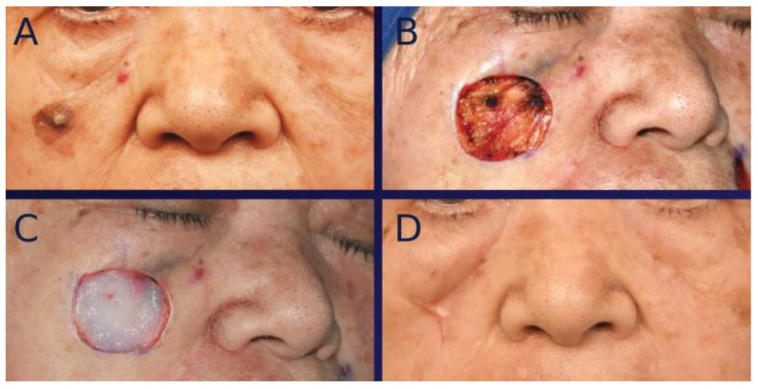
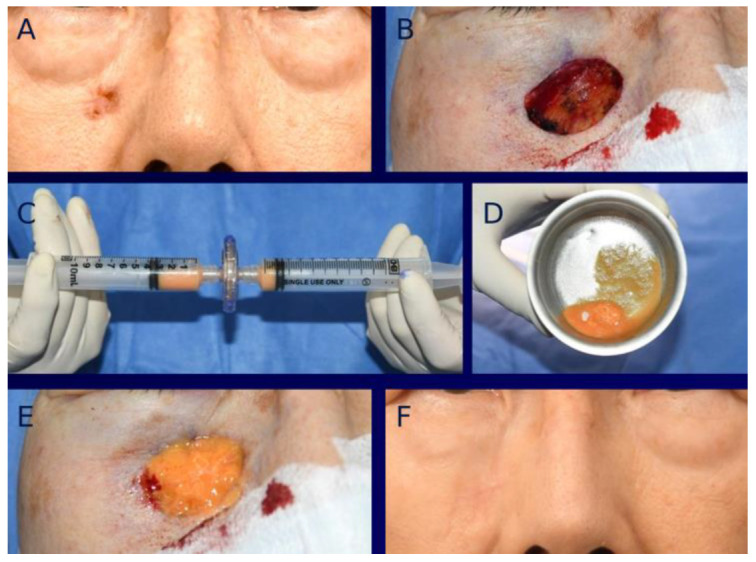
Our group has previously demonstrated that tissue-engineered dermis containing cultured fibroblasts or adipose-derived stromal vascular fraction cells is superior to artificial dermis in terms of scar quality for covering facial defects. However, using these cells for clinical applications requires Food and Drug Administration approval and involves complex procedures for cell culture or isolation. This retrospective study aimed to compare effects of tissue-engineered dermis containing micronized adipose tissue (MAT) and artificial dermis for facial reconstruction. Tissue-engineered dermis consisting of MAT seeded on artificial dermis was applied in 30 cases, while artificial dermis without MAT was grafted in 35 cases. Healing time and severities of scar contraction, color mismatch, and landmark distortion at one year after healing were evaluated. Wounds in the tissue-engineered dermis group re-epithelialized in 30.0 ± 4.3 days compared to 34.3 ± 5.4 days in the artificial dermis group (p < 0.05). The average dE2000 score in color mismatch analysis was 4.9 ± 1.7 in the tissue-engineered dermis group and 5.1 ± 1.7 in the artificial dermis group (p = 0.57). The extent of scar contraction was 16.2 ± 12.3% in the tissue-engineered dermis group and 23.2 ± 12.8% in the artificial dermis group (p < 0.05). The average severity grade of landmark distortion was 0.20 ± 0.50 in the tissue-engineered dermis group and 0.50 ± 0.71 in the artificial dermis group (p < 0.05). These findings indicate that tissue-engineered dermis grafts containing MAT are superior to artificial dermis grafts for facial reconstruction in terms of healing time, scar contraction, and landmark distortion severity. However, there was no significant difference in color mismatch between the two groups.
期刊介绍:
Aims
Bioengineering (ISSN 2306-5354) provides an advanced forum for the science and technology of bioengineering. It publishes original research papers, comprehensive reviews, communications and case reports. Our aim is to encourage scientists to publish their experimental and theoretical results in as much detail as possible. All aspects of bioengineering are welcomed from theoretical concepts to education and applications. There is no restriction on the length of the papers. The full experimental details must be provided so that the results can be reproduced. There are, in addition, four key features of this Journal:
● We are introducing a new concept in scientific and technical publications “The Translational Case Report in Bioengineering”. It is a descriptive explanatory analysis of a transformative or translational event. Understanding that the goal of bioengineering scholarship is to advance towards a transformative or clinical solution to an identified transformative/clinical need, the translational case report is used to explore causation in order to find underlying principles that may guide other similar transformative/translational undertakings.
● Manuscripts regarding research proposals and research ideas will be particularly welcomed.
● Electronic files and software regarding the full details of the calculation and experimental procedure, if unable to be published in a normal way, can be deposited as supplementary material.
● We also accept manuscripts communicating to a broader audience with regard to research projects financed with public funds.
Scope
● Bionics and biological cybernetics: implantology; bio–abio interfaces
● Bioelectronics: wearable electronics; implantable electronics; “more than Moore” electronics; bioelectronics devices
● Bioprocess and biosystems engineering and applications: bioprocess design; biocatalysis; bioseparation and bioreactors; bioinformatics; bioenergy; etc.
● Biomolecular, cellular and tissue engineering and applications: tissue engineering; chromosome engineering; embryo engineering; cellular, molecular and synthetic biology; metabolic engineering; bio-nanotechnology; micro/nano technologies; genetic engineering; transgenic technology
● Biomedical engineering and applications: biomechatronics; biomedical electronics; biomechanics; biomaterials; biomimetics; biomedical diagnostics; biomedical therapy; biomedical devices; sensors and circuits; biomedical imaging and medical information systems; implants and regenerative medicine; neurotechnology; clinical engineering; rehabilitation engineering
● Biochemical engineering and applications: metabolic pathway engineering; modeling and simulation
● Translational bioengineering






 京公网安备 11010802042870号
京ICP备2023020795号-1
京公网安备 11010802042870号
京ICP备2023020795号-1

 分享
分享
 求助内容:
求助内容: 应助结果提醒方式:
 扫码关注我们
