{"title":"CXR-Seg:用于胸部 X 光图像肺部分割的新型深度学习网络。","authors":"Sadia Din, Muhammad Shoaib, Erchin Serpedin","doi":"10.3390/bioengineering12020167","DOIUrl":null,"url":null,"abstract":"<p><p>Over the past decade, deep learning techniques, particularly neural networks, have become essential in medical imaging for tasks like image detection, classification, and segmentation. These methods have greatly enhanced diagnostic accuracy, enabling quicker identification and more effective treatments. In chest X-ray analysis, however, challenges remain in accurately segmenting and classifying organs such as the lungs, heart, diaphragm, sternum, and clavicles, as well as detecting abnormalities in the thoracic cavity. Despite progress, these issues highlight the need for improved approaches to overcome segmentation difficulties and enhance diagnostic reliability. In this context, we propose a novel architecture named CXR-Seg, tailored for semantic segmentation of lungs from chest X-ray images. The proposed network mainly consists of four components, including a pre-trained EfficientNet as an encoder to extract feature encodings, a spatial enhancement module embedded in the skip connection to promote the adjacent feature fusion, a transformer attention module at the bottleneck layer, and a multi-scale feature fusion block at the decoder. The performance of the proposed CRX-Seg was evaluated on four publicly available datasets (MC, Darwin, and Shenzhen for chest X-rays, and TCIA for brain flair segmentation from MRI images). The proposed method achieved a Jaccard index, Dice coefficient, accuracy, sensitivity, and specificity of 95.63%, 97.76%, 98.77%, 98.00%, and 99.05%on MC; 91.66%, 95.62%, 96.35%, 95.53%, and 96.94% on V7 Darwin COVID-19; and 92.97%, 96.32%, 96.69%, 96.01%, and 97.40% on the Shenzhen Tuberculosis CXR Dataset, respectively. Conclusively, the proposed network offers improved performance in comparison with state-of-the-art methods, and better generalization for the semantic segmentation of lungs from chest X-ray images.</p>","PeriodicalId":8874,"journal":{"name":"Bioengineering","volume":"12 2","pages":""},"PeriodicalIF":3.7000,"publicationDate":"2025-02-10","publicationTypes":"Journal Article","fieldsOfStudy":null,"isOpenAccess":false,"openAccessPdf":"https://www.ncbi.nlm.nih.gov/pmc/articles/PMC11851456/pdf/","citationCount":"0","resultStr":"{\"title\":\"CXR-Seg: A Novel Deep Learning Network for Lung Segmentation from Chest X-Ray Images.\",\"authors\":\"Sadia Din, Muhammad Shoaib, Erchin Serpedin\",\"doi\":\"10.3390/bioengineering12020167\",\"DOIUrl\":null,\"url\":null,\"abstract\":\"<p><p>Over the past decade, deep learning techniques, particularly neural networks, have become essential in medical imaging for tasks like image detection, classification, and segmentation. These methods have greatly enhanced diagnostic accuracy, enabling quicker identification and more effective treatments. In chest X-ray analysis, however, challenges remain in accurately segmenting and classifying organs such as the lungs, heart, diaphragm, sternum, and clavicles, as well as detecting abnormalities in the thoracic cavity. Despite progress, these issues highlight the need for improved approaches to overcome segmentation difficulties and enhance diagnostic reliability. In this context, we propose a novel architecture named CXR-Seg, tailored for semantic segmentation of lungs from chest X-ray images. The proposed network mainly consists of four components, including a pre-trained EfficientNet as an encoder to extract feature encodings, a spatial enhancement module embedded in the skip connection to promote the adjacent feature fusion, a transformer attention module at the bottleneck layer, and a multi-scale feature fusion block at the decoder. The performance of the proposed CRX-Seg was evaluated on four publicly available datasets (MC, Darwin, and Shenzhen for chest X-rays, and TCIA for brain flair segmentation from MRI images). The proposed method achieved a Jaccard index, Dice coefficient, accuracy, sensitivity, and specificity of 95.63%, 97.76%, 98.77%, 98.00%, and 99.05%on MC; 91.66%, 95.62%, 96.35%, 95.53%, and 96.94% on V7 Darwin COVID-19; and 92.97%, 96.32%, 96.69%, 96.01%, and 97.40% on the Shenzhen Tuberculosis CXR Dataset, respectively. Conclusively, the proposed network offers improved performance in comparison with state-of-the-art methods, and better generalization for the semantic segmentation of lungs from chest X-ray images.</p>\",\"PeriodicalId\":8874,\"journal\":{\"name\":\"Bioengineering\",\"volume\":\"12 2\",\"pages\":\"\"},\"PeriodicalIF\":3.7000,\"publicationDate\":\"2025-02-10\",\"publicationTypes\":\"Journal Article\",\"fieldsOfStudy\":null,\"isOpenAccess\":false,\"openAccessPdf\":\"https://www.ncbi.nlm.nih.gov/pmc/articles/PMC11851456/pdf/\",\"citationCount\":\"0\",\"resultStr\":null,\"platform\":\"Semanticscholar\",\"paperid\":null,\"PeriodicalName\":\"Bioengineering\",\"FirstCategoryId\":\"5\",\"ListUrlMain\":\"https://doi.org/10.3390/bioengineering12020167\",\"RegionNum\":3,\"RegionCategory\":\"医学\",\"ArticlePicture\":[],\"TitleCN\":null,\"AbstractTextCN\":null,\"PMCID\":null,\"EPubDate\":\"\",\"PubModel\":\"\",\"JCR\":\"Q2\",\"JCRName\":\"ENGINEERING, BIOMEDICAL\",\"Score\":null,\"Total\":0}","platform":"Semanticscholar","paperid":null,"PeriodicalName":"Bioengineering","FirstCategoryId":"5","ListUrlMain":"https://doi.org/10.3390/bioengineering12020167","RegionNum":3,"RegionCategory":"医学","ArticlePicture":[],"TitleCN":null,"AbstractTextCN":null,"PMCID":null,"EPubDate":"","PubModel":"","JCR":"Q2","JCRName":"ENGINEERING, BIOMEDICAL","Score":null,"Total":0}
引用次数: 0
摘要
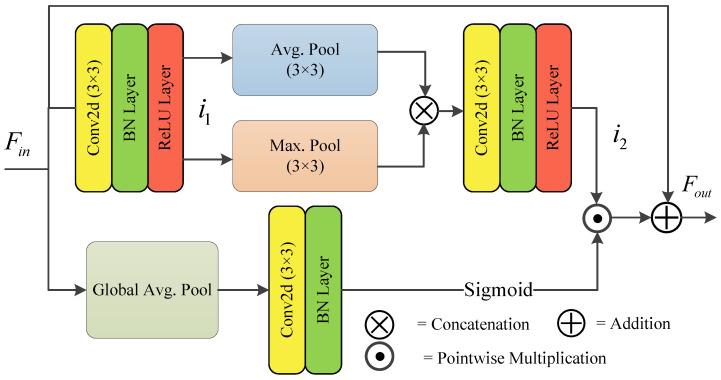
在过去的十年中,深度学习技术,特别是神经网络,已经成为医学成像中图像检测、分类和分割等任务的关键。这些方法大大提高了诊断的准确性,实现了更快的识别和更有效的治疗。然而,在胸部x线分析中,在准确分割和分类器官(如肺、心脏、隔膜、胸骨和锁骨)以及检测胸腔异常方面仍然存在挑战。尽管取得了进展,但这些问题突出表明需要改进方法来克服分割困难并提高诊断可靠性。在这种情况下,我们提出了一种名为CXR-Seg的新架构,专门用于从胸部x射线图像中对肺部进行语义分割。该网络主要由四个部分组成,包括预训练的高效网络(effentnet)作为编码器提取特征编码,嵌入在跳跳连接中的空间增强模块促进相邻特征融合,瓶颈层的变压器注意模块和解码器的多尺度特征融合块。所提出的CRX-Seg的性能在四个公开可用的数据集上进行了评估(MC, Darwin和Shenzhen用于胸部x射线,TCIA用于MRI图像的脑flair分割)。该方法在MC上的Jaccard指数、Dice系数、准确率、灵敏度和特异度分别为95.63%、97.76%、98.77%、98.00%和99.05%;V7 Darwin COVID-19阳性率分别为91.66%、95.62%、96.35%、95.53%、96.94%;深圳结核病CXR数据集的比例分别为92.97%、96.32%、96.69%、96.01%和97.40%。最后,与最先进的方法相比,所提出的网络提供了更好的性能,并且更好地概括了胸部x射线图像中肺部的语义分割。
CXR-Seg: A Novel Deep Learning Network for Lung Segmentation from Chest X-Ray Images.
Over the past decade, deep learning techniques, particularly neural networks, have become essential in medical imaging for tasks like image detection, classification, and segmentation. These methods have greatly enhanced diagnostic accuracy, enabling quicker identification and more effective treatments. In chest X-ray analysis, however, challenges remain in accurately segmenting and classifying organs such as the lungs, heart, diaphragm, sternum, and clavicles, as well as detecting abnormalities in the thoracic cavity. Despite progress, these issues highlight the need for improved approaches to overcome segmentation difficulties and enhance diagnostic reliability. In this context, we propose a novel architecture named CXR-Seg, tailored for semantic segmentation of lungs from chest X-ray images. The proposed network mainly consists of four components, including a pre-trained EfficientNet as an encoder to extract feature encodings, a spatial enhancement module embedded in the skip connection to promote the adjacent feature fusion, a transformer attention module at the bottleneck layer, and a multi-scale feature fusion block at the decoder. The performance of the proposed CRX-Seg was evaluated on four publicly available datasets (MC, Darwin, and Shenzhen for chest X-rays, and TCIA for brain flair segmentation from MRI images). The proposed method achieved a Jaccard index, Dice coefficient, accuracy, sensitivity, and specificity of 95.63%, 97.76%, 98.77%, 98.00%, and 99.05%on MC; 91.66%, 95.62%, 96.35%, 95.53%, and 96.94% on V7 Darwin COVID-19; and 92.97%, 96.32%, 96.69%, 96.01%, and 97.40% on the Shenzhen Tuberculosis CXR Dataset, respectively. Conclusively, the proposed network offers improved performance in comparison with state-of-the-art methods, and better generalization for the semantic segmentation of lungs from chest X-ray images.
期刊介绍:
Aims
Bioengineering (ISSN 2306-5354) provides an advanced forum for the science and technology of bioengineering. It publishes original research papers, comprehensive reviews, communications and case reports. Our aim is to encourage scientists to publish their experimental and theoretical results in as much detail as possible. All aspects of bioengineering are welcomed from theoretical concepts to education and applications. There is no restriction on the length of the papers. The full experimental details must be provided so that the results can be reproduced. There are, in addition, four key features of this Journal:
● We are introducing a new concept in scientific and technical publications “The Translational Case Report in Bioengineering”. It is a descriptive explanatory analysis of a transformative or translational event. Understanding that the goal of bioengineering scholarship is to advance towards a transformative or clinical solution to an identified transformative/clinical need, the translational case report is used to explore causation in order to find underlying principles that may guide other similar transformative/translational undertakings.
● Manuscripts regarding research proposals and research ideas will be particularly welcomed.
● Electronic files and software regarding the full details of the calculation and experimental procedure, if unable to be published in a normal way, can be deposited as supplementary material.
● We also accept manuscripts communicating to a broader audience with regard to research projects financed with public funds.
Scope
● Bionics and biological cybernetics: implantology; bio–abio interfaces
● Bioelectronics: wearable electronics; implantable electronics; “more than Moore” electronics; bioelectronics devices
● Bioprocess and biosystems engineering and applications: bioprocess design; biocatalysis; bioseparation and bioreactors; bioinformatics; bioenergy; etc.
● Biomolecular, cellular and tissue engineering and applications: tissue engineering; chromosome engineering; embryo engineering; cellular, molecular and synthetic biology; metabolic engineering; bio-nanotechnology; micro/nano technologies; genetic engineering; transgenic technology
● Biomedical engineering and applications: biomechatronics; biomedical electronics; biomechanics; biomaterials; biomimetics; biomedical diagnostics; biomedical therapy; biomedical devices; sensors and circuits; biomedical imaging and medical information systems; implants and regenerative medicine; neurotechnology; clinical engineering; rehabilitation engineering
● Biochemical engineering and applications: metabolic pathway engineering; modeling and simulation
● Translational bioengineering







 京公网安备 11010802042870号
京ICP备2023020795号-1
京公网安备 11010802042870号
京ICP备2023020795号-1

 分享
分享
 求助内容:
求助内容: 应助结果提醒方式:
 扫码关注我们
