{"title":"成人体型指数与成人血清抗衰老蛋白Klotho水平之间的关系:2007年至2016年NHANES基于人群的横断面研究","authors":"Li Gong, Jinghan Xu, Yiyang Zhuang, Liwei Zeng, Zhenfei Peng, Yuzhou Liu, Yinluan Huang, Yutian Chen, Fengyi Huang, Chunli Piao","doi":"10.3389/fendo.2025.1424350","DOIUrl":null,"url":null,"abstract":"<p><strong>Purpose: </strong>Adult body shape index (ABSI) is widely recognized as a reliable indicator for evaluating body fat distribution and dysfunction. However, the relationship between ABSI and Klotho protein, known for its anti-aging biological function, has not yet been investigated. Therefore, the aim of this study was to assess the correlation between ABSI and serum Klotho levels in adults residing in the United States.</p><p><strong>Methods: </strong>A cross-sectional study of participants was conducted based on the 2007-2016 National Health and Nutrition Examination Survey. Visceral adiposity was determined using the ABSI score, and Klotho protein concentration was measured using an enzyme-linked immunosorbent assay kit. Multiple regression models were used to estimate the association between ABSI and Klotho protein after adjusting for several potential confounding variables. Subgroup analysis of ABSI and Klotho was performed using restricted cubic splines.</p><p><strong>Result: </strong>A total of 11,070 adults were eligible for participation, with a mean ABSI of 8.28 ± 0.45 and a mean Klotho protein concentration of 853.33 ± 309.80 pg/mL. Multivariate regression analysis showed that participants with high ABSI scores had lower serum Klotho protein concentrations. When ABSI was divided into quartiles, after full adjustment, Klotho protein levels were lower in participants in the fourth fully adjusted ABSI quartile (Q4: -0.352 pg/ml) than in those in the lowest quartile (Q1) (P<0.0001).</p><p><strong>Conclusion: </strong>There was a negative linear correlation between ABSI score and serum Klotho concentration. Higher ABSI was associated with lower serum Klotho concentrations; however, this association did not seem to be significant in subjects with BMI ≥30 kg/m2.Further study is needed to verify the causality of this association and elucidate the underlying mechanisms.</p>","PeriodicalId":12447,"journal":{"name":"Frontiers in Endocrinology","volume":"16 ","pages":"1424350"},"PeriodicalIF":5.7000,"publicationDate":"2025-02-11","publicationTypes":"Journal Article","fieldsOfStudy":null,"isOpenAccess":false,"openAccessPdf":"https://www.ncbi.nlm.nih.gov/pmc/articles/PMC11850266/pdf/","citationCount":"0","resultStr":"{\"title\":\"Association between adult body shape index and serum levels of the anti-aging protein Klotho in adults: a population-based cross-sectional study of the NHANES from 2007 to 2016.\",\"authors\":\"Li Gong, Jinghan Xu, Yiyang Zhuang, Liwei Zeng, Zhenfei Peng, Yuzhou Liu, Yinluan Huang, Yutian Chen, Fengyi Huang, Chunli Piao\",\"doi\":\"10.3389/fendo.2025.1424350\",\"DOIUrl\":null,\"url\":null,\"abstract\":\"<p><strong>Purpose: </strong>Adult body shape index (ABSI) is widely recognized as a reliable indicator for evaluating body fat distribution and dysfunction. However, the relationship between ABSI and Klotho protein, known for its anti-aging biological function, has not yet been investigated. Therefore, the aim of this study was to assess the correlation between ABSI and serum Klotho levels in adults residing in the United States.</p><p><strong>Methods: </strong>A cross-sectional study of participants was conducted based on the 2007-2016 National Health and Nutrition Examination Survey. Visceral adiposity was determined using the ABSI score, and Klotho protein concentration was measured using an enzyme-linked immunosorbent assay kit. Multiple regression models were used to estimate the association between ABSI and Klotho protein after adjusting for several potential confounding variables. Subgroup analysis of ABSI and Klotho was performed using restricted cubic splines.</p><p><strong>Result: </strong>A total of 11,070 adults were eligible for participation, with a mean ABSI of 8.28 ± 0.45 and a mean Klotho protein concentration of 853.33 ± 309.80 pg/mL. Multivariate regression analysis showed that participants with high ABSI scores had lower serum Klotho protein concentrations. When ABSI was divided into quartiles, after full adjustment, Klotho protein levels were lower in participants in the fourth fully adjusted ABSI quartile (Q4: -0.352 pg/ml) than in those in the lowest quartile (Q1) (P<0.0001).</p><p><strong>Conclusion: </strong>There was a negative linear correlation between ABSI score and serum Klotho concentration. Higher ABSI was associated with lower serum Klotho concentrations; however, this association did not seem to be significant in subjects with BMI ≥30 kg/m2.Further study is needed to verify the causality of this association and elucidate the underlying mechanisms.</p>\",\"PeriodicalId\":12447,\"journal\":{\"name\":\"Frontiers in Endocrinology\",\"volume\":\"16 \",\"pages\":\"1424350\"},\"PeriodicalIF\":5.7000,\"publicationDate\":\"2025-02-11\",\"publicationTypes\":\"Journal Article\",\"fieldsOfStudy\":null,\"isOpenAccess\":false,\"openAccessPdf\":\"https://www.ncbi.nlm.nih.gov/pmc/articles/PMC11850266/pdf/\",\"citationCount\":\"0\",\"resultStr\":null,\"platform\":\"Semanticscholar\",\"paperid\":null,\"PeriodicalName\":\"Frontiers in Endocrinology\",\"FirstCategoryId\":\"3\",\"ListUrlMain\":\"https://doi.org/10.3389/fendo.2025.1424350\",\"RegionNum\":2,\"RegionCategory\":\"医学\",\"ArticlePicture\":[],\"TitleCN\":null,\"AbstractTextCN\":null,\"PMCID\":null,\"EPubDate\":\"2025/1/1 0:00:00\",\"PubModel\":\"eCollection\",\"JCR\":\"Q2\",\"JCRName\":\"ENDOCRINOLOGY & METABOLISM\",\"Score\":null,\"Total\":0}","platform":"Semanticscholar","paperid":null,"PeriodicalName":"Frontiers in Endocrinology","FirstCategoryId":"3","ListUrlMain":"https://doi.org/10.3389/fendo.2025.1424350","RegionNum":2,"RegionCategory":"医学","ArticlePicture":[],"TitleCN":null,"AbstractTextCN":null,"PMCID":null,"EPubDate":"2025/1/1 0:00:00","PubModel":"eCollection","JCR":"Q2","JCRName":"ENDOCRINOLOGY & METABOLISM","Score":null,"Total":0}
Association between adult body shape index and serum levels of the anti-aging protein Klotho in adults: a population-based cross-sectional study of the NHANES from 2007 to 2016.
Purpose: Adult body shape index (ABSI) is widely recognized as a reliable indicator for evaluating body fat distribution and dysfunction. However, the relationship between ABSI and Klotho protein, known for its anti-aging biological function, has not yet been investigated. Therefore, the aim of this study was to assess the correlation between ABSI and serum Klotho levels in adults residing in the United States.
Methods: A cross-sectional study of participants was conducted based on the 2007-2016 National Health and Nutrition Examination Survey. Visceral adiposity was determined using the ABSI score, and Klotho protein concentration was measured using an enzyme-linked immunosorbent assay kit. Multiple regression models were used to estimate the association between ABSI and Klotho protein after adjusting for several potential confounding variables. Subgroup analysis of ABSI and Klotho was performed using restricted cubic splines.
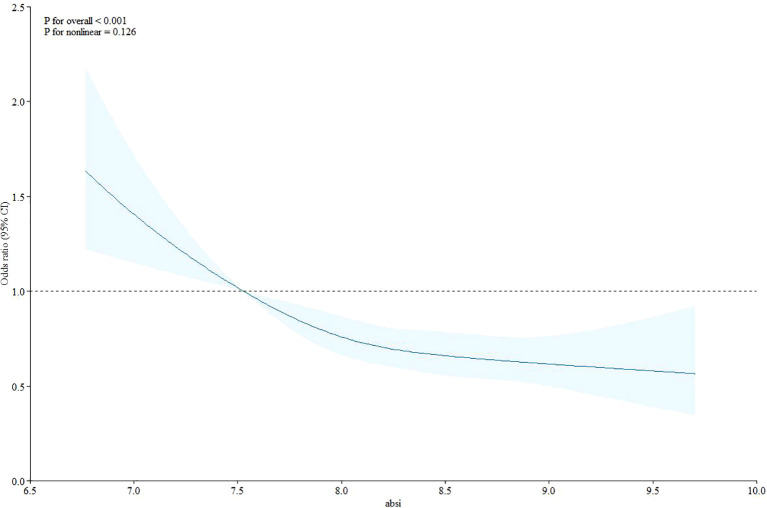
Result: A total of 11,070 adults were eligible for participation, with a mean ABSI of 8.28 ± 0.45 and a mean Klotho protein concentration of 853.33 ± 309.80 pg/mL. Multivariate regression analysis showed that participants with high ABSI scores had lower serum Klotho protein concentrations. When ABSI was divided into quartiles, after full adjustment, Klotho protein levels were lower in participants in the fourth fully adjusted ABSI quartile (Q4: -0.352 pg/ml) than in those in the lowest quartile (Q1) (P<0.0001).
Conclusion: There was a negative linear correlation between ABSI score and serum Klotho concentration. Higher ABSI was associated with lower serum Klotho concentrations; however, this association did not seem to be significant in subjects with BMI ≥30 kg/m2.Further study is needed to verify the causality of this association and elucidate the underlying mechanisms.
期刊介绍:
Frontiers in Endocrinology is a field journal of the "Frontiers in" journal series.
In today’s world, endocrinology is becoming increasingly important as it underlies many of the challenges societies face - from obesity and diabetes to reproduction, population control and aging. Endocrinology covers a broad field from basic molecular and cellular communication through to clinical care and some of the most crucial public health issues. The journal, thus, welcomes outstanding contributions in any domain of endocrinology.
Frontiers in Endocrinology publishes articles on the most outstanding discoveries across a wide research spectrum of Endocrinology. The mission of Frontiers in Endocrinology is to bring all relevant Endocrinology areas together on a single platform.





 京公网安备 11010802042870号
京ICP备2023020795号-1
京公网安备 11010802042870号
京ICP备2023020795号-1

 分享
分享
 求助内容:
求助内容: 应助结果提醒方式:
 扫码关注我们
