Amy Ronaldson, Kia-Chong Chua, Jane Hahn, Claire Henderson
{"title":"“人人重要”运动对心理健康素养的影响:社会经济地位和种族的调节作用。","authors":"Amy Ronaldson, Kia-Chong Chua, Jane Hahn, Claire Henderson","doi":"10.1093/eurpub/ckaf020","DOIUrl":null,"url":null,"abstract":"<p><p>We previously reported short-lived improvements in mental health literacy following the Every Mind Matters campaign, followed by a return to baseline levels. In this study, we aimed to examine whether either socioeconomic status or ethnicity moderated these improvements. We conducted regression analyses on a nationally representative, repeated cross-sectional dataset of nine survey waves from September 2019 to March 2022. Interaction terms (ethnicity*wave, socioeconomic status*wave) were entered into regression models to assess the moderating effect of these variables. Where significant interactions emerged, we obtained marginal estimates and plotted them for ease of interpretation. We found no evidence that improvements seen in mental health literacy following the launch of Every Mind Matters were moderated by ethnicity or socioeconomic status. Over time, there was some evidence of lower scores relating to symptoms recognition, knowledge of actions to improve mental health, and desire for social distance (stigma) among adults of lower socioeconomic status, which converged again for symptom recognition. These findings suggest that while a web resource can empower people and improve mental health literacy, in relation to ethnicity and socioeconomic status, it may be that while this can avoid a widening of inequalities it is insufficient to lead to a narrowing of them.</p>","PeriodicalId":12059,"journal":{"name":"European Journal of Public Health","volume":" ","pages":"366-372"},"PeriodicalIF":3.9000,"publicationDate":"2025-04-01","publicationTypes":"Journal Article","fieldsOfStudy":null,"isOpenAccess":false,"openAccessPdf":"https://www.ncbi.nlm.nih.gov/pmc/articles/PMC11967896/pdf/","citationCount":"0","resultStr":"{\"title\":\"The effect of the 'Every Mind Matters' campaign on mental health literacy: the moderating roles of socioeconomic status and ethnicity.\",\"authors\":\"Amy Ronaldson, Kia-Chong Chua, Jane Hahn, Claire Henderson\",\"doi\":\"10.1093/eurpub/ckaf020\",\"DOIUrl\":null,\"url\":null,\"abstract\":\"<p><p>We previously reported short-lived improvements in mental health literacy following the Every Mind Matters campaign, followed by a return to baseline levels. In this study, we aimed to examine whether either socioeconomic status or ethnicity moderated these improvements. We conducted regression analyses on a nationally representative, repeated cross-sectional dataset of nine survey waves from September 2019 to March 2022. Interaction terms (ethnicity*wave, socioeconomic status*wave) were entered into regression models to assess the moderating effect of these variables. Where significant interactions emerged, we obtained marginal estimates and plotted them for ease of interpretation. We found no evidence that improvements seen in mental health literacy following the launch of Every Mind Matters were moderated by ethnicity or socioeconomic status. Over time, there was some evidence of lower scores relating to symptoms recognition, knowledge of actions to improve mental health, and desire for social distance (stigma) among adults of lower socioeconomic status, which converged again for symptom recognition. These findings suggest that while a web resource can empower people and improve mental health literacy, in relation to ethnicity and socioeconomic status, it may be that while this can avoid a widening of inequalities it is insufficient to lead to a narrowing of them.</p>\",\"PeriodicalId\":12059,\"journal\":{\"name\":\"European Journal of Public Health\",\"volume\":\" \",\"pages\":\"366-372\"},\"PeriodicalIF\":3.9000,\"publicationDate\":\"2025-04-01\",\"publicationTypes\":\"Journal Article\",\"fieldsOfStudy\":null,\"isOpenAccess\":false,\"openAccessPdf\":\"https://www.ncbi.nlm.nih.gov/pmc/articles/PMC11967896/pdf/\",\"citationCount\":\"0\",\"resultStr\":null,\"platform\":\"Semanticscholar\",\"paperid\":null,\"PeriodicalName\":\"European Journal of Public Health\",\"FirstCategoryId\":\"3\",\"ListUrlMain\":\"https://doi.org/10.1093/eurpub/ckaf020\",\"RegionNum\":3,\"RegionCategory\":\"医学\",\"ArticlePicture\":[],\"TitleCN\":null,\"AbstractTextCN\":null,\"PMCID\":null,\"EPubDate\":\"\",\"PubModel\":\"\",\"JCR\":\"Q1\",\"JCRName\":\"PUBLIC, ENVIRONMENTAL & OCCUPATIONAL HEALTH\",\"Score\":null,\"Total\":0}","platform":"Semanticscholar","paperid":null,"PeriodicalName":"European Journal of Public Health","FirstCategoryId":"3","ListUrlMain":"https://doi.org/10.1093/eurpub/ckaf020","RegionNum":3,"RegionCategory":"医学","ArticlePicture":[],"TitleCN":null,"AbstractTextCN":null,"PMCID":null,"EPubDate":"","PubModel":"","JCR":"Q1","JCRName":"PUBLIC, ENVIRONMENTAL & OCCUPATIONAL HEALTH","Score":null,"Total":0}
引用次数: 0
摘要
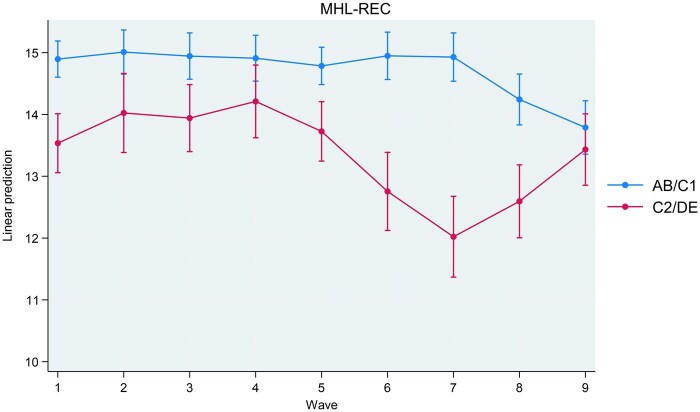
我们之前报道了在“每个人都很重要”运动之后,心理健康素养的短暂改善,随后又回到了基线水平。在这项研究中,我们旨在研究社会经济地位或种族是否会减缓这些改善。我们对2019年9月至2022年3月期间9次调查波的全国代表性重复横断面数据集进行了回归分析。将相互作用项(种族*波,社会经济地位*波)输入回归模型以评估这些变量的调节作用。在重要的相互作用出现的地方,我们获得了边际估计,并绘制了便于解释的图。我们没有发现任何证据表明,在Every Mind Matters启动后,心理健康素养的提高受到种族或社会经济地位的影响。随着时间的推移,有一些证据表明,社会经济地位较低的成年人在症状识别、改善心理健康的行动知识和对社会距离(耻辱)的渴望方面得分较低,这些得分在症状识别方面再次趋同。这些发现表明,虽然网络资源可以增强人们的能力,提高人们在种族和社会经济地位方面的心理健康素养,但这可能可以避免不平等的扩大,但不足以导致不平等的缩小。
The effect of the 'Every Mind Matters' campaign on mental health literacy: the moderating roles of socioeconomic status and ethnicity.
We previously reported short-lived improvements in mental health literacy following the Every Mind Matters campaign, followed by a return to baseline levels. In this study, we aimed to examine whether either socioeconomic status or ethnicity moderated these improvements. We conducted regression analyses on a nationally representative, repeated cross-sectional dataset of nine survey waves from September 2019 to March 2022. Interaction terms (ethnicity*wave, socioeconomic status*wave) were entered into regression models to assess the moderating effect of these variables. Where significant interactions emerged, we obtained marginal estimates and plotted them for ease of interpretation. We found no evidence that improvements seen in mental health literacy following the launch of Every Mind Matters were moderated by ethnicity or socioeconomic status. Over time, there was some evidence of lower scores relating to symptoms recognition, knowledge of actions to improve mental health, and desire for social distance (stigma) among adults of lower socioeconomic status, which converged again for symptom recognition. These findings suggest that while a web resource can empower people and improve mental health literacy, in relation to ethnicity and socioeconomic status, it may be that while this can avoid a widening of inequalities it is insufficient to lead to a narrowing of them.
期刊介绍:
The European Journal of Public Health (EJPH) is a multidisciplinary journal aimed at attracting contributions from epidemiology, health services research, health economics, social sciences, management sciences, ethics and law, environmental health sciences, and other disciplines of relevance to public health. The journal provides a forum for discussion and debate of current international public health issues, with a focus on the European Region. Bi-monthly issues contain peer-reviewed original articles, editorials, commentaries, book reviews, news, letters to the editor, announcements of events, and various other features.






 京公网安备 11010802042870号
京ICP备2023020795号-1
京公网安备 11010802042870号
京ICP备2023020795号-1

 分享
分享
 求助内容:
求助内容: 应助结果提醒方式:
 扫码关注我们
