{"title":"利用拉曼光谱和动态网络生物标志物理论鉴定lps诱导的RAW264.7巨噬细胞炎症模型中的细胞引爆点","authors":"Akinori Taketani, Shota Koshiyama, Takayuki Haruki, Shota Yonezawa, Jun Tahara, Moe Yamazaki, Yusuke Oshima, Akinori Wada, Tsutomu Sato, Keiichi Koizumi, Isao Kitajima, Shigeru Saito","doi":"10.3390/molecules30040920","DOIUrl":null,"url":null,"abstract":"<p><p>Raman spectroscopy is a non-destructive spectroscopic technique that provides complex molecular information. It is used to examine the physiological and pathological responses of living cells, such as differentiation, malignancy, and inflammation. The responses of two cellular states, initial and full-blown inflammation, have mainly been investigated using a comparative analysis with Raman spectra. However, the tipping point of the inflammatory state transition remains unclear. Therefore, the present study attempted to identify the tipping point of inflammation using a cell model. We stimulated RAW264.7 mouse macrophages with lipopolysaccharide (LPS) and continuously collected Raman spectra every 2 h for 24 h from the initial and full-blown inflammation states. A Partial Least Squares analysis and Principal Component Analysis-Linear Discriminant Analysis predicted the tipping point as 14 h after the LPS stimulation. In addition, a Dynamical Network Biomarker (DNB) analysis, identifying the tipping point of a state transition in various phenomena, indicated that the tipping point was 14 h and identified tryptophan as a biomarker. The results of a multivariate analysis and DNB analysis show the cellular tipping point.</p>","PeriodicalId":19041,"journal":{"name":"Molecules","volume":"30 4","pages":""},"PeriodicalIF":5.1000,"publicationDate":"2025-02-17","publicationTypes":"Journal Article","fieldsOfStudy":null,"isOpenAccess":false,"openAccessPdf":"https://www.ncbi.nlm.nih.gov/pmc/articles/PMC11858581/pdf/","citationCount":"0","resultStr":"{\"title\":\"Identification of the Cellular Tipping Point in the Inflammation Model of LPS-Induced RAW264.7 Macrophages Through Raman Spectroscopy and the Dynamical Network Biomarker Theory.\",\"authors\":\"Akinori Taketani, Shota Koshiyama, Takayuki Haruki, Shota Yonezawa, Jun Tahara, Moe Yamazaki, Yusuke Oshima, Akinori Wada, Tsutomu Sato, Keiichi Koizumi, Isao Kitajima, Shigeru Saito\",\"doi\":\"10.3390/molecules30040920\",\"DOIUrl\":null,\"url\":null,\"abstract\":\"<p><p>Raman spectroscopy is a non-destructive spectroscopic technique that provides complex molecular information. It is used to examine the physiological and pathological responses of living cells, such as differentiation, malignancy, and inflammation. The responses of two cellular states, initial and full-blown inflammation, have mainly been investigated using a comparative analysis with Raman spectra. However, the tipping point of the inflammatory state transition remains unclear. Therefore, the present study attempted to identify the tipping point of inflammation using a cell model. We stimulated RAW264.7 mouse macrophages with lipopolysaccharide (LPS) and continuously collected Raman spectra every 2 h for 24 h from the initial and full-blown inflammation states. A Partial Least Squares analysis and Principal Component Analysis-Linear Discriminant Analysis predicted the tipping point as 14 h after the LPS stimulation. In addition, a Dynamical Network Biomarker (DNB) analysis, identifying the tipping point of a state transition in various phenomena, indicated that the tipping point was 14 h and identified tryptophan as a biomarker. The results of a multivariate analysis and DNB analysis show the cellular tipping point.</p>\",\"PeriodicalId\":19041,\"journal\":{\"name\":\"Molecules\",\"volume\":\"30 4\",\"pages\":\"\"},\"PeriodicalIF\":5.1000,\"publicationDate\":\"2025-02-17\",\"publicationTypes\":\"Journal Article\",\"fieldsOfStudy\":null,\"isOpenAccess\":false,\"openAccessPdf\":\"https://www.ncbi.nlm.nih.gov/pmc/articles/PMC11858581/pdf/\",\"citationCount\":\"0\",\"resultStr\":null,\"platform\":\"Semanticscholar\",\"paperid\":null,\"PeriodicalName\":\"Molecules\",\"FirstCategoryId\":\"92\",\"ListUrlMain\":\"https://doi.org/10.3390/molecules30040920\",\"RegionNum\":2,\"RegionCategory\":\"化学\",\"ArticlePicture\":[],\"TitleCN\":null,\"AbstractTextCN\":null,\"PMCID\":null,\"EPubDate\":\"\",\"PubModel\":\"\",\"JCR\":\"Q2\",\"JCRName\":\"BIOCHEMISTRY & MOLECULAR BIOLOGY\",\"Score\":null,\"Total\":0}","platform":"Semanticscholar","paperid":null,"PeriodicalName":"Molecules","FirstCategoryId":"92","ListUrlMain":"https://doi.org/10.3390/molecules30040920","RegionNum":2,"RegionCategory":"化学","ArticlePicture":[],"TitleCN":null,"AbstractTextCN":null,"PMCID":null,"EPubDate":"","PubModel":"","JCR":"Q2","JCRName":"BIOCHEMISTRY & MOLECULAR BIOLOGY","Score":null,"Total":0}
Identification of the Cellular Tipping Point in the Inflammation Model of LPS-Induced RAW264.7 Macrophages Through Raman Spectroscopy and the Dynamical Network Biomarker Theory.
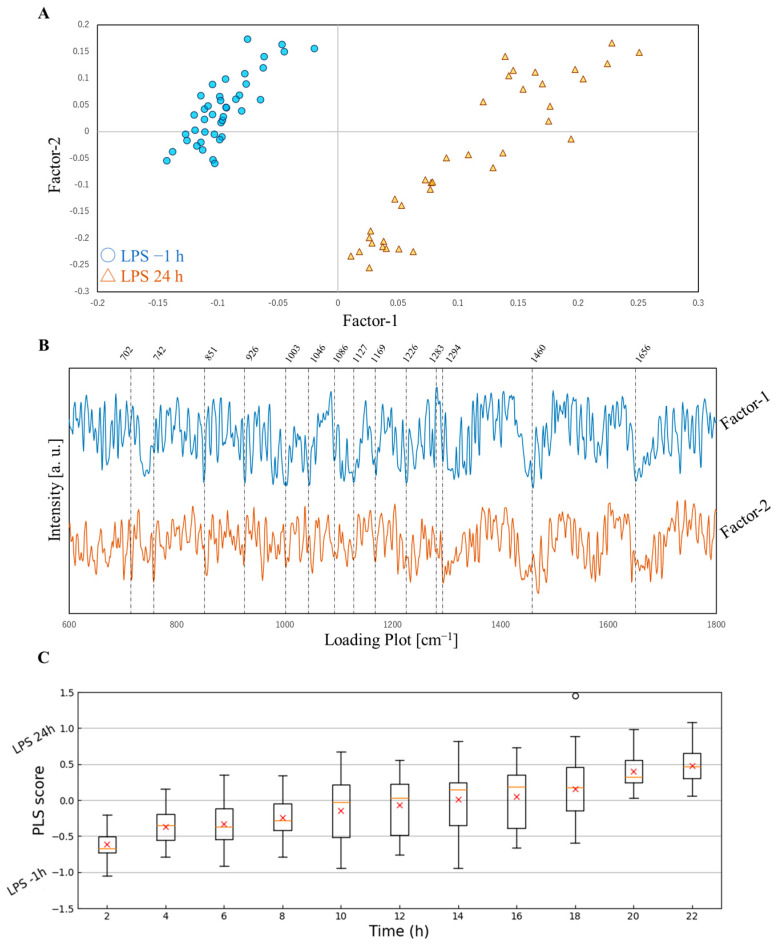
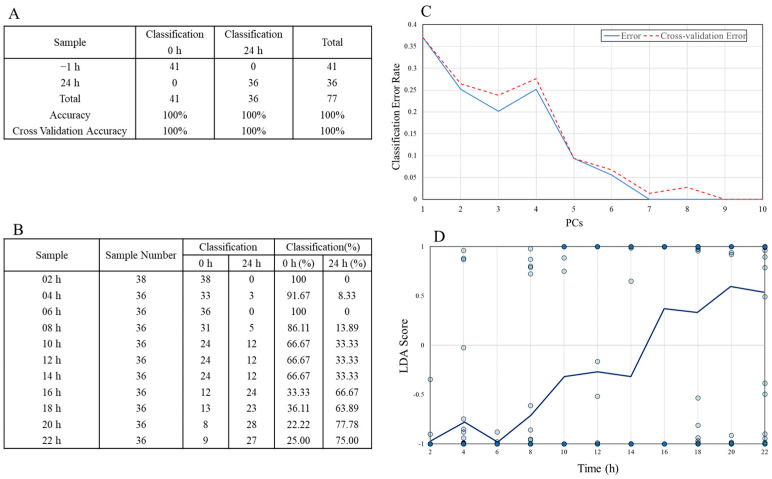
Raman spectroscopy is a non-destructive spectroscopic technique that provides complex molecular information. It is used to examine the physiological and pathological responses of living cells, such as differentiation, malignancy, and inflammation. The responses of two cellular states, initial and full-blown inflammation, have mainly been investigated using a comparative analysis with Raman spectra. However, the tipping point of the inflammatory state transition remains unclear. Therefore, the present study attempted to identify the tipping point of inflammation using a cell model. We stimulated RAW264.7 mouse macrophages with lipopolysaccharide (LPS) and continuously collected Raman spectra every 2 h for 24 h from the initial and full-blown inflammation states. A Partial Least Squares analysis and Principal Component Analysis-Linear Discriminant Analysis predicted the tipping point as 14 h after the LPS stimulation. In addition, a Dynamical Network Biomarker (DNB) analysis, identifying the tipping point of a state transition in various phenomena, indicated that the tipping point was 14 h and identified tryptophan as a biomarker. The results of a multivariate analysis and DNB analysis show the cellular tipping point.
期刊介绍:
Molecules (ISSN 1420-3049, CODEN: MOLEFW) is an open access journal of synthetic organic chemistry and natural product chemistry. All articles are peer-reviewed and published continously upon acceptance. Molecules is published by MDPI, Basel, Switzerland. Our aim is to encourage chemists to publish as much as possible their experimental detail, particularly synthetic procedures and characterization information. There is no restriction on the length of the experimental section. In addition, availability of compound samples is published and considered as important information. Authors are encouraged to register or deposit their chemical samples through the non-profit international organization Molecular Diversity Preservation International (MDPI). Molecules has been launched in 1996 to preserve and exploit molecular diversity of both, chemical information and chemical substances.





 京公网安备 11010802042870号
京ICP备2023020795号-1
京公网安备 11010802042870号
京ICP备2023020795号-1

 分享
分享
 求助内容:
求助内容: 应助结果提醒方式:
 扫码关注我们
