{"title":"附加介孔及y型沸石表面改性对铁包封催化剂烷烃氧化活性的影响。","authors":"Takamasa Takeda, Masaya Okamura, Syuhei Yamaguchi, Hidenori Yahiro, Shiro Hikichi","doi":"10.3390/molecules30040966","DOIUrl":null,"url":null,"abstract":"<p><p>Catalytic alkane hydroxylation activities of the iron complex encapsulated into the micropore of the Y-type zeolite and mesoporous zeolites, the latter of which were obtained by the partial removal of aluminum and alkaline treatment, have been explored by using H<sub>2</sub>O<sub>2</sub> as the oxidant. The iron complex with tris(pyridylmethyl)amine (=TPA) encapsulated into the micropore of the genuine Y-type zeolite was a more stable and effective cyclohexane hydroxylating heterogeneous catalyst compared to the corresponding copper analogue as well as the non-encapsulated homogeneous Fe-TPA complex. The chemical modification of the zeolite supports with the organic groups led to changing the catalytic activity depending on the size and the hydrophobic or hydrophilic nature of the added organic groups. When the content of water in the solvent was increased, the activity of the hydrophilic longer chain-modified catalyst was improved compared to that applied on the reaction with the non-aqueous solvent. The hydrophobic fluoroalkyl modifier located near the entrance of the micropore hindered the access of the substrate and aqueous H<sub>2</sub>O<sub>2</sub> to the encapsulated iron complex site in the genuine Y-type zeolite. On the other hand, the hydrophobic modification effectively improved the activity of the catalyst with the zeolite support having higher amounts of mesopores. The synergistic effect of the wider bore diameters and the hydrophobic nature derived from the fluoroalkyl chains led to the concentration of the hydrocarbon substrate near the active iron complex.</p>","PeriodicalId":19041,"journal":{"name":"Molecules","volume":"30 4","pages":""},"PeriodicalIF":4.6000,"publicationDate":"2025-02-19","publicationTypes":"Journal Article","fieldsOfStudy":null,"isOpenAccess":false,"openAccessPdf":"https://www.ncbi.nlm.nih.gov/pmc/articles/PMC11858444/pdf/","citationCount":"0","resultStr":"{\"title\":\"Effects of Additional Mesopores and the Surface Modification of the Y-Type Zeolite on the Alkane Oxidation Activity of Iron Complex-Encapsulated Catalysts.\",\"authors\":\"Takamasa Takeda, Masaya Okamura, Syuhei Yamaguchi, Hidenori Yahiro, Shiro Hikichi\",\"doi\":\"10.3390/molecules30040966\",\"DOIUrl\":null,\"url\":null,\"abstract\":\"<p><p>Catalytic alkane hydroxylation activities of the iron complex encapsulated into the micropore of the Y-type zeolite and mesoporous zeolites, the latter of which were obtained by the partial removal of aluminum and alkaline treatment, have been explored by using H<sub>2</sub>O<sub>2</sub> as the oxidant. The iron complex with tris(pyridylmethyl)amine (=TPA) encapsulated into the micropore of the genuine Y-type zeolite was a more stable and effective cyclohexane hydroxylating heterogeneous catalyst compared to the corresponding copper analogue as well as the non-encapsulated homogeneous Fe-TPA complex. The chemical modification of the zeolite supports with the organic groups led to changing the catalytic activity depending on the size and the hydrophobic or hydrophilic nature of the added organic groups. When the content of water in the solvent was increased, the activity of the hydrophilic longer chain-modified catalyst was improved compared to that applied on the reaction with the non-aqueous solvent. The hydrophobic fluoroalkyl modifier located near the entrance of the micropore hindered the access of the substrate and aqueous H<sub>2</sub>O<sub>2</sub> to the encapsulated iron complex site in the genuine Y-type zeolite. On the other hand, the hydrophobic modification effectively improved the activity of the catalyst with the zeolite support having higher amounts of mesopores. The synergistic effect of the wider bore diameters and the hydrophobic nature derived from the fluoroalkyl chains led to the concentration of the hydrocarbon substrate near the active iron complex.</p>\",\"PeriodicalId\":19041,\"journal\":{\"name\":\"Molecules\",\"volume\":\"30 4\",\"pages\":\"\"},\"PeriodicalIF\":4.6000,\"publicationDate\":\"2025-02-19\",\"publicationTypes\":\"Journal Article\",\"fieldsOfStudy\":null,\"isOpenAccess\":false,\"openAccessPdf\":\"https://www.ncbi.nlm.nih.gov/pmc/articles/PMC11858444/pdf/\",\"citationCount\":\"0\",\"resultStr\":null,\"platform\":\"Semanticscholar\",\"paperid\":null,\"PeriodicalName\":\"Molecules\",\"FirstCategoryId\":\"92\",\"ListUrlMain\":\"https://doi.org/10.3390/molecules30040966\",\"RegionNum\":2,\"RegionCategory\":\"化学\",\"ArticlePicture\":[],\"TitleCN\":null,\"AbstractTextCN\":null,\"PMCID\":null,\"EPubDate\":\"\",\"PubModel\":\"\",\"JCR\":\"Q2\",\"JCRName\":\"BIOCHEMISTRY & MOLECULAR BIOLOGY\",\"Score\":null,\"Total\":0}","platform":"Semanticscholar","paperid":null,"PeriodicalName":"Molecules","FirstCategoryId":"92","ListUrlMain":"https://doi.org/10.3390/molecules30040966","RegionNum":2,"RegionCategory":"化学","ArticlePicture":[],"TitleCN":null,"AbstractTextCN":null,"PMCID":null,"EPubDate":"","PubModel":"","JCR":"Q2","JCRName":"BIOCHEMISTRY & MOLECULAR BIOLOGY","Score":null,"Total":0}
Effects of Additional Mesopores and the Surface Modification of the Y-Type Zeolite on the Alkane Oxidation Activity of Iron Complex-Encapsulated Catalysts.
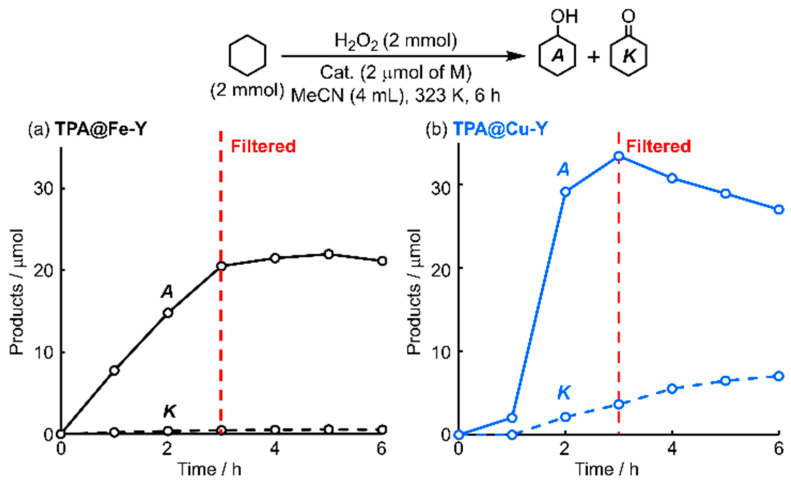
Catalytic alkane hydroxylation activities of the iron complex encapsulated into the micropore of the Y-type zeolite and mesoporous zeolites, the latter of which were obtained by the partial removal of aluminum and alkaline treatment, have been explored by using H2O2 as the oxidant. The iron complex with tris(pyridylmethyl)amine (=TPA) encapsulated into the micropore of the genuine Y-type zeolite was a more stable and effective cyclohexane hydroxylating heterogeneous catalyst compared to the corresponding copper analogue as well as the non-encapsulated homogeneous Fe-TPA complex. The chemical modification of the zeolite supports with the organic groups led to changing the catalytic activity depending on the size and the hydrophobic or hydrophilic nature of the added organic groups. When the content of water in the solvent was increased, the activity of the hydrophilic longer chain-modified catalyst was improved compared to that applied on the reaction with the non-aqueous solvent. The hydrophobic fluoroalkyl modifier located near the entrance of the micropore hindered the access of the substrate and aqueous H2O2 to the encapsulated iron complex site in the genuine Y-type zeolite. On the other hand, the hydrophobic modification effectively improved the activity of the catalyst with the zeolite support having higher amounts of mesopores. The synergistic effect of the wider bore diameters and the hydrophobic nature derived from the fluoroalkyl chains led to the concentration of the hydrocarbon substrate near the active iron complex.
期刊介绍:
Molecules (ISSN 1420-3049, CODEN: MOLEFW) is an open access journal of synthetic organic chemistry and natural product chemistry. All articles are peer-reviewed and published continously upon acceptance. Molecules is published by MDPI, Basel, Switzerland. Our aim is to encourage chemists to publish as much as possible their experimental detail, particularly synthetic procedures and characterization information. There is no restriction on the length of the experimental section. In addition, availability of compound samples is published and considered as important information. Authors are encouraged to register or deposit their chemical samples through the non-profit international organization Molecular Diversity Preservation International (MDPI). Molecules has been launched in 1996 to preserve and exploit molecular diversity of both, chemical information and chemical substances.






 京公网安备 11010802042870号
京ICP备2023020795号-1
京公网安备 11010802042870号
京ICP备2023020795号-1

 分享
分享
 求助内容:
求助内容: 应助结果提醒方式:
 扫码关注我们
