{"title":"硅桥双(12-冠-4)醚作为钠离子选择电极的离子载体。","authors":"Shoichi Katsuta, Yoshiyasu Ino, Hiroto Wakabayashi","doi":"10.3390/molecules30040925","DOIUrl":null,"url":null,"abstract":"<p><p>A new Na<sup>+</sup> ionophore with two 12-crown-4 moieties on silicon atoms and hydrophobic hydrocarbon groups on silicon atoms has been synthesized. The silicon-bridged bis(12-crown-4)s were easily obtained in high yield by simply mixing dichlorodiorganosilane and 2-hydroxymethyl-12-crown-4 under room temperature and nitrogen atmosphere. Seven compounds with different hydrocarbon substituents were synthesized. To investigate their properties as ionophores, PVC membrane-type ion-selective electrodes incorporating them were prepared, and the ion selectivity coefficients were determined. The typical selectivity sequence is Na<sup>+</sup> > K<sup>+</sup> > Rb<sup>+</sup> > Cs<sup>+</sup> > NH<sub>4</sub><sup>+</sup> > Li<sup>+</sup> > Ca<sup>2+</sup> > Mg<sup>2+</sup> > H<sup>+</sup>. The magnitude of selectivity depends on the structures of hydrocarbon substituents on the silicon atoms. The compound with two 2-ethylhexyl groups has particularly good Na<sup>+</sup> selectivity, and the performance of the electrode is equal to or better than that of an electrode using a commercially available Na<sup>+</sup> ionophore, malonate-bridged bis(12-crown-4). The electrode also showed better-aging stability than that of another known Na<sup>+</sup> ionophore, tetraethyl 4-<i>tert</i>-butylcalix[4]arene-<i>O</i>,<i>O'</i>,<i>O″</i>,<i>O‴</i>-tetraacetate, indicating high utility.</p>","PeriodicalId":19041,"journal":{"name":"Molecules","volume":"30 4","pages":""},"PeriodicalIF":4.6000,"publicationDate":"2025-02-17","publicationTypes":"Journal Article","fieldsOfStudy":null,"isOpenAccess":false,"openAccessPdf":"https://www.ncbi.nlm.nih.gov/pmc/articles/PMC11858547/pdf/","citationCount":"0","resultStr":"{\"title\":\"Silicon-Bridged Bis(12-crown-4) Ethers as Ionophores for Sodium Ion-Selective Electrodes.\",\"authors\":\"Shoichi Katsuta, Yoshiyasu Ino, Hiroto Wakabayashi\",\"doi\":\"10.3390/molecules30040925\",\"DOIUrl\":null,\"url\":null,\"abstract\":\"<p><p>A new Na<sup>+</sup> ionophore with two 12-crown-4 moieties on silicon atoms and hydrophobic hydrocarbon groups on silicon atoms has been synthesized. The silicon-bridged bis(12-crown-4)s were easily obtained in high yield by simply mixing dichlorodiorganosilane and 2-hydroxymethyl-12-crown-4 under room temperature and nitrogen atmosphere. Seven compounds with different hydrocarbon substituents were synthesized. To investigate their properties as ionophores, PVC membrane-type ion-selective electrodes incorporating them were prepared, and the ion selectivity coefficients were determined. The typical selectivity sequence is Na<sup>+</sup> > K<sup>+</sup> > Rb<sup>+</sup> > Cs<sup>+</sup> > NH<sub>4</sub><sup>+</sup> > Li<sup>+</sup> > Ca<sup>2+</sup> > Mg<sup>2+</sup> > H<sup>+</sup>. The magnitude of selectivity depends on the structures of hydrocarbon substituents on the silicon atoms. The compound with two 2-ethylhexyl groups has particularly good Na<sup>+</sup> selectivity, and the performance of the electrode is equal to or better than that of an electrode using a commercially available Na<sup>+</sup> ionophore, malonate-bridged bis(12-crown-4). The electrode also showed better-aging stability than that of another known Na<sup>+</sup> ionophore, tetraethyl 4-<i>tert</i>-butylcalix[4]arene-<i>O</i>,<i>O'</i>,<i>O″</i>,<i>O‴</i>-tetraacetate, indicating high utility.</p>\",\"PeriodicalId\":19041,\"journal\":{\"name\":\"Molecules\",\"volume\":\"30 4\",\"pages\":\"\"},\"PeriodicalIF\":4.6000,\"publicationDate\":\"2025-02-17\",\"publicationTypes\":\"Journal Article\",\"fieldsOfStudy\":null,\"isOpenAccess\":false,\"openAccessPdf\":\"https://www.ncbi.nlm.nih.gov/pmc/articles/PMC11858547/pdf/\",\"citationCount\":\"0\",\"resultStr\":null,\"platform\":\"Semanticscholar\",\"paperid\":null,\"PeriodicalName\":\"Molecules\",\"FirstCategoryId\":\"92\",\"ListUrlMain\":\"https://doi.org/10.3390/molecules30040925\",\"RegionNum\":2,\"RegionCategory\":\"化学\",\"ArticlePicture\":[],\"TitleCN\":null,\"AbstractTextCN\":null,\"PMCID\":null,\"EPubDate\":\"\",\"PubModel\":\"\",\"JCR\":\"Q2\",\"JCRName\":\"BIOCHEMISTRY & MOLECULAR BIOLOGY\",\"Score\":null,\"Total\":0}","platform":"Semanticscholar","paperid":null,"PeriodicalName":"Molecules","FirstCategoryId":"92","ListUrlMain":"https://doi.org/10.3390/molecules30040925","RegionNum":2,"RegionCategory":"化学","ArticlePicture":[],"TitleCN":null,"AbstractTextCN":null,"PMCID":null,"EPubDate":"","PubModel":"","JCR":"Q2","JCRName":"BIOCHEMISTRY & MOLECULAR BIOLOGY","Score":null,"Total":0}
Silicon-Bridged Bis(12-crown-4) Ethers as Ionophores for Sodium Ion-Selective Electrodes.
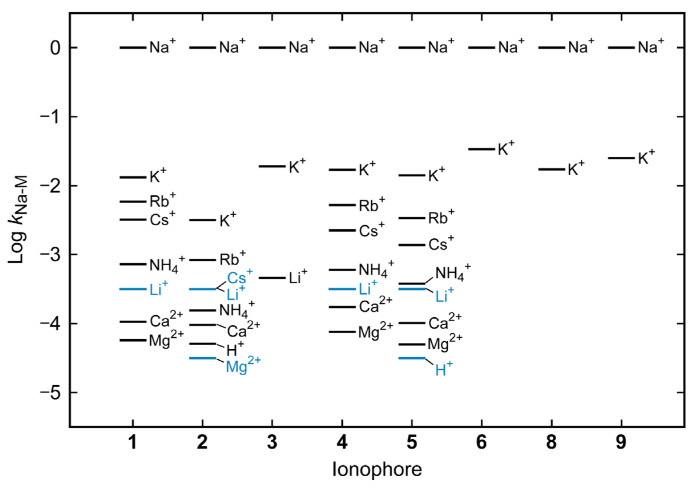
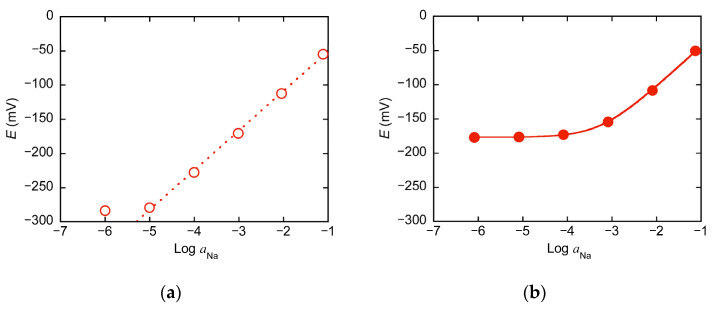
A new Na+ ionophore with two 12-crown-4 moieties on silicon atoms and hydrophobic hydrocarbon groups on silicon atoms has been synthesized. The silicon-bridged bis(12-crown-4)s were easily obtained in high yield by simply mixing dichlorodiorganosilane and 2-hydroxymethyl-12-crown-4 under room temperature and nitrogen atmosphere. Seven compounds with different hydrocarbon substituents were synthesized. To investigate their properties as ionophores, PVC membrane-type ion-selective electrodes incorporating them were prepared, and the ion selectivity coefficients were determined. The typical selectivity sequence is Na+ > K+ > Rb+ > Cs+ > NH4+ > Li+ > Ca2+ > Mg2+ > H+. The magnitude of selectivity depends on the structures of hydrocarbon substituents on the silicon atoms. The compound with two 2-ethylhexyl groups has particularly good Na+ selectivity, and the performance of the electrode is equal to or better than that of an electrode using a commercially available Na+ ionophore, malonate-bridged bis(12-crown-4). The electrode also showed better-aging stability than that of another known Na+ ionophore, tetraethyl 4-tert-butylcalix[4]arene-O,O',O″,O‴-tetraacetate, indicating high utility.
期刊介绍:
Molecules (ISSN 1420-3049, CODEN: MOLEFW) is an open access journal of synthetic organic chemistry and natural product chemistry. All articles are peer-reviewed and published continously upon acceptance. Molecules is published by MDPI, Basel, Switzerland. Our aim is to encourage chemists to publish as much as possible their experimental detail, particularly synthetic procedures and characterization information. There is no restriction on the length of the experimental section. In addition, availability of compound samples is published and considered as important information. Authors are encouraged to register or deposit their chemical samples through the non-profit international organization Molecular Diversity Preservation International (MDPI). Molecules has been launched in 1996 to preserve and exploit molecular diversity of both, chemical information and chemical substances.





 京公网安备 11010802042870号
京ICP备2023020795号-1
京公网安备 11010802042870号
京ICP备2023020795号-1

 分享
分享
 求助内容:
求助内容: 应助结果提醒方式:
 扫码关注我们
