Christine Rossmann, Azra Darko, Gerd Kager, Gerhard Ledinski, Willibald Wonisch, Thomas Wagner, Seth Hallström, Gilbert Reibnegger, Margret Paar, Gerhard Cvirn
{"title":"天然多胺亚精胺抑制LDL体外氧化。","authors":"Christine Rossmann, Azra Darko, Gerd Kager, Gerhard Ledinski, Willibald Wonisch, Thomas Wagner, Seth Hallström, Gilbert Reibnegger, Margret Paar, Gerhard Cvirn","doi":"10.3390/molecules30040955","DOIUrl":null,"url":null,"abstract":"<p><p>Spermidine is a natural autophagy-inducer and anti-aging compound. Herein, we investigated a potential autophagy-independent mechanism of spermidine, namely its capability to directly impede LDL oxidation, an early step in atherogenesis. In our in vitro-model, LDL oxidation was induced by the addition of CuCl<sub>2</sub> in the presence of increasing concentrations of spermidine, and the degree of oxidation of the lipid, as well as of the protein part of LDL, was measured. We found that spermidine concentration-dependently inhibited the production of lipid hydroperoxides, malondialdehyde, and oxidation-specific immune epitopes in the LDL particle, associated with decreased relative electrophoretic mobilities, respectively. For example, the LPO content was significantly lower when LDL was oxidized in the presence of 500 µg/mL spermidine (26.9 ± 1.6 nmol/mg LDL) than in the absence of spermidine (180.6 ± 7.7 nmol/mg LDL, <i>p</i> < 0.0001). When oxLDL was obtained under increasing spermidine concentrations, its cytotoxicity in EA.hy926 cells concentration-dependently decreased. Quantum chemical calculations show that the reaction between spermidine and hydroxyl radicals is exergonic. We conclude that spermidine is a direct inhibitor of LDL oxidation due to its capability to scavenge hydroxyl radicals. Thus, spermidine supplementation might be a suitable tool to impede atherogenesis and associated (cardio)vascular diseases. Further prospective clinical studies are needed to evaluate the potential atheroprotective/health-promoting effects of spermidine-rich diets.</p>","PeriodicalId":19041,"journal":{"name":"Molecules","volume":"30 4","pages":""},"PeriodicalIF":4.6000,"publicationDate":"2025-02-19","publicationTypes":"Journal Article","fieldsOfStudy":null,"isOpenAccess":false,"openAccessPdf":"https://www.ncbi.nlm.nih.gov/pmc/articles/PMC11858627/pdf/","citationCount":"0","resultStr":"{\"title\":\"Natural Polyamine Spermidine Inhibits the In Vitro Oxidation of LDL.\",\"authors\":\"Christine Rossmann, Azra Darko, Gerd Kager, Gerhard Ledinski, Willibald Wonisch, Thomas Wagner, Seth Hallström, Gilbert Reibnegger, Margret Paar, Gerhard Cvirn\",\"doi\":\"10.3390/molecules30040955\",\"DOIUrl\":null,\"url\":null,\"abstract\":\"<p><p>Spermidine is a natural autophagy-inducer and anti-aging compound. Herein, we investigated a potential autophagy-independent mechanism of spermidine, namely its capability to directly impede LDL oxidation, an early step in atherogenesis. In our in vitro-model, LDL oxidation was induced by the addition of CuCl<sub>2</sub> in the presence of increasing concentrations of spermidine, and the degree of oxidation of the lipid, as well as of the protein part of LDL, was measured. We found that spermidine concentration-dependently inhibited the production of lipid hydroperoxides, malondialdehyde, and oxidation-specific immune epitopes in the LDL particle, associated with decreased relative electrophoretic mobilities, respectively. For example, the LPO content was significantly lower when LDL was oxidized in the presence of 500 µg/mL spermidine (26.9 ± 1.6 nmol/mg LDL) than in the absence of spermidine (180.6 ± 7.7 nmol/mg LDL, <i>p</i> < 0.0001). When oxLDL was obtained under increasing spermidine concentrations, its cytotoxicity in EA.hy926 cells concentration-dependently decreased. Quantum chemical calculations show that the reaction between spermidine and hydroxyl radicals is exergonic. We conclude that spermidine is a direct inhibitor of LDL oxidation due to its capability to scavenge hydroxyl radicals. Thus, spermidine supplementation might be a suitable tool to impede atherogenesis and associated (cardio)vascular diseases. Further prospective clinical studies are needed to evaluate the potential atheroprotective/health-promoting effects of spermidine-rich diets.</p>\",\"PeriodicalId\":19041,\"journal\":{\"name\":\"Molecules\",\"volume\":\"30 4\",\"pages\":\"\"},\"PeriodicalIF\":4.6000,\"publicationDate\":\"2025-02-19\",\"publicationTypes\":\"Journal Article\",\"fieldsOfStudy\":null,\"isOpenAccess\":false,\"openAccessPdf\":\"https://www.ncbi.nlm.nih.gov/pmc/articles/PMC11858627/pdf/\",\"citationCount\":\"0\",\"resultStr\":null,\"platform\":\"Semanticscholar\",\"paperid\":null,\"PeriodicalName\":\"Molecules\",\"FirstCategoryId\":\"92\",\"ListUrlMain\":\"https://doi.org/10.3390/molecules30040955\",\"RegionNum\":2,\"RegionCategory\":\"化学\",\"ArticlePicture\":[],\"TitleCN\":null,\"AbstractTextCN\":null,\"PMCID\":null,\"EPubDate\":\"\",\"PubModel\":\"\",\"JCR\":\"Q2\",\"JCRName\":\"BIOCHEMISTRY & MOLECULAR BIOLOGY\",\"Score\":null,\"Total\":0}","platform":"Semanticscholar","paperid":null,"PeriodicalName":"Molecules","FirstCategoryId":"92","ListUrlMain":"https://doi.org/10.3390/molecules30040955","RegionNum":2,"RegionCategory":"化学","ArticlePicture":[],"TitleCN":null,"AbstractTextCN":null,"PMCID":null,"EPubDate":"","PubModel":"","JCR":"Q2","JCRName":"BIOCHEMISTRY & MOLECULAR BIOLOGY","Score":null,"Total":0}
引用次数: 0
摘要
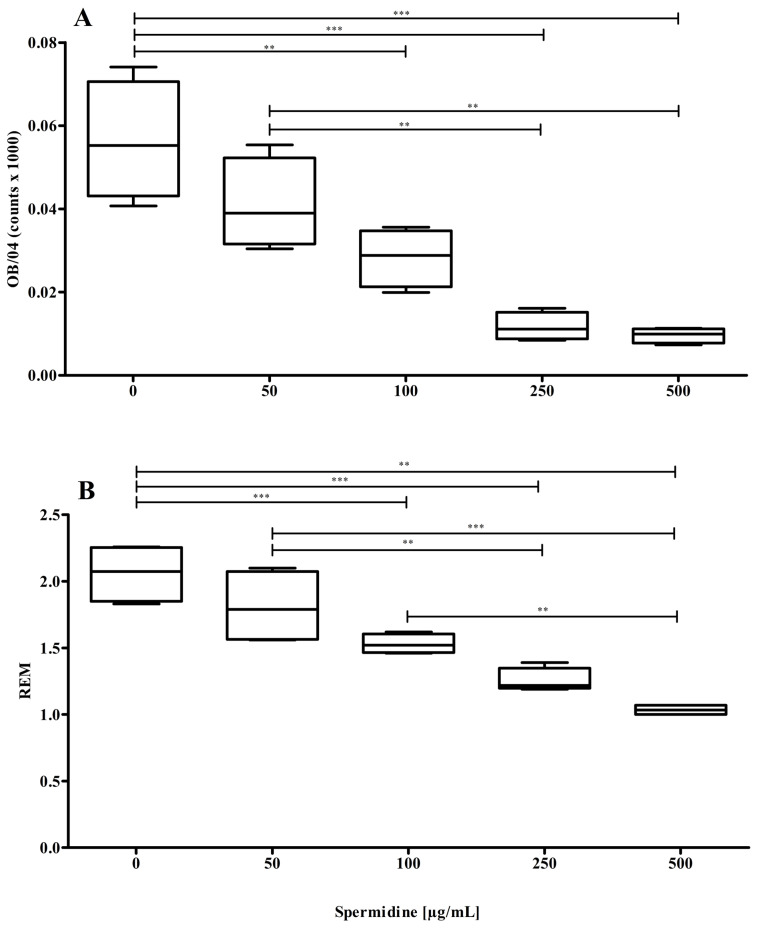
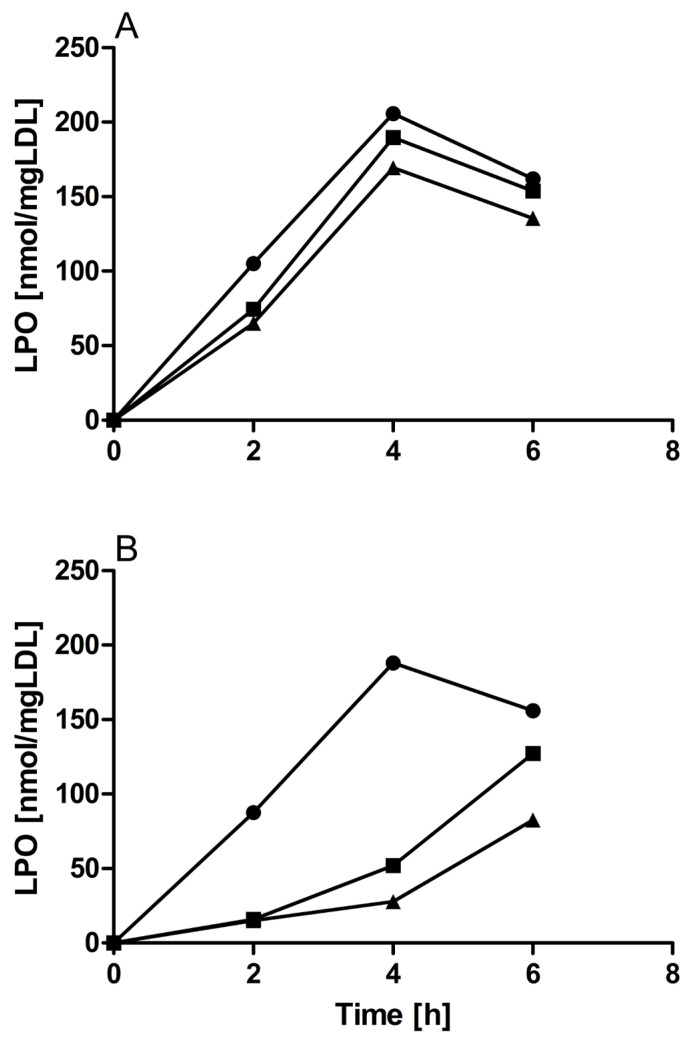
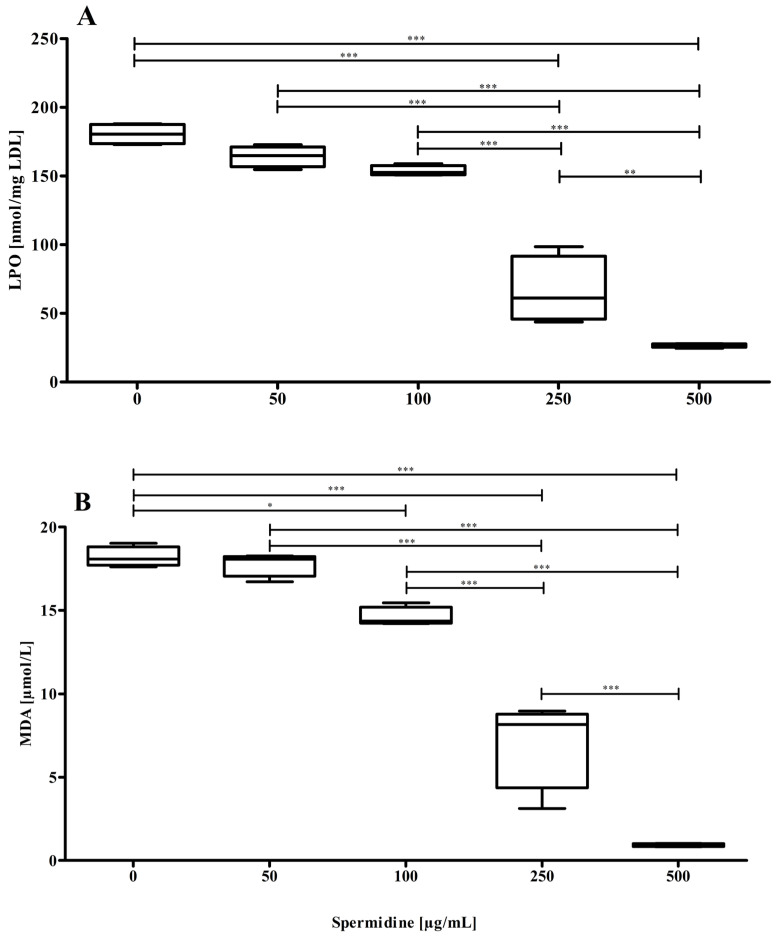
亚精胺是一种天然的自噬诱导剂和抗衰老化合物。在此,我们研究了亚精胺的潜在自噬独立机制,即其直接阻碍LDL氧化的能力,这是动脉粥样硬化的早期步骤。在我们的体外模型中,在亚精胺浓度增加的情况下,添加CuCl2诱导LDL氧化,并测量脂质氧化程度以及LDL蛋白质部分的氧化程度。我们发现亚精胺浓度依赖性地抑制LDL颗粒中脂质氢过氧化物、丙二醛和氧化特异性免疫表位的产生,分别与相对电泳迁移率降低相关。例如,当存在500µg/mL亚精胺(26.9±1.6 nmol/mg LDL)时,LDL的LPO含量显著低于不存在亚精胺(180.6±7.7 nmol/mg LDL, p < 0.0001)时。随着亚精胺浓度的增加,oxLDL对EA.hy926细胞的毒性呈浓度依赖性降低。量子化学计算表明,亚精胺和羟基自由基之间的反应是自发的。我们得出结论,亚精胺是LDL氧化的直接抑制剂,因为它具有清除羟基自由基的能力。因此,补充亚精胺可能是阻止动脉粥样硬化和相关(心血管)血管疾病的合适工具。需要进一步的前瞻性临床研究来评估富含亚精胺饮食的潜在动脉粥样硬化保护/健康促进作用。
Natural Polyamine Spermidine Inhibits the In Vitro Oxidation of LDL.
Spermidine is a natural autophagy-inducer and anti-aging compound. Herein, we investigated a potential autophagy-independent mechanism of spermidine, namely its capability to directly impede LDL oxidation, an early step in atherogenesis. In our in vitro-model, LDL oxidation was induced by the addition of CuCl2 in the presence of increasing concentrations of spermidine, and the degree of oxidation of the lipid, as well as of the protein part of LDL, was measured. We found that spermidine concentration-dependently inhibited the production of lipid hydroperoxides, malondialdehyde, and oxidation-specific immune epitopes in the LDL particle, associated with decreased relative electrophoretic mobilities, respectively. For example, the LPO content was significantly lower when LDL was oxidized in the presence of 500 µg/mL spermidine (26.9 ± 1.6 nmol/mg LDL) than in the absence of spermidine (180.6 ± 7.7 nmol/mg LDL, p < 0.0001). When oxLDL was obtained under increasing spermidine concentrations, its cytotoxicity in EA.hy926 cells concentration-dependently decreased. Quantum chemical calculations show that the reaction between spermidine and hydroxyl radicals is exergonic. We conclude that spermidine is a direct inhibitor of LDL oxidation due to its capability to scavenge hydroxyl radicals. Thus, spermidine supplementation might be a suitable tool to impede atherogenesis and associated (cardio)vascular diseases. Further prospective clinical studies are needed to evaluate the potential atheroprotective/health-promoting effects of spermidine-rich diets.
期刊介绍:
Molecules (ISSN 1420-3049, CODEN: MOLEFW) is an open access journal of synthetic organic chemistry and natural product chemistry. All articles are peer-reviewed and published continously upon acceptance. Molecules is published by MDPI, Basel, Switzerland. Our aim is to encourage chemists to publish as much as possible their experimental detail, particularly synthetic procedures and characterization information. There is no restriction on the length of the experimental section. In addition, availability of compound samples is published and considered as important information. Authors are encouraged to register or deposit their chemical samples through the non-profit international organization Molecular Diversity Preservation International (MDPI). Molecules has been launched in 1996 to preserve and exploit molecular diversity of both, chemical information and chemical substances.




 京公网安备 11010802042870号
京ICP备2023020795号-1
京公网安备 11010802042870号
京ICP备2023020795号-1

 分享
分享
 求助内容:
求助内容: 应助结果提醒方式:
 扫码关注我们
