Yan Chen, Huan Cao, Longhe Wang, Daojin Chen, Zifan Liu, Yiqing Zhou, Jinglin Shi
{"title":"基于深度强化学习的低地球轨道大星座卫星网络业务功能约束路由方法。","authors":"Yan Chen, Huan Cao, Longhe Wang, Daojin Chen, Zifan Liu, Yiqing Zhou, Jinglin Shi","doi":"10.3390/s25041232","DOIUrl":null,"url":null,"abstract":"<p><p>Low-orbit satellite communication networks have gradually become the research focus of fifth-generation (5G) beyond and sixth generation (6G) networks due to their advantages of wide coverage, large communication capacity, and low terrain influence. However, the low earth orbit mega satellite network (LEO-MSN) also has difficulty in constructing stable traffic transmission paths, network load imbalance and congestion due to the large scale of network nodes, a highly complex topology, and uneven distribution of traffic flow in time and space. In the service-based architecture proposed by 3GPP, the introduction of service function chain (SFC) constraints exacerbates these challenges. Therefore, in this paper, we propose GDRL-SFCR, an end-to-end routing decision method based on graph neural network (GNN) and deep reinforcement learning (DRL) which jointly optimize the end-to-end transmission delay and network load balancing under SFC constraints. Specifically, this method constructs the system model based on the latest NTN low-orbit satellite network end-to-end transmission architecture, taking into account the SFC constraints, transmission delays, and network node loads in the end-to-end traffic transmission, uses a GNN to extract node attributes and dynamic topology features, and uses the DRL method to design specific reward functions to train the model to learn routing policies that satisfy the SFC constraints. The simulation results demonstrate that, compared with graph theory-based methods and reinforcement learning-based methods, GDRL-SFCR can reduce the end-to-end traffic transmission delay by more than 11.3%, reduce the average network load by more than 14.1%, and increase the traffic access success rate and network capacity by more than 19.1% and two times, respectively.</p>","PeriodicalId":21698,"journal":{"name":"Sensors","volume":"25 4","pages":""},"PeriodicalIF":3.5000,"publicationDate":"2025-02-18","publicationTypes":"Journal Article","fieldsOfStudy":null,"isOpenAccess":false,"openAccessPdf":"https://www.ncbi.nlm.nih.gov/pmc/articles/PMC11861639/pdf/","citationCount":"0","resultStr":"{\"title\":\"Deep Reinforcement Learning-Based Routing Method for Low Earth Orbit Mega-Constellation Satellite Networks with Service Function Constraints.\",\"authors\":\"Yan Chen, Huan Cao, Longhe Wang, Daojin Chen, Zifan Liu, Yiqing Zhou, Jinglin Shi\",\"doi\":\"10.3390/s25041232\",\"DOIUrl\":null,\"url\":null,\"abstract\":\"<p><p>Low-orbit satellite communication networks have gradually become the research focus of fifth-generation (5G) beyond and sixth generation (6G) networks due to their advantages of wide coverage, large communication capacity, and low terrain influence. However, the low earth orbit mega satellite network (LEO-MSN) also has difficulty in constructing stable traffic transmission paths, network load imbalance and congestion due to the large scale of network nodes, a highly complex topology, and uneven distribution of traffic flow in time and space. In the service-based architecture proposed by 3GPP, the introduction of service function chain (SFC) constraints exacerbates these challenges. Therefore, in this paper, we propose GDRL-SFCR, an end-to-end routing decision method based on graph neural network (GNN) and deep reinforcement learning (DRL) which jointly optimize the end-to-end transmission delay and network load balancing under SFC constraints. Specifically, this method constructs the system model based on the latest NTN low-orbit satellite network end-to-end transmission architecture, taking into account the SFC constraints, transmission delays, and network node loads in the end-to-end traffic transmission, uses a GNN to extract node attributes and dynamic topology features, and uses the DRL method to design specific reward functions to train the model to learn routing policies that satisfy the SFC constraints. The simulation results demonstrate that, compared with graph theory-based methods and reinforcement learning-based methods, GDRL-SFCR can reduce the end-to-end traffic transmission delay by more than 11.3%, reduce the average network load by more than 14.1%, and increase the traffic access success rate and network capacity by more than 19.1% and two times, respectively.</p>\",\"PeriodicalId\":21698,\"journal\":{\"name\":\"Sensors\",\"volume\":\"25 4\",\"pages\":\"\"},\"PeriodicalIF\":3.5000,\"publicationDate\":\"2025-02-18\",\"publicationTypes\":\"Journal Article\",\"fieldsOfStudy\":null,\"isOpenAccess\":false,\"openAccessPdf\":\"https://www.ncbi.nlm.nih.gov/pmc/articles/PMC11861639/pdf/\",\"citationCount\":\"0\",\"resultStr\":null,\"platform\":\"Semanticscholar\",\"paperid\":null,\"PeriodicalName\":\"Sensors\",\"FirstCategoryId\":\"103\",\"ListUrlMain\":\"https://doi.org/10.3390/s25041232\",\"RegionNum\":3,\"RegionCategory\":\"综合性期刊\",\"ArticlePicture\":[],\"TitleCN\":null,\"AbstractTextCN\":null,\"PMCID\":null,\"EPubDate\":\"\",\"PubModel\":\"\",\"JCR\":\"Q2\",\"JCRName\":\"CHEMISTRY, ANALYTICAL\",\"Score\":null,\"Total\":0}","platform":"Semanticscholar","paperid":null,"PeriodicalName":"Sensors","FirstCategoryId":"103","ListUrlMain":"https://doi.org/10.3390/s25041232","RegionNum":3,"RegionCategory":"综合性期刊","ArticlePicture":[],"TitleCN":null,"AbstractTextCN":null,"PMCID":null,"EPubDate":"","PubModel":"","JCR":"Q2","JCRName":"CHEMISTRY, ANALYTICAL","Score":null,"Total":0}
Deep Reinforcement Learning-Based Routing Method for Low Earth Orbit Mega-Constellation Satellite Networks with Service Function Constraints.
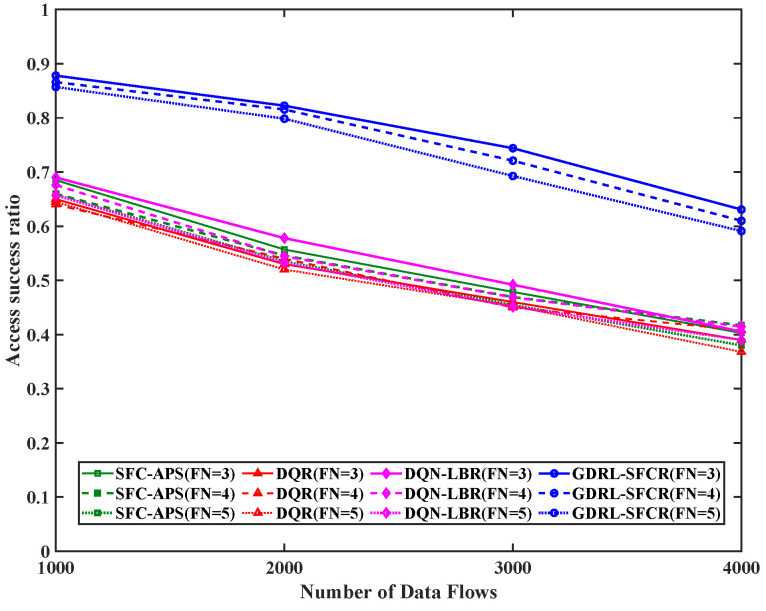
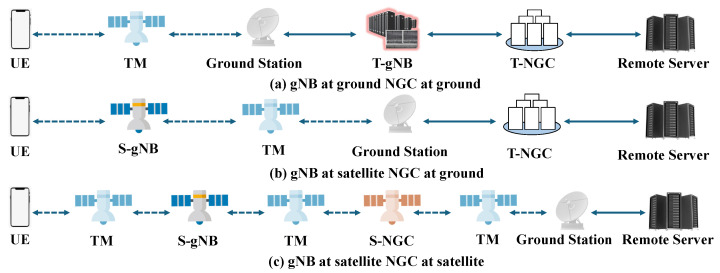
Low-orbit satellite communication networks have gradually become the research focus of fifth-generation (5G) beyond and sixth generation (6G) networks due to their advantages of wide coverage, large communication capacity, and low terrain influence. However, the low earth orbit mega satellite network (LEO-MSN) also has difficulty in constructing stable traffic transmission paths, network load imbalance and congestion due to the large scale of network nodes, a highly complex topology, and uneven distribution of traffic flow in time and space. In the service-based architecture proposed by 3GPP, the introduction of service function chain (SFC) constraints exacerbates these challenges. Therefore, in this paper, we propose GDRL-SFCR, an end-to-end routing decision method based on graph neural network (GNN) and deep reinforcement learning (DRL) which jointly optimize the end-to-end transmission delay and network load balancing under SFC constraints. Specifically, this method constructs the system model based on the latest NTN low-orbit satellite network end-to-end transmission architecture, taking into account the SFC constraints, transmission delays, and network node loads in the end-to-end traffic transmission, uses a GNN to extract node attributes and dynamic topology features, and uses the DRL method to design specific reward functions to train the model to learn routing policies that satisfy the SFC constraints. The simulation results demonstrate that, compared with graph theory-based methods and reinforcement learning-based methods, GDRL-SFCR can reduce the end-to-end traffic transmission delay by more than 11.3%, reduce the average network load by more than 14.1%, and increase the traffic access success rate and network capacity by more than 19.1% and two times, respectively.
期刊介绍:
Sensors (ISSN 1424-8220) provides an advanced forum for the science and technology of sensors and biosensors. It publishes reviews (including comprehensive reviews on the complete sensors products), regular research papers and short notes. Our aim is to encourage scientists to publish their experimental and theoretical results in as much detail as possible. There is no restriction on the length of the papers. The full experimental details must be provided so that the results can be reproduced.





 京公网安备 11010802042870号
京ICP备2023020795号-1
京公网安备 11010802042870号
京ICP备2023020795号-1

 分享
分享
 求助内容:
求助内容: 应助结果提醒方式:
 扫码关注我们
