{"title":"晚期癌症患者护理人员品味模式及其影响因素:一项潜在剖面研究。","authors":"Gui-Ying Yao, Minghui Deng, Xueying Fang, Mei Zhang, Hua Guo, Bing Zhang","doi":"10.1186/s40359-025-02526-1","DOIUrl":null,"url":null,"abstract":"<p><strong>Objective: </strong>Caregivers' positive affect benefits patients' and their well-being. Savoring is one important emotion regulation strategy to manage positive affect. Limited information about patterns of savoring hinders the development of targeted interventions to promote cancer caregivers' emotional well-being. The purpose of this study was to identify latent patterns of savoring and investigate influencing factors associated with the identified patterns among caregivers of people with advanced cancer.</p><p><strong>Methods: </strong>Latent profile analysis was performed to identify savoring patterns based on savoring beliefs and strategies in 404 informal caregivers of patients with advanced cancer. Multinomial logistic regression analysis examined associated factors regarding different savoring profiles.</p><p><strong>Results: </strong>Three latent profiles of savoring were identified. Individuals in high level of savoring (HS, 33.4%) showed the highest level of savoring and positive affect. Compared with HS, caregivers in low level of savoring (LS, 9.4%) and medium level of savoring (MS, 57.2%) showed lower savoring and lower positive affect. Active coping(β<sub>MS</sub> = -0.109, β<sub>LS</sub> = -0.252, p<0.001)was the strongest protecting factor for both MS and LS, while passive coping (β = 0.146, p = 0.008) was a risk factor for LS. Non-assistance from others (β = 0.677, p = 0.015) and unemployment (β = 1.287, p = 0.007)were the strongest risk factors for the MS and LS subgroup, respectively.</p><p><strong>Conclusions: </strong>Caregivers' savoring patterns appear to vary at different levels. Oncological professionals should pay attention to caregivers with passive coping, unemployment, and lack of assistance for designing targeted savoring training to promote emotional well-being.</p>","PeriodicalId":37867,"journal":{"name":"BMC Psychology","volume":"13 1","pages":"163"},"PeriodicalIF":3.0000,"publicationDate":"2025-02-25","publicationTypes":"Journal Article","fieldsOfStudy":null,"isOpenAccess":false,"openAccessPdf":"https://www.ncbi.nlm.nih.gov/pmc/articles/PMC11863586/pdf/","citationCount":"0","resultStr":"{\"title\":\"Patterns and influencing factors of savoring in caregivers of advanced cancer patients: a latent profile study.\",\"authors\":\"Gui-Ying Yao, Minghui Deng, Xueying Fang, Mei Zhang, Hua Guo, Bing Zhang\",\"doi\":\"10.1186/s40359-025-02526-1\",\"DOIUrl\":null,\"url\":null,\"abstract\":\"<p><strong>Objective: </strong>Caregivers' positive affect benefits patients' and their well-being. Savoring is one important emotion regulation strategy to manage positive affect. Limited information about patterns of savoring hinders the development of targeted interventions to promote cancer caregivers' emotional well-being. The purpose of this study was to identify latent patterns of savoring and investigate influencing factors associated with the identified patterns among caregivers of people with advanced cancer.</p><p><strong>Methods: </strong>Latent profile analysis was performed to identify savoring patterns based on savoring beliefs and strategies in 404 informal caregivers of patients with advanced cancer. Multinomial logistic regression analysis examined associated factors regarding different savoring profiles.</p><p><strong>Results: </strong>Three latent profiles of savoring were identified. Individuals in high level of savoring (HS, 33.4%) showed the highest level of savoring and positive affect. Compared with HS, caregivers in low level of savoring (LS, 9.4%) and medium level of savoring (MS, 57.2%) showed lower savoring and lower positive affect. Active coping(β<sub>MS</sub> = -0.109, β<sub>LS</sub> = -0.252, p<0.001)was the strongest protecting factor for both MS and LS, while passive coping (β = 0.146, p = 0.008) was a risk factor for LS. Non-assistance from others (β = 0.677, p = 0.015) and unemployment (β = 1.287, p = 0.007)were the strongest risk factors for the MS and LS subgroup, respectively.</p><p><strong>Conclusions: </strong>Caregivers' savoring patterns appear to vary at different levels. Oncological professionals should pay attention to caregivers with passive coping, unemployment, and lack of assistance for designing targeted savoring training to promote emotional well-being.</p>\",\"PeriodicalId\":37867,\"journal\":{\"name\":\"BMC Psychology\",\"volume\":\"13 1\",\"pages\":\"163\"},\"PeriodicalIF\":3.0000,\"publicationDate\":\"2025-02-25\",\"publicationTypes\":\"Journal Article\",\"fieldsOfStudy\":null,\"isOpenAccess\":false,\"openAccessPdf\":\"https://www.ncbi.nlm.nih.gov/pmc/articles/PMC11863586/pdf/\",\"citationCount\":\"0\",\"resultStr\":null,\"platform\":\"Semanticscholar\",\"paperid\":null,\"PeriodicalName\":\"BMC Psychology\",\"FirstCategoryId\":\"102\",\"ListUrlMain\":\"https://doi.org/10.1186/s40359-025-02526-1\",\"RegionNum\":3,\"RegionCategory\":\"心理学\",\"ArticlePicture\":[],\"TitleCN\":null,\"AbstractTextCN\":null,\"PMCID\":null,\"EPubDate\":\"\",\"PubModel\":\"\",\"JCR\":\"Q1\",\"JCRName\":\"PSYCHOLOGY, MULTIDISCIPLINARY\",\"Score\":null,\"Total\":0}","platform":"Semanticscholar","paperid":null,"PeriodicalName":"BMC Psychology","FirstCategoryId":"102","ListUrlMain":"https://doi.org/10.1186/s40359-025-02526-1","RegionNum":3,"RegionCategory":"心理学","ArticlePicture":[],"TitleCN":null,"AbstractTextCN":null,"PMCID":null,"EPubDate":"","PubModel":"","JCR":"Q1","JCRName":"PSYCHOLOGY, MULTIDISCIPLINARY","Score":null,"Total":0}
Patterns and influencing factors of savoring in caregivers of advanced cancer patients: a latent profile study.
Objective: Caregivers' positive affect benefits patients' and their well-being. Savoring is one important emotion regulation strategy to manage positive affect. Limited information about patterns of savoring hinders the development of targeted interventions to promote cancer caregivers' emotional well-being. The purpose of this study was to identify latent patterns of savoring and investigate influencing factors associated with the identified patterns among caregivers of people with advanced cancer.
Methods: Latent profile analysis was performed to identify savoring patterns based on savoring beliefs and strategies in 404 informal caregivers of patients with advanced cancer. Multinomial logistic regression analysis examined associated factors regarding different savoring profiles.
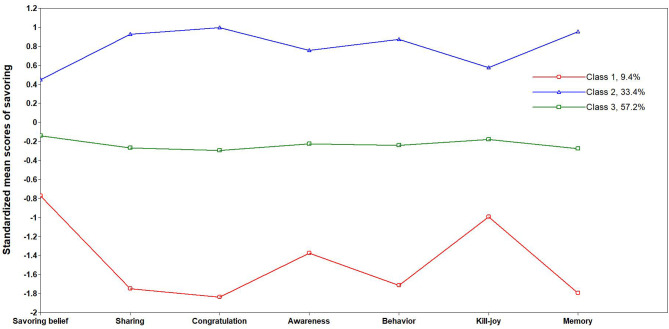
Results: Three latent profiles of savoring were identified. Individuals in high level of savoring (HS, 33.4%) showed the highest level of savoring and positive affect. Compared with HS, caregivers in low level of savoring (LS, 9.4%) and medium level of savoring (MS, 57.2%) showed lower savoring and lower positive affect. Active coping(βMS = -0.109, βLS = -0.252, p<0.001)was the strongest protecting factor for both MS and LS, while passive coping (β = 0.146, p = 0.008) was a risk factor for LS. Non-assistance from others (β = 0.677, p = 0.015) and unemployment (β = 1.287, p = 0.007)were the strongest risk factors for the MS and LS subgroup, respectively.
Conclusions: Caregivers' savoring patterns appear to vary at different levels. Oncological professionals should pay attention to caregivers with passive coping, unemployment, and lack of assistance for designing targeted savoring training to promote emotional well-being.
期刊介绍:
BMC Psychology is an open access, peer-reviewed journal that considers manuscripts on all aspects of psychology, human behavior and the mind, including developmental, clinical, cognitive, experimental, health and social psychology, as well as personality and individual differences. The journal welcomes quantitative and qualitative research methods, including animal studies.




 京公网安备 11010802042870号
京ICP备2023020795号-1
京公网安备 11010802042870号
京ICP备2023020795号-1

 分享
分享
 求助内容:
求助内容: 应助结果提醒方式:
 扫码关注我们
