{"title":"CRISPR-Cas系统与保加利亚非临床肠球菌群体获得四环素耐药性的关系","authors":"Maria Pandova, Yoana Kizheva, Petya Hristova","doi":"10.3390/antibiotics14020145","DOIUrl":null,"url":null,"abstract":"<p><p>Non-clinical enterococci are relatively poorly studied by means of acquired antibiotic resistance to tetracycline and by the distribution, functionality and role of their CRISPR systems. <b>Background:</b> In our study, 72 enterococcal strains, isolated from various non-clinical origins, were investigated for their phenotypic and genotypic (<i>tet</i>(M), <i>tet</i>(O), <i>tet</i>(S), <i>tet</i>(L), <i>tet</i>(K), <i>tet</i>(T) and <i>tet</i>(W)) tetracycline resistance. <b>Methods:</b> The genetic determinants for HGT (MGEs (<i>Int-Tn</i> and <i>prg</i>W), inducible pheromones (<i>cpd</i>, <i>cop</i> and <i>cff</i>), aggregation substances (<i>agg</i>, <i>asa1</i>, <i>prgB</i> and <i>asa373</i>) and CRISPR-Cas systems were characterized by PCR and whole-genome sequencing. <b>Results:</b> Four <i>tet</i> genes (<i>tetM</i>, <i>tetO</i>, <i>tetS</i> and <i>tetT</i>) were detected in 39% (n = 28) of our enterococcal population, with <i>tet</i>M (31%) being dominant. The gene location was linked to the Tn6009 transposon. All strains that contained <i>tet</i> genes also had genes for HGT. No <i>tet</i> genes were found in <i>E. casseliflavus</i> and <i>E. gilvus</i>. In our study, 79% of all <i>tet</i>-positive strains correlated with non-functional CRISPR systems. The strain <i>E. faecalis</i> BM15 was the only one containing a combination of a functional CRISPR system (<i>cas1</i>, <i>cas2</i>, <i>csn2</i> and <i>csn</i>1/<i>cas</i>9) and <i>tet</i> genes. The CRISPR subtype repeats II-A, III-B, IV-A2 and VI-B1 were identified among <i>E. faecalis</i> strains (CM4-II-A, III-B and VI-B1; BM5-IV-A2, II-A and III-B; BM12 and BM15-II-A). The subtype II-A was the most present. These repeats enclosed a great number of spacers (1-10 spacers) with lengths of 31 to 36 bp. One CRISPR locus was identified in plasmid (p.Firmicutes1 in strain <i>E. faecalis</i> BM5). We described the presence of CRISPR loci in the species <i>E. pseudoavium</i>, <i>E. pallens</i> and <i>E. devriesei</i> and their lack in <i>E. gilvus</i>, <i>E. malodoratus</i> and <i>E. mundtii</i>. <b>Conclusions:</b> Our findings generally describe the acquisition of foreign DNA as a consequence of CRISPR inactivation, and self-targeting spacers as the main cause.</p>","PeriodicalId":54246,"journal":{"name":"Antibiotics-Basel","volume":"14 2","pages":""},"PeriodicalIF":4.6000,"publicationDate":"2025-02-02","publicationTypes":"Journal Article","fieldsOfStudy":null,"isOpenAccess":false,"openAccessPdf":"https://www.ncbi.nlm.nih.gov/pmc/articles/PMC11852239/pdf/","citationCount":"0","resultStr":"{\"title\":\"Relationship Between CRISPR-Cas Systems and Acquisition of Tetracycline Resistance in Non-Clinical <i>Enterococcus</i> Populations in Bulgaria.\",\"authors\":\"Maria Pandova, Yoana Kizheva, Petya Hristova\",\"doi\":\"10.3390/antibiotics14020145\",\"DOIUrl\":null,\"url\":null,\"abstract\":\"<p><p>Non-clinical enterococci are relatively poorly studied by means of acquired antibiotic resistance to tetracycline and by the distribution, functionality and role of their CRISPR systems. <b>Background:</b> In our study, 72 enterococcal strains, isolated from various non-clinical origins, were investigated for their phenotypic and genotypic (<i>tet</i>(M), <i>tet</i>(O), <i>tet</i>(S), <i>tet</i>(L), <i>tet</i>(K), <i>tet</i>(T) and <i>tet</i>(W)) tetracycline resistance. <b>Methods:</b> The genetic determinants for HGT (MGEs (<i>Int-Tn</i> and <i>prg</i>W), inducible pheromones (<i>cpd</i>, <i>cop</i> and <i>cff</i>), aggregation substances (<i>agg</i>, <i>asa1</i>, <i>prgB</i> and <i>asa373</i>) and CRISPR-Cas systems were characterized by PCR and whole-genome sequencing. <b>Results:</b> Four <i>tet</i> genes (<i>tetM</i>, <i>tetO</i>, <i>tetS</i> and <i>tetT</i>) were detected in 39% (n = 28) of our enterococcal population, with <i>tet</i>M (31%) being dominant. The gene location was linked to the Tn6009 transposon. All strains that contained <i>tet</i> genes also had genes for HGT. No <i>tet</i> genes were found in <i>E. casseliflavus</i> and <i>E. gilvus</i>. In our study, 79% of all <i>tet</i>-positive strains correlated with non-functional CRISPR systems. The strain <i>E. faecalis</i> BM15 was the only one containing a combination of a functional CRISPR system (<i>cas1</i>, <i>cas2</i>, <i>csn2</i> and <i>csn</i>1/<i>cas</i>9) and <i>tet</i> genes. The CRISPR subtype repeats II-A, III-B, IV-A2 and VI-B1 were identified among <i>E. faecalis</i> strains (CM4-II-A, III-B and VI-B1; BM5-IV-A2, II-A and III-B; BM12 and BM15-II-A). The subtype II-A was the most present. These repeats enclosed a great number of spacers (1-10 spacers) with lengths of 31 to 36 bp. One CRISPR locus was identified in plasmid (p.Firmicutes1 in strain <i>E. faecalis</i> BM5). We described the presence of CRISPR loci in the species <i>E. pseudoavium</i>, <i>E. pallens</i> and <i>E. devriesei</i> and their lack in <i>E. gilvus</i>, <i>E. malodoratus</i> and <i>E. mundtii</i>. <b>Conclusions:</b> Our findings generally describe the acquisition of foreign DNA as a consequence of CRISPR inactivation, and self-targeting spacers as the main cause.</p>\",\"PeriodicalId\":54246,\"journal\":{\"name\":\"Antibiotics-Basel\",\"volume\":\"14 2\",\"pages\":\"\"},\"PeriodicalIF\":4.6000,\"publicationDate\":\"2025-02-02\",\"publicationTypes\":\"Journal Article\",\"fieldsOfStudy\":null,\"isOpenAccess\":false,\"openAccessPdf\":\"https://www.ncbi.nlm.nih.gov/pmc/articles/PMC11852239/pdf/\",\"citationCount\":\"0\",\"resultStr\":null,\"platform\":\"Semanticscholar\",\"paperid\":null,\"PeriodicalName\":\"Antibiotics-Basel\",\"FirstCategoryId\":\"3\",\"ListUrlMain\":\"https://doi.org/10.3390/antibiotics14020145\",\"RegionNum\":2,\"RegionCategory\":\"医学\",\"ArticlePicture\":[],\"TitleCN\":null,\"AbstractTextCN\":null,\"PMCID\":null,\"EPubDate\":\"\",\"PubModel\":\"\",\"JCR\":\"Q1\",\"JCRName\":\"INFECTIOUS DISEASES\",\"Score\":null,\"Total\":0}","platform":"Semanticscholar","paperid":null,"PeriodicalName":"Antibiotics-Basel","FirstCategoryId":"3","ListUrlMain":"https://doi.org/10.3390/antibiotics14020145","RegionNum":2,"RegionCategory":"医学","ArticlePicture":[],"TitleCN":null,"AbstractTextCN":null,"PMCID":null,"EPubDate":"","PubModel":"","JCR":"Q1","JCRName":"INFECTIOUS DISEASES","Score":null,"Total":0}
Relationship Between CRISPR-Cas Systems and Acquisition of Tetracycline Resistance in Non-Clinical Enterococcus Populations in Bulgaria.
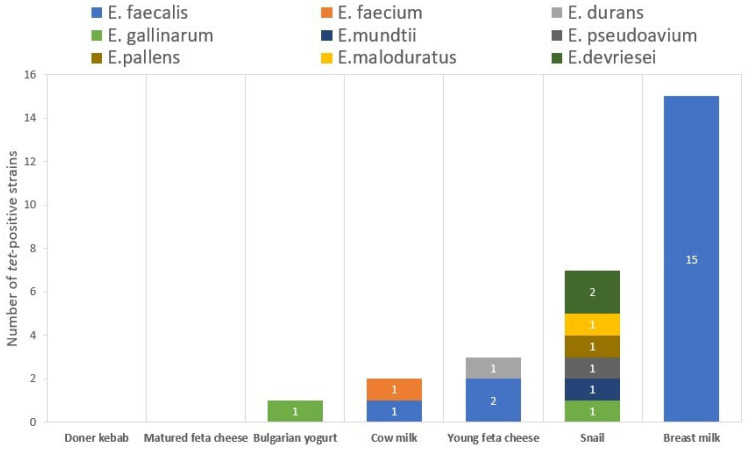
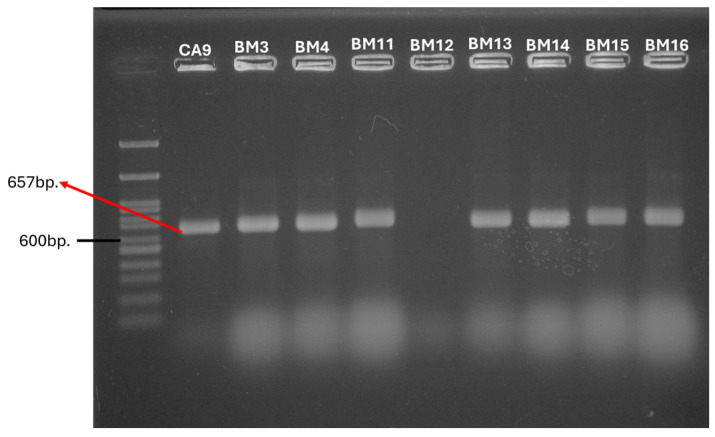
Non-clinical enterococci are relatively poorly studied by means of acquired antibiotic resistance to tetracycline and by the distribution, functionality and role of their CRISPR systems. Background: In our study, 72 enterococcal strains, isolated from various non-clinical origins, were investigated for their phenotypic and genotypic (tet(M), tet(O), tet(S), tet(L), tet(K), tet(T) and tet(W)) tetracycline resistance. Methods: The genetic determinants for HGT (MGEs (Int-Tn and prgW), inducible pheromones (cpd, cop and cff), aggregation substances (agg, asa1, prgB and asa373) and CRISPR-Cas systems were characterized by PCR and whole-genome sequencing. Results: Four tet genes (tetM, tetO, tetS and tetT) were detected in 39% (n = 28) of our enterococcal population, with tetM (31%) being dominant. The gene location was linked to the Tn6009 transposon. All strains that contained tet genes also had genes for HGT. No tet genes were found in E. casseliflavus and E. gilvus. In our study, 79% of all tet-positive strains correlated with non-functional CRISPR systems. The strain E. faecalis BM15 was the only one containing a combination of a functional CRISPR system (cas1, cas2, csn2 and csn1/cas9) and tet genes. The CRISPR subtype repeats II-A, III-B, IV-A2 and VI-B1 were identified among E. faecalis strains (CM4-II-A, III-B and VI-B1; BM5-IV-A2, II-A and III-B; BM12 and BM15-II-A). The subtype II-A was the most present. These repeats enclosed a great number of spacers (1-10 spacers) with lengths of 31 to 36 bp. One CRISPR locus was identified in plasmid (p.Firmicutes1 in strain E. faecalis BM5). We described the presence of CRISPR loci in the species E. pseudoavium, E. pallens and E. devriesei and their lack in E. gilvus, E. malodoratus and E. mundtii. Conclusions: Our findings generally describe the acquisition of foreign DNA as a consequence of CRISPR inactivation, and self-targeting spacers as the main cause.
Antibiotics-BaselPharmacology, Toxicology and Pharmaceutics-General Pharmacology, Toxicology and Pharmaceutics
CiteScore
7.30
自引率
14.60%
发文量
1547
审稿时长
11 weeks
期刊介绍:
Antibiotics (ISSN 2079-6382) is an open access, peer reviewed journal on all aspects of antibiotics. Antibiotics is a multi-disciplinary journal encompassing the general fields of biochemistry, chemistry, genetics, microbiology and pharmacology. Our aim is to encourage scientists to publish their experimental and theoretical results in as much detail as possible. Therefore, there is no restriction on the length of papers.






 京公网安备 11010802042870号
京ICP备2023020795号-1
京公网安备 11010802042870号
京ICP备2023020795号-1

 分享
分享
 求助内容:
求助内容: 应助结果提醒方式:
 扫码关注我们
