Luca Pipitò, Raffaella Rubino, Giulio D'Agati, Eleonora Bono, Chiara Vincenza Mazzola, Sofia Urso, Giuseppe Zinna, Salvatore Antonino Distefano, Alberto Firenze, Celestino Bonura, Giovanni M Giammanco, Antonio Cascio
{"title":"ESKAPE病原菌的抗菌素耐药性:意大利巴勒莫大学医院回顾性流行病学研究","authors":"Luca Pipitò, Raffaella Rubino, Giulio D'Agati, Eleonora Bono, Chiara Vincenza Mazzola, Sofia Urso, Giuseppe Zinna, Salvatore Antonino Distefano, Alberto Firenze, Celestino Bonura, Giovanni M Giammanco, Antonio Cascio","doi":"10.3390/antibiotics14020186","DOIUrl":null,"url":null,"abstract":"<p><strong>Background: </strong>Antimicrobial resistance (AMR) is an escalating global health threat, projected to cause over 40 million deaths by 2050. ESKAPE pathogens (<i>Enterococcus faecium</i>, <i>Staphylococcus aureus</i>, <i>Klebsiella pneumoniae</i>, <i>Acinetobacter baumannii</i>, <i>Pseudomonas aeruginosa</i>, and <i>Enterobacter</i> spp.) are major contributors to nosocomial infections and AMR. We evaluated the epidemiology and AMR prevalence of ESKAPE pathogens at the University Hospital in Palermo between January 2018 and July 2023, analyzing factors associated with mortality in patients with positive blood cultures.</p><p><strong>Methods: </strong>Microbiological data from all specimen types were collected using the Business Intelligence system Biwer, excluding duplicates. We assessed the prevalence and trends of ESKAPE isolates and AMR over time. Clinical data from hospital discharge forms were used to evaluate factors associated with mortality in patients with ESKAPE-positive blood cultures. Differences in AMR prevalence between blood and non-blood isolates were examined.</p><p><strong>Results: </strong>A total of 11,607 specimens from 4916 patients were analyzed. Most patients were admitted to Internal Medicine (19.4%), the ICU (13.2%), and General Surgery (9.9%). Additionally, 21.5% of the specimens were collected from ICU-admitted patients. Blood cultures accounted for 14.3% of the specimens, urine for 25.3%, respiratory secretions for 22.1%, and skin and mucosal swabs for 20.9%. The prevalence of all isolates increased progressively, peaking in 2021. The vancomycin-resistant <i>E. faecium</i> prevalence was 19.4%, with a significant upward trend, while oxacillin-resistant <i>S. aureus</i> prevalence was 35.0%, showing a significant decline. <i>A. baumannii</i> exhibited high resistance to all antibiotics tested except for colistin and cefiderocol. Carbapenemase resistance was 55.0% in <i>K. pneumoniae</i>, 20.4% in <i>P. aeruginosa</i>, and 4.6% in <i>Enterobacter</i> spp. <i>P. aeruginosa</i> showed a significant decrease in meropenem resistance. <i>K. pneumoniae</i> and <i>A. baumannii</i> bloodstream infections were linked to higher mortality risk.</p>","PeriodicalId":54246,"journal":{"name":"Antibiotics-Basel","volume":"14 2","pages":""},"PeriodicalIF":4.6000,"publicationDate":"2025-02-12","publicationTypes":"Journal Article","fieldsOfStudy":null,"isOpenAccess":false,"openAccessPdf":"https://www.ncbi.nlm.nih.gov/pmc/articles/PMC11851393/pdf/","citationCount":"0","resultStr":"{\"title\":\"Antimicrobial Resistance in ESKAPE Pathogens: A Retrospective Epidemiological Study at the University Hospital of Palermo, Italy.\",\"authors\":\"Luca Pipitò, Raffaella Rubino, Giulio D'Agati, Eleonora Bono, Chiara Vincenza Mazzola, Sofia Urso, Giuseppe Zinna, Salvatore Antonino Distefano, Alberto Firenze, Celestino Bonura, Giovanni M Giammanco, Antonio Cascio\",\"doi\":\"10.3390/antibiotics14020186\",\"DOIUrl\":null,\"url\":null,\"abstract\":\"<p><strong>Background: </strong>Antimicrobial resistance (AMR) is an escalating global health threat, projected to cause over 40 million deaths by 2050. ESKAPE pathogens (<i>Enterococcus faecium</i>, <i>Staphylococcus aureus</i>, <i>Klebsiella pneumoniae</i>, <i>Acinetobacter baumannii</i>, <i>Pseudomonas aeruginosa</i>, and <i>Enterobacter</i> spp.) are major contributors to nosocomial infections and AMR. We evaluated the epidemiology and AMR prevalence of ESKAPE pathogens at the University Hospital in Palermo between January 2018 and July 2023, analyzing factors associated with mortality in patients with positive blood cultures.</p><p><strong>Methods: </strong>Microbiological data from all specimen types were collected using the Business Intelligence system Biwer, excluding duplicates. We assessed the prevalence and trends of ESKAPE isolates and AMR over time. Clinical data from hospital discharge forms were used to evaluate factors associated with mortality in patients with ESKAPE-positive blood cultures. Differences in AMR prevalence between blood and non-blood isolates were examined.</p><p><strong>Results: </strong>A total of 11,607 specimens from 4916 patients were analyzed. Most patients were admitted to Internal Medicine (19.4%), the ICU (13.2%), and General Surgery (9.9%). Additionally, 21.5% of the specimens were collected from ICU-admitted patients. Blood cultures accounted for 14.3% of the specimens, urine for 25.3%, respiratory secretions for 22.1%, and skin and mucosal swabs for 20.9%. The prevalence of all isolates increased progressively, peaking in 2021. The vancomycin-resistant <i>E. faecium</i> prevalence was 19.4%, with a significant upward trend, while oxacillin-resistant <i>S. aureus</i> prevalence was 35.0%, showing a significant decline. <i>A. baumannii</i> exhibited high resistance to all antibiotics tested except for colistin and cefiderocol. Carbapenemase resistance was 55.0% in <i>K. pneumoniae</i>, 20.4% in <i>P. aeruginosa</i>, and 4.6% in <i>Enterobacter</i> spp. <i>P. aeruginosa</i> showed a significant decrease in meropenem resistance. <i>K. pneumoniae</i> and <i>A. baumannii</i> bloodstream infections were linked to higher mortality risk.</p>\",\"PeriodicalId\":54246,\"journal\":{\"name\":\"Antibiotics-Basel\",\"volume\":\"14 2\",\"pages\":\"\"},\"PeriodicalIF\":4.6000,\"publicationDate\":\"2025-02-12\",\"publicationTypes\":\"Journal Article\",\"fieldsOfStudy\":null,\"isOpenAccess\":false,\"openAccessPdf\":\"https://www.ncbi.nlm.nih.gov/pmc/articles/PMC11851393/pdf/\",\"citationCount\":\"0\",\"resultStr\":null,\"platform\":\"Semanticscholar\",\"paperid\":null,\"PeriodicalName\":\"Antibiotics-Basel\",\"FirstCategoryId\":\"3\",\"ListUrlMain\":\"https://doi.org/10.3390/antibiotics14020186\",\"RegionNum\":2,\"RegionCategory\":\"医学\",\"ArticlePicture\":[],\"TitleCN\":null,\"AbstractTextCN\":null,\"PMCID\":null,\"EPubDate\":\"\",\"PubModel\":\"\",\"JCR\":\"Q1\",\"JCRName\":\"INFECTIOUS DISEASES\",\"Score\":null,\"Total\":0}","platform":"Semanticscholar","paperid":null,"PeriodicalName":"Antibiotics-Basel","FirstCategoryId":"3","ListUrlMain":"https://doi.org/10.3390/antibiotics14020186","RegionNum":2,"RegionCategory":"医学","ArticlePicture":[],"TitleCN":null,"AbstractTextCN":null,"PMCID":null,"EPubDate":"","PubModel":"","JCR":"Q1","JCRName":"INFECTIOUS DISEASES","Score":null,"Total":0}
Antimicrobial Resistance in ESKAPE Pathogens: A Retrospective Epidemiological Study at the University Hospital of Palermo, Italy.
Background: Antimicrobial resistance (AMR) is an escalating global health threat, projected to cause over 40 million deaths by 2050. ESKAPE pathogens (Enterococcus faecium, Staphylococcus aureus, Klebsiella pneumoniae, Acinetobacter baumannii, Pseudomonas aeruginosa, and Enterobacter spp.) are major contributors to nosocomial infections and AMR. We evaluated the epidemiology and AMR prevalence of ESKAPE pathogens at the University Hospital in Palermo between January 2018 and July 2023, analyzing factors associated with mortality in patients with positive blood cultures.
Methods: Microbiological data from all specimen types were collected using the Business Intelligence system Biwer, excluding duplicates. We assessed the prevalence and trends of ESKAPE isolates and AMR over time. Clinical data from hospital discharge forms were used to evaluate factors associated with mortality in patients with ESKAPE-positive blood cultures. Differences in AMR prevalence between blood and non-blood isolates were examined.
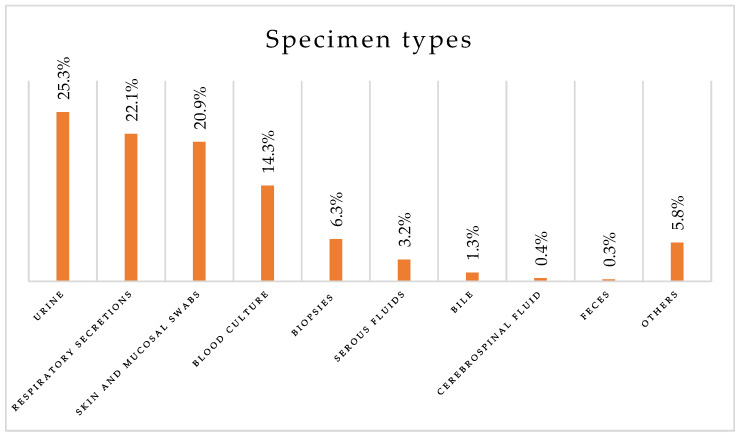
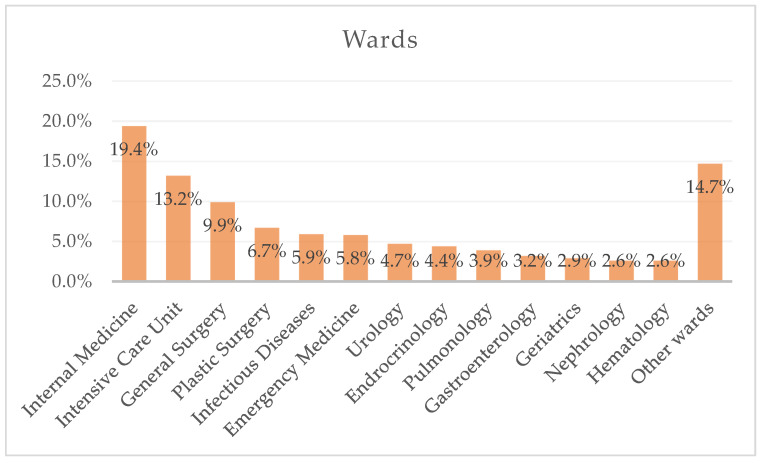
Results: A total of 11,607 specimens from 4916 patients were analyzed. Most patients were admitted to Internal Medicine (19.4%), the ICU (13.2%), and General Surgery (9.9%). Additionally, 21.5% of the specimens were collected from ICU-admitted patients. Blood cultures accounted for 14.3% of the specimens, urine for 25.3%, respiratory secretions for 22.1%, and skin and mucosal swabs for 20.9%. The prevalence of all isolates increased progressively, peaking in 2021. The vancomycin-resistant E. faecium prevalence was 19.4%, with a significant upward trend, while oxacillin-resistant S. aureus prevalence was 35.0%, showing a significant decline. A. baumannii exhibited high resistance to all antibiotics tested except for colistin and cefiderocol. Carbapenemase resistance was 55.0% in K. pneumoniae, 20.4% in P. aeruginosa, and 4.6% in Enterobacter spp. P. aeruginosa showed a significant decrease in meropenem resistance. K. pneumoniae and A. baumannii bloodstream infections were linked to higher mortality risk.
Antibiotics-BaselPharmacology, Toxicology and Pharmaceutics-General Pharmacology, Toxicology and Pharmaceutics
CiteScore
7.30
自引率
14.60%
发文量
1547
审稿时长
11 weeks
期刊介绍:
Antibiotics (ISSN 2079-6382) is an open access, peer reviewed journal on all aspects of antibiotics. Antibiotics is a multi-disciplinary journal encompassing the general fields of biochemistry, chemistry, genetics, microbiology and pharmacology. Our aim is to encourage scientists to publish their experimental and theoretical results in as much detail as possible. Therefore, there is no restriction on the length of papers.






 京公网安备 11010802042870号
京ICP备2023020795号-1
京公网安备 11010802042870号
京ICP备2023020795号-1

 分享
分享
 求助内容:
求助内容: 应助结果提醒方式:
 扫码关注我们
