David Ortega-Paredes, Felipe Del Canto, Rafael Rios, Lorena Diaz, Jinnethe Reyes, Cesar A Arias, Jeannete Zurita
{"title":"厄瓜多尔携带blaKPC基因的产esbl大肠杆菌和肺炎克雷伯菌中粘菌素和替加环素耐药性的基因组分析","authors":"David Ortega-Paredes, Felipe Del Canto, Rafael Rios, Lorena Diaz, Jinnethe Reyes, Cesar A Arias, Jeannete Zurita","doi":"10.3390/antibiotics14020206","DOIUrl":null,"url":null,"abstract":"<p><p><b>Introduction:</b> <i>Escherichia coli</i> (<i>E. coli</i>) and <i>Klebsiella pneumoniae</i> (<i>K. pneumoniae</i>) are resistant to third-generation cephalosporins (3GCs), carbapenems, colistin, and tigecycline, making them a major public health priority, mainly within the developing world. However, their genomic epidemiology and possible determinants of resistance remain to be elucidated. Thus, this study aimed to perform a genomic characterization of <i>E. coli</i> and <i>K. pneumoniae</i>, both of which are resistant to last-line antibiotics, isolated from humans, poultry, and a dairy farm environment within Ecuador. <b>Methods:</b> This study analyzed nine 3GC-resistant <i>E. coli</i> isolates harboring the <i>mcr</i>-1 gene (six from poultry farms, two from human infections, and one from dairy farm compost), together with ten isolated colistin- and carbapenem-resistant <i>K. pneumoniae</i> clinical samples. <b>Results:</b> The <i>E. coli</i> isolates of human origin belonged to ST609 and phylogroup A, while the poultry and compost isolates belonged to phylogroups A, B1, E, and F. Diverse STs of the <i>K. pneumoniae</i> isolates included ST13 (five isolates), ST258 (four isolates), and ST86 (one isolate). Within the <i>E. coli</i> isolates, <i>bla</i><sub>CTX-M-55</sub>, <i>bla</i><sub>CTX-M-65</sub>, <i>bla</i><sub>CTX-M-15</sub>, and <i>bla</i><sub>CTX-M-2</sub> genes were identified. This study also identified <i>bla</i><sub>CMY-2</sub> and <i>bla</i><sub>KPC-3</sub> (the latter in a carbapenem-susceptible isolate). In <i>E. coli</i>, the plasmid-borne <i>mcr</i>-1.1 gene was identified across all <i>E. coli</i> isolates within an IncI2 plasmid. Tigecycline-reduced susceptibility or resistance was related to missense amino acid substitutions coded in the <i>marA</i> and <i>acr</i>A genes. Within <i>K. pneumoiae</i>, <i>bla</i><sub>CTX-M-15</sub> and <i>bla</i><sub>CTX-M-65</sub>, on the one hand, and <i>bla</i><sub>KPC-2</sub> and <i>bla</i><sub>KPC-3</sub>, on the other, were associated with 3GC and carbapenem resistance, respectively. The <i>bla</i><sub>KPC-2</sub> allele was identified in a ~10 kb Tn<i>4401</i> transposon (<i>tnpR-tnpA-istA-istB-bla<sub>KPC-2</sub>-tnpA</i>). In <i>K pneumoniae</i>, sequence data and phenotypic analysis linked a nonsense amino acid substitution coded in the <i>mgrB</i> (K3*) gene and missense amino acid substitutions coded in the <i>marA</i>, <i>acr</i>A, <i>arnB</i>, <i>eptA</i>, <i>pmrB</i>, <i>pmrJ</i>, and <i>phoQ</i> genes to colistin resistance. Meanwhile, tigecycline resistance was linked to nonsense and missense amino acid substitutions coded within the <i>ramR</i> sequence. Additionally, this study identified several integron structures, including Int191 (<i>5'CS-dfrA14-3'CS</i>), which was the most prevalent integron (Int) among <i>E. coli</i> and <i>K. pneumoniae</i> isolates in this study, followed by Int0 (<i>5'CS-3'CS</i>) and Int18 (<i>5'CS-dfrA1-3'CS</i>). <b>Conclusions:</b> These results contribute to the genomic epidemiology of MDR <i>E. coli</i> and <i>K. pneumoniae</i> in our setting and to the worldwide epidemiology in the One Health approach.</p>","PeriodicalId":54246,"journal":{"name":"Antibiotics-Basel","volume":"14 2","pages":""},"PeriodicalIF":5.5000,"publicationDate":"2025-02-17","publicationTypes":"Journal Article","fieldsOfStudy":null,"isOpenAccess":false,"openAccessPdf":"https://www.ncbi.nlm.nih.gov/pmc/articles/PMC11851850/pdf/","citationCount":"0","resultStr":"{\"title\":\"Genomic Insights into Colistin and Tigecycline Resistance in ESBL-Producing <i>Escherichia coli</i> and <i>Klebsiella pneumoniae</i> Harboring <i>bla</i><sub>KPC</sub> Genes in Ecuador.\",\"authors\":\"David Ortega-Paredes, Felipe Del Canto, Rafael Rios, Lorena Diaz, Jinnethe Reyes, Cesar A Arias, Jeannete Zurita\",\"doi\":\"10.3390/antibiotics14020206\",\"DOIUrl\":null,\"url\":null,\"abstract\":\"<p><p><b>Introduction:</b> <i>Escherichia coli</i> (<i>E. coli</i>) and <i>Klebsiella pneumoniae</i> (<i>K. pneumoniae</i>) are resistant to third-generation cephalosporins (3GCs), carbapenems, colistin, and tigecycline, making them a major public health priority, mainly within the developing world. However, their genomic epidemiology and possible determinants of resistance remain to be elucidated. Thus, this study aimed to perform a genomic characterization of <i>E. coli</i> and <i>K. pneumoniae</i>, both of which are resistant to last-line antibiotics, isolated from humans, poultry, and a dairy farm environment within Ecuador. <b>Methods:</b> This study analyzed nine 3GC-resistant <i>E. coli</i> isolates harboring the <i>mcr</i>-1 gene (six from poultry farms, two from human infections, and one from dairy farm compost), together with ten isolated colistin- and carbapenem-resistant <i>K. pneumoniae</i> clinical samples. <b>Results:</b> The <i>E. coli</i> isolates of human origin belonged to ST609 and phylogroup A, while the poultry and compost isolates belonged to phylogroups A, B1, E, and F. Diverse STs of the <i>K. pneumoniae</i> isolates included ST13 (five isolates), ST258 (four isolates), and ST86 (one isolate). Within the <i>E. coli</i> isolates, <i>bla</i><sub>CTX-M-55</sub>, <i>bla</i><sub>CTX-M-65</sub>, <i>bla</i><sub>CTX-M-15</sub>, and <i>bla</i><sub>CTX-M-2</sub> genes were identified. This study also identified <i>bla</i><sub>CMY-2</sub> and <i>bla</i><sub>KPC-3</sub> (the latter in a carbapenem-susceptible isolate). In <i>E. coli</i>, the plasmid-borne <i>mcr</i>-1.1 gene was identified across all <i>E. coli</i> isolates within an IncI2 plasmid. Tigecycline-reduced susceptibility or resistance was related to missense amino acid substitutions coded in the <i>marA</i> and <i>acr</i>A genes. Within <i>K. pneumoiae</i>, <i>bla</i><sub>CTX-M-15</sub> and <i>bla</i><sub>CTX-M-65</sub>, on the one hand, and <i>bla</i><sub>KPC-2</sub> and <i>bla</i><sub>KPC-3</sub>, on the other, were associated with 3GC and carbapenem resistance, respectively. The <i>bla</i><sub>KPC-2</sub> allele was identified in a ~10 kb Tn<i>4401</i> transposon (<i>tnpR-tnpA-istA-istB-bla<sub>KPC-2</sub>-tnpA</i>). In <i>K pneumoniae</i>, sequence data and phenotypic analysis linked a nonsense amino acid substitution coded in the <i>mgrB</i> (K3*) gene and missense amino acid substitutions coded in the <i>marA</i>, <i>acr</i>A, <i>arnB</i>, <i>eptA</i>, <i>pmrB</i>, <i>pmrJ</i>, and <i>phoQ</i> genes to colistin resistance. Meanwhile, tigecycline resistance was linked to nonsense and missense amino acid substitutions coded within the <i>ramR</i> sequence. Additionally, this study identified several integron structures, including Int191 (<i>5'CS-dfrA14-3'CS</i>), which was the most prevalent integron (Int) among <i>E. coli</i> and <i>K. pneumoniae</i> isolates in this study, followed by Int0 (<i>5'CS-3'CS</i>) and Int18 (<i>5'CS-dfrA1-3'CS</i>). <b>Conclusions:</b> These results contribute to the genomic epidemiology of MDR <i>E. coli</i> and <i>K. pneumoniae</i> in our setting and to the worldwide epidemiology in the One Health approach.</p>\",\"PeriodicalId\":54246,\"journal\":{\"name\":\"Antibiotics-Basel\",\"volume\":\"14 2\",\"pages\":\"\"},\"PeriodicalIF\":5.5000,\"publicationDate\":\"2025-02-17\",\"publicationTypes\":\"Journal Article\",\"fieldsOfStudy\":null,\"isOpenAccess\":false,\"openAccessPdf\":\"https://www.ncbi.nlm.nih.gov/pmc/articles/PMC11851850/pdf/\",\"citationCount\":\"0\",\"resultStr\":null,\"platform\":\"Semanticscholar\",\"paperid\":null,\"PeriodicalName\":\"Antibiotics-Basel\",\"FirstCategoryId\":\"3\",\"ListUrlMain\":\"https://doi.org/10.3390/antibiotics14020206\",\"RegionNum\":2,\"RegionCategory\":\"医学\",\"ArticlePicture\":[],\"TitleCN\":null,\"AbstractTextCN\":null,\"PMCID\":null,\"EPubDate\":\"\",\"PubModel\":\"\",\"JCR\":\"Q1\",\"JCRName\":\"INFECTIOUS DISEASES\",\"Score\":null,\"Total\":0}","platform":"Semanticscholar","paperid":null,"PeriodicalName":"Antibiotics-Basel","FirstCategoryId":"3","ListUrlMain":"https://doi.org/10.3390/antibiotics14020206","RegionNum":2,"RegionCategory":"医学","ArticlePicture":[],"TitleCN":null,"AbstractTextCN":null,"PMCID":null,"EPubDate":"","PubModel":"","JCR":"Q1","JCRName":"INFECTIOUS DISEASES","Score":null,"Total":0}
Genomic Insights into Colistin and Tigecycline Resistance in ESBL-Producing Escherichia coli and Klebsiella pneumoniae Harboring blaKPC Genes in Ecuador.
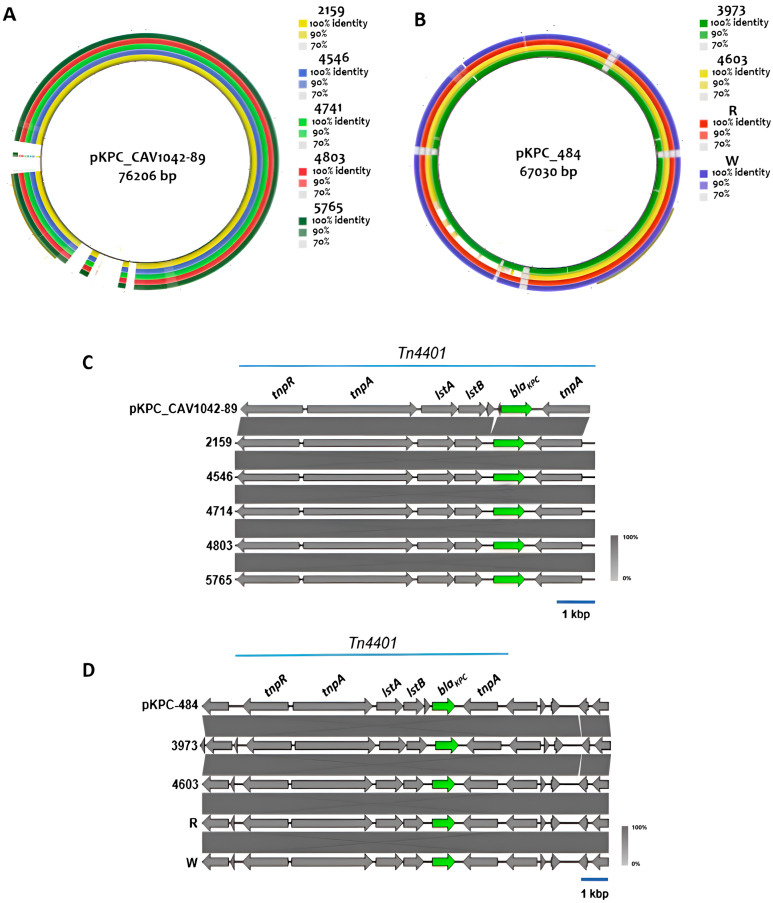
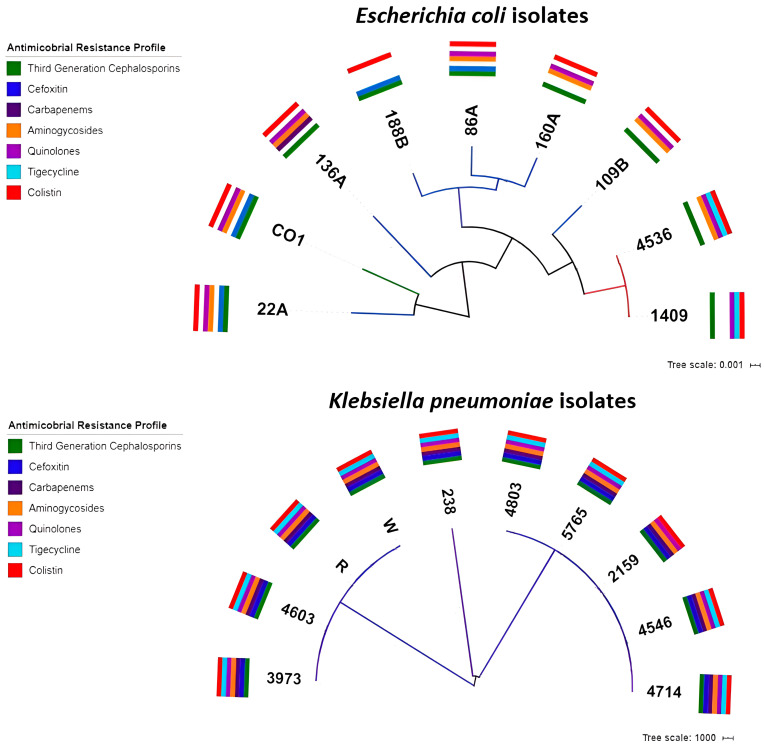
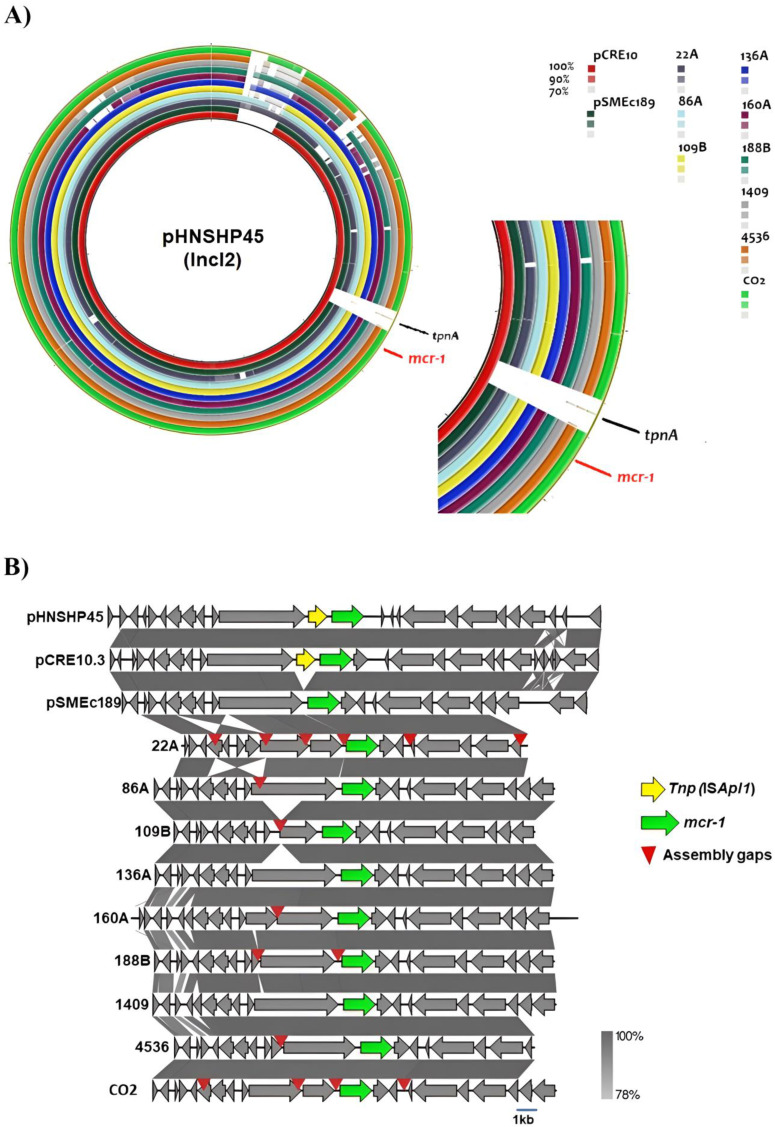
Introduction:Escherichia coli (E. coli) and Klebsiella pneumoniae (K. pneumoniae) are resistant to third-generation cephalosporins (3GCs), carbapenems, colistin, and tigecycline, making them a major public health priority, mainly within the developing world. However, their genomic epidemiology and possible determinants of resistance remain to be elucidated. Thus, this study aimed to perform a genomic characterization of E. coli and K. pneumoniae, both of which are resistant to last-line antibiotics, isolated from humans, poultry, and a dairy farm environment within Ecuador. Methods: This study analyzed nine 3GC-resistant E. coli isolates harboring the mcr-1 gene (six from poultry farms, two from human infections, and one from dairy farm compost), together with ten isolated colistin- and carbapenem-resistant K. pneumoniae clinical samples. Results: The E. coli isolates of human origin belonged to ST609 and phylogroup A, while the poultry and compost isolates belonged to phylogroups A, B1, E, and F. Diverse STs of the K. pneumoniae isolates included ST13 (five isolates), ST258 (four isolates), and ST86 (one isolate). Within the E. coli isolates, blaCTX-M-55, blaCTX-M-65, blaCTX-M-15, and blaCTX-M-2 genes were identified. This study also identified blaCMY-2 and blaKPC-3 (the latter in a carbapenem-susceptible isolate). In E. coli, the plasmid-borne mcr-1.1 gene was identified across all E. coli isolates within an IncI2 plasmid. Tigecycline-reduced susceptibility or resistance was related to missense amino acid substitutions coded in the marA and acrA genes. Within K. pneumoiae, blaCTX-M-15 and blaCTX-M-65, on the one hand, and blaKPC-2 and blaKPC-3, on the other, were associated with 3GC and carbapenem resistance, respectively. The blaKPC-2 allele was identified in a ~10 kb Tn4401 transposon (tnpR-tnpA-istA-istB-blaKPC-2-tnpA). In K pneumoniae, sequence data and phenotypic analysis linked a nonsense amino acid substitution coded in the mgrB (K3*) gene and missense amino acid substitutions coded in the marA, acrA, arnB, eptA, pmrB, pmrJ, and phoQ genes to colistin resistance. Meanwhile, tigecycline resistance was linked to nonsense and missense amino acid substitutions coded within the ramR sequence. Additionally, this study identified several integron structures, including Int191 (5'CS-dfrA14-3'CS), which was the most prevalent integron (Int) among E. coli and K. pneumoniae isolates in this study, followed by Int0 (5'CS-3'CS) and Int18 (5'CS-dfrA1-3'CS). Conclusions: These results contribute to the genomic epidemiology of MDR E. coli and K. pneumoniae in our setting and to the worldwide epidemiology in the One Health approach.
Antibiotics-BaselPharmacology, Toxicology and Pharmaceutics-General Pharmacology, Toxicology and Pharmaceutics
CiteScore
7.30
自引率
14.60%
发文量
1547
审稿时长
11 weeks
期刊介绍:
Antibiotics (ISSN 2079-6382) is an open access, peer reviewed journal on all aspects of antibiotics. Antibiotics is a multi-disciplinary journal encompassing the general fields of biochemistry, chemistry, genetics, microbiology and pharmacology. Our aim is to encourage scientists to publish their experimental and theoretical results in as much detail as possible. Therefore, there is no restriction on the length of papers.





 京公网安备 11010802042870号
京ICP备2023020795号-1
京公网安备 11010802042870号
京ICP备2023020795号-1

 分享
分享
 求助内容:
求助内容: 应助结果提醒方式:
 扫码关注我们
