{"title":"纳米硒对盐胁迫下枣椰树产量、生理特性和氧化稳定性的影响","authors":"Khaled A. El-Tarabily, Synan F. AbuQamar","doi":"10.1016/j.scienta.2025.114016","DOIUrl":null,"url":null,"abstract":"<div><div>Salinity poses a substantial risk to agricultural productivity. This work explored the use of biogenic selenium nanoparticles (BSeNPs) synthesized by <em>Streptomyces ferrugineus</em>, characterized by their spherical morphology (41 nm diameter), and -25.3 mV surface charge, to mitigate salinity stress in date palm trees. Over two growing seasons (2022 and 2023), BSeNPs (0, 5, 10, 20, 40, and 80 mg/L) were applied as foliar sprays and soil drenches to assess their impact on growth, yield, and oxidative stability. Salinity stress reduced growth, chlorophyll content, relative water content (RWC), and ascorbic acid, while increasing catalase, ascorbate peroxidase, malondialdehyde, and hydrogen peroxide levels. The soil application of BSeNPs at 40 mg/L significantly increased chlorophyll content by 28.8–29.5%, RWC by 33.3%, and ascorbic acid by 90.5%. It also reduced proline by 48.8–51.7%, malondialdehyde (MDA) by 31.0–33.3%, and the activities of ascorbate peroxidase (APX) and catalase (CAT) by 32.1–40.0%, and 16.7–25.0%, respectively, compared to untreated controls. Biogenic SeNPs enhanced the antioxidant defense system, reduced reactive oxygen species-induced oxidative damage, and minimized lipid peroxidation. This study is the first to demonstrate the potential of BSeNPs derived from actinobacteria to mitigate salinity-induced oxidative stress in date palm trees while simultaneously enhancing fruit yield and quality. By offering a sustainable and eco-friendly solution, BSeNPs pave the way for protecting high-value crops like date palms against the adverse effects of salinity. This innovative approach not only safeguards agricultural productivity under challenging environmental conditions but also promotes sustainable farming practices, highlighting the transformative role of BSeNPs in modern agriculture.</div></div>","PeriodicalId":21679,"journal":{"name":"Scientia Horticulturae","volume":"342 ","pages":"Article 114016"},"PeriodicalIF":4.2000,"publicationDate":"2025-02-15","publicationTypes":"Journal Article","fieldsOfStudy":null,"isOpenAccess":false,"openAccessPdf":"","citationCount":"0","resultStr":"{\"title\":\"Enhancement of yield, physiological characteristics, and oxidative stability of date palm (Phoenix dactylifera L.) trees under salt stress using biogenic selenium nanoparticles\",\"authors\":\"Khaled A. El-Tarabily, Synan F. AbuQamar\",\"doi\":\"10.1016/j.scienta.2025.114016\",\"DOIUrl\":null,\"url\":null,\"abstract\":\"<div><div>Salinity poses a substantial risk to agricultural productivity. This work explored the use of biogenic selenium nanoparticles (BSeNPs) synthesized by <em>Streptomyces ferrugineus</em>, characterized by their spherical morphology (41 nm diameter), and -25.3 mV surface charge, to mitigate salinity stress in date palm trees. Over two growing seasons (2022 and 2023), BSeNPs (0, 5, 10, 20, 40, and 80 mg/L) were applied as foliar sprays and soil drenches to assess their impact on growth, yield, and oxidative stability. Salinity stress reduced growth, chlorophyll content, relative water content (RWC), and ascorbic acid, while increasing catalase, ascorbate peroxidase, malondialdehyde, and hydrogen peroxide levels. The soil application of BSeNPs at 40 mg/L significantly increased chlorophyll content by 28.8–29.5%, RWC by 33.3%, and ascorbic acid by 90.5%. It also reduced proline by 48.8–51.7%, malondialdehyde (MDA) by 31.0–33.3%, and the activities of ascorbate peroxidase (APX) and catalase (CAT) by 32.1–40.0%, and 16.7–25.0%, respectively, compared to untreated controls. Biogenic SeNPs enhanced the antioxidant defense system, reduced reactive oxygen species-induced oxidative damage, and minimized lipid peroxidation. This study is the first to demonstrate the potential of BSeNPs derived from actinobacteria to mitigate salinity-induced oxidative stress in date palm trees while simultaneously enhancing fruit yield and quality. By offering a sustainable and eco-friendly solution, BSeNPs pave the way for protecting high-value crops like date palms against the adverse effects of salinity. This innovative approach not only safeguards agricultural productivity under challenging environmental conditions but also promotes sustainable farming practices, highlighting the transformative role of BSeNPs in modern agriculture.</div></div>\",\"PeriodicalId\":21679,\"journal\":{\"name\":\"Scientia Horticulturae\",\"volume\":\"342 \",\"pages\":\"Article 114016\"},\"PeriodicalIF\":4.2000,\"publicationDate\":\"2025-02-15\",\"publicationTypes\":\"Journal Article\",\"fieldsOfStudy\":null,\"isOpenAccess\":false,\"openAccessPdf\":\"\",\"citationCount\":\"0\",\"resultStr\":null,\"platform\":\"Semanticscholar\",\"paperid\":null,\"PeriodicalName\":\"Scientia Horticulturae\",\"FirstCategoryId\":\"97\",\"ListUrlMain\":\"https://www.sciencedirect.com/science/article/pii/S0304423825000676\",\"RegionNum\":2,\"RegionCategory\":\"农林科学\",\"ArticlePicture\":[],\"TitleCN\":null,\"AbstractTextCN\":null,\"PMCID\":null,\"EPubDate\":\"2025/2/27 0:00:00\",\"PubModel\":\"Epub\",\"JCR\":\"Q1\",\"JCRName\":\"HORTICULTURE\",\"Score\":null,\"Total\":0}","platform":"Semanticscholar","paperid":null,"PeriodicalName":"Scientia Horticulturae","FirstCategoryId":"97","ListUrlMain":"https://www.sciencedirect.com/science/article/pii/S0304423825000676","RegionNum":2,"RegionCategory":"农林科学","ArticlePicture":[],"TitleCN":null,"AbstractTextCN":null,"PMCID":null,"EPubDate":"2025/2/27 0:00:00","PubModel":"Epub","JCR":"Q1","JCRName":"HORTICULTURE","Score":null,"Total":0}
Enhancement of yield, physiological characteristics, and oxidative stability of date palm (Phoenix dactylifera L.) trees under salt stress using biogenic selenium nanoparticles
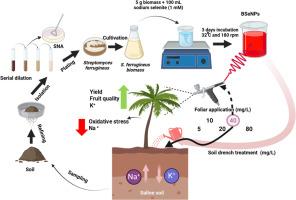
Salinity poses a substantial risk to agricultural productivity. This work explored the use of biogenic selenium nanoparticles (BSeNPs) synthesized by Streptomyces ferrugineus, characterized by their spherical morphology (41 nm diameter), and -25.3 mV surface charge, to mitigate salinity stress in date palm trees. Over two growing seasons (2022 and 2023), BSeNPs (0, 5, 10, 20, 40, and 80 mg/L) were applied as foliar sprays and soil drenches to assess their impact on growth, yield, and oxidative stability. Salinity stress reduced growth, chlorophyll content, relative water content (RWC), and ascorbic acid, while increasing catalase, ascorbate peroxidase, malondialdehyde, and hydrogen peroxide levels. The soil application of BSeNPs at 40 mg/L significantly increased chlorophyll content by 28.8–29.5%, RWC by 33.3%, and ascorbic acid by 90.5%. It also reduced proline by 48.8–51.7%, malondialdehyde (MDA) by 31.0–33.3%, and the activities of ascorbate peroxidase (APX) and catalase (CAT) by 32.1–40.0%, and 16.7–25.0%, respectively, compared to untreated controls. Biogenic SeNPs enhanced the antioxidant defense system, reduced reactive oxygen species-induced oxidative damage, and minimized lipid peroxidation. This study is the first to demonstrate the potential of BSeNPs derived from actinobacteria to mitigate salinity-induced oxidative stress in date palm trees while simultaneously enhancing fruit yield and quality. By offering a sustainable and eco-friendly solution, BSeNPs pave the way for protecting high-value crops like date palms against the adverse effects of salinity. This innovative approach not only safeguards agricultural productivity under challenging environmental conditions but also promotes sustainable farming practices, highlighting the transformative role of BSeNPs in modern agriculture.
期刊介绍:
Scientia Horticulturae is an international journal publishing research related to horticultural crops. Articles in the journal deal with open or protected production of vegetables, fruits, edible fungi and ornamentals under temperate, subtropical and tropical conditions. Papers in related areas (biochemistry, micropropagation, soil science, plant breeding, plant physiology, phytopathology, etc.) are considered, if they contain information of direct significance to horticulture. Papers on the technical aspects of horticulture (engineering, crop processing, storage, transport etc.) are accepted for publication only if they relate directly to the living product. In the case of plantation crops, those yielding a product that may be used fresh (e.g. tropical vegetables, citrus, bananas, and other fruits) will be considered, while those papers describing the processing of the product (e.g. rubber, tobacco, and quinine) will not. The scope of the journal includes all horticultural crops but does not include speciality crops such as, medicinal crops or forestry crops, such as bamboo. Basic molecular studies without any direct application in horticulture will not be considered for this journal.




 京公网安备 11010802042870号
京ICP备2023020795号-1
京公网安备 11010802042870号
京ICP备2023020795号-1

 分享
分享
 求助内容:
求助内容: 应助结果提醒方式:
 扫码关注我们
