Tong Zhang , Chen Wang , Shengpeng Su , Axiang Sun , Ting Du , Jianlong Wang , Julong Liu , Wentao Zhang
{"title":"金属酚网络增强了赋形剂在冷冻干燥过程中对益生菌的保护作用","authors":"Tong Zhang , Chen Wang , Shengpeng Su , Axiang Sun , Ting Du , Jianlong Wang , Julong Liu , Wentao Zhang","doi":"10.1016/j.foodres.2025.116097","DOIUrl":null,"url":null,"abstract":"<div><div>Probiotic powder using a single protective method during freeze-drying is insufficient vitality because it lacks adequate protection. Here we developed a protection strategy through biointerfacial phenolic self-assembly to enhance the protection of excipients for probiotics to address existing challenges during freeze-drying. This strategy could strengthen the connections of excipients and phenolic protective layers containing hydroxyl groups with water molecules, improving the hydration layer's preservation and shielding bacteria from damage. The results indicated that, compared with origin probiotics, protected probiotics maintained higher viability at approximately 91 % and higher ATPase activity and exhibited a better survival rate in various environmental challenges after freeze-drying. The broad applicability of this protection strategy was confirmed across other LAB strains. Additionally, the protected probiotics demonstrated superior shelf life during 30 days of storage, indicating promising prospects for preparing bacterial powder via freeze-drying.</div></div>","PeriodicalId":323,"journal":{"name":"Food Research International","volume":"206 ","pages":"Article 116097"},"PeriodicalIF":8.0000,"publicationDate":"2025-04-01","publicationTypes":"Journal Article","fieldsOfStudy":null,"isOpenAccess":false,"openAccessPdf":"","citationCount":"0","resultStr":"{\"title\":\"Metal-phenolic networks enhanced the protection of excipients for probiotics during freeze-drying\",\"authors\":\"Tong Zhang , Chen Wang , Shengpeng Su , Axiang Sun , Ting Du , Jianlong Wang , Julong Liu , Wentao Zhang\",\"doi\":\"10.1016/j.foodres.2025.116097\",\"DOIUrl\":null,\"url\":null,\"abstract\":\"<div><div>Probiotic powder using a single protective method during freeze-drying is insufficient vitality because it lacks adequate protection. Here we developed a protection strategy through biointerfacial phenolic self-assembly to enhance the protection of excipients for probiotics to address existing challenges during freeze-drying. This strategy could strengthen the connections of excipients and phenolic protective layers containing hydroxyl groups with water molecules, improving the hydration layer's preservation and shielding bacteria from damage. The results indicated that, compared with origin probiotics, protected probiotics maintained higher viability at approximately 91 % and higher ATPase activity and exhibited a better survival rate in various environmental challenges after freeze-drying. The broad applicability of this protection strategy was confirmed across other LAB strains. Additionally, the protected probiotics demonstrated superior shelf life during 30 days of storage, indicating promising prospects for preparing bacterial powder via freeze-drying.</div></div>\",\"PeriodicalId\":323,\"journal\":{\"name\":\"Food Research International\",\"volume\":\"206 \",\"pages\":\"Article 116097\"},\"PeriodicalIF\":8.0000,\"publicationDate\":\"2025-04-01\",\"publicationTypes\":\"Journal Article\",\"fieldsOfStudy\":null,\"isOpenAccess\":false,\"openAccessPdf\":\"\",\"citationCount\":\"0\",\"resultStr\":null,\"platform\":\"Semanticscholar\",\"paperid\":null,\"PeriodicalName\":\"Food Research International\",\"FirstCategoryId\":\"97\",\"ListUrlMain\":\"https://www.sciencedirect.com/science/article/pii/S096399692500434X\",\"RegionNum\":1,\"RegionCategory\":\"农林科学\",\"ArticlePicture\":[],\"TitleCN\":null,\"AbstractTextCN\":null,\"PMCID\":null,\"EPubDate\":\"2025/2/24 0:00:00\",\"PubModel\":\"Epub\",\"JCR\":\"Q1\",\"JCRName\":\"FOOD SCIENCE & TECHNOLOGY\",\"Score\":null,\"Total\":0}","platform":"Semanticscholar","paperid":null,"PeriodicalName":"Food Research International","FirstCategoryId":"97","ListUrlMain":"https://www.sciencedirect.com/science/article/pii/S096399692500434X","RegionNum":1,"RegionCategory":"农林科学","ArticlePicture":[],"TitleCN":null,"AbstractTextCN":null,"PMCID":null,"EPubDate":"2025/2/24 0:00:00","PubModel":"Epub","JCR":"Q1","JCRName":"FOOD SCIENCE & TECHNOLOGY","Score":null,"Total":0}
Metal-phenolic networks enhanced the protection of excipients for probiotics during freeze-drying
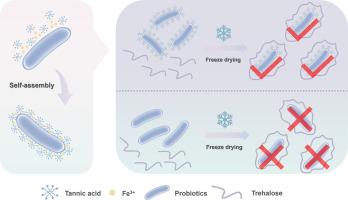
Probiotic powder using a single protective method during freeze-drying is insufficient vitality because it lacks adequate protection. Here we developed a protection strategy through biointerfacial phenolic self-assembly to enhance the protection of excipients for probiotics to address existing challenges during freeze-drying. This strategy could strengthen the connections of excipients and phenolic protective layers containing hydroxyl groups with water molecules, improving the hydration layer's preservation and shielding bacteria from damage. The results indicated that, compared with origin probiotics, protected probiotics maintained higher viability at approximately 91 % and higher ATPase activity and exhibited a better survival rate in various environmental challenges after freeze-drying. The broad applicability of this protection strategy was confirmed across other LAB strains. Additionally, the protected probiotics demonstrated superior shelf life during 30 days of storage, indicating promising prospects for preparing bacterial powder via freeze-drying.
期刊介绍:
Food Research International serves as a rapid dissemination platform for significant and impactful research in food science, technology, engineering, and nutrition. The journal focuses on publishing novel, high-quality, and high-impact review papers, original research papers, and letters to the editors across various disciplines in the science and technology of food. Additionally, it follows a policy of publishing special issues on topical and emergent subjects in food research or related areas. Selected, peer-reviewed papers from scientific meetings, workshops, and conferences on the science, technology, and engineering of foods are also featured in special issues.




 京公网安备 11010802042870号
京ICP备2023020795号-1
京公网安备 11010802042870号
京ICP备2023020795号-1

 分享
分享
 求助内容:
求助内容: 应助结果提醒方式:
 扫码关注我们
