Tariq M. Al-Hejri , Hamdan M. Danamah , Vijaykumar V. Jadhav , Shoyebmohamad F. Shaikh , Rajaram S. Mane
{"title":"Bi2O3@TiO2 p-n异质结电极:一种改善储能性能的有前途的方法","authors":"Tariq M. Al-Hejri , Hamdan M. Danamah , Vijaykumar V. Jadhav , Shoyebmohamad F. Shaikh , Rajaram S. Mane","doi":"10.1016/j.est.2025.115996","DOIUrl":null,"url":null,"abstract":"<div><div>A key strategy to boost electrochemical energy storage device efficiency is to develop cost-effective and eco-friendly nano-hetero-junctions with varying potential windows. A novel Bi<sub>2</sub>O<sub>3</sub>@TiO<sub>2</sub> <em>p</em>-<em>n</em> hetero-junction electrode is synthesized using sequential ionic layer adsorption and reaction (SILAR) chemical approach for obtaining advanced energy storage performance and higher energy density on account of separate working potential windows. Before performing electrochemical energy storage investigations, Bi<sub>2</sub>O<sub>3</sub>, TiO<sub>2</sub>, and Bi<sub>2</sub>O<sub>3</sub>@TiO<sub>2</sub> <em>p</em>-<em>n</em> hetero-junction electrodes are separately envisaged for confirming various physical and chemical parameters like structures, existing chemical elements, surface morphologies, and electrical conductivities. The as-obtained Bi<sub>2</sub>O<sub>3</sub>@TiO<sub>2</sub> <em>p</em>-<em>n</em> hetero-junction electrode endows nanoflower-nanoball-type bi-layered surface morphology which shows an ameliorated specific capacitance (SC) of 1942.97 F g<sup>−1</sup> and a specific capacity of 1198.18 mA.h.g<sup>−1</sup> at a current density of 5 mA cm<sup>−2</sup>. Notably, the band gap energy and potential window range of the Bi<sub>2</sub>O<sub>3</sub>@TiO<sub>2</sub> <em>p</em>-<em>n</em> hetero-junction electrode are reduced to 1.8 eV and extended to 1.7 V, respectively. The symmetrical supercapacitor setup with Bi<sub>2</sub>O<sub>3</sub>@TiO<sub>2</sub>//Bi<sub>2</sub>O<sub>3</sub>@TiO<sub>2</sub> configuration exhibits a power density as high as 750 W kg<sup>−1</sup> at 316.93 Wh kg<sup>−1</sup> energy density and a moderate chemical stability with 99.57 % retention even after 10,000 redox cycles. These improvements are associated to; an expanded potential range, a hierarchical porous morphology, and a synergistic effect of the Bi<sub>2</sub>O<sub>3</sub> and TiO<sub>2</sub>, convincing the importance of the Bi<sub>2</sub>O<sub>3</sub>@TiO<sub>2</sub> <em>p</em>-<em>n</em> hetero-junction electrode in developing high-performing electrochemical energy storage devices like supercapacitors.</div></div>","PeriodicalId":15942,"journal":{"name":"Journal of energy storage","volume":"115 ","pages":"Article 115996"},"PeriodicalIF":8.9000,"publicationDate":"2025-04-15","publicationTypes":"Journal Article","fieldsOfStudy":null,"isOpenAccess":false,"openAccessPdf":"","citationCount":"0","resultStr":"{\"title\":\"Bi2O3@TiO2 p-n hetero-junction electrode: A promising approach for improving energy storage performance\",\"authors\":\"Tariq M. Al-Hejri , Hamdan M. Danamah , Vijaykumar V. Jadhav , Shoyebmohamad F. Shaikh , Rajaram S. Mane\",\"doi\":\"10.1016/j.est.2025.115996\",\"DOIUrl\":null,\"url\":null,\"abstract\":\"<div><div>A key strategy to boost electrochemical energy storage device efficiency is to develop cost-effective and eco-friendly nano-hetero-junctions with varying potential windows. A novel Bi<sub>2</sub>O<sub>3</sub>@TiO<sub>2</sub> <em>p</em>-<em>n</em> hetero-junction electrode is synthesized using sequential ionic layer adsorption and reaction (SILAR) chemical approach for obtaining advanced energy storage performance and higher energy density on account of separate working potential windows. Before performing electrochemical energy storage investigations, Bi<sub>2</sub>O<sub>3</sub>, TiO<sub>2</sub>, and Bi<sub>2</sub>O<sub>3</sub>@TiO<sub>2</sub> <em>p</em>-<em>n</em> hetero-junction electrodes are separately envisaged for confirming various physical and chemical parameters like structures, existing chemical elements, surface morphologies, and electrical conductivities. The as-obtained Bi<sub>2</sub>O<sub>3</sub>@TiO<sub>2</sub> <em>p</em>-<em>n</em> hetero-junction electrode endows nanoflower-nanoball-type bi-layered surface morphology which shows an ameliorated specific capacitance (SC) of 1942.97 F g<sup>−1</sup> and a specific capacity of 1198.18 mA.h.g<sup>−1</sup> at a current density of 5 mA cm<sup>−2</sup>. Notably, the band gap energy and potential window range of the Bi<sub>2</sub>O<sub>3</sub>@TiO<sub>2</sub> <em>p</em>-<em>n</em> hetero-junction electrode are reduced to 1.8 eV and extended to 1.7 V, respectively. The symmetrical supercapacitor setup with Bi<sub>2</sub>O<sub>3</sub>@TiO<sub>2</sub>//Bi<sub>2</sub>O<sub>3</sub>@TiO<sub>2</sub> configuration exhibits a power density as high as 750 W kg<sup>−1</sup> at 316.93 Wh kg<sup>−1</sup> energy density and a moderate chemical stability with 99.57 % retention even after 10,000 redox cycles. These improvements are associated to; an expanded potential range, a hierarchical porous morphology, and a synergistic effect of the Bi<sub>2</sub>O<sub>3</sub> and TiO<sub>2</sub>, convincing the importance of the Bi<sub>2</sub>O<sub>3</sub>@TiO<sub>2</sub> <em>p</em>-<em>n</em> hetero-junction electrode in developing high-performing electrochemical energy storage devices like supercapacitors.</div></div>\",\"PeriodicalId\":15942,\"journal\":{\"name\":\"Journal of energy storage\",\"volume\":\"115 \",\"pages\":\"Article 115996\"},\"PeriodicalIF\":8.9000,\"publicationDate\":\"2025-04-15\",\"publicationTypes\":\"Journal Article\",\"fieldsOfStudy\":null,\"isOpenAccess\":false,\"openAccessPdf\":\"\",\"citationCount\":\"0\",\"resultStr\":null,\"platform\":\"Semanticscholar\",\"paperid\":null,\"PeriodicalName\":\"Journal of energy storage\",\"FirstCategoryId\":\"5\",\"ListUrlMain\":\"https://www.sciencedirect.com/science/article/pii/S2352152X25007091\",\"RegionNum\":2,\"RegionCategory\":\"工程技术\",\"ArticlePicture\":[],\"TitleCN\":null,\"AbstractTextCN\":null,\"PMCID\":null,\"EPubDate\":\"2025/2/28 0:00:00\",\"PubModel\":\"Epub\",\"JCR\":\"Q1\",\"JCRName\":\"ENERGY & FUELS\",\"Score\":null,\"Total\":0}","platform":"Semanticscholar","paperid":null,"PeriodicalName":"Journal of energy storage","FirstCategoryId":"5","ListUrlMain":"https://www.sciencedirect.com/science/article/pii/S2352152X25007091","RegionNum":2,"RegionCategory":"工程技术","ArticlePicture":[],"TitleCN":null,"AbstractTextCN":null,"PMCID":null,"EPubDate":"2025/2/28 0:00:00","PubModel":"Epub","JCR":"Q1","JCRName":"ENERGY & FUELS","Score":null,"Total":0}
Bi2O3@TiO2 p-n hetero-junction electrode: A promising approach for improving energy storage performance
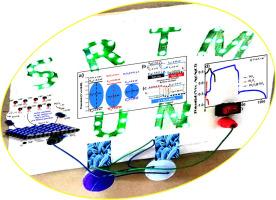
A key strategy to boost electrochemical energy storage device efficiency is to develop cost-effective and eco-friendly nano-hetero-junctions with varying potential windows. A novel Bi2O3@TiO2p-n hetero-junction electrode is synthesized using sequential ionic layer adsorption and reaction (SILAR) chemical approach for obtaining advanced energy storage performance and higher energy density on account of separate working potential windows. Before performing electrochemical energy storage investigations, Bi2O3, TiO2, and Bi2O3@TiO2p-n hetero-junction electrodes are separately envisaged for confirming various physical and chemical parameters like structures, existing chemical elements, surface morphologies, and electrical conductivities. The as-obtained Bi2O3@TiO2p-n hetero-junction electrode endows nanoflower-nanoball-type bi-layered surface morphology which shows an ameliorated specific capacitance (SC) of 1942.97 F g−1 and a specific capacity of 1198.18 mA.h.g−1 at a current density of 5 mA cm−2. Notably, the band gap energy and potential window range of the Bi2O3@TiO2p-n hetero-junction electrode are reduced to 1.8 eV and extended to 1.7 V, respectively. The symmetrical supercapacitor setup with Bi2O3@TiO2//Bi2O3@TiO2 configuration exhibits a power density as high as 750 W kg−1 at 316.93 Wh kg−1 energy density and a moderate chemical stability with 99.57 % retention even after 10,000 redox cycles. These improvements are associated to; an expanded potential range, a hierarchical porous morphology, and a synergistic effect of the Bi2O3 and TiO2, convincing the importance of the Bi2O3@TiO2p-n hetero-junction electrode in developing high-performing electrochemical energy storage devices like supercapacitors.
期刊介绍:
Journal of energy storage focusses on all aspects of energy storage, in particular systems integration, electric grid integration, modelling and analysis, novel energy storage technologies, sizing and management strategies, business models for operation of storage systems and energy storage developments worldwide.





 京公网安备 11010802042870号
京ICP备2023020795号-1
京公网安备 11010802042870号
京ICP备2023020795号-1

 分享
分享
 求助内容:
求助内容: 应助结果提醒方式:
 扫码关注我们
