John Wheeler , Gabrielle P. Black , Michelle L. Hladik , Corey J. Sanders , Jennifer Teerlink , Luann Wong , Xuyang Zhang , Robert Budd , Thomas M. Young
{"title":"生物固体中拟除虫菊酯和氟虫腈浓度的特征","authors":"John Wheeler , Gabrielle P. Black , Michelle L. Hladik , Corey J. Sanders , Jennifer Teerlink , Luann Wong , Xuyang Zhang , Robert Budd , Thomas M. Young","doi":"10.1016/j.scitotenv.2025.178954","DOIUrl":null,"url":null,"abstract":"<div><div>Pesticides are prevalent in wastewater, yet few studies have measured pesticides in biosolids and aqueous media from samples collected concurrently. Seventeen California wastewater treatment plants (WWTPs) were sampled in May 2020. Biosolids samples were analyzed for 27 analytes, and paired aqueous samples (influent and effluent) were analyzed for 23 analytes. Analytes included fipronil and its transformation products (fiproles), pyrethroids, novaluron, and several other pesticides with down-the-drain transport potential. Of the 27 compounds analyzed in biosolids samples, 16 were detected in at least one sample, and 10 had a detection frequency (DF) of at least 25 %. Fipronil sulfone, fipronil sulfide, and fipronil were the most frequently detected fiproles (DF = 100 %, 94 %, and 67 %, respectively); permethrin was the most frequently detected pyrethroid (DF = 100 %), followed by bifenthrin (DF = 94 %), cyhalothrin (DF = 89 %), and etofenprox (DF = 78 %). To elucidate fipronil transformation pathways within the treatment system, data from the three sample types were compared; findings were generally consistent with transformation pathways reported previously (e.g., some fiproles were rarely detected in influent or biosolids, but frequently detected in effluent, indicating their formation during the treatment process). No correlations were found between WWTP characteristics and pesticide concentrations in biosolids. The fraction of organic carbon (<em>f</em><sub><em>OC</em></sub>) of each biosolids sample was measured, and a statistically significant negative correlation was observed between <em>f</em><sub><em>OC</em></sub> and some fiproles, but not fipronil; possible explanations are discussed. Additional analysis for two major agricultural pesticides (bifenthrin and permethrin) indicated that estimated mass loads of these pesticides in biosolids applied to land as a soil amendment are minimal (approximately 2 to 3 orders of magnitude lower) compared to inputs from agricultural applications. This study provides insight on the magnitude of pesticides entering the environment via land-applied biosolids; existing regulations surrounding agricultural pesticide applications are expected to also be protective of the relatively low inputs from biosolids.</div></div>","PeriodicalId":422,"journal":{"name":"Science of the Total Environment","volume":"969 ","pages":"Article 178954"},"PeriodicalIF":8.0000,"publicationDate":"2025-03-15","publicationTypes":"Journal Article","fieldsOfStudy":null,"isOpenAccess":false,"openAccessPdf":"","citationCount":"0","resultStr":"{\"title\":\"Characterizing pyrethroid and fipronil concentrations in biosolids\",\"authors\":\"John Wheeler , Gabrielle P. Black , Michelle L. Hladik , Corey J. Sanders , Jennifer Teerlink , Luann Wong , Xuyang Zhang , Robert Budd , Thomas M. Young\",\"doi\":\"10.1016/j.scitotenv.2025.178954\",\"DOIUrl\":null,\"url\":null,\"abstract\":\"<div><div>Pesticides are prevalent in wastewater, yet few studies have measured pesticides in biosolids and aqueous media from samples collected concurrently. Seventeen California wastewater treatment plants (WWTPs) were sampled in May 2020. Biosolids samples were analyzed for 27 analytes, and paired aqueous samples (influent and effluent) were analyzed for 23 analytes. Analytes included fipronil and its transformation products (fiproles), pyrethroids, novaluron, and several other pesticides with down-the-drain transport potential. Of the 27 compounds analyzed in biosolids samples, 16 were detected in at least one sample, and 10 had a detection frequency (DF) of at least 25 %. Fipronil sulfone, fipronil sulfide, and fipronil were the most frequently detected fiproles (DF = 100 %, 94 %, and 67 %, respectively); permethrin was the most frequently detected pyrethroid (DF = 100 %), followed by bifenthrin (DF = 94 %), cyhalothrin (DF = 89 %), and etofenprox (DF = 78 %). To elucidate fipronil transformation pathways within the treatment system, data from the three sample types were compared; findings were generally consistent with transformation pathways reported previously (e.g., some fiproles were rarely detected in influent or biosolids, but frequently detected in effluent, indicating their formation during the treatment process). No correlations were found between WWTP characteristics and pesticide concentrations in biosolids. The fraction of organic carbon (<em>f</em><sub><em>OC</em></sub>) of each biosolids sample was measured, and a statistically significant negative correlation was observed between <em>f</em><sub><em>OC</em></sub> and some fiproles, but not fipronil; possible explanations are discussed. Additional analysis for two major agricultural pesticides (bifenthrin and permethrin) indicated that estimated mass loads of these pesticides in biosolids applied to land as a soil amendment are minimal (approximately 2 to 3 orders of magnitude lower) compared to inputs from agricultural applications. This study provides insight on the magnitude of pesticides entering the environment via land-applied biosolids; existing regulations surrounding agricultural pesticide applications are expected to also be protective of the relatively low inputs from biosolids.</div></div>\",\"PeriodicalId\":422,\"journal\":{\"name\":\"Science of the Total Environment\",\"volume\":\"969 \",\"pages\":\"Article 178954\"},\"PeriodicalIF\":8.0000,\"publicationDate\":\"2025-03-15\",\"publicationTypes\":\"Journal Article\",\"fieldsOfStudy\":null,\"isOpenAccess\":false,\"openAccessPdf\":\"\",\"citationCount\":\"0\",\"resultStr\":null,\"platform\":\"Semanticscholar\",\"paperid\":null,\"PeriodicalName\":\"Science of the Total Environment\",\"FirstCategoryId\":\"93\",\"ListUrlMain\":\"https://www.sciencedirect.com/science/article/pii/S0048969725005893\",\"RegionNum\":1,\"RegionCategory\":\"环境科学与生态学\",\"ArticlePicture\":[],\"TitleCN\":null,\"AbstractTextCN\":null,\"PMCID\":null,\"EPubDate\":\"2025/2/28 0:00:00\",\"PubModel\":\"Epub\",\"JCR\":\"Q1\",\"JCRName\":\"ENVIRONMENTAL SCIENCES\",\"Score\":null,\"Total\":0}","platform":"Semanticscholar","paperid":null,"PeriodicalName":"Science of the Total Environment","FirstCategoryId":"93","ListUrlMain":"https://www.sciencedirect.com/science/article/pii/S0048969725005893","RegionNum":1,"RegionCategory":"环境科学与生态学","ArticlePicture":[],"TitleCN":null,"AbstractTextCN":null,"PMCID":null,"EPubDate":"2025/2/28 0:00:00","PubModel":"Epub","JCR":"Q1","JCRName":"ENVIRONMENTAL SCIENCES","Score":null,"Total":0}
Characterizing pyrethroid and fipronil concentrations in biosolids
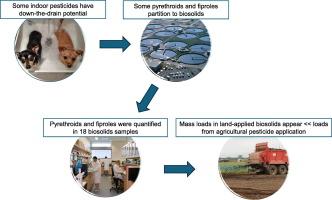
Pesticides are prevalent in wastewater, yet few studies have measured pesticides in biosolids and aqueous media from samples collected concurrently. Seventeen California wastewater treatment plants (WWTPs) were sampled in May 2020. Biosolids samples were analyzed for 27 analytes, and paired aqueous samples (influent and effluent) were analyzed for 23 analytes. Analytes included fipronil and its transformation products (fiproles), pyrethroids, novaluron, and several other pesticides with down-the-drain transport potential. Of the 27 compounds analyzed in biosolids samples, 16 were detected in at least one sample, and 10 had a detection frequency (DF) of at least 25 %. Fipronil sulfone, fipronil sulfide, and fipronil were the most frequently detected fiproles (DF = 100 %, 94 %, and 67 %, respectively); permethrin was the most frequently detected pyrethroid (DF = 100 %), followed by bifenthrin (DF = 94 %), cyhalothrin (DF = 89 %), and etofenprox (DF = 78 %). To elucidate fipronil transformation pathways within the treatment system, data from the three sample types were compared; findings were generally consistent with transformation pathways reported previously (e.g., some fiproles were rarely detected in influent or biosolids, but frequently detected in effluent, indicating their formation during the treatment process). No correlations were found between WWTP characteristics and pesticide concentrations in biosolids. The fraction of organic carbon (fOC) of each biosolids sample was measured, and a statistically significant negative correlation was observed between fOC and some fiproles, but not fipronil; possible explanations are discussed. Additional analysis for two major agricultural pesticides (bifenthrin and permethrin) indicated that estimated mass loads of these pesticides in biosolids applied to land as a soil amendment are minimal (approximately 2 to 3 orders of magnitude lower) compared to inputs from agricultural applications. This study provides insight on the magnitude of pesticides entering the environment via land-applied biosolids; existing regulations surrounding agricultural pesticide applications are expected to also be protective of the relatively low inputs from biosolids.
期刊介绍:
The Science of the Total Environment is an international journal dedicated to scientific research on the environment and its interaction with humanity. It covers a wide range of disciplines and seeks to publish innovative, hypothesis-driven, and impactful research that explores the entire environment, including the atmosphere, lithosphere, hydrosphere, biosphere, and anthroposphere.
The journal's updated Aims & Scope emphasizes the importance of interdisciplinary environmental research with broad impact. Priority is given to studies that advance fundamental understanding and explore the interconnectedness of multiple environmental spheres. Field studies are preferred, while laboratory experiments must demonstrate significant methodological advancements or mechanistic insights with direct relevance to the environment.




 京公网安备 11010802042870号
京ICP备2023020795号-1
京公网安备 11010802042870号
京ICP备2023020795号-1

 分享
分享
 求助内容:
求助内容: 应助结果提醒方式:
 扫码关注我们
