{"title":"使用商用微型红外相机和3D打印机监测眩晕患者的眼球震颤:成本效益评估和病例报告。","authors":"Hiroyuki Sakazaki, Masao Noda, Yumi Dobashi, Tatsuaki Kuroda, Reiko Tsunoda, Hiroaki Fushiki","doi":"10.2196/70015","DOIUrl":null,"url":null,"abstract":"<p><strong>Background: </strong>Observing eye movements during episodic vertigo attacks is crucial for accurately diagnosing vestibular disorders. In clinical practice, many cases lack observable symptoms or clear findings during outpatient examinations, leading to diagnostic challenges. An accurate diagnosis is essential for timely treatment, as conditions such as benign paroxysmal positional vertigo (BPPV), Ménière's disease, and vestibular migraine require different therapeutic approaches.</p><p><strong>Objective: </strong>This study aimed to develop and evaluate a cost-effective diagnostic tool that integrates a mini-infrared camera with 3D-printed goggles, enabling at-home recording of nystagmus during vertigo attacks.</p><p><strong>Methods: </strong>A commercially available mini-infrared camera (US $25) was combined with 3D-printed goggles (US $13) to create a system for recording eye movements in dark conditions. A case study was conducted on a male patient in his 40s who experienced recurrent episodic vertigo.</p><p><strong>Results: </strong>Initial outpatient evaluations, including oculomotor and vestibular tests using infrared Frenzel glasses, revealed no spontaneous or positional nystagmus. However, with the proposed system, the patient successfully recorded geotropic direction-changing positional nystagmus during a vertigo attack at home. The nystagmus was beating distinctly stronger on the left side down with 2.0 beats/second than the right side down with 1.2 beats/second. Based on the recorded videos, a diagnosis of lateral semicircular canal-type BPPV was made. Treatment with the Gufoni maneuver effectively alleviated the patient's symptoms, confirming the diagnosis. The affordability and practicality of the device make it particularly suitable for telemedicine and emergency care applications, enabling patients in remote or underserved areas to receive accurate diagnoses.</p><p><strong>Conclusions: </strong>The proposed system demonstrates the feasibility and utility of using affordable, accessible technology for diagnosing vestibular disorders outside of clinical settings. By addressing key challenges, such as the absence of symptoms during clinical visits and the high costs associated with traditional diagnostic tools, this device offers a practical solution for real-time monitoring and accurate diagnosis. Its potential applications extend to telemedicine, emergency settings, and resource-limited environments. Future iterations that incorporate higher-resolution imaging and automated analysis could further enhance its diagnostic capabilities and usability across diverse patient populations.</p>","PeriodicalId":14841,"journal":{"name":"JMIR Formative Research","volume":"9 ","pages":"e70015"},"PeriodicalIF":2.0000,"publicationDate":"2025-02-27","publicationTypes":"Journal Article","fieldsOfStudy":null,"isOpenAccess":false,"openAccessPdf":"https://www.ncbi.nlm.nih.gov/pmc/articles/PMC11884307/pdf/","citationCount":"0","resultStr":"{\"title\":\"Monitoring Nystagmus in a Patient With Vertigo Using a Commercial Mini-Infrared Camera and 3D Printer: Cost-Effectiveness Evaluation and Case Report.\",\"authors\":\"Hiroyuki Sakazaki, Masao Noda, Yumi Dobashi, Tatsuaki Kuroda, Reiko Tsunoda, Hiroaki Fushiki\",\"doi\":\"10.2196/70015\",\"DOIUrl\":null,\"url\":null,\"abstract\":\"<p><strong>Background: </strong>Observing eye movements during episodic vertigo attacks is crucial for accurately diagnosing vestibular disorders. In clinical practice, many cases lack observable symptoms or clear findings during outpatient examinations, leading to diagnostic challenges. An accurate diagnosis is essential for timely treatment, as conditions such as benign paroxysmal positional vertigo (BPPV), Ménière's disease, and vestibular migraine require different therapeutic approaches.</p><p><strong>Objective: </strong>This study aimed to develop and evaluate a cost-effective diagnostic tool that integrates a mini-infrared camera with 3D-printed goggles, enabling at-home recording of nystagmus during vertigo attacks.</p><p><strong>Methods: </strong>A commercially available mini-infrared camera (US $25) was combined with 3D-printed goggles (US $13) to create a system for recording eye movements in dark conditions. A case study was conducted on a male patient in his 40s who experienced recurrent episodic vertigo.</p><p><strong>Results: </strong>Initial outpatient evaluations, including oculomotor and vestibular tests using infrared Frenzel glasses, revealed no spontaneous or positional nystagmus. However, with the proposed system, the patient successfully recorded geotropic direction-changing positional nystagmus during a vertigo attack at home. The nystagmus was beating distinctly stronger on the left side down with 2.0 beats/second than the right side down with 1.2 beats/second. Based on the recorded videos, a diagnosis of lateral semicircular canal-type BPPV was made. Treatment with the Gufoni maneuver effectively alleviated the patient's symptoms, confirming the diagnosis. The affordability and practicality of the device make it particularly suitable for telemedicine and emergency care applications, enabling patients in remote or underserved areas to receive accurate diagnoses.</p><p><strong>Conclusions: </strong>The proposed system demonstrates the feasibility and utility of using affordable, accessible technology for diagnosing vestibular disorders outside of clinical settings. By addressing key challenges, such as the absence of symptoms during clinical visits and the high costs associated with traditional diagnostic tools, this device offers a practical solution for real-time monitoring and accurate diagnosis. Its potential applications extend to telemedicine, emergency settings, and resource-limited environments. Future iterations that incorporate higher-resolution imaging and automated analysis could further enhance its diagnostic capabilities and usability across diverse patient populations.</p>\",\"PeriodicalId\":14841,\"journal\":{\"name\":\"JMIR Formative Research\",\"volume\":\"9 \",\"pages\":\"e70015\"},\"PeriodicalIF\":2.0000,\"publicationDate\":\"2025-02-27\",\"publicationTypes\":\"Journal Article\",\"fieldsOfStudy\":null,\"isOpenAccess\":false,\"openAccessPdf\":\"https://www.ncbi.nlm.nih.gov/pmc/articles/PMC11884307/pdf/\",\"citationCount\":\"0\",\"resultStr\":null,\"platform\":\"Semanticscholar\",\"paperid\":null,\"PeriodicalName\":\"JMIR Formative Research\",\"FirstCategoryId\":\"1085\",\"ListUrlMain\":\"https://doi.org/10.2196/70015\",\"RegionNum\":0,\"RegionCategory\":null,\"ArticlePicture\":[],\"TitleCN\":null,\"AbstractTextCN\":null,\"PMCID\":null,\"EPubDate\":\"\",\"PubModel\":\"\",\"JCR\":\"Q3\",\"JCRName\":\"HEALTH CARE SCIENCES & SERVICES\",\"Score\":null,\"Total\":0}","platform":"Semanticscholar","paperid":null,"PeriodicalName":"JMIR Formative Research","FirstCategoryId":"1085","ListUrlMain":"https://doi.org/10.2196/70015","RegionNum":0,"RegionCategory":null,"ArticlePicture":[],"TitleCN":null,"AbstractTextCN":null,"PMCID":null,"EPubDate":"","PubModel":"","JCR":"Q3","JCRName":"HEALTH CARE SCIENCES & SERVICES","Score":null,"Total":0}
Monitoring Nystagmus in a Patient With Vertigo Using a Commercial Mini-Infrared Camera and 3D Printer: Cost-Effectiveness Evaluation and Case Report.
Background: Observing eye movements during episodic vertigo attacks is crucial for accurately diagnosing vestibular disorders. In clinical practice, many cases lack observable symptoms or clear findings during outpatient examinations, leading to diagnostic challenges. An accurate diagnosis is essential for timely treatment, as conditions such as benign paroxysmal positional vertigo (BPPV), Ménière's disease, and vestibular migraine require different therapeutic approaches.
Objective: This study aimed to develop and evaluate a cost-effective diagnostic tool that integrates a mini-infrared camera with 3D-printed goggles, enabling at-home recording of nystagmus during vertigo attacks.
Methods: A commercially available mini-infrared camera (US $25) was combined with 3D-printed goggles (US $13) to create a system for recording eye movements in dark conditions. A case study was conducted on a male patient in his 40s who experienced recurrent episodic vertigo.
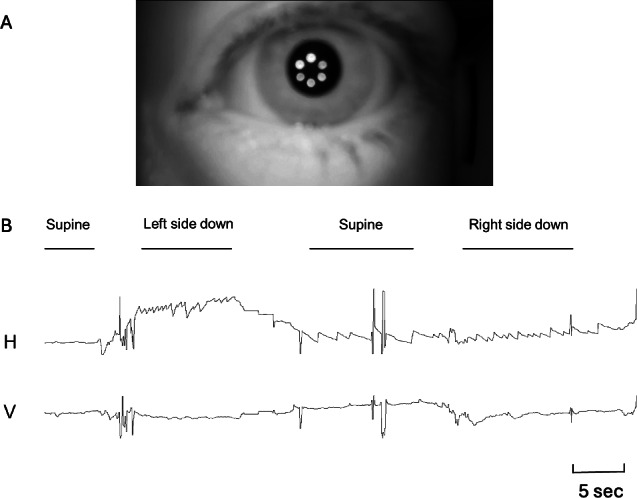
Results: Initial outpatient evaluations, including oculomotor and vestibular tests using infrared Frenzel glasses, revealed no spontaneous or positional nystagmus. However, with the proposed system, the patient successfully recorded geotropic direction-changing positional nystagmus during a vertigo attack at home. The nystagmus was beating distinctly stronger on the left side down with 2.0 beats/second than the right side down with 1.2 beats/second. Based on the recorded videos, a diagnosis of lateral semicircular canal-type BPPV was made. Treatment with the Gufoni maneuver effectively alleviated the patient's symptoms, confirming the diagnosis. The affordability and practicality of the device make it particularly suitable for telemedicine and emergency care applications, enabling patients in remote or underserved areas to receive accurate diagnoses.
Conclusions: The proposed system demonstrates the feasibility and utility of using affordable, accessible technology for diagnosing vestibular disorders outside of clinical settings. By addressing key challenges, such as the absence of symptoms during clinical visits and the high costs associated with traditional diagnostic tools, this device offers a practical solution for real-time monitoring and accurate diagnosis. Its potential applications extend to telemedicine, emergency settings, and resource-limited environments. Future iterations that incorporate higher-resolution imaging and automated analysis could further enhance its diagnostic capabilities and usability across diverse patient populations.







 京公网安备 11010802042870号
京ICP备2023020795号-1
京公网安备 11010802042870号
京ICP备2023020795号-1

 分享
分享
 求助内容:
求助内容: 应助结果提醒方式:
 扫码关注我们
