Dzunani Mthombeni, Andrew N Makanya, Sikiru Jimoh, John Maina
{"title":"发育中的鸵鸟(Struthio camelus australis)胚胎绒毛膜尿囊膜的形态计量学和立体学研究:光镜和透射电镜研究。","authors":"Dzunani Mthombeni, Andrew N Makanya, Sikiru Jimoh, John Maina","doi":"10.1098/rstb.2023.0423","DOIUrl":null,"url":null,"abstract":"<p><p>The developing chorioallantoic membrane (CAM) of the ostrich (<i>Struthio camelus</i>) was studied between embryonic days 16 (E16) and E37. Egg masses and volumes were estimated prior to harvesting of the CAM. CAM volumes were obtained before the CAM was sampled for histology and transmission electron microscopy analysis. Stereological methods were used to estimate volume densities and absolute volumes of CAM structural components. Growth rate estimates of the CAM and its major components were obtained. At E16, the three layers of the CAM were clearly delineated, but large parts still had not developed the blood-gas barrier (BGB) portions. By E37, chorionic blood capillaries had assumed a superficial position with thin BGB portions covering most of the chorionic surface. On regression analyses, the CAM had two growth phases, namely phase I that occurred between E16 and E25, when the CAM grew rapidly from a volume of 5.55 ± 1.27 to 28.82 ± 5.62 cm<sup>3</sup> to then decrease to 25.18 ± 4.79 cm<sup>3</sup> during phase II (E25-E37). The latter decline was attributed to changes in the chorionic and allantoic layers, while regression in the mesoderm mainly characterized blood and lymphatic vessels.This article is part of the theme issue 'The biology of the avian respiratory system'.</p>","PeriodicalId":19872,"journal":{"name":"Philosophical Transactions of the Royal Society B: Biological Sciences","volume":"380 1920","pages":"20230423"},"PeriodicalIF":5.3000,"publicationDate":"2025-02-27","publicationTypes":"Journal Article","fieldsOfStudy":null,"isOpenAccess":false,"openAccessPdf":"https://www.ncbi.nlm.nih.gov/pmc/articles/PMC11864831/pdf/","citationCount":"0","resultStr":"{\"title\":\"A morphometric and stereological study of the chorioallantoic membrane of the developing ostrich (<i>Struthio camelus australis</i>) embryo: a light and transmission electron microscopy investigation.\",\"authors\":\"Dzunani Mthombeni, Andrew N Makanya, Sikiru Jimoh, John Maina\",\"doi\":\"10.1098/rstb.2023.0423\",\"DOIUrl\":null,\"url\":null,\"abstract\":\"<p><p>The developing chorioallantoic membrane (CAM) of the ostrich (<i>Struthio camelus</i>) was studied between embryonic days 16 (E16) and E37. Egg masses and volumes were estimated prior to harvesting of the CAM. CAM volumes were obtained before the CAM was sampled for histology and transmission electron microscopy analysis. Stereological methods were used to estimate volume densities and absolute volumes of CAM structural components. Growth rate estimates of the CAM and its major components were obtained. At E16, the three layers of the CAM were clearly delineated, but large parts still had not developed the blood-gas barrier (BGB) portions. By E37, chorionic blood capillaries had assumed a superficial position with thin BGB portions covering most of the chorionic surface. On regression analyses, the CAM had two growth phases, namely phase I that occurred between E16 and E25, when the CAM grew rapidly from a volume of 5.55 ± 1.27 to 28.82 ± 5.62 cm<sup>3</sup> to then decrease to 25.18 ± 4.79 cm<sup>3</sup> during phase II (E25-E37). The latter decline was attributed to changes in the chorionic and allantoic layers, while regression in the mesoderm mainly characterized blood and lymphatic vessels.This article is part of the theme issue 'The biology of the avian respiratory system'.</p>\",\"PeriodicalId\":19872,\"journal\":{\"name\":\"Philosophical Transactions of the Royal Society B: Biological Sciences\",\"volume\":\"380 1920\",\"pages\":\"20230423\"},\"PeriodicalIF\":5.3000,\"publicationDate\":\"2025-02-27\",\"publicationTypes\":\"Journal Article\",\"fieldsOfStudy\":null,\"isOpenAccess\":false,\"openAccessPdf\":\"https://www.ncbi.nlm.nih.gov/pmc/articles/PMC11864831/pdf/\",\"citationCount\":\"0\",\"resultStr\":null,\"platform\":\"Semanticscholar\",\"paperid\":null,\"PeriodicalName\":\"Philosophical Transactions of the Royal Society B: Biological Sciences\",\"FirstCategoryId\":\"99\",\"ListUrlMain\":\"https://doi.org/10.1098/rstb.2023.0423\",\"RegionNum\":2,\"RegionCategory\":\"生物学\",\"ArticlePicture\":[],\"TitleCN\":null,\"AbstractTextCN\":null,\"PMCID\":null,\"EPubDate\":\"\",\"PubModel\":\"\",\"JCR\":\"Q1\",\"JCRName\":\"BIOLOGY\",\"Score\":null,\"Total\":0}","platform":"Semanticscholar","paperid":null,"PeriodicalName":"Philosophical Transactions of the Royal Society B: Biological Sciences","FirstCategoryId":"99","ListUrlMain":"https://doi.org/10.1098/rstb.2023.0423","RegionNum":2,"RegionCategory":"生物学","ArticlePicture":[],"TitleCN":null,"AbstractTextCN":null,"PMCID":null,"EPubDate":"","PubModel":"","JCR":"Q1","JCRName":"BIOLOGY","Score":null,"Total":0}
A morphometric and stereological study of the chorioallantoic membrane of the developing ostrich (Struthio camelus australis) embryo: a light and transmission electron microscopy investigation.
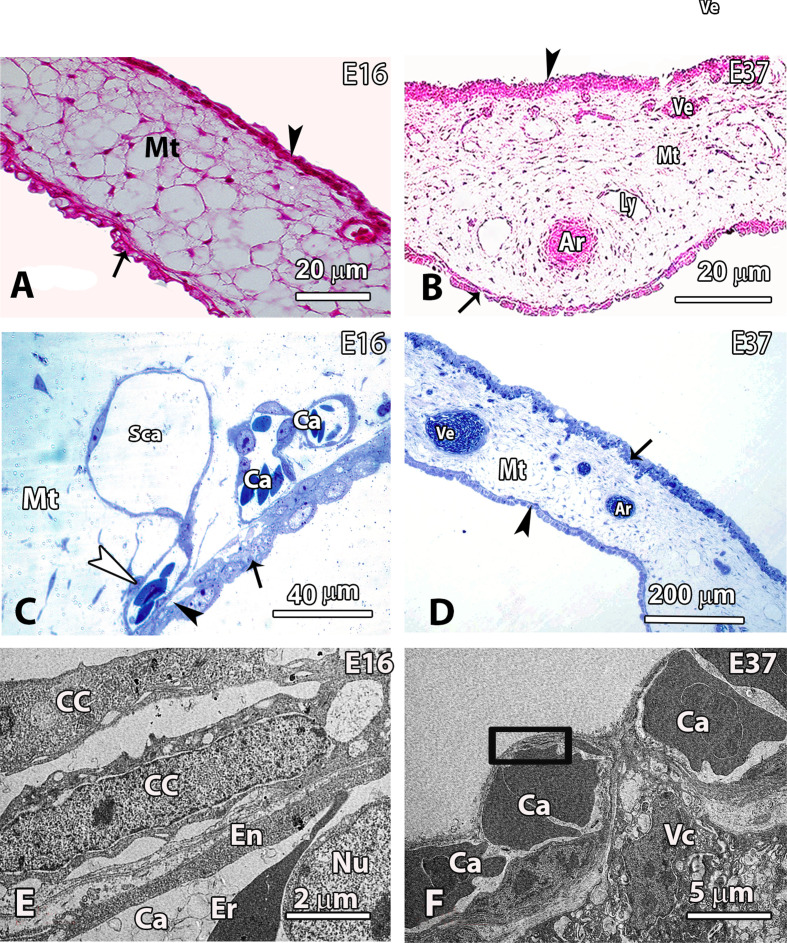
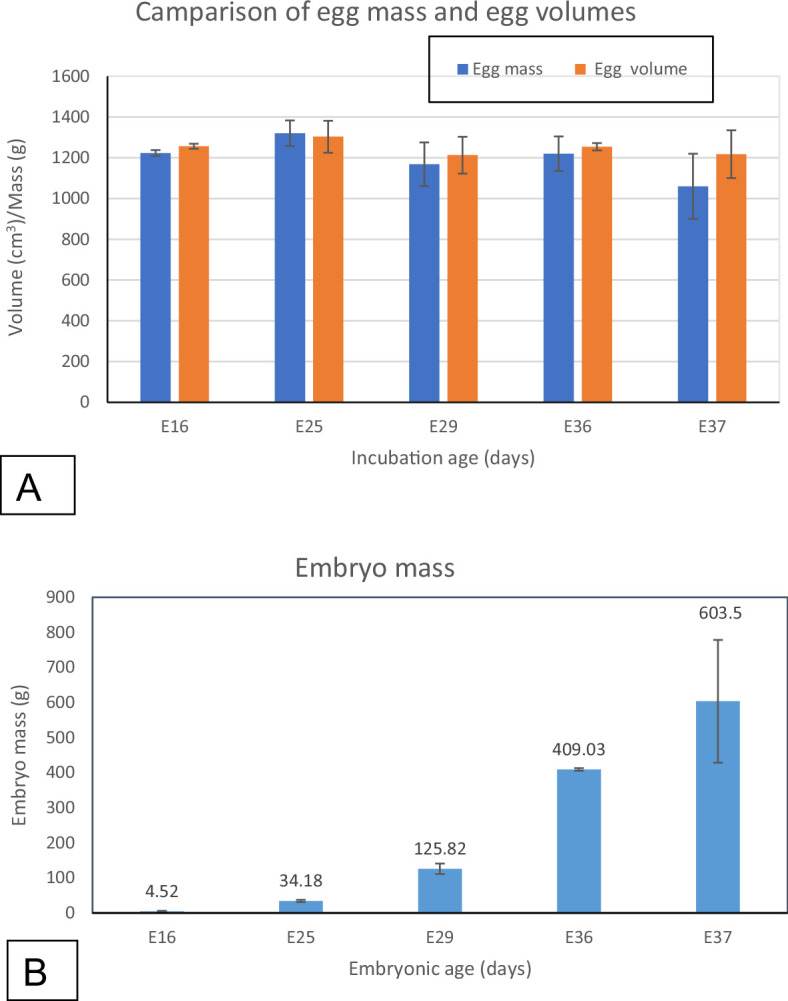
The developing chorioallantoic membrane (CAM) of the ostrich (Struthio camelus) was studied between embryonic days 16 (E16) and E37. Egg masses and volumes were estimated prior to harvesting of the CAM. CAM volumes were obtained before the CAM was sampled for histology and transmission electron microscopy analysis. Stereological methods were used to estimate volume densities and absolute volumes of CAM structural components. Growth rate estimates of the CAM and its major components were obtained. At E16, the three layers of the CAM were clearly delineated, but large parts still had not developed the blood-gas barrier (BGB) portions. By E37, chorionic blood capillaries had assumed a superficial position with thin BGB portions covering most of the chorionic surface. On regression analyses, the CAM had two growth phases, namely phase I that occurred between E16 and E25, when the CAM grew rapidly from a volume of 5.55 ± 1.27 to 28.82 ± 5.62 cm3 to then decrease to 25.18 ± 4.79 cm3 during phase II (E25-E37). The latter decline was attributed to changes in the chorionic and allantoic layers, while regression in the mesoderm mainly characterized blood and lymphatic vessels.This article is part of the theme issue 'The biology of the avian respiratory system'.
期刊介绍:
The journal publishes topics across the life sciences. As long as the core subject lies within the biological sciences, some issues may also include content crossing into other areas such as the physical sciences, social sciences, biophysics, policy, economics etc. Issues generally sit within four broad areas (although many issues sit across these areas):
Organismal, environmental and evolutionary biology
Neuroscience and cognition
Cellular, molecular and developmental biology
Health and disease.





 京公网安备 11010802042870号
京ICP备2023020795号-1
京公网安备 11010802042870号
京ICP备2023020795号-1

 分享
分享
 求助内容:
求助内容: 应助结果提醒方式:
 扫码关注我们
