{"title":"所有权的双重标准。","authors":"Zofia Washington, Ori Friedman","doi":"10.1162/opmi_a_00190","DOIUrl":null,"url":null,"abstract":"<p><p>Owners are often blamed when their property causes harm but might not receive corresponding praise when their property does good. This suggests a double standard of ownership, wherein owning property poses risks for moral blame that are not balanced with equal opportunities for credit. We investigated this possibility in three preregistered experiments on 746 US residents. Participants read vignettes where agentic property (e.g., animals, robots) produced bad or good outcomes, and judged whether owners and the property were morally responsible. With bad outcomes, participants assigned owners more blame than property (Experiments 1 and 2) or similar blame (Experiment 3). But with good outcomes, participants consistently assigned owners much less praise relative to their property. The first two experiments also examined if the double standard arises in two other relationships between authorities and subordinates; participants showed the double standard when assessing moral responsibility for parents and children, but not for employers and employees. Together, these findings point to a novel asymmetry in how owners are assigned responsibility.</p>","PeriodicalId":32558,"journal":{"name":"Open Mind","volume":"9 ","pages":"325-339"},"PeriodicalIF":0.0000,"publicationDate":"2025-02-16","publicationTypes":"Journal Article","fieldsOfStudy":null,"isOpenAccess":false,"openAccessPdf":"https://www.ncbi.nlm.nih.gov/pmc/articles/PMC11864797/pdf/","citationCount":"0","resultStr":"{\"title\":\"The Double Standard of Ownership.\",\"authors\":\"Zofia Washington, Ori Friedman\",\"doi\":\"10.1162/opmi_a_00190\",\"DOIUrl\":null,\"url\":null,\"abstract\":\"<p><p>Owners are often blamed when their property causes harm but might not receive corresponding praise when their property does good. This suggests a double standard of ownership, wherein owning property poses risks for moral blame that are not balanced with equal opportunities for credit. We investigated this possibility in three preregistered experiments on 746 US residents. Participants read vignettes where agentic property (e.g., animals, robots) produced bad or good outcomes, and judged whether owners and the property were morally responsible. With bad outcomes, participants assigned owners more blame than property (Experiments 1 and 2) or similar blame (Experiment 3). But with good outcomes, participants consistently assigned owners much less praise relative to their property. The first two experiments also examined if the double standard arises in two other relationships between authorities and subordinates; participants showed the double standard when assessing moral responsibility for parents and children, but not for employers and employees. Together, these findings point to a novel asymmetry in how owners are assigned responsibility.</p>\",\"PeriodicalId\":32558,\"journal\":{\"name\":\"Open Mind\",\"volume\":\"9 \",\"pages\":\"325-339\"},\"PeriodicalIF\":0.0000,\"publicationDate\":\"2025-02-16\",\"publicationTypes\":\"Journal Article\",\"fieldsOfStudy\":null,\"isOpenAccess\":false,\"openAccessPdf\":\"https://www.ncbi.nlm.nih.gov/pmc/articles/PMC11864797/pdf/\",\"citationCount\":\"0\",\"resultStr\":null,\"platform\":\"Semanticscholar\",\"paperid\":null,\"PeriodicalName\":\"Open Mind\",\"FirstCategoryId\":\"1085\",\"ListUrlMain\":\"https://doi.org/10.1162/opmi_a_00190\",\"RegionNum\":0,\"RegionCategory\":null,\"ArticlePicture\":[],\"TitleCN\":null,\"AbstractTextCN\":null,\"PMCID\":null,\"EPubDate\":\"2025/1/1 0:00:00\",\"PubModel\":\"eCollection\",\"JCR\":\"Q1\",\"JCRName\":\"Social Sciences\",\"Score\":null,\"Total\":0}","platform":"Semanticscholar","paperid":null,"PeriodicalName":"Open Mind","FirstCategoryId":"1085","ListUrlMain":"https://doi.org/10.1162/opmi_a_00190","RegionNum":0,"RegionCategory":null,"ArticlePicture":[],"TitleCN":null,"AbstractTextCN":null,"PMCID":null,"EPubDate":"2025/1/1 0:00:00","PubModel":"eCollection","JCR":"Q1","JCRName":"Social Sciences","Score":null,"Total":0}
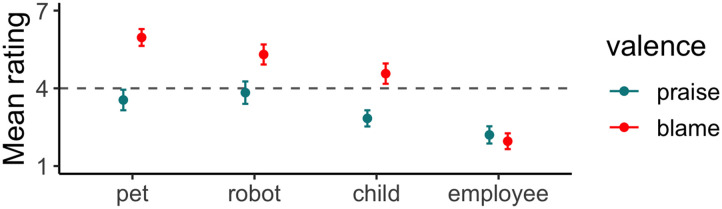
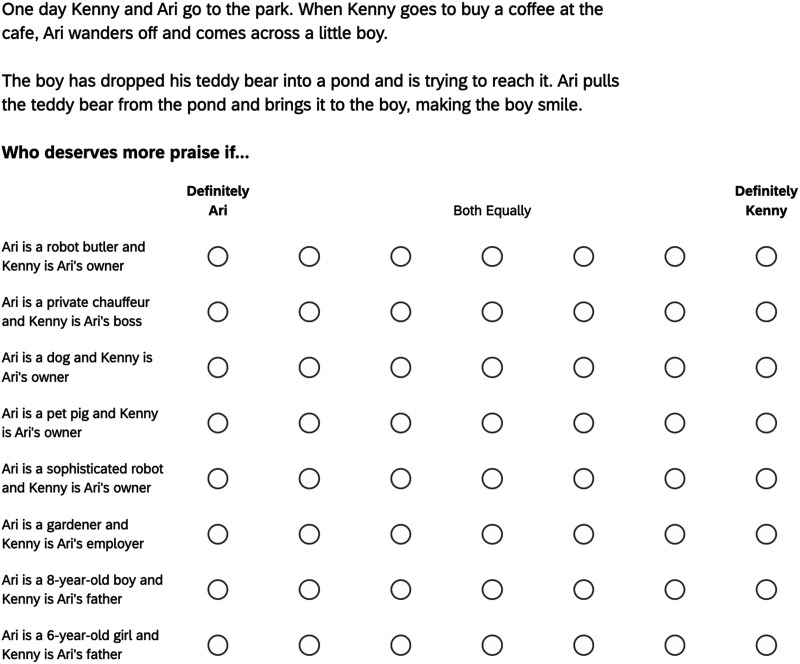
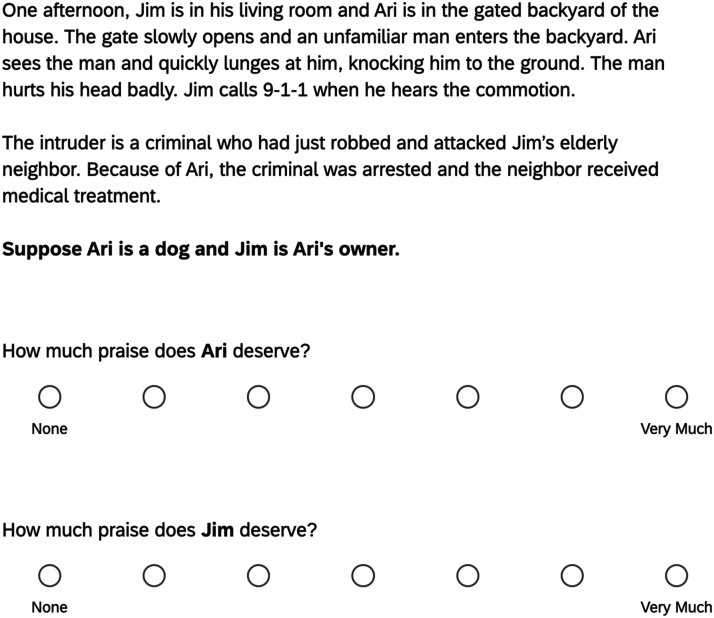
Owners are often blamed when their property causes harm but might not receive corresponding praise when their property does good. This suggests a double standard of ownership, wherein owning property poses risks for moral blame that are not balanced with equal opportunities for credit. We investigated this possibility in three preregistered experiments on 746 US residents. Participants read vignettes where agentic property (e.g., animals, robots) produced bad or good outcomes, and judged whether owners and the property were morally responsible. With bad outcomes, participants assigned owners more blame than property (Experiments 1 and 2) or similar blame (Experiment 3). But with good outcomes, participants consistently assigned owners much less praise relative to their property. The first two experiments also examined if the double standard arises in two other relationships between authorities and subordinates; participants showed the double standard when assessing moral responsibility for parents and children, but not for employers and employees. Together, these findings point to a novel asymmetry in how owners are assigned responsibility.





 京公网安备 11010802042870号
京ICP备2023020795号-1
京公网安备 11010802042870号
京ICP备2023020795号-1

 分享
分享
 求助内容:
求助内容: 应助结果提醒方式:
 扫码关注我们
