M.Carolina Espinosa-Arzate , Edgardo I. Valenzuela , Sonia Arriaga , Adalberto Noyola , Francisco J. Cervantes
{"title":"通过与氧化铁和硫酸盐还原相结合的厌氧甲烷氧化去除消化出水中的溶解甲烷","authors":"M.Carolina Espinosa-Arzate , Edgardo I. Valenzuela , Sonia Arriaga , Adalberto Noyola , Francisco J. Cervantes","doi":"10.1016/j.biortech.2025.132304","DOIUrl":null,"url":null,"abstract":"<div><div>Bioreactors supplied with sulfate and Fe(III) oxides (hematite and goethite), as electron acceptors, were tested for their capacity to remove dissolved methane from a digestate from a methanogenic reactor treating synthetic wastewater. Negligible removal of dissolved methane occurred when no electron acceptor was provided. However, when hematite and goethite were supplied, methane removal rates of 6.7 and 3.7 g CH<sub>4</sub>/m<sup>3</sup>-day, respectively, were achieved coupled to the reduction of both minerals. Simultaneous supply of sulfate and hematite supported the highest removal rate observed (9.1 g CH<sub>4</sub>/m<sup>3</sup>-day) coupled to the reduction of both electron acceptors. Taxonomic characterization based on 16S rRNA gene sequencing revealed <em>Methanobacterium</em> and <em>Methanolinea</em> as the microorganisms potentially involved in the removal of dissolved methane. This treatment concept could contribute to prevent the emission of dissolved methane from digested effluents, which ultimately may attenuate global warming associated with greenhouse gases emissions from wastewater treatment plants.</div></div>","PeriodicalId":258,"journal":{"name":"Bioresource Technology","volume":"424 ","pages":"Article 132304"},"PeriodicalIF":9.0000,"publicationDate":"2025-05-01","publicationTypes":"Journal Article","fieldsOfStudy":null,"isOpenAccess":false,"openAccessPdf":"","citationCount":"0","resultStr":"{\"title\":\"Removal of dissolved methane from digested effluent by anaerobic methane oxidation linked to ferric oxides and sulfate reduction\",\"authors\":\"M.Carolina Espinosa-Arzate , Edgardo I. Valenzuela , Sonia Arriaga , Adalberto Noyola , Francisco J. Cervantes\",\"doi\":\"10.1016/j.biortech.2025.132304\",\"DOIUrl\":null,\"url\":null,\"abstract\":\"<div><div>Bioreactors supplied with sulfate and Fe(III) oxides (hematite and goethite), as electron acceptors, were tested for their capacity to remove dissolved methane from a digestate from a methanogenic reactor treating synthetic wastewater. Negligible removal of dissolved methane occurred when no electron acceptor was provided. However, when hematite and goethite were supplied, methane removal rates of 6.7 and 3.7 g CH<sub>4</sub>/m<sup>3</sup>-day, respectively, were achieved coupled to the reduction of both minerals. Simultaneous supply of sulfate and hematite supported the highest removal rate observed (9.1 g CH<sub>4</sub>/m<sup>3</sup>-day) coupled to the reduction of both electron acceptors. Taxonomic characterization based on 16S rRNA gene sequencing revealed <em>Methanobacterium</em> and <em>Methanolinea</em> as the microorganisms potentially involved in the removal of dissolved methane. This treatment concept could contribute to prevent the emission of dissolved methane from digested effluents, which ultimately may attenuate global warming associated with greenhouse gases emissions from wastewater treatment plants.</div></div>\",\"PeriodicalId\":258,\"journal\":{\"name\":\"Bioresource Technology\",\"volume\":\"424 \",\"pages\":\"Article 132304\"},\"PeriodicalIF\":9.0000,\"publicationDate\":\"2025-05-01\",\"publicationTypes\":\"Journal Article\",\"fieldsOfStudy\":null,\"isOpenAccess\":false,\"openAccessPdf\":\"\",\"citationCount\":\"0\",\"resultStr\":null,\"platform\":\"Semanticscholar\",\"paperid\":null,\"PeriodicalName\":\"Bioresource Technology\",\"FirstCategoryId\":\"5\",\"ListUrlMain\":\"https://www.sciencedirect.com/science/article/pii/S0960852425002706\",\"RegionNum\":1,\"RegionCategory\":\"环境科学与生态学\",\"ArticlePicture\":[],\"TitleCN\":null,\"AbstractTextCN\":null,\"PMCID\":null,\"EPubDate\":\"2025/2/25 0:00:00\",\"PubModel\":\"Epub\",\"JCR\":\"Q1\",\"JCRName\":\"AGRICULTURAL ENGINEERING\",\"Score\":null,\"Total\":0}","platform":"Semanticscholar","paperid":null,"PeriodicalName":"Bioresource Technology","FirstCategoryId":"5","ListUrlMain":"https://www.sciencedirect.com/science/article/pii/S0960852425002706","RegionNum":1,"RegionCategory":"环境科学与生态学","ArticlePicture":[],"TitleCN":null,"AbstractTextCN":null,"PMCID":null,"EPubDate":"2025/2/25 0:00:00","PubModel":"Epub","JCR":"Q1","JCRName":"AGRICULTURAL ENGINEERING","Score":null,"Total":0}
引用次数: 0
摘要
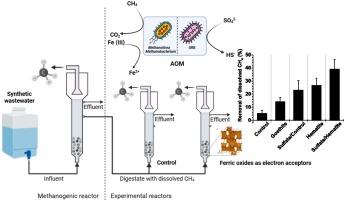
以硫酸盐和铁(III)氧化物(赤铁矿和针铁矿)作为电子受体的生物反应器,对其从处理合成废水的产甲烷反应器的消化液中去除溶解甲烷的能力进行了测试。当不提供电子受体时,溶解甲烷的去除可以忽略不计。然而,当提供赤铁矿和针铁矿时,甲烷去除率分别达到6.7和3.7 g CH4/m3-d,并且这两种矿物都减少了。同时提供硫酸盐和赤铁矿支持观察到的最高去除率(9.1 g CH4/m3-day),以及两个电子受体的还原。基于16S rRNA基因测序的分类鉴定显示甲烷杆菌和甲醇菌可能参与溶解甲烷的去除。这一处理概念可能有助于防止消化废水排放溶解甲烷,最终可能减轻与废水处理厂温室气体排放有关的全球变暖。
Removal of dissolved methane from digested effluent by anaerobic methane oxidation linked to ferric oxides and sulfate reduction
Bioreactors supplied with sulfate and Fe(III) oxides (hematite and goethite), as electron acceptors, were tested for their capacity to remove dissolved methane from a digestate from a methanogenic reactor treating synthetic wastewater. Negligible removal of dissolved methane occurred when no electron acceptor was provided. However, when hematite and goethite were supplied, methane removal rates of 6.7 and 3.7 g CH4/m3-day, respectively, were achieved coupled to the reduction of both minerals. Simultaneous supply of sulfate and hematite supported the highest removal rate observed (9.1 g CH4/m3-day) coupled to the reduction of both electron acceptors. Taxonomic characterization based on 16S rRNA gene sequencing revealed Methanobacterium and Methanolinea as the microorganisms potentially involved in the removal of dissolved methane. This treatment concept could contribute to prevent the emission of dissolved methane from digested effluents, which ultimately may attenuate global warming associated with greenhouse gases emissions from wastewater treatment plants.
期刊介绍:
Bioresource Technology publishes original articles, review articles, case studies, and short communications covering the fundamentals, applications, and management of bioresource technology. The journal seeks to advance and disseminate knowledge across various areas related to biomass, biological waste treatment, bioenergy, biotransformations, bioresource systems analysis, and associated conversion or production technologies.
Topics include:
• Biofuels: liquid and gaseous biofuels production, modeling and economics
• Bioprocesses and bioproducts: biocatalysis and fermentations
• Biomass and feedstocks utilization: bioconversion of agro-industrial residues
• Environmental protection: biological waste treatment
• Thermochemical conversion of biomass: combustion, pyrolysis, gasification, catalysis.




 京公网安备 11010802042870号
京ICP备2023020795号-1
京公网安备 11010802042870号
京ICP备2023020795号-1

 分享
分享
 求助内容:
求助内容: 应助结果提醒方式:
 扫码关注我们
