Kimberly C Olney, Katelin A Gibson, Mika P Cadiz, Negin Rahimzadeh, Vivek Swarup, John D Fryer
{"title":"死亡间隔导致脑组织中疾病特异性特征的丧失。","authors":"Kimberly C Olney, Katelin A Gibson, Mika P Cadiz, Negin Rahimzadeh, Vivek Swarup, John D Fryer","doi":"10.1523/ENEURO.0505-24.2025","DOIUrl":null,"url":null,"abstract":"<p><p>Human brain banks are essential for studying a wide variety of neurological and neurodegenerative diseases, yet the variability in postmortem interval (PMI)-the time from death to tissue preservation-poses significant challenges due to rapid cellular decomposition, protein alterations, and RNA degradation. Furthermore, the postmortem transcriptomic alterations occurring within distinct cell types are poorly understood. In this study, we analyzed the effect of a 3 h postmortem interval on single-nucleus RNA signatures in the brains of wild-type (WT) and PS19 mice, a common model of tauopathy. We observed that basic quality control metrics (such as the number of genes and reads per cell), total nuclei counts, and RNA integrity number (RIN<sup>e</sup>) remained consistent across all samples, regardless of PMI or genotype. However, a 3 h PMI diminished the number of genes differentially expressed between PS19 and WT mice, suggesting an impact of delayed processing on the detection of disease-specific transcriptomic signatures. When directly comparing 3 h PMI versus freshly harvested 0 h mouse brains, we identified genes upregulated in neurons and interneurons involved in DNA repair, immune response, and stress pathways. Furthermore, genes that were altered in non-neuronal cell types at 3 versus 0 h PMI were associated with cell-cell adhesion processes. These findings highlight the effects of PMI on single-nucleus transcriptional changes that may dampen the true changes in cellular states in banked brain tissues.</p>","PeriodicalId":11617,"journal":{"name":"eNeuro","volume":" ","pages":""},"PeriodicalIF":2.7000,"publicationDate":"2025-03-14","publicationTypes":"Journal Article","fieldsOfStudy":null,"isOpenAccess":false,"openAccessPdf":"https://www.ncbi.nlm.nih.gov/pmc/articles/PMC11913402/pdf/","citationCount":"0","resultStr":"{\"title\":\"Postmortem Interval Leads to Loss of Disease-Specific Signatures in Brain Tissue.\",\"authors\":\"Kimberly C Olney, Katelin A Gibson, Mika P Cadiz, Negin Rahimzadeh, Vivek Swarup, John D Fryer\",\"doi\":\"10.1523/ENEURO.0505-24.2025\",\"DOIUrl\":null,\"url\":null,\"abstract\":\"<p><p>Human brain banks are essential for studying a wide variety of neurological and neurodegenerative diseases, yet the variability in postmortem interval (PMI)-the time from death to tissue preservation-poses significant challenges due to rapid cellular decomposition, protein alterations, and RNA degradation. Furthermore, the postmortem transcriptomic alterations occurring within distinct cell types are poorly understood. In this study, we analyzed the effect of a 3 h postmortem interval on single-nucleus RNA signatures in the brains of wild-type (WT) and PS19 mice, a common model of tauopathy. We observed that basic quality control metrics (such as the number of genes and reads per cell), total nuclei counts, and RNA integrity number (RIN<sup>e</sup>) remained consistent across all samples, regardless of PMI or genotype. However, a 3 h PMI diminished the number of genes differentially expressed between PS19 and WT mice, suggesting an impact of delayed processing on the detection of disease-specific transcriptomic signatures. When directly comparing 3 h PMI versus freshly harvested 0 h mouse brains, we identified genes upregulated in neurons and interneurons involved in DNA repair, immune response, and stress pathways. Furthermore, genes that were altered in non-neuronal cell types at 3 versus 0 h PMI were associated with cell-cell adhesion processes. These findings highlight the effects of PMI on single-nucleus transcriptional changes that may dampen the true changes in cellular states in banked brain tissues.</p>\",\"PeriodicalId\":11617,\"journal\":{\"name\":\"eNeuro\",\"volume\":\" \",\"pages\":\"\"},\"PeriodicalIF\":2.7000,\"publicationDate\":\"2025-03-14\",\"publicationTypes\":\"Journal Article\",\"fieldsOfStudy\":null,\"isOpenAccess\":false,\"openAccessPdf\":\"https://www.ncbi.nlm.nih.gov/pmc/articles/PMC11913402/pdf/\",\"citationCount\":\"0\",\"resultStr\":null,\"platform\":\"Semanticscholar\",\"paperid\":null,\"PeriodicalName\":\"eNeuro\",\"FirstCategoryId\":\"3\",\"ListUrlMain\":\"https://doi.org/10.1523/ENEURO.0505-24.2025\",\"RegionNum\":3,\"RegionCategory\":\"医学\",\"ArticlePicture\":[],\"TitleCN\":null,\"AbstractTextCN\":null,\"PMCID\":null,\"EPubDate\":\"2025/3/1 0:00:00\",\"PubModel\":\"Print\",\"JCR\":\"Q3\",\"JCRName\":\"NEUROSCIENCES\",\"Score\":null,\"Total\":0}","platform":"Semanticscholar","paperid":null,"PeriodicalName":"eNeuro","FirstCategoryId":"3","ListUrlMain":"https://doi.org/10.1523/ENEURO.0505-24.2025","RegionNum":3,"RegionCategory":"医学","ArticlePicture":[],"TitleCN":null,"AbstractTextCN":null,"PMCID":null,"EPubDate":"2025/3/1 0:00:00","PubModel":"Print","JCR":"Q3","JCRName":"NEUROSCIENCES","Score":null,"Total":0}
Postmortem Interval Leads to Loss of Disease-Specific Signatures in Brain Tissue.
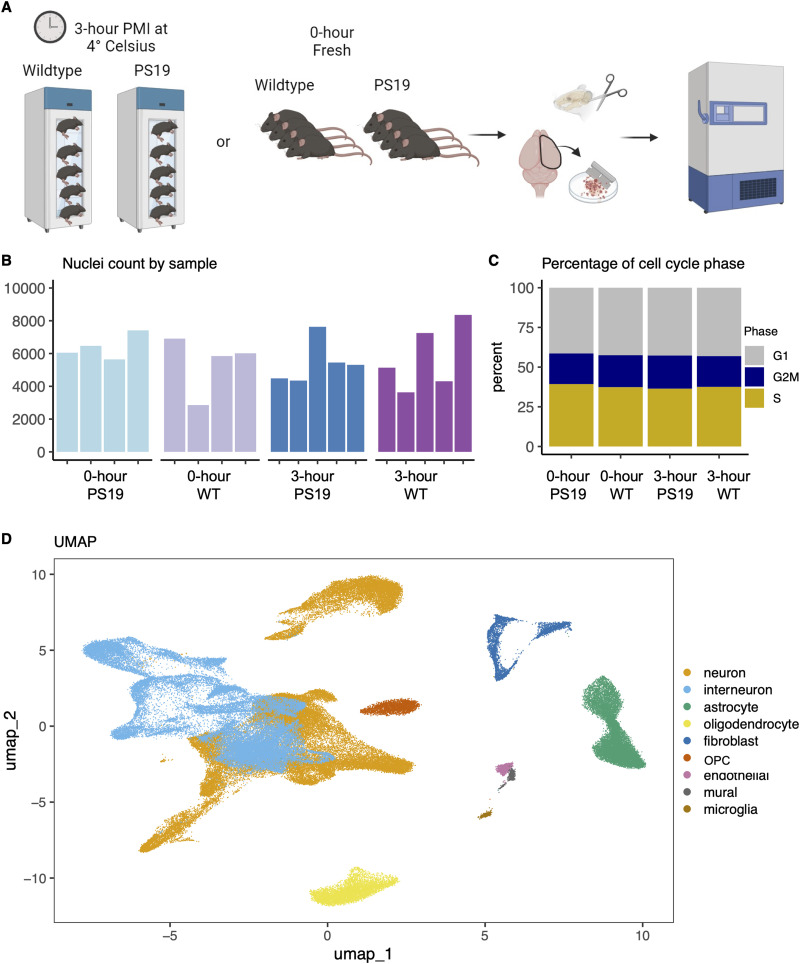
Human brain banks are essential for studying a wide variety of neurological and neurodegenerative diseases, yet the variability in postmortem interval (PMI)-the time from death to tissue preservation-poses significant challenges due to rapid cellular decomposition, protein alterations, and RNA degradation. Furthermore, the postmortem transcriptomic alterations occurring within distinct cell types are poorly understood. In this study, we analyzed the effect of a 3 h postmortem interval on single-nucleus RNA signatures in the brains of wild-type (WT) and PS19 mice, a common model of tauopathy. We observed that basic quality control metrics (such as the number of genes and reads per cell), total nuclei counts, and RNA integrity number (RINe) remained consistent across all samples, regardless of PMI or genotype. However, a 3 h PMI diminished the number of genes differentially expressed between PS19 and WT mice, suggesting an impact of delayed processing on the detection of disease-specific transcriptomic signatures. When directly comparing 3 h PMI versus freshly harvested 0 h mouse brains, we identified genes upregulated in neurons and interneurons involved in DNA repair, immune response, and stress pathways. Furthermore, genes that were altered in non-neuronal cell types at 3 versus 0 h PMI were associated with cell-cell adhesion processes. These findings highlight the effects of PMI on single-nucleus transcriptional changes that may dampen the true changes in cellular states in banked brain tissues.
期刊介绍:
An open-access journal from the Society for Neuroscience, eNeuro publishes high-quality, broad-based, peer-reviewed research focused solely on the field of neuroscience. eNeuro embodies an emerging scientific vision that offers a new experience for authors and readers, all in support of the Society’s mission to advance understanding of the brain and nervous system.





 京公网安备 11010802042870号
京ICP备2023020795号-1
京公网安备 11010802042870号
京ICP备2023020795号-1

 分享
分享
 求助内容:
求助内容: 应助结果提醒方式:
 扫码关注我们
