Anafo Abdulzeid, Senyefia Bosson-Amedenu, Vincent Uwumboriyhie Gmayinaam, Appiah Enock, Selasi Ocloo, Joseph Acquah
{"title":"评估塔克瓦-恩苏阿姆市五岁以下儿童的疟疾负担和干预成果。","authors":"Anafo Abdulzeid, Senyefia Bosson-Amedenu, Vincent Uwumboriyhie Gmayinaam, Appiah Enock, Selasi Ocloo, Joseph Acquah","doi":"10.1186/s12879-025-10705-z","DOIUrl":null,"url":null,"abstract":"<p><strong>Background: </strong>Malaria is a significant public health burden, particularly in sub-Saharan Africa. Despite global efforts to reduce malaria incidence, various challenges, including socio-economic disparities, insecticide resistance, and climatic factors, continue to hamper malaria elimination in Ghana. Over the years, several interventions have been implemented to combat malaria. However, the implementation of these malaria interventions and their association with the malaria burden remains unclear.</p><p><strong>Aim: </strong>This study evaluated the epidemiological behaviour of malaria in Tarkwa-Nsuaem Municipality from 2013 to 2023.</p><p><strong>Materials and methods: </strong>Malaria incidence, severe cases, and mortality among children under five from 2013 to 2023 were obtained from the Tarkwa-Nsuaem Health Directorate. Meteorological data were sourced from the Global Climate Monitor, while intervention coverage data were extracted from the Malaria Atlas Project. The study employed the Mann-Kendall test to assess trends and applied Joinpoint regression to detect significant shifts in malaria incidence, severe cases, and mortality. Additionally, data on insecticide-treated net coverage and case management treatment were analyzed to evaluate intervention effectiveness. To further assess the influence of climate factors on malaria incidence, a Seasonal AutoRegressive Integrated Moving Average with Exogenous Variables model was applied. The best-fitting model, SARIMAX(1,1,1)x(1,1,1,12), incorporated rainfall and temperature as exogenous predictors to capture the temporal dynamics and seasonal variations in malaria incidence.</p><p><strong>Results: </strong>Over the study period, 110,737 malaria cases were reported, with an annual mean incidence rate of 242.37 cases per 1,000 population. Malaria incidence increased significantly by 12.48% from 109.63 cases per 1,000 in 2013 to 234.41 in 2023 (p = 0.02). ITN coverage fluctuated between 27.21% and 51.82%, and treatment coverage improved steadily to 62.08%. Malaria-related deaths decreased significantly, with zero deaths reported since 2020. However, severe malaria cases showed a fluctuating trend, decreasing by 80.6% from 2013 to 2018, followed by a 110.3% increase from 2018 to 2023. The AutoRegressive Integrated Moving Average with Exogenous Variables model results indicated that rainfall was a significant predictor of malaria incidence (p = 0.032), while temperature did not show a statistically significant impact (p = 0.927). The model successfully captured historical trends and seasonal variations.</p><p><strong>Conclusions: </strong>The study showed a significant reduction in malaria-related mortality in Tarkwa-Nsuaem, likely attributable to improved case management and treatment coverage. However, the fluctuating ITN coverage and the recent rise in severe cases warrant further investigation. Targeted interventions, especially in mining areas, and more consistent vector control measures are needed to sustain progress and further reduce malaria incidence.</p>","PeriodicalId":8981,"journal":{"name":"BMC Infectious Diseases","volume":"25 1","pages":"294"},"PeriodicalIF":3.2000,"publicationDate":"2025-02-28","publicationTypes":"Journal Article","fieldsOfStudy":null,"isOpenAccess":false,"openAccessPdf":"https://www.ncbi.nlm.nih.gov/pmc/articles/PMC11871811/pdf/","citationCount":"0","resultStr":"{\"title\":\"Evaluating malaria burden in children under-five and intervention outcomes in Tarkwa-Nsuaem municipality.\",\"authors\":\"Anafo Abdulzeid, Senyefia Bosson-Amedenu, Vincent Uwumboriyhie Gmayinaam, Appiah Enock, Selasi Ocloo, Joseph Acquah\",\"doi\":\"10.1186/s12879-025-10705-z\",\"DOIUrl\":null,\"url\":null,\"abstract\":\"<p><strong>Background: </strong>Malaria is a significant public health burden, particularly in sub-Saharan Africa. Despite global efforts to reduce malaria incidence, various challenges, including socio-economic disparities, insecticide resistance, and climatic factors, continue to hamper malaria elimination in Ghana. Over the years, several interventions have been implemented to combat malaria. However, the implementation of these malaria interventions and their association with the malaria burden remains unclear.</p><p><strong>Aim: </strong>This study evaluated the epidemiological behaviour of malaria in Tarkwa-Nsuaem Municipality from 2013 to 2023.</p><p><strong>Materials and methods: </strong>Malaria incidence, severe cases, and mortality among children under five from 2013 to 2023 were obtained from the Tarkwa-Nsuaem Health Directorate. Meteorological data were sourced from the Global Climate Monitor, while intervention coverage data were extracted from the Malaria Atlas Project. The study employed the Mann-Kendall test to assess trends and applied Joinpoint regression to detect significant shifts in malaria incidence, severe cases, and mortality. Additionally, data on insecticide-treated net coverage and case management treatment were analyzed to evaluate intervention effectiveness. To further assess the influence of climate factors on malaria incidence, a Seasonal AutoRegressive Integrated Moving Average with Exogenous Variables model was applied. The best-fitting model, SARIMAX(1,1,1)x(1,1,1,12), incorporated rainfall and temperature as exogenous predictors to capture the temporal dynamics and seasonal variations in malaria incidence.</p><p><strong>Results: </strong>Over the study period, 110,737 malaria cases were reported, with an annual mean incidence rate of 242.37 cases per 1,000 population. Malaria incidence increased significantly by 12.48% from 109.63 cases per 1,000 in 2013 to 234.41 in 2023 (p = 0.02). ITN coverage fluctuated between 27.21% and 51.82%, and treatment coverage improved steadily to 62.08%. Malaria-related deaths decreased significantly, with zero deaths reported since 2020. However, severe malaria cases showed a fluctuating trend, decreasing by 80.6% from 2013 to 2018, followed by a 110.3% increase from 2018 to 2023. The AutoRegressive Integrated Moving Average with Exogenous Variables model results indicated that rainfall was a significant predictor of malaria incidence (p = 0.032), while temperature did not show a statistically significant impact (p = 0.927). The model successfully captured historical trends and seasonal variations.</p><p><strong>Conclusions: </strong>The study showed a significant reduction in malaria-related mortality in Tarkwa-Nsuaem, likely attributable to improved case management and treatment coverage. However, the fluctuating ITN coverage and the recent rise in severe cases warrant further investigation. Targeted interventions, especially in mining areas, and more consistent vector control measures are needed to sustain progress and further reduce malaria incidence.</p>\",\"PeriodicalId\":8981,\"journal\":{\"name\":\"BMC Infectious Diseases\",\"volume\":\"25 1\",\"pages\":\"294\"},\"PeriodicalIF\":3.2000,\"publicationDate\":\"2025-02-28\",\"publicationTypes\":\"Journal Article\",\"fieldsOfStudy\":null,\"isOpenAccess\":false,\"openAccessPdf\":\"https://www.ncbi.nlm.nih.gov/pmc/articles/PMC11871811/pdf/\",\"citationCount\":\"0\",\"resultStr\":null,\"platform\":\"Semanticscholar\",\"paperid\":null,\"PeriodicalName\":\"BMC Infectious Diseases\",\"FirstCategoryId\":\"3\",\"ListUrlMain\":\"https://doi.org/10.1186/s12879-025-10705-z\",\"RegionNum\":3,\"RegionCategory\":\"医学\",\"ArticlePicture\":[],\"TitleCN\":null,\"AbstractTextCN\":null,\"PMCID\":null,\"EPubDate\":\"\",\"PubModel\":\"\",\"JCR\":\"Q2\",\"JCRName\":\"INFECTIOUS DISEASES\",\"Score\":null,\"Total\":0}","platform":"Semanticscholar","paperid":null,"PeriodicalName":"BMC Infectious Diseases","FirstCategoryId":"3","ListUrlMain":"https://doi.org/10.1186/s12879-025-10705-z","RegionNum":3,"RegionCategory":"医学","ArticlePicture":[],"TitleCN":null,"AbstractTextCN":null,"PMCID":null,"EPubDate":"","PubModel":"","JCR":"Q2","JCRName":"INFECTIOUS DISEASES","Score":null,"Total":0}
Evaluating malaria burden in children under-five and intervention outcomes in Tarkwa-Nsuaem municipality.
Background: Malaria is a significant public health burden, particularly in sub-Saharan Africa. Despite global efforts to reduce malaria incidence, various challenges, including socio-economic disparities, insecticide resistance, and climatic factors, continue to hamper malaria elimination in Ghana. Over the years, several interventions have been implemented to combat malaria. However, the implementation of these malaria interventions and their association with the malaria burden remains unclear.
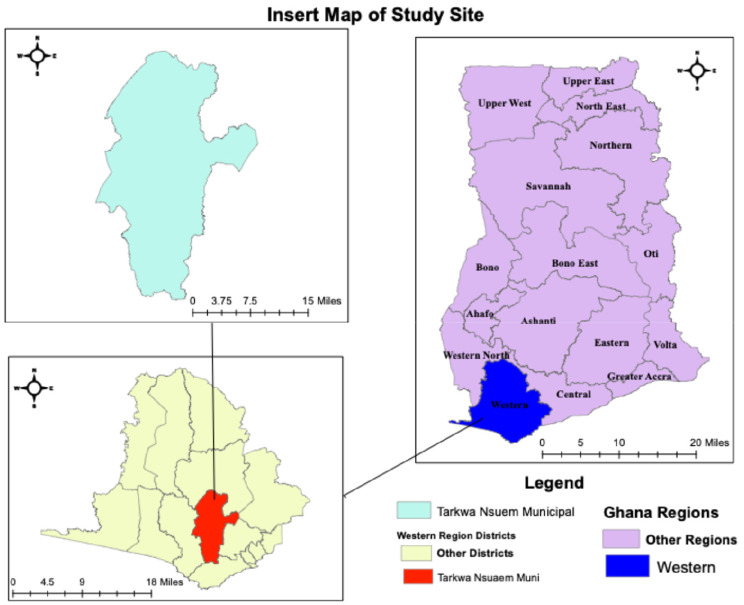
Aim: This study evaluated the epidemiological behaviour of malaria in Tarkwa-Nsuaem Municipality from 2013 to 2023.
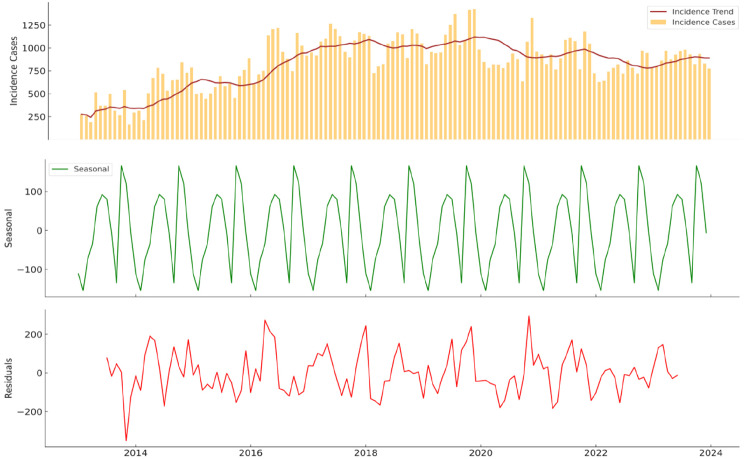
Materials and methods: Malaria incidence, severe cases, and mortality among children under five from 2013 to 2023 were obtained from the Tarkwa-Nsuaem Health Directorate. Meteorological data were sourced from the Global Climate Monitor, while intervention coverage data were extracted from the Malaria Atlas Project. The study employed the Mann-Kendall test to assess trends and applied Joinpoint regression to detect significant shifts in malaria incidence, severe cases, and mortality. Additionally, data on insecticide-treated net coverage and case management treatment were analyzed to evaluate intervention effectiveness. To further assess the influence of climate factors on malaria incidence, a Seasonal AutoRegressive Integrated Moving Average with Exogenous Variables model was applied. The best-fitting model, SARIMAX(1,1,1)x(1,1,1,12), incorporated rainfall and temperature as exogenous predictors to capture the temporal dynamics and seasonal variations in malaria incidence.
Results: Over the study period, 110,737 malaria cases were reported, with an annual mean incidence rate of 242.37 cases per 1,000 population. Malaria incidence increased significantly by 12.48% from 109.63 cases per 1,000 in 2013 to 234.41 in 2023 (p = 0.02). ITN coverage fluctuated between 27.21% and 51.82%, and treatment coverage improved steadily to 62.08%. Malaria-related deaths decreased significantly, with zero deaths reported since 2020. However, severe malaria cases showed a fluctuating trend, decreasing by 80.6% from 2013 to 2018, followed by a 110.3% increase from 2018 to 2023. The AutoRegressive Integrated Moving Average with Exogenous Variables model results indicated that rainfall was a significant predictor of malaria incidence (p = 0.032), while temperature did not show a statistically significant impact (p = 0.927). The model successfully captured historical trends and seasonal variations.
Conclusions: The study showed a significant reduction in malaria-related mortality in Tarkwa-Nsuaem, likely attributable to improved case management and treatment coverage. However, the fluctuating ITN coverage and the recent rise in severe cases warrant further investigation. Targeted interventions, especially in mining areas, and more consistent vector control measures are needed to sustain progress and further reduce malaria incidence.
期刊介绍:
BMC Infectious Diseases is an open access, peer-reviewed journal that considers articles on all aspects of the prevention, diagnosis and management of infectious and sexually transmitted diseases in humans, as well as related molecular genetics, pathophysiology, and epidemiology.





 京公网安备 11010802042870号
京ICP备2023020795号-1
京公网安备 11010802042870号
京ICP备2023020795号-1

 分享
分享
 求助内容:
求助内容: 应助结果提醒方式:
 扫码关注我们
