Cornelia Margineanu, Laura Antohi, Andrew Ambrosy, Daniela Bartos, Sean Collins, Crina Sinescu, Gabriel Tatu Chitoiu, Daniel Lighezan, Dragos Vinereanu, Dana Pop, P S Pang, Javed Butler, Ovidiu Chioncel
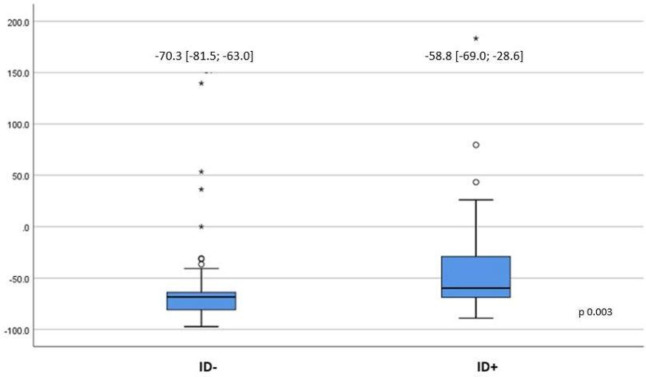
{"title":"铁缺乏对最近因失代偿性心力衰竭住院患者充血和出院后生存的影响:FERIC-RO研究的多中心、前瞻性、观察性分析","authors":"Cornelia Margineanu, Laura Antohi, Andrew Ambrosy, Daniela Bartos, Sean Collins, Crina Sinescu, Gabriel Tatu Chitoiu, Daniel Lighezan, Dragos Vinereanu, Dana Pop, P S Pang, Javed Butler, Ovidiu Chioncel","doi":"10.1136/openhrt-2024-002851","DOIUrl":null,"url":null,"abstract":"<p><strong>Background: </strong>Iron deficiency (ID) is a highly prevalent comorbidity in patients with chronic and acute heart failure and is associated with worse clinical outcomes. We aimed to evaluate the prevalence and clinical characteristics of ID and its association with in-hospital congestion and postdischarge outcomes.</p><p><strong>Methods: </strong>FiER deficit in Insuficienta Cardiaca in Romania was a prospective, multicentric study, enrolling 163 patients hospitalised for worsening chronic heart failure (WCHF) irrespective of left ventricular ejection fraction. ID was evaluated at discharge and defined as ferritin<100 ng/mL or ferritin 100-299 ng/mL with transferrin saturation<20%. Patients were classified based on ID status. In-hospital changes of clinical signs of congestion and natriuretic peptides (NT-proBNP) were reported and correlated with ID status. Additionally, survival analysis at 30 and 90 days was performed and compared between patients with ID+ and ID-.</p><p><strong>Results: </strong>The prevalence of ID was 54.6% (N=89) among 163 eligible patients. Patients with ID+ had more clinical signs of congestion and advanced New York Heart Association functional class at discharge (classes III and IV 58.4% vs 31.1%; p 0.002). NT-proBNP values at admission were higher in ID+ (9288 pg/dL vs 4414 pg/dL, p<0.001), with lower NT-proBNP decrease during hospitalisation (-45.7% vs -63.3%, p 0.003). Additionally, there was no difference in ID prevalence between discharge and 30 days after (54.6% vs 51.3%, p 0.782). Postdischarge all-cause mortality did not differ between ID+ and ID- at 30 days (5.6%% vs 2.7%, p 0.361), but at 90 days, it was higher in ID+ group (30.9% ID+ vs 9.6% ID-, p 0.005).</p><p><strong>Conclusions: </strong>Patients hospitalised for WCHF and ID had more residual congestion, higher absolute values and significantly lower in-hospital change of NT-proBNP. A significant difference in survival between the two ID groups emerged within 90 days of hospital discharge.</p>","PeriodicalId":19505,"journal":{"name":"Open Heart","volume":"12 1","pages":""},"PeriodicalIF":3.1000,"publicationDate":"2025-02-27","publicationTypes":"Journal Article","fieldsOfStudy":null,"isOpenAccess":false,"openAccessPdf":"https://www.ncbi.nlm.nih.gov/pmc/articles/PMC11873344/pdf/","citationCount":"0","resultStr":"{\"title\":\"Impact of iron deficiency on congestion and postdischarge survival in patients recently hospitalised for decompensated heart failure: a multicentre, prospective, observational analysis of the FERIC-RO study.\",\"authors\":\"Cornelia Margineanu, Laura Antohi, Andrew Ambrosy, Daniela Bartos, Sean Collins, Crina Sinescu, Gabriel Tatu Chitoiu, Daniel Lighezan, Dragos Vinereanu, Dana Pop, P S Pang, Javed Butler, Ovidiu Chioncel\",\"doi\":\"10.1136/openhrt-2024-002851\",\"DOIUrl\":null,\"url\":null,\"abstract\":\"<p><strong>Background: </strong>Iron deficiency (ID) is a highly prevalent comorbidity in patients with chronic and acute heart failure and is associated with worse clinical outcomes. We aimed to evaluate the prevalence and clinical characteristics of ID and its association with in-hospital congestion and postdischarge outcomes.</p><p><strong>Methods: </strong>FiER deficit in Insuficienta Cardiaca in Romania was a prospective, multicentric study, enrolling 163 patients hospitalised for worsening chronic heart failure (WCHF) irrespective of left ventricular ejection fraction. ID was evaluated at discharge and defined as ferritin<100 ng/mL or ferritin 100-299 ng/mL with transferrin saturation<20%. Patients were classified based on ID status. In-hospital changes of clinical signs of congestion and natriuretic peptides (NT-proBNP) were reported and correlated with ID status. Additionally, survival analysis at 30 and 90 days was performed and compared between patients with ID+ and ID-.</p><p><strong>Results: </strong>The prevalence of ID was 54.6% (N=89) among 163 eligible patients. Patients with ID+ had more clinical signs of congestion and advanced New York Heart Association functional class at discharge (classes III and IV 58.4% vs 31.1%; p 0.002). NT-proBNP values at admission were higher in ID+ (9288 pg/dL vs 4414 pg/dL, p<0.001), with lower NT-proBNP decrease during hospitalisation (-45.7% vs -63.3%, p 0.003). Additionally, there was no difference in ID prevalence between discharge and 30 days after (54.6% vs 51.3%, p 0.782). Postdischarge all-cause mortality did not differ between ID+ and ID- at 30 days (5.6%% vs 2.7%, p 0.361), but at 90 days, it was higher in ID+ group (30.9% ID+ vs 9.6% ID-, p 0.005).</p><p><strong>Conclusions: </strong>Patients hospitalised for WCHF and ID had more residual congestion, higher absolute values and significantly lower in-hospital change of NT-proBNP. A significant difference in survival between the two ID groups emerged within 90 days of hospital discharge.</p>\",\"PeriodicalId\":19505,\"journal\":{\"name\":\"Open Heart\",\"volume\":\"12 1\",\"pages\":\"\"},\"PeriodicalIF\":3.1000,\"publicationDate\":\"2025-02-27\",\"publicationTypes\":\"Journal Article\",\"fieldsOfStudy\":null,\"isOpenAccess\":false,\"openAccessPdf\":\"https://www.ncbi.nlm.nih.gov/pmc/articles/PMC11873344/pdf/\",\"citationCount\":\"0\",\"resultStr\":null,\"platform\":\"Semanticscholar\",\"paperid\":null,\"PeriodicalName\":\"Open Heart\",\"FirstCategoryId\":\"1085\",\"ListUrlMain\":\"https://doi.org/10.1136/openhrt-2024-002851\",\"RegionNum\":0,\"RegionCategory\":null,\"ArticlePicture\":[],\"TitleCN\":null,\"AbstractTextCN\":null,\"PMCID\":null,\"EPubDate\":\"\",\"PubModel\":\"\",\"JCR\":\"Q2\",\"JCRName\":\"CARDIAC & CARDIOVASCULAR SYSTEMS\",\"Score\":null,\"Total\":0}","platform":"Semanticscholar","paperid":null,"PeriodicalName":"Open Heart","FirstCategoryId":"1085","ListUrlMain":"https://doi.org/10.1136/openhrt-2024-002851","RegionNum":0,"RegionCategory":null,"ArticlePicture":[],"TitleCN":null,"AbstractTextCN":null,"PMCID":null,"EPubDate":"","PubModel":"","JCR":"Q2","JCRName":"CARDIAC & CARDIOVASCULAR SYSTEMS","Score":null,"Total":0}
引用次数: 0
摘要
背景:缺铁(ID)是慢性和急性心力衰竭患者中一种非常普遍的合并症,并且与较差的临床结果相关。我们的目的是评估ID的患病率和临床特征及其与院内拥堵和出院后结局的关系。方法:罗马尼亚心脏功能不全患者的FiER缺陷是一项前瞻性、多中心研究,纳入163例因慢性心力衰竭(WCHF)恶化而住院的患者,与左心室射血分数无关。结果:163例符合条件的患者中,ID患病率为54.6% (N=89)。ID+患者在出院时有更多的充血临床症状和高级纽约心脏协会功能分级(III级和IV级分别为58.4%和31.1%;p 0.002)。入院时的NT-proBNP值高于ID+ (9288 pg/dL vs 4414 pg/dL)。结论:WCHF和ID住院的患者有更多的剩余充血,更高的绝对值和更低的NT-proBNP院内变化。出院后90天内,两组患者的生存率有显著差异。
Impact of iron deficiency on congestion and postdischarge survival in patients recently hospitalised for decompensated heart failure: a multicentre, prospective, observational analysis of the FERIC-RO study.
Background: Iron deficiency (ID) is a highly prevalent comorbidity in patients with chronic and acute heart failure and is associated with worse clinical outcomes. We aimed to evaluate the prevalence and clinical characteristics of ID and its association with in-hospital congestion and postdischarge outcomes.
Methods: FiER deficit in Insuficienta Cardiaca in Romania was a prospective, multicentric study, enrolling 163 patients hospitalised for worsening chronic heart failure (WCHF) irrespective of left ventricular ejection fraction. ID was evaluated at discharge and defined as ferritin<100 ng/mL or ferritin 100-299 ng/mL with transferrin saturation<20%. Patients were classified based on ID status. In-hospital changes of clinical signs of congestion and natriuretic peptides (NT-proBNP) were reported and correlated with ID status. Additionally, survival analysis at 30 and 90 days was performed and compared between patients with ID+ and ID-.
Results: The prevalence of ID was 54.6% (N=89) among 163 eligible patients. Patients with ID+ had more clinical signs of congestion and advanced New York Heart Association functional class at discharge (classes III and IV 58.4% vs 31.1%; p 0.002). NT-proBNP values at admission were higher in ID+ (9288 pg/dL vs 4414 pg/dL, p<0.001), with lower NT-proBNP decrease during hospitalisation (-45.7% vs -63.3%, p 0.003). Additionally, there was no difference in ID prevalence between discharge and 30 days after (54.6% vs 51.3%, p 0.782). Postdischarge all-cause mortality did not differ between ID+ and ID- at 30 days (5.6%% vs 2.7%, p 0.361), but at 90 days, it was higher in ID+ group (30.9% ID+ vs 9.6% ID-, p 0.005).
Conclusions: Patients hospitalised for WCHF and ID had more residual congestion, higher absolute values and significantly lower in-hospital change of NT-proBNP. A significant difference in survival between the two ID groups emerged within 90 days of hospital discharge.
期刊介绍:
Open Heart is an online-only, open access cardiology journal that aims to be “open” in many ways: open access (free access for all readers), open peer review (unblinded peer review) and open data (data sharing is encouraged). The goal is to ensure maximum transparency and maximum impact on research progress and patient care. The journal is dedicated to publishing high quality, peer reviewed medical research in all disciplines and therapeutic areas of cardiovascular medicine. Research is published across all study phases and designs, from study protocols to phase I trials to meta-analyses, including small or specialist studies. Opinionated discussions on controversial topics are welcomed. Open Heart aims to operate a fast submission and review process with continuous publication online, to ensure timely, up-to-date research is available worldwide. The journal adheres to a rigorous and transparent peer review process, and all articles go through a statistical assessment to ensure robustness of the analyses. Open Heart is an official journal of the British Cardiovascular Society.







 京公网安备 11010802042870号
京ICP备2023020795号-1
京公网安备 11010802042870号
京ICP备2023020795号-1

 分享
分享
 求助内容:
求助内容: 应助结果提醒方式:
 扫码关注我们
