Sarah Hazem Muslim, Ali Azeez Al-Jumaili, Hadeer Akram Al-Ani
{"title":"用健康信念模型探讨物质使用障碍患者接受治疗的影响因素:一项定性研究。","authors":"Sarah Hazem Muslim, Ali Azeez Al-Jumaili, Hadeer Akram Al-Ani","doi":"10.1186/s40359-025-02469-7","DOIUrl":null,"url":null,"abstract":"<p><strong>Background: </strong>Substance abuse has become a significant public health issue in Iraq, fueled by economic slowdown, and high unemployment rates. Treatment acceptance among Iraqi patients with substance use disorder remains poorly understood.</p><p><strong>Objectives: </strong>The study aimed to explore in-depth the factors influencing treatment acceptance among patients with substance use disorder (SUD).</p><p><strong>Methods: </strong>This qualitative study included face-to-face semi-structured interviews with patients having SUD relying on the Health Belief Model. Convenience sampling was employed to interview patients from the two specialized treatment centers in Baghdad between Nov. 2023 through Feb 2024. Thematic analysis was used to identify recurring themes and sub-themes.</p><p><strong>Results: </strong>Thirty-three patients from both genders (27 male and 6 female) were recruited in this study. Most (60.6%) of participants had primary school education and 63.6% of them were low-income workers. Ninety-one percent abused Crystal (Methamphetamine). Interviews showed patients have good adherence to treatment. Four domains of the Health Belief Model were strongly connected with the patient motivation to initial engagement and adherence to treatment. The patients perceived benefits for treatment (improving physical and mental health and restoration of family relationships), cues to action (a national program about cured cases and influences of family, friends and legal issues), good subjective norm (support from family during hospitalization), and facilitating conditions (maintaining privacy, availability of free treatment, and governmental financial assistance to recovered patients). On the other hand, perceived barriers were an obstacle to seeking treatment including lack of awareness about treatment centers, fear of legal consequences, and psychological barriers. Additionally, patients had high susceptibility to relapse which prevents long-lasting recovery from substance abuse due to high accessibility and affordability of drugs.</p><p><strong>Conclusion: </strong>The majority of patients adhered to their treatment plans well due to perceived benefit of treatment, perceived severity of SUD, positive subject norms, and alarming cues to action The HBM successfully explains the factors that influence treatment acceptance among patients with SUD. Increasing treatment acceptability among patients with SUD requires addressing existing barriers (lack of awareness about treatment centers, addiction enjoyment, and fear of legal consequences) and improving the facilitating factors. Extensive awareness campaigns and providing accessible treatment facilities can increase treatment acceptance. Health officials can enable more patients to make responsible choices of getting treatment and overcoming addiction by establishing additional drug-abuse treatment centers across the nation. Finally, the findings of this study can help health authorities in the region to identify potential factors affecting patients with SUD willingness to accept treatment.</p>","PeriodicalId":37867,"journal":{"name":"BMC Psychology","volume":"13 1","pages":"177"},"PeriodicalIF":3.0000,"publicationDate":"2025-02-28","publicationTypes":"Journal Article","fieldsOfStudy":null,"isOpenAccess":false,"openAccessPdf":"https://www.ncbi.nlm.nih.gov/pmc/articles/PMC11871802/pdf/","citationCount":"0","resultStr":"{\"title\":\"Delving into the Elements Impacting Treatment Acceptance among patients with Substance Use Disorder using Health Belief Model: a qualitative study.\",\"authors\":\"Sarah Hazem Muslim, Ali Azeez Al-Jumaili, Hadeer Akram Al-Ani\",\"doi\":\"10.1186/s40359-025-02469-7\",\"DOIUrl\":null,\"url\":null,\"abstract\":\"<p><strong>Background: </strong>Substance abuse has become a significant public health issue in Iraq, fueled by economic slowdown, and high unemployment rates. Treatment acceptance among Iraqi patients with substance use disorder remains poorly understood.</p><p><strong>Objectives: </strong>The study aimed to explore in-depth the factors influencing treatment acceptance among patients with substance use disorder (SUD).</p><p><strong>Methods: </strong>This qualitative study included face-to-face semi-structured interviews with patients having SUD relying on the Health Belief Model. Convenience sampling was employed to interview patients from the two specialized treatment centers in Baghdad between Nov. 2023 through Feb 2024. Thematic analysis was used to identify recurring themes and sub-themes.</p><p><strong>Results: </strong>Thirty-three patients from both genders (27 male and 6 female) were recruited in this study. Most (60.6%) of participants had primary school education and 63.6% of them were low-income workers. Ninety-one percent abused Crystal (Methamphetamine). Interviews showed patients have good adherence to treatment. Four domains of the Health Belief Model were strongly connected with the patient motivation to initial engagement and adherence to treatment. The patients perceived benefits for treatment (improving physical and mental health and restoration of family relationships), cues to action (a national program about cured cases and influences of family, friends and legal issues), good subjective norm (support from family during hospitalization), and facilitating conditions (maintaining privacy, availability of free treatment, and governmental financial assistance to recovered patients). On the other hand, perceived barriers were an obstacle to seeking treatment including lack of awareness about treatment centers, fear of legal consequences, and psychological barriers. Additionally, patients had high susceptibility to relapse which prevents long-lasting recovery from substance abuse due to high accessibility and affordability of drugs.</p><p><strong>Conclusion: </strong>The majority of patients adhered to their treatment plans well due to perceived benefit of treatment, perceived severity of SUD, positive subject norms, and alarming cues to action The HBM successfully explains the factors that influence treatment acceptance among patients with SUD. Increasing treatment acceptability among patients with SUD requires addressing existing barriers (lack of awareness about treatment centers, addiction enjoyment, and fear of legal consequences) and improving the facilitating factors. Extensive awareness campaigns and providing accessible treatment facilities can increase treatment acceptance. Health officials can enable more patients to make responsible choices of getting treatment and overcoming addiction by establishing additional drug-abuse treatment centers across the nation. Finally, the findings of this study can help health authorities in the region to identify potential factors affecting patients with SUD willingness to accept treatment.</p>\",\"PeriodicalId\":37867,\"journal\":{\"name\":\"BMC Psychology\",\"volume\":\"13 1\",\"pages\":\"177\"},\"PeriodicalIF\":3.0000,\"publicationDate\":\"2025-02-28\",\"publicationTypes\":\"Journal Article\",\"fieldsOfStudy\":null,\"isOpenAccess\":false,\"openAccessPdf\":\"https://www.ncbi.nlm.nih.gov/pmc/articles/PMC11871802/pdf/\",\"citationCount\":\"0\",\"resultStr\":null,\"platform\":\"Semanticscholar\",\"paperid\":null,\"PeriodicalName\":\"BMC Psychology\",\"FirstCategoryId\":\"102\",\"ListUrlMain\":\"https://doi.org/10.1186/s40359-025-02469-7\",\"RegionNum\":3,\"RegionCategory\":\"心理学\",\"ArticlePicture\":[],\"TitleCN\":null,\"AbstractTextCN\":null,\"PMCID\":null,\"EPubDate\":\"\",\"PubModel\":\"\",\"JCR\":\"Q1\",\"JCRName\":\"PSYCHOLOGY, MULTIDISCIPLINARY\",\"Score\":null,\"Total\":0}","platform":"Semanticscholar","paperid":null,"PeriodicalName":"BMC Psychology","FirstCategoryId":"102","ListUrlMain":"https://doi.org/10.1186/s40359-025-02469-7","RegionNum":3,"RegionCategory":"心理学","ArticlePicture":[],"TitleCN":null,"AbstractTextCN":null,"PMCID":null,"EPubDate":"","PubModel":"","JCR":"Q1","JCRName":"PSYCHOLOGY, MULTIDISCIPLINARY","Score":null,"Total":0}
Delving into the Elements Impacting Treatment Acceptance among patients with Substance Use Disorder using Health Belief Model: a qualitative study.
Background: Substance abuse has become a significant public health issue in Iraq, fueled by economic slowdown, and high unemployment rates. Treatment acceptance among Iraqi patients with substance use disorder remains poorly understood.
Objectives: The study aimed to explore in-depth the factors influencing treatment acceptance among patients with substance use disorder (SUD).
Methods: This qualitative study included face-to-face semi-structured interviews with patients having SUD relying on the Health Belief Model. Convenience sampling was employed to interview patients from the two specialized treatment centers in Baghdad between Nov. 2023 through Feb 2024. Thematic analysis was used to identify recurring themes and sub-themes.
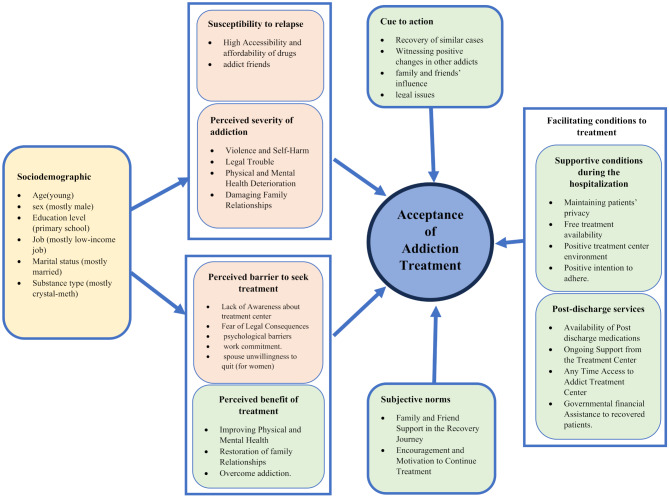
Results: Thirty-three patients from both genders (27 male and 6 female) were recruited in this study. Most (60.6%) of participants had primary school education and 63.6% of them were low-income workers. Ninety-one percent abused Crystal (Methamphetamine). Interviews showed patients have good adherence to treatment. Four domains of the Health Belief Model were strongly connected with the patient motivation to initial engagement and adherence to treatment. The patients perceived benefits for treatment (improving physical and mental health and restoration of family relationships), cues to action (a national program about cured cases and influences of family, friends and legal issues), good subjective norm (support from family during hospitalization), and facilitating conditions (maintaining privacy, availability of free treatment, and governmental financial assistance to recovered patients). On the other hand, perceived barriers were an obstacle to seeking treatment including lack of awareness about treatment centers, fear of legal consequences, and psychological barriers. Additionally, patients had high susceptibility to relapse which prevents long-lasting recovery from substance abuse due to high accessibility and affordability of drugs.
Conclusion: The majority of patients adhered to their treatment plans well due to perceived benefit of treatment, perceived severity of SUD, positive subject norms, and alarming cues to action The HBM successfully explains the factors that influence treatment acceptance among patients with SUD. Increasing treatment acceptability among patients with SUD requires addressing existing barriers (lack of awareness about treatment centers, addiction enjoyment, and fear of legal consequences) and improving the facilitating factors. Extensive awareness campaigns and providing accessible treatment facilities can increase treatment acceptance. Health officials can enable more patients to make responsible choices of getting treatment and overcoming addiction by establishing additional drug-abuse treatment centers across the nation. Finally, the findings of this study can help health authorities in the region to identify potential factors affecting patients with SUD willingness to accept treatment.
期刊介绍:
BMC Psychology is an open access, peer-reviewed journal that considers manuscripts on all aspects of psychology, human behavior and the mind, including developmental, clinical, cognitive, experimental, health and social psychology, as well as personality and individual differences. The journal welcomes quantitative and qualitative research methods, including animal studies.





 京公网安备 11010802042870号
京ICP备2023020795号-1
京公网安备 11010802042870号
京ICP备2023020795号-1

 分享
分享
 求助内容:
求助内容: 应助结果提醒方式:
 扫码关注我们
