Artur Terbalyan, Kazimierz Mikołajec, Michał Krzysztofik, Robert Urbański, Jakub Jarosz, Petr Stastny, Michał Spieszny
{"title":"克服等长单侧条件反射活动对优秀和业余排球运动员随后单腿起跳的影响:一项随机交叉试验。","authors":"Artur Terbalyan, Kazimierz Mikołajec, Michał Krzysztofik, Robert Urbański, Jakub Jarosz, Petr Stastny, Michał Spieszny","doi":"10.1186/s13102-025-01083-9","DOIUrl":null,"url":null,"abstract":"<p><strong>Background: </strong>The study aimed to assess the acute effects of overcoming isometric split squats on subsequent single-leg drop jump (DJ) performance and the contralateral effect in volleyball players, considering training status differences.</p><p><strong>Methods: </strong>Ten male elite (ELI) and ten amateur (AMA) volleyball players took part in two experimental sessions in which they performed conditioning activity (CA) consisted of 3 sets of overcoming isometric 3-second split squats, differing in the limb used: dominant (DL) or non-dominant (ND-L). Single-leg DJ was performed before and at the 4th and 8th minute post-CA for both limbs. The best post-CA attempt in terms of jump height (JH) was analyzed.</p><p><strong>Results: </strong>Results revealed a significant increase in jump height (JH) in the non-dominant limb (ND-L) from 13.7 ± 2.6 cm to 15.5 ± 2.7 cm after CA performed by the ND-L (p = 0.001; Hedge's g = 0.65). Similarly, the reactive strength index (RSI) of the ND-L improved from 0.40 ± 0.06 to 0.45 ± 0.08 (p = 0.008; g = 0.58). Additionally, contact time in the ND-L increased significantly from 342 ± 36 ms to 375 ± 42 ms after CA performed by the dominant limb (p = 0.001; g = 0.66). In the elite (ELI) group, JH significantly increased from 16.4 ± 2.4 cm to 18.3 ± 3.3 cm (p < 0.001; g = 0.79), while RSI in the dominant limb (DL) improved from 0.47 ± 0.06 to 0.53 ± 0.07 (p = 0.011; g = 0.68).</p><p><strong>Conclusions: </strong>Results suggest that the examined CA effectively induces the post-activation performance enhancement in DJ among elite volleyball players, with a predominantly local impact on the limb executing the CA.</p><p><strong>Trial registration: </strong>NCT06459050 (Retrospectively registered).</p>","PeriodicalId":48585,"journal":{"name":"BMC Sports Science Medicine and Rehabilitation","volume":"17 1","pages":"30"},"PeriodicalIF":3.4000,"publicationDate":"2025-02-28","publicationTypes":"Journal Article","fieldsOfStudy":null,"isOpenAccess":false,"openAccessPdf":"https://www.ncbi.nlm.nih.gov/pmc/articles/PMC11869637/pdf/","citationCount":"0","resultStr":"{\"title\":\"Effects of overcoming isometric unilateral conditioning activity on subsequent single-leg drop jump in elite and amateur volleyball players: a randomized crossover trial.\",\"authors\":\"Artur Terbalyan, Kazimierz Mikołajec, Michał Krzysztofik, Robert Urbański, Jakub Jarosz, Petr Stastny, Michał Spieszny\",\"doi\":\"10.1186/s13102-025-01083-9\",\"DOIUrl\":null,\"url\":null,\"abstract\":\"<p><strong>Background: </strong>The study aimed to assess the acute effects of overcoming isometric split squats on subsequent single-leg drop jump (DJ) performance and the contralateral effect in volleyball players, considering training status differences.</p><p><strong>Methods: </strong>Ten male elite (ELI) and ten amateur (AMA) volleyball players took part in two experimental sessions in which they performed conditioning activity (CA) consisted of 3 sets of overcoming isometric 3-second split squats, differing in the limb used: dominant (DL) or non-dominant (ND-L). Single-leg DJ was performed before and at the 4th and 8th minute post-CA for both limbs. The best post-CA attempt in terms of jump height (JH) was analyzed.</p><p><strong>Results: </strong>Results revealed a significant increase in jump height (JH) in the non-dominant limb (ND-L) from 13.7 ± 2.6 cm to 15.5 ± 2.7 cm after CA performed by the ND-L (p = 0.001; Hedge's g = 0.65). Similarly, the reactive strength index (RSI) of the ND-L improved from 0.40 ± 0.06 to 0.45 ± 0.08 (p = 0.008; g = 0.58). Additionally, contact time in the ND-L increased significantly from 342 ± 36 ms to 375 ± 42 ms after CA performed by the dominant limb (p = 0.001; g = 0.66). In the elite (ELI) group, JH significantly increased from 16.4 ± 2.4 cm to 18.3 ± 3.3 cm (p < 0.001; g = 0.79), while RSI in the dominant limb (DL) improved from 0.47 ± 0.06 to 0.53 ± 0.07 (p = 0.011; g = 0.68).</p><p><strong>Conclusions: </strong>Results suggest that the examined CA effectively induces the post-activation performance enhancement in DJ among elite volleyball players, with a predominantly local impact on the limb executing the CA.</p><p><strong>Trial registration: </strong>NCT06459050 (Retrospectively registered).</p>\",\"PeriodicalId\":48585,\"journal\":{\"name\":\"BMC Sports Science Medicine and Rehabilitation\",\"volume\":\"17 1\",\"pages\":\"30\"},\"PeriodicalIF\":3.4000,\"publicationDate\":\"2025-02-28\",\"publicationTypes\":\"Journal Article\",\"fieldsOfStudy\":null,\"isOpenAccess\":false,\"openAccessPdf\":\"https://www.ncbi.nlm.nih.gov/pmc/articles/PMC11869637/pdf/\",\"citationCount\":\"0\",\"resultStr\":null,\"platform\":\"Semanticscholar\",\"paperid\":null,\"PeriodicalName\":\"BMC Sports Science Medicine and Rehabilitation\",\"FirstCategoryId\":\"3\",\"ListUrlMain\":\"https://doi.org/10.1186/s13102-025-01083-9\",\"RegionNum\":3,\"RegionCategory\":\"医学\",\"ArticlePicture\":[],\"TitleCN\":null,\"AbstractTextCN\":null,\"PMCID\":null,\"EPubDate\":\"\",\"PubModel\":\"\",\"JCR\":\"Q1\",\"JCRName\":\"REHABILITATION\",\"Score\":null,\"Total\":0}","platform":"Semanticscholar","paperid":null,"PeriodicalName":"BMC Sports Science Medicine and Rehabilitation","FirstCategoryId":"3","ListUrlMain":"https://doi.org/10.1186/s13102-025-01083-9","RegionNum":3,"RegionCategory":"医学","ArticlePicture":[],"TitleCN":null,"AbstractTextCN":null,"PMCID":null,"EPubDate":"","PubModel":"","JCR":"Q1","JCRName":"REHABILITATION","Score":null,"Total":0}
引用次数: 0
摘要
背景:本研究旨在评估在考虑训练状态差异的情况下,克服等长分深蹲对排球运动员后续单腿起跳(DJ)表现的急性影响和对侧效应。方法:10名优秀男子排球运动员(ELI)和10名业余男子排球运动员(AMA)参加了两个实验,他们进行了3组克服等长3秒分深蹲的调节活动(CA),不同的肢体使用:优势(DL)或非优势(ND-L)。单腿DJ分别在ca前、ca后第4分钟和ca后第8分钟进行。从跳高(JH)角度分析了ca后的最佳尝试。结果:非优势肢(ND-L)的跳高(JH)从13.7±2.6 cm显著增加到15.5±2.7 cm (p = 0.001;对冲系数g = 0.65)。ND-L的反应性强度指数(RSI)由0.40±0.06提高到0.45±0.08 (p = 0.008;g = 0.58)。此外,优势肢CA后,ND-L的接触时间从342±36 ms显著增加到375±42 ms (p = 0.001;g = 0.66)。在精英(ELI)组,JH从16.4±2.4 cm显著增加到18.3±3.3 cm (p)。结论:结果表明,所检查的CA有效地诱导DJ激活后的表现增强,主要是对执行CA的肢体的局部影响。试验注册:NCT06459050(回顾性注册)。
Effects of overcoming isometric unilateral conditioning activity on subsequent single-leg drop jump in elite and amateur volleyball players: a randomized crossover trial.
Background: The study aimed to assess the acute effects of overcoming isometric split squats on subsequent single-leg drop jump (DJ) performance and the contralateral effect in volleyball players, considering training status differences.
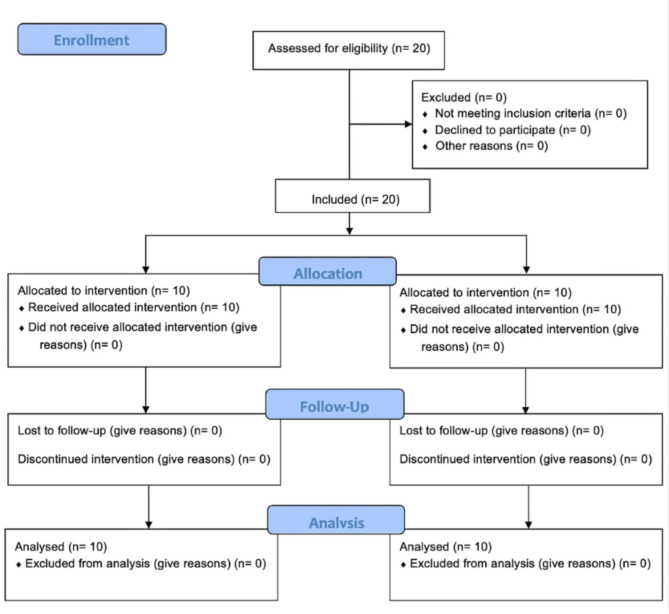
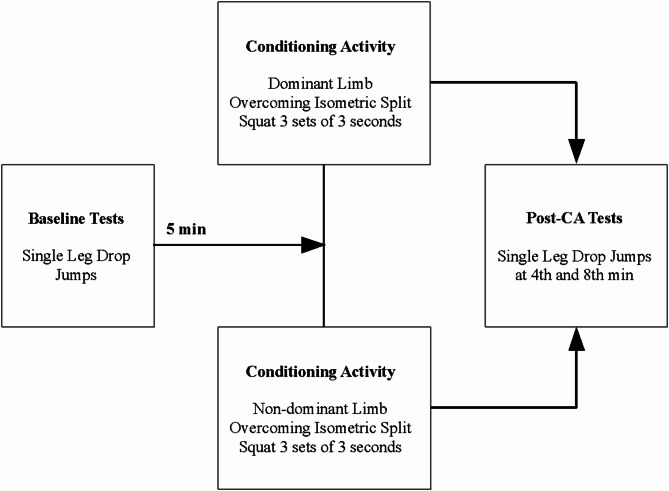
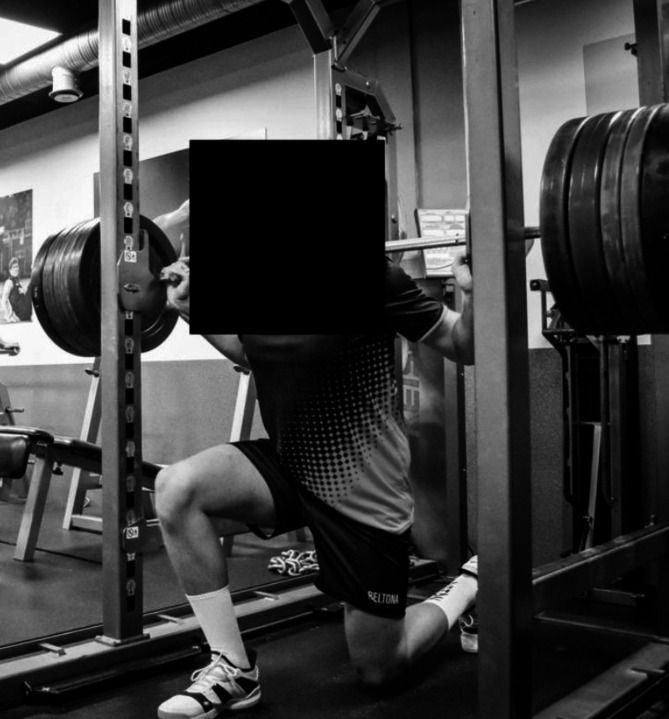
Methods: Ten male elite (ELI) and ten amateur (AMA) volleyball players took part in two experimental sessions in which they performed conditioning activity (CA) consisted of 3 sets of overcoming isometric 3-second split squats, differing in the limb used: dominant (DL) or non-dominant (ND-L). Single-leg DJ was performed before and at the 4th and 8th minute post-CA for both limbs. The best post-CA attempt in terms of jump height (JH) was analyzed.
Results: Results revealed a significant increase in jump height (JH) in the non-dominant limb (ND-L) from 13.7 ± 2.6 cm to 15.5 ± 2.7 cm after CA performed by the ND-L (p = 0.001; Hedge's g = 0.65). Similarly, the reactive strength index (RSI) of the ND-L improved from 0.40 ± 0.06 to 0.45 ± 0.08 (p = 0.008; g = 0.58). Additionally, contact time in the ND-L increased significantly from 342 ± 36 ms to 375 ± 42 ms after CA performed by the dominant limb (p = 0.001; g = 0.66). In the elite (ELI) group, JH significantly increased from 16.4 ± 2.4 cm to 18.3 ± 3.3 cm (p < 0.001; g = 0.79), while RSI in the dominant limb (DL) improved from 0.47 ± 0.06 to 0.53 ± 0.07 (p = 0.011; g = 0.68).
Conclusions: Results suggest that the examined CA effectively induces the post-activation performance enhancement in DJ among elite volleyball players, with a predominantly local impact on the limb executing the CA.
期刊介绍:
BMC Sports Science, Medicine and Rehabilitation is an open access, peer reviewed journal that considers articles on all aspects of sports medicine and the exercise sciences, including rehabilitation, traumatology, cardiology, physiology, and nutrition.




 京公网安备 11010802042870号
京ICP备2023020795号-1
京公网安备 11010802042870号
京ICP备2023020795号-1

 分享
分享
 求助内容:
求助内容: 应助结果提醒方式:
 扫码关注我们
