Junjie Zhao, Weiwen Zhang, Jian Luo, Honglong Fang, Kaiyu Wang
{"title":"新一代宏基因组测序在急性Q热致全身毛细血管渗漏综合征中的临床应用:1例报告及文献复习。","authors":"Junjie Zhao, Weiwen Zhang, Jian Luo, Honglong Fang, Kaiyu Wang","doi":"10.1186/s12879-025-10699-8","DOIUrl":null,"url":null,"abstract":"<p><strong>Introduction: </strong>Query fever (Q fever), a zoonotic disease, caused by Coxiella burnetii, is an infectious disease that has long been considered a rare and regionally restricted disease. It can be responsible for endocarditis and endovascular infections. Systemic capillary leak syndrome (SCLS), a rare disease of unknown etiology that most commonly develops in adults 50-70 years of age, is diagnosed clinically based on a characteristic symptomatic triad of hypotension, hemoconcentration (elevated hemoglobin or hematocrit), and serum hypoalbuminemia resulting from fluid extravasation. Although Q fever has increasingly been recognized and reported in recent years, the treatment of Q fever complicated by SCLS, with an etiological diagnosis aided by metagenomic next-generation sequencing (mNGS), remains uncommon.</p><p><strong>Case presentation: </strong>This report describes a case of acute Q fever with concurrent SCLS in a 54-year-old male who worked in a slaughterhouse. The patient presented with fever, chest tightness, and shortness of breath, accompanied by severe headache. His condition rapidly deteriorated, leading to acute fever, generalized weakness, and hypotension. Due to respiratory failure and shock, he was admitted to the intensive care unit (ICU) for treatment. Despite empirical antibiotic therapy along with fluid resuscitation, his blood pressure continued to decline, and metabolic acidosis and respiratory distress worsened. As his condition failed to improve, tracheal intubation was performed. mNGS detected both Coxiella burnetii in his BALF and blood samples. Based on the mNGS results, he was started on doxycycline, alongside penicillin antibiotics, vasopressors, and continuous renal replacement therapy (CRRT). The patient's condition gradually improved, and he was discharged home after 12 days of treatment. At his 90-day follow-up, he had nearly fully recovered to his pre-illness status.</p><p><strong>Conclusions: </strong>mNGS plays a crucial role in assisting the diagnosis of Q fever, which enables the timely treatment of the underlying disease triggering SCLS. This, combined with restrictive fluid resuscitation strategies, is essential for improving patient outcomes.</p>","PeriodicalId":8981,"journal":{"name":"BMC Infectious Diseases","volume":"25 1","pages":"300"},"PeriodicalIF":3.0000,"publicationDate":"2025-03-02","publicationTypes":"Journal Article","fieldsOfStudy":null,"isOpenAccess":false,"openAccessPdf":"https://www.ncbi.nlm.nih.gov/pmc/articles/PMC11874829/pdf/","citationCount":"0","resultStr":"{\"title\":\"Clinical application of acute Q fever -induced systemic capillary leak syndrome in a patient by using metagenomic next-generation sequencing: a case report and literature review.\",\"authors\":\"Junjie Zhao, Weiwen Zhang, Jian Luo, Honglong Fang, Kaiyu Wang\",\"doi\":\"10.1186/s12879-025-10699-8\",\"DOIUrl\":null,\"url\":null,\"abstract\":\"<p><strong>Introduction: </strong>Query fever (Q fever), a zoonotic disease, caused by Coxiella burnetii, is an infectious disease that has long been considered a rare and regionally restricted disease. It can be responsible for endocarditis and endovascular infections. Systemic capillary leak syndrome (SCLS), a rare disease of unknown etiology that most commonly develops in adults 50-70 years of age, is diagnosed clinically based on a characteristic symptomatic triad of hypotension, hemoconcentration (elevated hemoglobin or hematocrit), and serum hypoalbuminemia resulting from fluid extravasation. Although Q fever has increasingly been recognized and reported in recent years, the treatment of Q fever complicated by SCLS, with an etiological diagnosis aided by metagenomic next-generation sequencing (mNGS), remains uncommon.</p><p><strong>Case presentation: </strong>This report describes a case of acute Q fever with concurrent SCLS in a 54-year-old male who worked in a slaughterhouse. The patient presented with fever, chest tightness, and shortness of breath, accompanied by severe headache. His condition rapidly deteriorated, leading to acute fever, generalized weakness, and hypotension. Due to respiratory failure and shock, he was admitted to the intensive care unit (ICU) for treatment. Despite empirical antibiotic therapy along with fluid resuscitation, his blood pressure continued to decline, and metabolic acidosis and respiratory distress worsened. As his condition failed to improve, tracheal intubation was performed. mNGS detected both Coxiella burnetii in his BALF and blood samples. Based on the mNGS results, he was started on doxycycline, alongside penicillin antibiotics, vasopressors, and continuous renal replacement therapy (CRRT). The patient's condition gradually improved, and he was discharged home after 12 days of treatment. At his 90-day follow-up, he had nearly fully recovered to his pre-illness status.</p><p><strong>Conclusions: </strong>mNGS plays a crucial role in assisting the diagnosis of Q fever, which enables the timely treatment of the underlying disease triggering SCLS. This, combined with restrictive fluid resuscitation strategies, is essential for improving patient outcomes.</p>\",\"PeriodicalId\":8981,\"journal\":{\"name\":\"BMC Infectious Diseases\",\"volume\":\"25 1\",\"pages\":\"300\"},\"PeriodicalIF\":3.0000,\"publicationDate\":\"2025-03-02\",\"publicationTypes\":\"Journal Article\",\"fieldsOfStudy\":null,\"isOpenAccess\":false,\"openAccessPdf\":\"https://www.ncbi.nlm.nih.gov/pmc/articles/PMC11874829/pdf/\",\"citationCount\":\"0\",\"resultStr\":null,\"platform\":\"Semanticscholar\",\"paperid\":null,\"PeriodicalName\":\"BMC Infectious Diseases\",\"FirstCategoryId\":\"3\",\"ListUrlMain\":\"https://doi.org/10.1186/s12879-025-10699-8\",\"RegionNum\":3,\"RegionCategory\":\"医学\",\"ArticlePicture\":[],\"TitleCN\":null,\"AbstractTextCN\":null,\"PMCID\":null,\"EPubDate\":\"\",\"PubModel\":\"\",\"JCR\":\"Q2\",\"JCRName\":\"INFECTIOUS DISEASES\",\"Score\":null,\"Total\":0}","platform":"Semanticscholar","paperid":null,"PeriodicalName":"BMC Infectious Diseases","FirstCategoryId":"3","ListUrlMain":"https://doi.org/10.1186/s12879-025-10699-8","RegionNum":3,"RegionCategory":"医学","ArticlePicture":[],"TitleCN":null,"AbstractTextCN":null,"PMCID":null,"EPubDate":"","PubModel":"","JCR":"Q2","JCRName":"INFECTIOUS DISEASES","Score":null,"Total":0}
Clinical application of acute Q fever -induced systemic capillary leak syndrome in a patient by using metagenomic next-generation sequencing: a case report and literature review.
Introduction: Query fever (Q fever), a zoonotic disease, caused by Coxiella burnetii, is an infectious disease that has long been considered a rare and regionally restricted disease. It can be responsible for endocarditis and endovascular infections. Systemic capillary leak syndrome (SCLS), a rare disease of unknown etiology that most commonly develops in adults 50-70 years of age, is diagnosed clinically based on a characteristic symptomatic triad of hypotension, hemoconcentration (elevated hemoglobin or hematocrit), and serum hypoalbuminemia resulting from fluid extravasation. Although Q fever has increasingly been recognized and reported in recent years, the treatment of Q fever complicated by SCLS, with an etiological diagnosis aided by metagenomic next-generation sequencing (mNGS), remains uncommon.
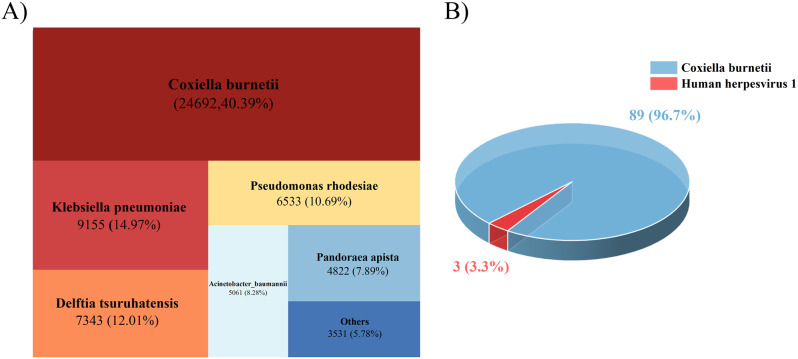
Case presentation: This report describes a case of acute Q fever with concurrent SCLS in a 54-year-old male who worked in a slaughterhouse. The patient presented with fever, chest tightness, and shortness of breath, accompanied by severe headache. His condition rapidly deteriorated, leading to acute fever, generalized weakness, and hypotension. Due to respiratory failure and shock, he was admitted to the intensive care unit (ICU) for treatment. Despite empirical antibiotic therapy along with fluid resuscitation, his blood pressure continued to decline, and metabolic acidosis and respiratory distress worsened. As his condition failed to improve, tracheal intubation was performed. mNGS detected both Coxiella burnetii in his BALF and blood samples. Based on the mNGS results, he was started on doxycycline, alongside penicillin antibiotics, vasopressors, and continuous renal replacement therapy (CRRT). The patient's condition gradually improved, and he was discharged home after 12 days of treatment. At his 90-day follow-up, he had nearly fully recovered to his pre-illness status.
Conclusions: mNGS plays a crucial role in assisting the diagnosis of Q fever, which enables the timely treatment of the underlying disease triggering SCLS. This, combined with restrictive fluid resuscitation strategies, is essential for improving patient outcomes.
期刊介绍:
BMC Infectious Diseases is an open access, peer-reviewed journal that considers articles on all aspects of the prevention, diagnosis and management of infectious and sexually transmitted diseases in humans, as well as related molecular genetics, pathophysiology, and epidemiology.






 京公网安备 11010802042870号
京ICP备2023020795号-1
京公网安备 11010802042870号
京ICP备2023020795号-1

 分享
分享
 求助内容:
求助内容: 应助结果提醒方式:
 扫码关注我们
