Christopher Mlynski, Georgia Clay, Kata Sik, Julia Jankowski, Veronika Job
{"title":"因为它很有趣!努力享受信念的个体差异与努力寻求的行为和生理指标有关。","authors":"Christopher Mlynski, Georgia Clay, Kata Sik, Julia Jankowski, Veronika Job","doi":"10.1037/pspa0000443","DOIUrl":null,"url":null,"abstract":"<p><p>Effort is commonly characterized as a negative, unpleasant experience. This research explores the extent to which individuals vary in whether they believe effort to be enjoyable or aversive and how this relates to a range of behavioral and physiological indicators of effort exertion. In five studies (<i>N</i> = 2,338), participants either completed an Effort Enjoyment Belief Scale or were experimentally led to believe that effort is enjoyable or aversive. Across our studies, descriptive analyses of the Effort Enjoyment Belief Scale revealed no general tendency among participants to perceive effort as aversive; instead, some participants tended to endorse a belief that effort is enjoyable. Both measured and manipulated effort enjoyment belief predicted difficulty selection on an arithmetic task. Further, the belief predicted effort exertion as assessed via cardiovascular measurements (β-adrenergic sympathetic activity) and was associated with high school grades and subjective evaluation of academic success at university. These results imply that the subjective cost or value of effort may be affected by (social) learning experiences, shaping individuals' effort enjoyment belief and, in turn, their tendency to approach or avoid demanding tasks and the exertion of effort. Thus, when modeling behavior as the result of a cost-benefit analysis, effort may not contribute exclusively to the costs but also add value to a course of action, depending on individuals' effort enjoyment belief. (PsycInfo Database Record (c) 2026 APA, all rights reserved).</p>","PeriodicalId":16691,"journal":{"name":"Journal of personality and social psychology","volume":" ","pages":"237-259"},"PeriodicalIF":6.7000,"publicationDate":"2026-02-01","publicationTypes":"Journal Article","fieldsOfStudy":null,"isOpenAccess":false,"openAccessPdf":"","citationCount":"0","resultStr":"{\"title\":\"Because it is fun! Individual differences in effort enjoyment belief relate to behavioral and physiological indicators of effort-seeking.\",\"authors\":\"Christopher Mlynski, Georgia Clay, Kata Sik, Julia Jankowski, Veronika Job\",\"doi\":\"10.1037/pspa0000443\",\"DOIUrl\":null,\"url\":null,\"abstract\":\"<p><p>Effort is commonly characterized as a negative, unpleasant experience. This research explores the extent to which individuals vary in whether they believe effort to be enjoyable or aversive and how this relates to a range of behavioral and physiological indicators of effort exertion. In five studies (<i>N</i> = 2,338), participants either completed an Effort Enjoyment Belief Scale or were experimentally led to believe that effort is enjoyable or aversive. Across our studies, descriptive analyses of the Effort Enjoyment Belief Scale revealed no general tendency among participants to perceive effort as aversive; instead, some participants tended to endorse a belief that effort is enjoyable. Both measured and manipulated effort enjoyment belief predicted difficulty selection on an arithmetic task. Further, the belief predicted effort exertion as assessed via cardiovascular measurements (β-adrenergic sympathetic activity) and was associated with high school grades and subjective evaluation of academic success at university. These results imply that the subjective cost or value of effort may be affected by (social) learning experiences, shaping individuals' effort enjoyment belief and, in turn, their tendency to approach or avoid demanding tasks and the exertion of effort. Thus, when modeling behavior as the result of a cost-benefit analysis, effort may not contribute exclusively to the costs but also add value to a course of action, depending on individuals' effort enjoyment belief. (PsycInfo Database Record (c) 2026 APA, all rights reserved).</p>\",\"PeriodicalId\":16691,\"journal\":{\"name\":\"Journal of personality and social psychology\",\"volume\":\" \",\"pages\":\"237-259\"},\"PeriodicalIF\":6.7000,\"publicationDate\":\"2026-02-01\",\"publicationTypes\":\"Journal Article\",\"fieldsOfStudy\":null,\"isOpenAccess\":false,\"openAccessPdf\":\"\",\"citationCount\":\"0\",\"resultStr\":null,\"platform\":\"Semanticscholar\",\"paperid\":null,\"PeriodicalName\":\"Journal of personality and social psychology\",\"FirstCategoryId\":\"102\",\"ListUrlMain\":\"https://doi.org/10.1037/pspa0000443\",\"RegionNum\":1,\"RegionCategory\":\"心理学\",\"ArticlePicture\":[],\"TitleCN\":null,\"AbstractTextCN\":null,\"PMCID\":null,\"EPubDate\":\"2025/3/3 0:00:00\",\"PubModel\":\"Epub\",\"JCR\":\"Q1\",\"JCRName\":\"PSYCHOLOGY, SOCIAL\",\"Score\":null,\"Total\":0}","platform":"Semanticscholar","paperid":null,"PeriodicalName":"Journal of personality and social psychology","FirstCategoryId":"102","ListUrlMain":"https://doi.org/10.1037/pspa0000443","RegionNum":1,"RegionCategory":"心理学","ArticlePicture":[],"TitleCN":null,"AbstractTextCN":null,"PMCID":null,"EPubDate":"2025/3/3 0:00:00","PubModel":"Epub","JCR":"Q1","JCRName":"PSYCHOLOGY, SOCIAL","Score":null,"Total":0}
引用次数: 0
摘要
努力通常被描述为一种消极的、不愉快的经历。这项研究探讨了个体在努力是令人愉快还是令人厌恶方面的差异程度,以及这与努力消耗的一系列行为和生理指标之间的关系。在五项研究中(N = 2338),参与者要么完成了一份努力享受信念量表,要么通过实验让他们相信努力是令人愉快的,或者是令人厌恶的。在我们的研究中,对努力享受信念量表的描述性分析显示,参与者没有将努力视为厌恶的普遍倾向;相反,一些参与者倾向于认同一种信念,即努力是令人愉快的。测量的和操纵的努力享受信念都预测了算术任务的难度选择。此外,这种信念通过心血管测量(β-肾上腺素能交感神经活动)来预测努力程度,并与高中成绩和大学学业成功的主观评价有关。这些结果表明,努力的主观成本或价值可能受到(社会)学习经验的影响,形成个人的努力享受信念,反过来,他们倾向于接近或避免要求高的任务和努力的投入。因此,当将行为建模为成本-收益分析的结果时,努力可能不仅仅对成本有贡献,而且还会为行动过程增加价值,这取决于个人的努力享受信念。(PsycInfo Database Record (c) 2025 APA,版权所有)。
Because it is fun! Individual differences in effort enjoyment belief relate to behavioral and physiological indicators of effort-seeking.
Effort is commonly characterized as a negative, unpleasant experience. This research explores the extent to which individuals vary in whether they believe effort to be enjoyable or aversive and how this relates to a range of behavioral and physiological indicators of effort exertion. In five studies (N = 2,338), participants either completed an Effort Enjoyment Belief Scale or were experimentally led to believe that effort is enjoyable or aversive. Across our studies, descriptive analyses of the Effort Enjoyment Belief Scale revealed no general tendency among participants to perceive effort as aversive; instead, some participants tended to endorse a belief that effort is enjoyable. Both measured and manipulated effort enjoyment belief predicted difficulty selection on an arithmetic task. Further, the belief predicted effort exertion as assessed via cardiovascular measurements (β-adrenergic sympathetic activity) and was associated with high school grades and subjective evaluation of academic success at university. These results imply that the subjective cost or value of effort may be affected by (social) learning experiences, shaping individuals' effort enjoyment belief and, in turn, their tendency to approach or avoid demanding tasks and the exertion of effort. Thus, when modeling behavior as the result of a cost-benefit analysis, effort may not contribute exclusively to the costs but also add value to a course of action, depending on individuals' effort enjoyment belief. (PsycInfo Database Record (c) 2026 APA, all rights reserved).
期刊介绍:
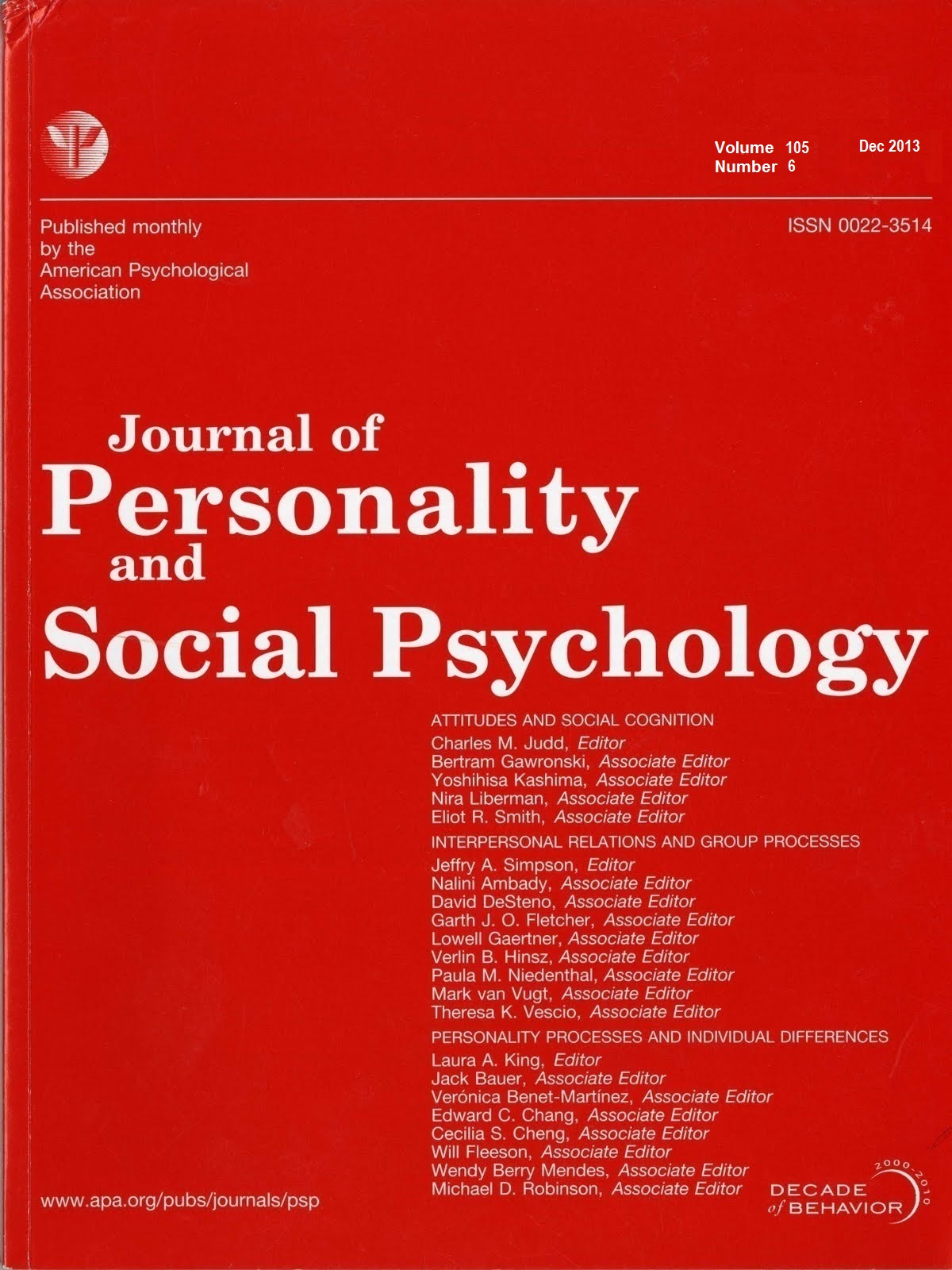
Journal of personality and social psychology publishes original papers in all areas of personality and social psychology and emphasizes empirical reports, but may include specialized theoretical, methodological, and review papers.Journal of personality and social psychology is divided into three independently edited sections. Attitudes and Social Cognition addresses all aspects of psychology (e.g., attitudes, cognition, emotion, motivation) that take place in significant micro- and macrolevel social contexts.




 京公网安备 11010802042870号
京ICP备2023020795号-1
京公网安备 11010802042870号
京ICP备2023020795号-1

 分享
分享
 求助内容:
求助内容: 应助结果提醒方式:
 扫码关注我们
