IF 2.9 3区 生物学Q2 MULTIDISCIPLINARY SCIENCESPeerJPub Date : 2025-02-26eCollection Date: 2025-01-01DOI:10.7717/peerj.18262
Rodrigo Sarmiento-Garcés, Daniel Posada-Echeverría, Rafik Neme
{"title":"哥伦比亚加勒比地区热带干燥森林昆虫取样方法的多样性和有效性。","authors":"Rodrigo Sarmiento-Garcés, Daniel Posada-Echeverría, Rafik Neme","doi":"10.7717/peerj.18262","DOIUrl":null,"url":null,"abstract":"<p><p>Tropical dry forests (TDFs) are among the most threatened ecosystems in Colombia and globally. Characterized by distinct dry and wet seasons, TDFs support a rich diversity of flora and fauna and offer crucial ecosystem services, despite facing significant threats such as deforestation, urbanization and climate change. This study provides a comprehensive assessment of insect diversity within an urban TDF area in Puerto Colombia, Atlántico and in the Colombian Caribbean, by comparing three traditional sampling methods: Malaise traps, pitfall traps, and canopy fogging. In total, 3,135 insects were collected, representing 413 morphospecies across various trophic guilds. Our findings indicate that Malaise traps were the most effective in capturing a diverse range of species, followed by pitfall traps, while canopy fogging yielded the lowest species richness. Each method captured unique species, demonstrating that these methods are complementary in capturing the full spectrum of insect diversity in TDFs. Additionally, our study contributes valuable data on the taxonomic and functional diversity of insects in this continuously threatened ecosystem, underscoring the need for conservation efforts in urban and peri-urban TDFs.</p>","PeriodicalId":19799,"journal":{"name":"PeerJ","volume":"13 ","pages":"e18262"},"PeriodicalIF":2.9000,"publicationDate":"2025-02-26","publicationTypes":"Journal Article","fieldsOfStudy":null,"isOpenAccess":false,"openAccessPdf":"https://www.ncbi.nlm.nih.gov/pmc/articles/PMC11871896/pdf/","citationCount":"0","resultStr":"{\"title\":\"Diversity and efficacy of insect sampling methods in an urban tropical dry forest of the Colombian Caribbean.\",\"authors\":\"Rodrigo Sarmiento-Garcés, Daniel Posada-Echeverría, Rafik Neme\",\"doi\":\"10.7717/peerj.18262\",\"DOIUrl\":null,\"url\":null,\"abstract\":\"<p><p>Tropical dry forests (TDFs) are among the most threatened ecosystems in Colombia and globally. Characterized by distinct dry and wet seasons, TDFs support a rich diversity of flora and fauna and offer crucial ecosystem services, despite facing significant threats such as deforestation, urbanization and climate change. This study provides a comprehensive assessment of insect diversity within an urban TDF area in Puerto Colombia, Atlántico and in the Colombian Caribbean, by comparing three traditional sampling methods: Malaise traps, pitfall traps, and canopy fogging. In total, 3,135 insects were collected, representing 413 morphospecies across various trophic guilds. Our findings indicate that Malaise traps were the most effective in capturing a diverse range of species, followed by pitfall traps, while canopy fogging yielded the lowest species richness. Each method captured unique species, demonstrating that these methods are complementary in capturing the full spectrum of insect diversity in TDFs. Additionally, our study contributes valuable data on the taxonomic and functional diversity of insects in this continuously threatened ecosystem, underscoring the need for conservation efforts in urban and peri-urban TDFs.</p>\",\"PeriodicalId\":19799,\"journal\":{\"name\":\"PeerJ\",\"volume\":\"13 \",\"pages\":\"e18262\"},\"PeriodicalIF\":2.9000,\"publicationDate\":\"2025-02-26\",\"publicationTypes\":\"Journal Article\",\"fieldsOfStudy\":null,\"isOpenAccess\":false,\"openAccessPdf\":\"https://www.ncbi.nlm.nih.gov/pmc/articles/PMC11871896/pdf/\",\"citationCount\":\"0\",\"resultStr\":null,\"platform\":\"Semanticscholar\",\"paperid\":null,\"PeriodicalName\":\"PeerJ\",\"FirstCategoryId\":\"99\",\"ListUrlMain\":\"https://doi.org/10.7717/peerj.18262\",\"RegionNum\":3,\"RegionCategory\":\"生物学\",\"ArticlePicture\":[],\"TitleCN\":null,\"AbstractTextCN\":null,\"PMCID\":null,\"EPubDate\":\"2025/1/1 0:00:00\",\"PubModel\":\"eCollection\",\"JCR\":\"Q2\",\"JCRName\":\"MULTIDISCIPLINARY SCIENCES\",\"Score\":null,\"Total\":0}","platform":"Semanticscholar","paperid":null,"PeriodicalName":"PeerJ","FirstCategoryId":"99","ListUrlMain":"https://doi.org/10.7717/peerj.18262","RegionNum":3,"RegionCategory":"生物学","ArticlePicture":[],"TitleCN":null,"AbstractTextCN":null,"PMCID":null,"EPubDate":"2025/1/1 0:00:00","PubModel":"eCollection","JCR":"Q2","JCRName":"MULTIDISCIPLINARY SCIENCES","Score":null,"Total":0}
Diversity and efficacy of insect sampling methods in an urban tropical dry forest of the Colombian Caribbean.
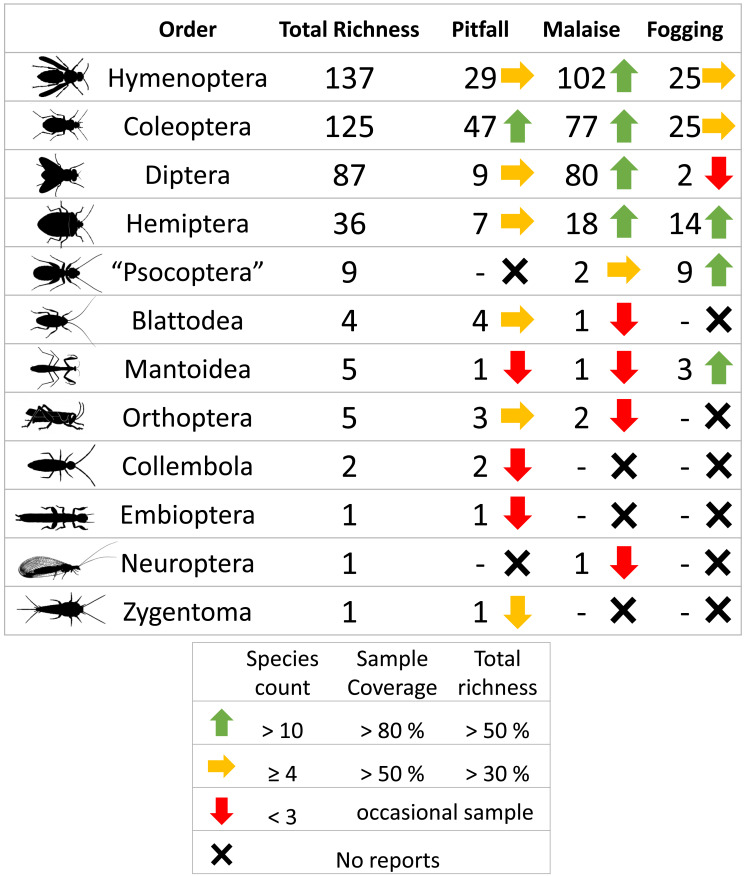
Tropical dry forests (TDFs) are among the most threatened ecosystems in Colombia and globally. Characterized by distinct dry and wet seasons, TDFs support a rich diversity of flora and fauna and offer crucial ecosystem services, despite facing significant threats such as deforestation, urbanization and climate change. This study provides a comprehensive assessment of insect diversity within an urban TDF area in Puerto Colombia, Atlántico and in the Colombian Caribbean, by comparing three traditional sampling methods: Malaise traps, pitfall traps, and canopy fogging. In total, 3,135 insects were collected, representing 413 morphospecies across various trophic guilds. Our findings indicate that Malaise traps were the most effective in capturing a diverse range of species, followed by pitfall traps, while canopy fogging yielded the lowest species richness. Each method captured unique species, demonstrating that these methods are complementary in capturing the full spectrum of insect diversity in TDFs. Additionally, our study contributes valuable data on the taxonomic and functional diversity of insects in this continuously threatened ecosystem, underscoring the need for conservation efforts in urban and peri-urban TDFs.
期刊介绍:
PeerJ is an open access peer-reviewed scientific journal covering research in the biological and medical sciences. At PeerJ, authors take out a lifetime publication plan (for as little as $99) which allows them to publish articles in the journal for free, forever. PeerJ has 5 Nobel Prize Winners on the Board; they have won several industry and media awards; and they are widely recognized as being one of the most interesting recent developments in academic publishing.







 京公网安备 11010802042870号
京ICP备2023020795号-1
京公网安备 11010802042870号
京ICP备2023020795号-1

 分享
分享
 求助内容:
求助内容: 应助结果提醒方式:
 扫码关注我们
