IF 2.9 3区 生物学Q2 MULTIDISCIPLINARY SCIENCESPeerJPub Date : 2025-02-26eCollection Date: 2025-01-01DOI:10.7717/peerj.18937
Fengjiao Zhang, Dan Zhao, Jing Zhang
{"title":"急性缺血性卒中患者静脉注射rt-PA后不良预后预测图的开发和验证。","authors":"Fengjiao Zhang, Dan Zhao, Jing Zhang","doi":"10.7717/peerj.18937","DOIUrl":null,"url":null,"abstract":"<p><strong>Background: </strong>Intravenous administration of recombinant tissue plasminogen activator (rt-PA) within 4.5 h of symptom onset is a standard treatment for acute ischemic stroke (AIS). However, certain patients continue to develop unfavorable outcomes despite timely rt-PA therapy. Identifying those at high risk is essential for developing individualized care plans and establishing appropriate follow-up.</p><p><strong>Methods: </strong>This retrospective study included AIS patients treated with intravenous rt-PA at 0.9 mg/kg at our center. Outcomes at three months were evaluated using the modified Rankin Scale (mRS). Patients with mRS scores ≤2 were considered to have favorable outcomes, and those with scores >2 were considered to have poor outcomes. Univariable analysis and stepwise logistic regression were used to identify independent predictors of poor prognosis, and a nomogram was subsequently developed. The model's discriminative power was assessed with area under the receiver operating characteristic curves (AUC-ROC), and its calibration was examined using calibration plots. Decision curves and clinical impact curves were applied to determine clinical utility.</p><p><strong>Results: </strong>Among 392 enrolled patients, 77 had poor outcomes three months after rt-PA therapy. Fibrinogen (Fg), baseline NIHSS, and a history of hypertension emerged as independent predictors of poor prognosis. The nomogram achieved an AUC of 0.948 (95% CI [0.910-0.985]), with sensitivity of 0.900 and specificity of 0.916 in the training dataset, and an AUC of 0.959 (95% CI [0.907-1.000]), with sensitivity of 0.943 and specificity of 0.947 in the validation dataset. Calibration plots demonstrated close agreement between predicted and observed probabilities, and decision curves indicated a wide range of net benefit threshold probabilities.</p><p><strong>Conclusions: </strong>This nomogram, incorporating baseline NIHSS, Fg, and a history of hypertension, accurately predicts poor three-month outcomes in AIS patients treated with intravenous rt-PA. Its ease of use may facilitate early risk stratification and assist clinicians in formulating more targeted management strategies and follow-up protocols for patients likely to experience unfavorable outcomes.</p>","PeriodicalId":19799,"journal":{"name":"PeerJ","volume":"13 ","pages":"e18937"},"PeriodicalIF":2.9000,"publicationDate":"2025-02-26","publicationTypes":"Journal Article","fieldsOfStudy":null,"isOpenAccess":false,"openAccessPdf":"https://www.ncbi.nlm.nih.gov/pmc/articles/PMC11871902/pdf/","citationCount":"0","resultStr":"{\"title\":\"Development and validation of a prognostic nomogram for predicting poor outcomes following intravenous rt-PA in patients with acute ischemic stroke.\",\"authors\":\"Fengjiao Zhang, Dan Zhao, Jing Zhang\",\"doi\":\"10.7717/peerj.18937\",\"DOIUrl\":null,\"url\":null,\"abstract\":\"<p><strong>Background: </strong>Intravenous administration of recombinant tissue plasminogen activator (rt-PA) within 4.5 h of symptom onset is a standard treatment for acute ischemic stroke (AIS). However, certain patients continue to develop unfavorable outcomes despite timely rt-PA therapy. Identifying those at high risk is essential for developing individualized care plans and establishing appropriate follow-up.</p><p><strong>Methods: </strong>This retrospective study included AIS patients treated with intravenous rt-PA at 0.9 mg/kg at our center. Outcomes at three months were evaluated using the modified Rankin Scale (mRS). Patients with mRS scores ≤2 were considered to have favorable outcomes, and those with scores >2 were considered to have poor outcomes. Univariable analysis and stepwise logistic regression were used to identify independent predictors of poor prognosis, and a nomogram was subsequently developed. The model's discriminative power was assessed with area under the receiver operating characteristic curves (AUC-ROC), and its calibration was examined using calibration plots. Decision curves and clinical impact curves were applied to determine clinical utility.</p><p><strong>Results: </strong>Among 392 enrolled patients, 77 had poor outcomes three months after rt-PA therapy. Fibrinogen (Fg), baseline NIHSS, and a history of hypertension emerged as independent predictors of poor prognosis. The nomogram achieved an AUC of 0.948 (95% CI [0.910-0.985]), with sensitivity of 0.900 and specificity of 0.916 in the training dataset, and an AUC of 0.959 (95% CI [0.907-1.000]), with sensitivity of 0.943 and specificity of 0.947 in the validation dataset. Calibration plots demonstrated close agreement between predicted and observed probabilities, and decision curves indicated a wide range of net benefit threshold probabilities.</p><p><strong>Conclusions: </strong>This nomogram, incorporating baseline NIHSS, Fg, and a history of hypertension, accurately predicts poor three-month outcomes in AIS patients treated with intravenous rt-PA. Its ease of use may facilitate early risk stratification and assist clinicians in formulating more targeted management strategies and follow-up protocols for patients likely to experience unfavorable outcomes.</p>\",\"PeriodicalId\":19799,\"journal\":{\"name\":\"PeerJ\",\"volume\":\"13 \",\"pages\":\"e18937\"},\"PeriodicalIF\":2.9000,\"publicationDate\":\"2025-02-26\",\"publicationTypes\":\"Journal Article\",\"fieldsOfStudy\":null,\"isOpenAccess\":false,\"openAccessPdf\":\"https://www.ncbi.nlm.nih.gov/pmc/articles/PMC11871902/pdf/\",\"citationCount\":\"0\",\"resultStr\":null,\"platform\":\"Semanticscholar\",\"paperid\":null,\"PeriodicalName\":\"PeerJ\",\"FirstCategoryId\":\"99\",\"ListUrlMain\":\"https://doi.org/10.7717/peerj.18937\",\"RegionNum\":3,\"RegionCategory\":\"生物学\",\"ArticlePicture\":[],\"TitleCN\":null,\"AbstractTextCN\":null,\"PMCID\":null,\"EPubDate\":\"2025/1/1 0:00:00\",\"PubModel\":\"eCollection\",\"JCR\":\"Q2\",\"JCRName\":\"MULTIDISCIPLINARY SCIENCES\",\"Score\":null,\"Total\":0}","platform":"Semanticscholar","paperid":null,"PeriodicalName":"PeerJ","FirstCategoryId":"99","ListUrlMain":"https://doi.org/10.7717/peerj.18937","RegionNum":3,"RegionCategory":"生物学","ArticlePicture":[],"TitleCN":null,"AbstractTextCN":null,"PMCID":null,"EPubDate":"2025/1/1 0:00:00","PubModel":"eCollection","JCR":"Q2","JCRName":"MULTIDISCIPLINARY SCIENCES","Score":null,"Total":0}
Development and validation of a prognostic nomogram for predicting poor outcomes following intravenous rt-PA in patients with acute ischemic stroke.
Background: Intravenous administration of recombinant tissue plasminogen activator (rt-PA) within 4.5 h of symptom onset is a standard treatment for acute ischemic stroke (AIS). However, certain patients continue to develop unfavorable outcomes despite timely rt-PA therapy. Identifying those at high risk is essential for developing individualized care plans and establishing appropriate follow-up.
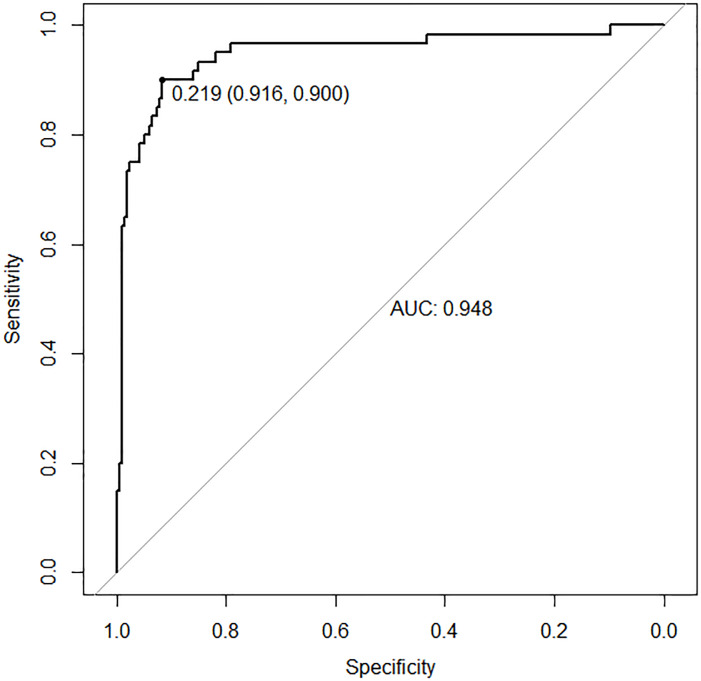
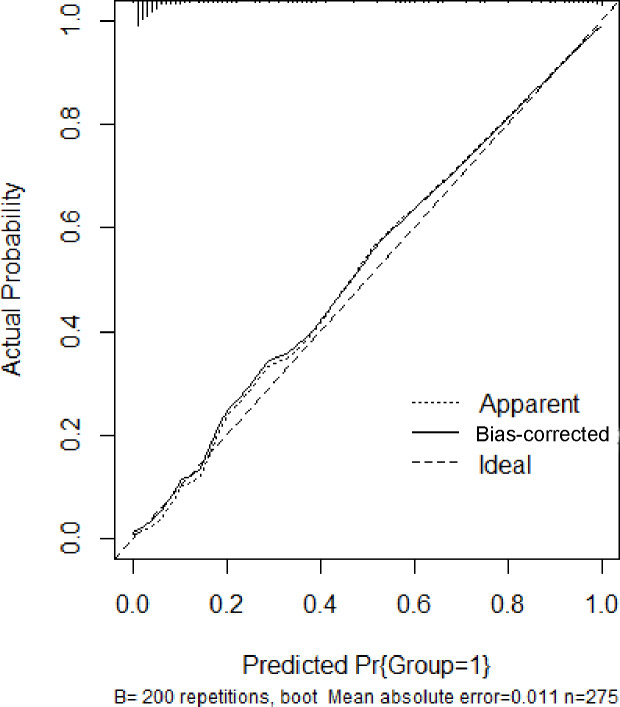
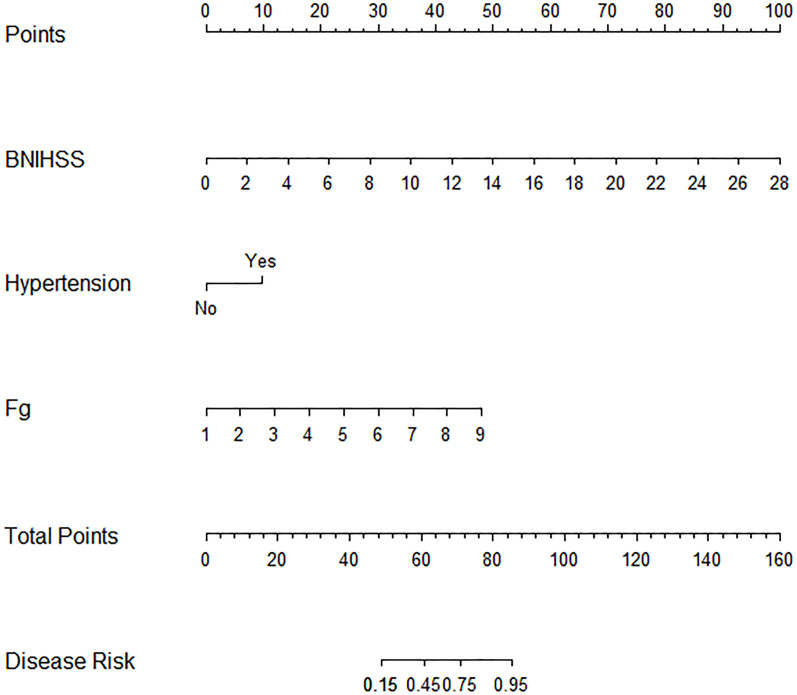
Methods: This retrospective study included AIS patients treated with intravenous rt-PA at 0.9 mg/kg at our center. Outcomes at three months were evaluated using the modified Rankin Scale (mRS). Patients with mRS scores ≤2 were considered to have favorable outcomes, and those with scores >2 were considered to have poor outcomes. Univariable analysis and stepwise logistic regression were used to identify independent predictors of poor prognosis, and a nomogram was subsequently developed. The model's discriminative power was assessed with area under the receiver operating characteristic curves (AUC-ROC), and its calibration was examined using calibration plots. Decision curves and clinical impact curves were applied to determine clinical utility.
Results: Among 392 enrolled patients, 77 had poor outcomes three months after rt-PA therapy. Fibrinogen (Fg), baseline NIHSS, and a history of hypertension emerged as independent predictors of poor prognosis. The nomogram achieved an AUC of 0.948 (95% CI [0.910-0.985]), with sensitivity of 0.900 and specificity of 0.916 in the training dataset, and an AUC of 0.959 (95% CI [0.907-1.000]), with sensitivity of 0.943 and specificity of 0.947 in the validation dataset. Calibration plots demonstrated close agreement between predicted and observed probabilities, and decision curves indicated a wide range of net benefit threshold probabilities.
Conclusions: This nomogram, incorporating baseline NIHSS, Fg, and a history of hypertension, accurately predicts poor three-month outcomes in AIS patients treated with intravenous rt-PA. Its ease of use may facilitate early risk stratification and assist clinicians in formulating more targeted management strategies and follow-up protocols for patients likely to experience unfavorable outcomes.
期刊介绍:
PeerJ is an open access peer-reviewed scientific journal covering research in the biological and medical sciences. At PeerJ, authors take out a lifetime publication plan (for as little as $99) which allows them to publish articles in the journal for free, forever. PeerJ has 5 Nobel Prize Winners on the Board; they have won several industry and media awards; and they are widely recognized as being one of the most interesting recent developments in academic publishing.




 京公网安备 11010802042870号
京ICP备2023020795号-1
京公网安备 11010802042870号
京ICP备2023020795号-1

 分享
分享
 求助内容:
求助内容: 应助结果提醒方式:
 扫码关注我们
