{"title":"Cas9-Rep融合在体内束缚供体DNA,提高hdr介导的基因组编辑效率","authors":"Zhentao Zhou, Jiahui Xiao, Shuai Yin, Yache Chen, Yang Yuan, Jianwei Zhang, Lizhong Xiong, Kabin Xie","doi":"10.1111/pbi.70036","DOIUrl":null,"url":null,"abstract":"<p>Genome editing based on the homology-directed repair (HDR) pathway enables scar-free and precise genetic manipulations. However, the low frequency of HDR hinders its application in plant genome editing. In this study, we engineered the fusion of Cas9 and a viral replication protein (Rep) as a molecular bridge to tether donor DNA <i>in vivo</i>, which enhances the efficiency of targeted gene insertion via the HDR pathway. This Rep-bridged knock-in (RBKI) method combines the advantages of rolling cycle replication of viral replicons and <i>in vivo</i> enrichment of donor DNA at the target site for HDR. Chromatin immunoprecipitation indicated that the Cas9-Rep fusion protein bound up to 66-fold more donor DNA than Cas9 did. We exemplified the RBKI method by inserting small- to middle-sized tags (33–519 bp) into 3 rice genes. Compared to Cas9, Cas9-Rep fusion increased the KI frequencies by 4–7.6-fold, and up to 72.2% of stable rice transformants carried in-frame knock-in events in the T<sub>0</sub> generation. Whole-genome sequencing of 6 plants segregated from heterozygous KI lines indicated that the knock-in events were faithfully inherited by the progenies with neither off-target editing nor random insertions of the donor DNA fragment. Further analysis suggested that the RBKI method reduced the number of byproducts from nonhomologous end joining; however, HDR-mediated knock-in tended to accompany microhomology-mediated end joining events. Together, these findings show that the <i>in vivo</i> tethering of donor DNAs with Cas9-Rep is an effective strategy to increase the frequency of HDR-mediated genome editing.</p>","PeriodicalId":221,"journal":{"name":"Plant Biotechnology Journal","volume":"23 6","pages":"2006-2017"},"PeriodicalIF":10.5000,"publicationDate":"2025-03-05","publicationTypes":"Journal Article","fieldsOfStudy":null,"isOpenAccess":false,"openAccessPdf":"https://onlinelibrary.wiley.com/doi/epdf/10.1111/pbi.70036","citationCount":"0","resultStr":"{\"title\":\"Cas9-Rep fusion tethers donor DNA in vivo and boosts the efficiency of HDR-mediated genome editing\",\"authors\":\"Zhentao Zhou, Jiahui Xiao, Shuai Yin, Yache Chen, Yang Yuan, Jianwei Zhang, Lizhong Xiong, Kabin Xie\",\"doi\":\"10.1111/pbi.70036\",\"DOIUrl\":null,\"url\":null,\"abstract\":\"<p>Genome editing based on the homology-directed repair (HDR) pathway enables scar-free and precise genetic manipulations. However, the low frequency of HDR hinders its application in plant genome editing. In this study, we engineered the fusion of Cas9 and a viral replication protein (Rep) as a molecular bridge to tether donor DNA <i>in vivo</i>, which enhances the efficiency of targeted gene insertion via the HDR pathway. This Rep-bridged knock-in (RBKI) method combines the advantages of rolling cycle replication of viral replicons and <i>in vivo</i> enrichment of donor DNA at the target site for HDR. Chromatin immunoprecipitation indicated that the Cas9-Rep fusion protein bound up to 66-fold more donor DNA than Cas9 did. We exemplified the RBKI method by inserting small- to middle-sized tags (33–519 bp) into 3 rice genes. Compared to Cas9, Cas9-Rep fusion increased the KI frequencies by 4–7.6-fold, and up to 72.2% of stable rice transformants carried in-frame knock-in events in the T<sub>0</sub> generation. Whole-genome sequencing of 6 plants segregated from heterozygous KI lines indicated that the knock-in events were faithfully inherited by the progenies with neither off-target editing nor random insertions of the donor DNA fragment. Further analysis suggested that the RBKI method reduced the number of byproducts from nonhomologous end joining; however, HDR-mediated knock-in tended to accompany microhomology-mediated end joining events. Together, these findings show that the <i>in vivo</i> tethering of donor DNAs with Cas9-Rep is an effective strategy to increase the frequency of HDR-mediated genome editing.</p>\",\"PeriodicalId\":221,\"journal\":{\"name\":\"Plant Biotechnology Journal\",\"volume\":\"23 6\",\"pages\":\"2006-2017\"},\"PeriodicalIF\":10.5000,\"publicationDate\":\"2025-03-05\",\"publicationTypes\":\"Journal Article\",\"fieldsOfStudy\":null,\"isOpenAccess\":false,\"openAccessPdf\":\"https://onlinelibrary.wiley.com/doi/epdf/10.1111/pbi.70036\",\"citationCount\":\"0\",\"resultStr\":null,\"platform\":\"Semanticscholar\",\"paperid\":null,\"PeriodicalName\":\"Plant Biotechnology Journal\",\"FirstCategoryId\":\"5\",\"ListUrlMain\":\"https://onlinelibrary.wiley.com/doi/10.1111/pbi.70036\",\"RegionNum\":1,\"RegionCategory\":\"生物学\",\"ArticlePicture\":[],\"TitleCN\":null,\"AbstractTextCN\":null,\"PMCID\":null,\"EPubDate\":\"\",\"PubModel\":\"\",\"JCR\":\"Q1\",\"JCRName\":\"BIOTECHNOLOGY & APPLIED MICROBIOLOGY\",\"Score\":null,\"Total\":0}","platform":"Semanticscholar","paperid":null,"PeriodicalName":"Plant Biotechnology Journal","FirstCategoryId":"5","ListUrlMain":"https://onlinelibrary.wiley.com/doi/10.1111/pbi.70036","RegionNum":1,"RegionCategory":"生物学","ArticlePicture":[],"TitleCN":null,"AbstractTextCN":null,"PMCID":null,"EPubDate":"","PubModel":"","JCR":"Q1","JCRName":"BIOTECHNOLOGY & APPLIED MICROBIOLOGY","Score":null,"Total":0}
Cas9-Rep fusion tethers donor DNA in vivo and boosts the efficiency of HDR-mediated genome editing
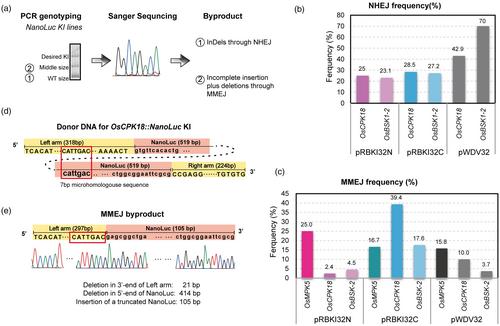
Genome editing based on the homology-directed repair (HDR) pathway enables scar-free and precise genetic manipulations. However, the low frequency of HDR hinders its application in plant genome editing. In this study, we engineered the fusion of Cas9 and a viral replication protein (Rep) as a molecular bridge to tether donor DNA in vivo, which enhances the efficiency of targeted gene insertion via the HDR pathway. This Rep-bridged knock-in (RBKI) method combines the advantages of rolling cycle replication of viral replicons and in vivo enrichment of donor DNA at the target site for HDR. Chromatin immunoprecipitation indicated that the Cas9-Rep fusion protein bound up to 66-fold more donor DNA than Cas9 did. We exemplified the RBKI method by inserting small- to middle-sized tags (33–519 bp) into 3 rice genes. Compared to Cas9, Cas9-Rep fusion increased the KI frequencies by 4–7.6-fold, and up to 72.2% of stable rice transformants carried in-frame knock-in events in the T0 generation. Whole-genome sequencing of 6 plants segregated from heterozygous KI lines indicated that the knock-in events were faithfully inherited by the progenies with neither off-target editing nor random insertions of the donor DNA fragment. Further analysis suggested that the RBKI method reduced the number of byproducts from nonhomologous end joining; however, HDR-mediated knock-in tended to accompany microhomology-mediated end joining events. Together, these findings show that the in vivo tethering of donor DNAs with Cas9-Rep is an effective strategy to increase the frequency of HDR-mediated genome editing.
期刊介绍:
Plant Biotechnology Journal aspires to publish original research and insightful reviews of high impact, authored by prominent researchers in applied plant science. The journal places a special emphasis on molecular plant sciences and their practical applications through plant biotechnology. Our goal is to establish a platform for showcasing significant advances in the field, encompassing curiosity-driven studies with potential applications, strategic research in plant biotechnology, scientific analysis of crucial issues for the beneficial utilization of plant sciences, and assessments of the performance of plant biotechnology products in practical applications.




 京公网安备 11010802042870号
京ICP备2023020795号-1
京公网安备 11010802042870号
京ICP备2023020795号-1

 分享
分享
 求助内容:
求助内容: 应助结果提醒方式:
 扫码关注我们
